
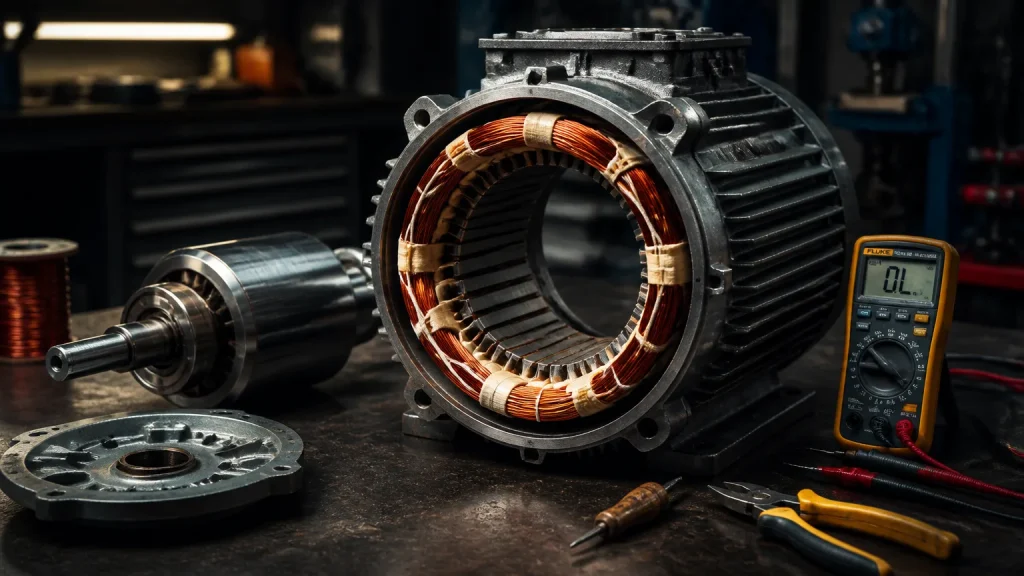
Electric motor rewinding can be a practical alternative to replacement when a motor fails. It makes particular sense for custom-built motors, hard-to-source models, and units tied to production equipment. Contractors, manufacturers, and serious DIYers can often restore performance while controlling costs and reducing downtime.
That matters during seasonal workloads and demanding industrial schedules around Coldwater, Jackson, Kalamazoo, and nearby communities. A dependable repair partner can help determine whether rewinding is safe and economical. Temporary replacement equipment may also protect productivity during evaluation or repair. These equipment rental tips for Coldwater contractors can help you plan. This guide explains the process, costs, benefits, and key decisions before work begins.
How Much Does Electric Motor Rewinding Cost?
Electric motor rewinding prices depend on more than horsepower. Technicians also consider voltage, phase, frame size, motor construction, winding complexity, and the condition of the core. Insulation materials, varnish or resin treatment, machining, bearing replacement, balancing, and rush service can also raise the total.
A small fractional-horsepower motor may cost more to rewind than it is worth. Replacement is often practical for common, low-cost units. Larger, specialty, older, or custom motors are different. Rewinding can preserve a proven motor when replacement costs, compatibility concerns, or long lead times create greater risks.
Ask for an itemized quote before approving work. It should identify charges for disassembly, diagnostics, rewinding, varnish or resin treatment, machining, bearings, balancing, testing, and warranty coverage. Ask whether the shop will document the winding specifications, including wire size, turns, connections, and insulation system.
Do not choose a shop based only on the lowest flat price. A cheaper quote may omit surge testing, core-loss checks, dynamic balancing, or final performance testing. Those steps help confirm the repair will deliver reliable efficiency and service life. Compare the complete repair scope with the replacement motor’s purchase price, installation requirements, downtime, and delivery schedule. A qualified shop can help you weigh those risks and select the most practical option.
The Electric Motor Rewinding Process, Step by Step
The process starts with intake and diagnosis. Technicians record the nameplate data, wiring configuration, operating history, and failure symptoms. They test insulation resistance, winding resistance, and phase balance. They also inspect bearings, look for overheating, and check for mechanical or electrical overload.
Next, the shop controls the disassembly. Technicians document lead locations, coil connections, winding direction, and the original winding pattern. They remove damaged windings without harming the stator core. The stator and rotor are inspected for worn fits, cracked components, contamination, and heat damage before new wire is installed. Cleaning the exterior beforehand can help. Use a shop vacuum to remove loose dust, and maintain proper shop ventilation during cleaning and repair preparation.
A reliable electric motor rewinding job must match the original design or an engineered specification. That includes the number of turns, wire size, coil span, connections, insulation class, and voltage configuration. Guesswork can reduce efficiency, create excessive heat, or cause another failure.
Technicians insert the new coils, form the end turns, and secure the windings with lacing and wedges. They apply varnish or resin, then cure the assembly under controlled conditions. Bearing replacement or servicing follows. The rotor is checked and balanced before careful reassembly.
Final testing confirms the repair. Technicians repeat insulation resistance, winding resistance, and phase-balance tests. They verify connections, check for abnormal vibration or noise, and run the motor at no load. These tests help confirm acceptable current draw, speed, and operating temperature before returning the motor to service.
Serious DIYers can safely gather nameplate information, document wiring, clean the exterior, and arrange transport. Energized testing, winding removal, and final verification require qualified technicians and proper equipment.
The Benefits of Rewinding Instead of Replacing a Motor
Electric motor rewinding can reduce downtime when a local repair shop restores your existing motor faster than a replacement can be sourced, shipped, configured, and installed. That speed matters for industrial facilities, contractors, farms, and workshops that depend on continuous production.
Rewinding also preserves motors with uncommon frames, mounting patterns, brakes, enclosures, or application-specific designs. Finding a direct replacement may require costly modifications. Repairing the original motor can simplify installation and keep connected equipment operating as designed.
Quality work supports reliable service, not just short-term savings. A qualified technician uses the correct insulation system, improves heat management, services bearings, balances the rotor, and identifies the original failure cause. These steps help prevent repeat failures.
Repairing the existing core reduces scrap and avoids storing or disposing of a large replacement motor. It also reduces the logistical burden of handling oversized equipment. For example, rewinding may keep power-tool or jobsite equipment working when a replacement motor is unavailable. A rewound motor still needs correct overload protection, alignment, lubrication, and operating conditions. Pair it with a dependable impact driver for field work and maintain both tools according to the manufacturer’s specifications.
How to Decide Whether Your Motor Should Be Rewound
Compare the full electric motor rewinding estimate with replacement price, availability, expected service life, downtime, and equipment-adaptation costs. Rewinding may not make sense if the stator core is badly damaged, the housing is cracked, the shaft is severely worn, overloads caused repeated failures, or obsolete components are unavailable.
Ask the repair shop for documented winding data, core and insulation tests, rotor balancing, new bearings where needed, failure-cause analysis, and a written warranty. Before inspection, lock out and tag out equipment, verify no voltage, and label connections. Never use temporary power without correctly rated cords, protection, and grounding. Review generator extension cord safety before connecting any generator.
A Rewind Can Restore Performance and Protect Your Budget
Electric motor rewinding is a value-based repair decision, not simply a cheaper replacement. Compare total cost, downtime, specifications, core condition, and repair quality before discarding a failed motor.
In southern Michigan, contractors, manufacturers, and serious DIYers should document symptoms and nameplate information before calling a qualified professional. Clean air passages, proper alignment, correct overload settings, and routine bearing and connection inspections help extend motor life.