
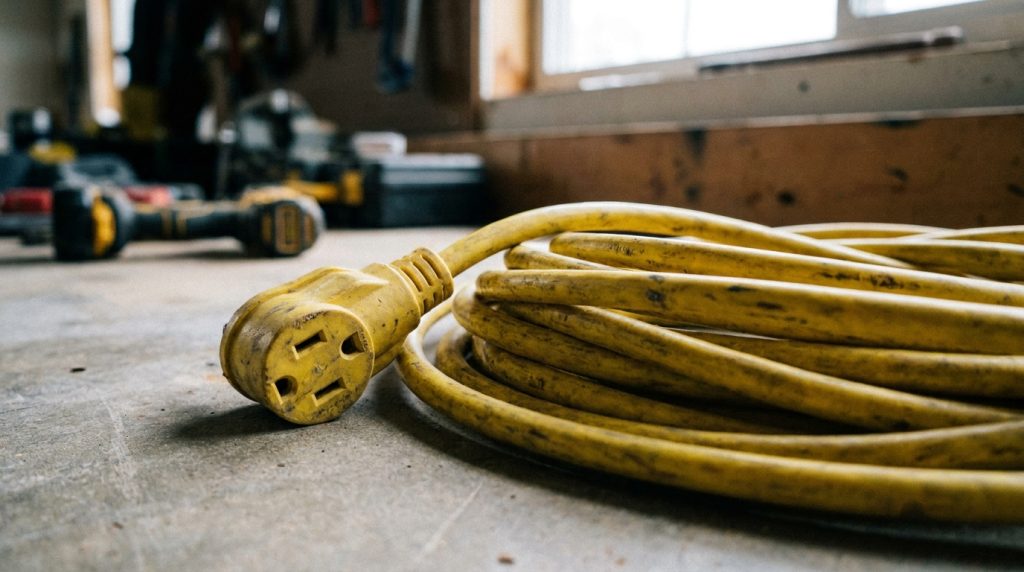
Portable generators provide dependable backup power during outages and are essential on construction sites, farms, and remote job locations. However, even the best generator can become a safety hazard if it’s connected to the wrong extension cord. Using an undersized, damaged, or improperly rated cord can lead to voltage drop, overheating, equipment damage, or even fire.
Choosing the correct extension cord ensures your generator operates safely while delivering reliable power to your tools and equipment.
Why Generator Extension Cords Matter
Extension cords designed for generators are built to safely handle higher electrical loads than standard household cords. A properly sized cord helps:
- Deliver consistent power to tools and appliances
- Reduce voltage drop over long distances
- Prevent overheating
- Protect sensitive equipment
- Improve jobsite safety
- Extend the life of both the generator and connected devices
Never assume any heavy-duty extension cord is suitable for generator use. The cord must be rated for the electrical load you’ll be placing on it.
Understanding Wire Gauge (AWG)
One of the most important factors when selecting a generator extension cord is its wire gauge, measured in American Wire Gauge (AWG).
Lower AWG numbers indicate thicker wire capable of carrying more current.
Common sizes include:
- 10 AWG: Heavy-duty generators and high-power tools
- 12 AWG: Most contractor applications
- 14 AWG: Medium-duty equipment
- 16 AWG: Light-duty devices only
As cord length increases, a larger wire size is generally required to reduce voltage drop.
Choosing the Right Cord Length
While longer cords provide greater flexibility, they also increase electrical resistance.
Whenever possible:
- Use the shortest cord that safely reaches your equipment.
- Avoid connecting multiple extension cords together.
- Keep cords fully uncoiled during use to prevent heat buildup.
- Select a heavier gauge if longer distances are unavoidable.
Using a shorter, properly sized cord improves efficiency and reduces unnecessary power loss.
Indoor vs. Outdoor Extension Cords
Generators are commonly used outdoors, so extension cords should be rated accordingly.
Look for cords that feature:
- Weather-resistant jackets
- Water-resistant connectors
- UV-resistant insulation
- Abrasion-resistant outer coatings
- Cold-weather flexibility if used year-round
Outdoor-rated cords are designed to withstand demanding jobsite conditions.
Matching the Cord to the Load
Different equipment requires different amounts of electrical current.
Typical applications include:
Light-Duty Loads
Suitable for:
- LED work lights
- Battery chargers
- Fans
- Small electronics
Medium-Duty Loads
Suitable for:
- Circular saws
- Shop vacuums
- Air compressors
- Power drills
Heavy-Duty Loads
Suitable for:
- Table saws
- Large air compressors
- Welders (when approved)
- Jobsite distribution boxes
- Multiple power tools
Always verify that the cord’s amp rating meets or exceeds the combined electrical load.
Twist-Lock vs. Straight-Blade Plugs
Generator extension cords are available with different connector styles.
Straight-Blade Plugs
Commonly used for:
- Standard household equipment
- Portable tools
- Temporary power
Twist-Lock Connectors
Twist-lock connectors provide a secure connection that resists accidental unplugging.
They’re commonly found on:
- Construction generators
- Industrial equipment
- Jobsite power distribution
- Emergency backup systems
For demanding environments, twist-lock connections offer additional reliability.
Common Generator Cord Mistakes
Avoid these common errors:
- Using household extension cords for heavy loads
- Running cords through standing water
- Connecting multiple extension cords together
- Using damaged or repaired cords
- Exceeding the cord’s amp rating
- Leaving cords tightly coiled while in use
- Operating cords where vehicles can drive over them
These mistakes can reduce performance and create serious safety hazards.
Generator Extension Cord Safety Tips
Follow these best practices:
- Inspect cords before every use.
- Replace cords with damaged insulation immediately.
- Keep connections dry.
- Never overload a cord.
- Fully uncoil extension cords before use.
- Store cords in a clean, dry location.
- Keep cords away from sharp edges and excessive heat.
Routine inspection and proper storage significantly extend cord life.
When to Replace an Extension Cord
Replace a generator extension cord if you notice:
- Cracked insulation
- Loose plugs
- Burn marks
- Exposed wiring
- Frequent overheating
- Bent prongs
- Cuts or abrasions
Never attempt to repair heavily damaged extension cords with electrical tape.
Choosing the Best Generator Extension Cord
The best extension cord depends on your generator’s output and the equipment you’re powering.
For most contractors, look for:
- Heavy-duty outdoor-rated construction
- Appropriate wire gauge for the electrical load
- Durable molded plugs
- Bright-colored jackets for jobsite visibility
- Oil-, water-, and abrasion-resistant insulation
Investing in a quality extension cord improves both safety and equipment performance.
Related Resources
If you’re building a safer and more efficient jobsite, these guides may also help:
- Essential Electrical Components: The Complete Guide for Contractors and DIYers
- Best Work Lights for Contractors
- Choosing the Right Shop Fan
- Power Tool Maintenance Tips to Extend the Life of Your Equipment
- Milwaukee vs. DeWalt: Which Power Tools Actually Last on the Jobsite?
- Tape Measures: Standout, Blade Width, and Accuracy Classes Explained
Find Heavy-Duty Extension Cords at CEM Industrial Supply
CEM Industrial Supply offers professional-grade extension cords, electrical supplies, contractor tools, safety products, and industrial equipment designed for demanding jobsite conditions. Whether you’re powering tools from a portable generator or setting up temporary jobsite power, our team can help you choose the right cord for safe, reliable performance.
Frequently Asked Questions
What size extension cord should I use with a generator?
The correct size depends on the generator’s output, cord length, and the equipment being powered. Heavy-duty applications typically require 10 AWG or 12 AWG cords to safely carry higher electrical loads.
Can I use a regular household extension cord with a generator?
Household extension cords may be suitable for very light loads, but they are generally not recommended for powering high-demand tools or appliances from a generator. Always use a cord rated for the intended electrical load.
What does AWG mean on an extension cord?
AWG stands for American Wire Gauge. Lower gauge numbers indicate thicker wire that can safely carry more electrical current with less voltage drop.
Why is voltage drop important?
Voltage drop reduces the amount of power reaching your equipment. Excessive voltage drop can cause motors to overheat, tools to perform poorly, and electronic equipment to malfunction.
Are outdoor extension cords required for generators?
Yes. Because portable generators are operated outdoors, extension cords should also be rated for outdoor use and designed to withstand moisture, sunlight, and abrasion.
Is it safe to connect two extension cords together?
It’s generally best to avoid connecting multiple extension cords. If a longer reach is necessary, use a single extension cord of the proper length and wire gauge instead.
What is a twist-lock generator cord?
A twist-lock cord uses locking connectors that rotate into place, preventing accidental disconnection. They’re commonly used on contractor-grade generators and industrial equipment.
How can I tell if an extension cord is overloaded?
Signs include excessive heat, a burning smell, soft or melted insulation, flickering lights, or repeatedly tripping circuit breakers. If any of these occur, disconnect the load immediately.
Can extension cords stay coiled while in use?
No. Extension cords should always be fully uncoiled during operation. Coiled cords trap heat, which can damage the insulation and increase the risk of fire.
How often should generator extension cords be replaced?
Inspect extension cords before every use. Replace them immediately if they have damaged insulation, exposed wires, loose plugs, burn marks, or other signs of wear that could compromise safety.