
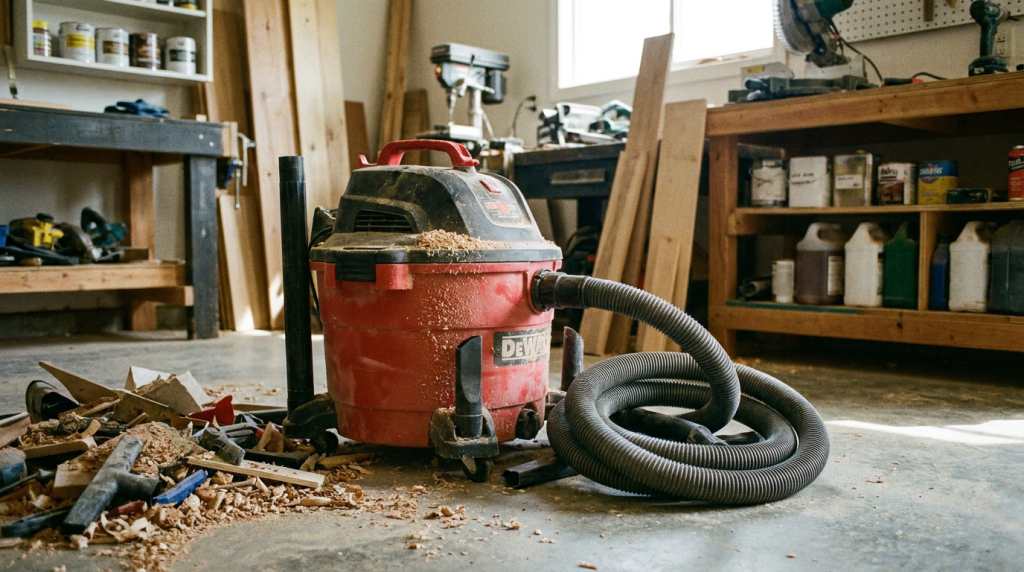
A shop vacuum, often called a “shop vac,” may seem like a simple household or workshop tool. Yet anyone who has cleaned sawdust after a project, cleared water from a basement, or tidied a garage after a busy weekend knows how helpful the right vacuum can be.
In Bhakti Yoga, the path of loving devotion to God, even ordinary tasks can become sacred when offered with care. The Sanskrit word seva means “service.” Cleaning a home, workshop, temple room, classroom, or community space can become seva when done with humility and love.
The Bhagavad-gita teaches that we can spiritualize our daily work by offering it to the Divine. In simple words, our hands may be busy with tools, dust, and chores, but our heart can remain connected through prayer, gratitude, and remembrance.
So, which shop vacuum is right? The answer depends on your space, your messes, your budget, and how you plan to serve through your work. Let’s walk through it gently and practically.
If you’re trying to determine which shop vacuum is right for your needs, you may also find it helpful to read about the various features and specifications that can enhance your cleaning experience. For more information on selecting the best equipment for your workspace, check out this related article on our website: Contact Us. This resource can provide you with valuable insights and guidance on making an informed decision.
What Is a Shop Vacuum?
A shop vacuum is a heavy-duty vacuum designed for tougher messes than a regular home vacuum. It can often handle dust, debris, wood chips, dirt, and sometimes liquids.
Unlike many household vacuums, shop vacuums usually have a large canister, a stronger hose, and more powerful suction. They are common in garages, workshops, construction areas, basements, and homes where practical cleanup is needed.
Why It Is Different From a Regular Vacuum
A regular vacuum is usually made for carpets, rugs, and everyday household dust. It may struggle with larger debris like wood shavings, screws, leaves, or wet spills.
A shop vacuum is built for rougher conditions. Many models can pick up both dry and wet messes, though you must use the correct filter and setup for each type.
This matters because using the wrong vacuum for the wrong job can damage the machine, create safety issues, or leave you frustrated.
A Simple Way to Think About It
A home vacuum is like a gentle broom for daily living.
A shop vacuum is like a strong helper for difficult cleanup.
Both have their place. The right tool helps us serve better, with less stress and more steadiness.
In Sanskrit, sadhana means “spiritual practice.” For many people, sadhana includes chanting, prayer, meditation, study, and service. But there is also a practical side: keeping our spaces clean and peaceful so the mind can become calmer and the heart more receptive.
Start With Your Main Use
Before comparing brands, horsepower, tank size, or attachments, begin with one simple question:
What will I use this shop vacuum for most often?
This is the most important step. A person cleaning a small apartment balcony does not need the same machine as someone running a woodworking shop. A family dealing with occasional basement water needs different features than a contractor cleaning job sites.
For Garage and Home Cleanup
If your main goal is general garage cleanup, a medium-sized wet/dry shop vacuum is usually enough.
You may use it for:
- Dirt near the entryway
- Leaves blown into the garage
- Dust from storage shelves
- Small debris from home repairs
- Car interior cleaning
- Occasional liquid spills
For most households, a 6 to 12 gallon shop vacuum offers a nice balance. It is large enough to handle meaningful cleanup but not so big that it becomes difficult to move or store.
For Woodworking and Sawdust
If you work with wood, sawdust collection becomes very important. Fine dust can spread through the air and settle everywhere. More importantly, breathing fine dust regularly is not good for your health.
For woodworking, look for:
- Strong suction
- Good airflow
- Fine dust filter or HEPA filter option
- Dust collection bags
- Hose adapters for tools
- Larger capacity if you work often
A shop vacuum can help with small woodworking tools, but for a full woodshop, you may eventually need a dedicated dust collector. Still, a good shop vac is a wonderful starting point.
For Wet Messes and Basement Water
If you need a shop vacuum for water cleanup, make sure it is clearly labeled as a wet/dry vacuum. Not all vacuums can safely handle liquids.
For wet pickup, look for:
- Wet/dry capability
- Easy drain port
- Large tank
- Stable base
- Foam sleeve or wet filter
- Strong motor
A drain port is especially helpful. Without it, you may have to lift and pour a heavy tank full of water, which can be difficult and messy.
For Car Cleaning
For car interiors, portability and attachments matter more than tank size.
Helpful features include:
- Long hose
- Crevice tool
- Brush attachment
- Small nozzle
- Lightweight body
- Good cord length
- Optional blower function
A smaller 2 to 6 gallon shop vacuum can be perfect for cars. It is easy to carry, easy to store, and usually strong enough for crumbs, dirt, pet hair, and floor mats.
Please check out our latest article at https://cemindustrialsupply.com/news/ for more information.
Understand Shop Vacuum Size and Capacity
Shop vacuums come in different tank sizes. The tank size is usually measured in gallons. Bigger is not always better. The best choice depends on how much debris or liquid you need to collect before emptying the tank.
In spiritual life, we learn the value of balance. The Sanskrit word yukta can mean “balanced” or “properly engaged.” A tool that is too small may frustrate us. A tool that is too large may become a burden. The right shop vacuum is the one properly suited to your real life.
Small Shop Vacuums: 2 to 6 Gallons
Small shop vacuums are best for light-duty tasks.
They are good for:
- Cars
- Small apartments
- Closets
- Craft areas
- Quick spills
- Small garage cleanup
Their main advantage is convenience. You can carry them easily, store them on a shelf, and use them without much effort.
Their limitation is capacity. You will need to empty them more often, and they may not be ideal for major renovation debris or large amounts of water.
Medium Shop Vacuums: 6 to 12 Gallons
Medium shop vacuums are the best choice for many families and homeowners.
They are good for:
- Garages
- Basements
- Workshops
- DIY projects
- Moderate water cleanup
- Home renovation dust
A medium tank gives you flexibility without becoming too bulky. If you are unsure which shop vacuum is right, this range is often the safest and most practical choice.
Large Shop Vacuums: 14 to 20 Gallons or More
Large shop vacuums are made for heavy-duty cleanup.
They are good for:
- Construction sites
- Large workshops
- Frequent wet pickup
- Commercial cleaning
- Big renovation projects
- High-volume debris
The downside is that they are heavier and take up more storage space. If the tank fills with water, it can become very heavy. Choose a large vacuum only if you truly need that capacity.
When considering which shop vacuum is right for your needs, it’s also important to understand how to maintain your equipment effectively. A related article discusses the root causes of coupling damage, including misalignment and soft foot, which can impact the performance of your tools. You can read more about these issues and their implications for your shop setup in this insightful piece on coupling damage. This knowledge can help you make informed decisions about your vacuum and other machinery.
Power, Suction, and Airflow: What Really Matters?
Many shop vacuums advertise “peak horsepower,” but this number can be confusing. It does not always tell the full story of cleaning performance.
When choosing a shop vacuum, consider suction, airflow, hose size, filter quality, and how the vacuum performs with the type of debris you collect.
Peak Horsepower
Peak horsepower is often used in marketing. It refers to the maximum output under certain conditions, not necessarily everyday working power.
A higher number may suggest a stronger motor, but it should not be your only deciding factor.
For light home use, you may not need the highest horsepower. For heavy debris, long hoses, or power tool dust collection, stronger performance becomes more important.
CFM: Airflow
CFM means “cubic feet per minute.” It measures how much air the vacuum moves.
Higher CFM is helpful for collecting light, loose debris like sawdust and dust. If you plan to connect your shop vacuum to woodworking tools, airflow matters a lot.
Water Lift: Suction Strength
Water lift measures suction power. This is especially helpful when picking up heavier debris or pulling material through a hose.
A vacuum with good suction can handle tougher messes, but again, the whole design matters. Hose diameter, filter condition, and attachments all affect performance.
Hose Diameter
A wider hose can pick up larger debris without clogging. A narrower hose may provide more focused suction and can be easier to use in tight spaces.
Common hose sizes include:
- 1¼ inch for small cleanup and cars
- 1⅞ inch for general home use
- 2½ inch for larger debris and workshop cleanup
If you regularly clean wood chips, leaves, or construction debris, a 2½ inch hose may be best.
When considering which shop vacuum is right for your needs, it’s also beneficial to explore the essential tools that every contractor should have in their arsenal. A related article discusses the top manufacturing supplies that can enhance your efficiency and effectiveness on the job site. You can read more about these crucial items in the article linked here: top manufacturing supplies. This information can help you make informed decisions not only about shop vacuums but also about other tools that can contribute to your success.
Wet/Dry Capability and Filter Choices
One of the greatest benefits of a shop vacuum is wet/dry capability. But to use it safely and effectively, you need the right filter setup.
This is where many people make mistakes. They use a dry filter for wet pickup, or they vacuum fine dust with a basic filter that lets particles escape.
A little preparation prevents damage and keeps the air cleaner.
Dry Pickup Filters
For dry debris, most shop vacuums use a cartridge filter. This filter protects the motor and traps dust.
For general dirt and debris, a standard filter may be enough.
For fine dust, such as drywall dust, ash, or fine sawdust, you need a fine dust filter or HEPA-level filtration if available.
Drywall dust is especially difficult. It can clog filters quickly and may escape into the air if the filter is not designed for it.
Wet Pickup Filters
For liquids, many shop vacuums use a foam sleeve or wet filter. In many cases, you must remove the dry paper cartridge filter before vacuuming water.
Always read the instructions for your specific model. This is not just a small detail. Using the wrong filter for wet pickup can damage the vacuum.
Dust Bags
Dust collection bags fit inside the tank and collect dry debris before it reaches the filter.
They are helpful for:
- Fine dust
- Easier cleanup
- Protecting the filter
- Reducing mess when emptying
- Woodworking dust
If you use your shop vacuum often, bags can make life much easier.
HEPA Filters
HEPA stands for “High Efficiency Particulate Air.” A HEPA filter can capture very small particles.
A HEPA shop vacuum or HEPA filter is helpful if you are concerned about fine dust, allergens, or indoor air quality.
However, true HEPA performance depends on the whole vacuum system, not just the filter. If fine dust is your main concern, choose a vacuum designed for that purpose.
Portability, Storage, and Ease of Use
A shop vacuum may look powerful in the store, but ask yourself: will I actually enjoy using it?
A tool that is too heavy, loud, awkward, or difficult to empty may sit unused. A practical tool supports steady service.
In Bhakti Yoga, devotion is not meant to be showy or complicated. The word bhakti means loving devotion. It grows through simple, sincere actions repeated over time: chanting God’s names, offering food, serving others, keeping clean spaces, and remembering that life is sacred.
In the same way, choose a shop vacuum that supports your real daily rhythm.
Wheels and Stability
For medium and large shop vacuums, wheels are important. Look for sturdy casters and a stable base.
A vacuum that tips over easily can be frustrating, especially when pulling the hose around a garage or workshop.
Cord Length
A longer power cord gives you more freedom. If the cord is short, you may constantly move the plug or rely on extension cords.
For garage and shop use, a longer cord is usually better.
Hose Length
A longer hose helps you reach cars, corners, ceilings, shelves, and workbenches.
However, very long hoses can reduce suction depending on the vacuum. Choose a good balance.
Storage for Accessories
Many shop vacuums include onboard storage for nozzles, hoses, and wands. This may seem minor, but it matters.
When attachments are easy to find, you are more likely to use the right one for the job.
Noise Level
Shop vacuums can be loud. If you live in an apartment, share a home, have small children, or use the vacuum often, consider noise level.
Some models are designed to be quieter. You can also use hearing protection during long cleanup sessions.
Attachments and Features Worth Considering
The right attachments can make a basic shop vacuum much more useful. Before buying, look at what comes in the box and what accessories are available separately.
Crevice Tool
A crevice tool is narrow and helpful for tight spaces.
Use it for:
- Car seats
- Corners
- Baseboards
- Between appliances
- Window tracks
- Workshop gaps
This is one of the most useful attachments for everyday cleaning.
Utility Nozzle
A utility nozzle is a general-purpose attachment for floors, benches, and flat surfaces.
It is good for garage floors, basement areas, and general cleanup.
Brush Attachment
A brush attachment helps loosen dust and dirt from surfaces.
It is helpful for:
- Car dashboards
- Shelving
- Vents
- Upholstery
- Delicate surfaces
Floor Wand
A floor wand allows you to stand upright while vacuuming. This is important if you clean larger areas.
Without a wand, you may bend over too much, which can strain your back.
Blower Function
Some shop vacuums can also blow air. This can be useful for clearing leaves from a garage, blowing dust out of hard-to-reach places, or inflating certain items.
Use this feature carefully. Blowing dust around may make the air less clean, so it is not always the best choice indoors.
Drain Port
If you plan to pick up water, a drain port is very helpful. It allows you to empty liquid without lifting the entire tank.
For basements and wet cleanup, this feature may be worth choosing a larger model.
Matching the Shop Vacuum to Your Lifestyle
Let’s make this very practical. The right shop vacuum depends on who you are, where you live, and what you clean.
There is no single “best shop vacuum” for everyone. There is only the best shop vacuum for your needs.
Best for Small Homes and Apartments
Choose a small wet/dry vacuum, around 2 to 6 gallons.
Look for:
- Compact design
- Easy storage
- Good attachments
- Lightweight body
- Moderate noise
- Wet/dry option if needed
This is ideal for small spills, car cleaning, balcony dirt, and occasional home projects.
Best for Most Homeowners
Choose a medium wet/dry shop vacuum, around 8 to 12 gallons.
Look for:
- Strong suction
- 1⅞ inch or 2½ inch hose
- Good filter options
- Wheels
- Accessory storage
- Drain port if possible
This size is excellent for garages, basements, home repairs, and general household cleanup.
Best for Woodworkers
Choose a shop vacuum with strong airflow, good filtration, and dust bag compatibility.
Look for:
- High CFM
- Fine dust or HEPA filter option
- Dust bags
- Tool adapters
- Larger hose
- Auto-start feature if available
An auto-start feature allows the vacuum to turn on when your power tool turns on. This is very useful for sanding and cutting.
Best for Contractors and Heavy-Duty Use
Choose a large, durable shop vacuum built for frequent use.
Look for:
- Large tank
- Strong motor
- Tough hose
- Durable wheels
- Long cord
- High-quality filtration
- Easy emptying
- Replacement parts availability
Contractors should consider durability and serviceability. A cheaper vacuum may not last under daily use.
Best for Wet Cleanup
Choose a wet/dry vacuum with a large tank and drain port.
Look for:
- Wet filter or foam sleeve
- Drain hose or drain plug
- Stable body
- Strong suction
- Easy tank cleaning
- Safe design for liquids
Remember to remove or change filters according to the manufacturer’s instructions before vacuuming water.
Safety and Care: Keeping Your Vacuum Working Well
A shop vacuum is powerful, but it needs care. Proper use helps it last longer and keeps you safer.
This, too, can be part of a devotional mindset. Caring for tools, cleaning after use, and acting responsibly are forms of mindfulness. In the Bhagavad-gita, Krishna encourages steadiness, wisdom, and thoughtful action. Spiritual life is not separate from practical life. It shines through it.
Do Not Vacuum Dangerous Materials
Avoid vacuuming:
- Hot ashes
- Burning material
- Gasoline
- Flammable liquids
- Toxic dust unless the vacuum is rated for it
- Sharp hazardous objects without caution
- Mold or asbestos without professional equipment
Ashes can remain hot long after a fire appears out. Gasoline and flammable liquids can create dangerous fumes. Some materials require specialized vacuums and protective gear.
Clean or Replace Filters
A clogged filter reduces suction and strains the motor.
If your vacuum loses power, check the filter first. Tap out loose dust, wash it if the filter is washable, or replace it when needed.
Always let washable filters dry completely before reinstalling them.
Empty the Tank Regularly
Do not let debris sit in the tank too long, especially if it is damp. Moisture can create odors, rust, or mold.
After wet pickup, empty and rinse the tank. Let it dry before storing.
Use the Right Extension Cord
If you need an extension cord, use one rated for the vacuum’s power requirements. A weak or overly long cord may cause overheating or poor performance.
Check your manual for guidance.
Store It Properly
Wrap the cord neatly, secure the hose, and keep attachments together.
A well-stored tool is easier to use next time. It is a small act of care that saves time and frustration.
Budget: How Much Should You Spend?
Shop vacuums come in many price ranges. A higher price may bring better durability, quieter operation, stronger suction, better filters, or more accessories. But not everyone needs a premium model.
The goal is not to buy the most expensive vacuum. The goal is to buy wisely.
In Bhakti teachings, simplicity is valued. Simple living does not always mean buying the cheapest thing. It means choosing what genuinely supports a meaningful, serviceful life without unnecessary excess.
Budget Shop Vacuums
A budget shop vacuum can be perfectly fine for occasional use.
Choose this if you need:
- Light garage cleanup
- Car cleaning
- Occasional spills
- Basic home projects
Just be aware that cheaper models may be louder, less durable, or come with fewer filter options.
Mid-Range Shop Vacuums
Mid-range models are best for most people.
They usually offer:
- Better suction
- More attachments
- Stronger build quality
- Good capacity
- Wet/dry use
- Better filter availability
If you want one reliable vacuum for home, garage, and DIY projects, this is often the sweet spot.
Premium Shop Vacuums
Premium models may be worth it if you use your vacuum often or need excellent dust control.
Consider premium if you need:
- HEPA filtration
- Quiet operation
- Professional durability
- Tool-triggered auto-start
- Advanced dust extraction
- Frequent job-site use
For contractors, serious woodworkers, or people with strong dust concerns, a higher-quality vacuum can be a wise investment.
A Simple Buying Checklist
Before you purchase, take a moment to review your needs. This can prevent regret and help you choose with clarity.
Ask These Questions
What will I clean most often?
Will I vacuum wet messes, dry messes, or both?
How much storage space do I have?
Do I need to carry it up stairs?
Will I use it for a car, garage, basement, workshop, or job site?
Do I need fine dust filtration?
How loud can it be?
Do I need a drain port?
Are replacement filters and bags easy to find?
What is my honest budget?
Recommended Choices by Need
For cars and small messes: choose a 2 to 6 gallon portable wet/dry vacuum.
For general home and garage use: choose an 8 to 12 gallon wet/dry vacuum.
For woodworking: choose a model with strong airflow, fine dust filtration, and dust bag compatibility.
For water cleanup: choose a larger wet/dry vacuum with a drain port.
For construction or professional use: choose a durable large-capacity model with strong performance and available replacement parts.
Cleaning as a Spiritual Practice
It may seem surprising to connect a shop vacuum with spiritual growth. But Bhakti Yoga invites us to bring love into everything.
The Sanskrit word kirtan means chanting or glorifying God, often through sacred sound. Many Bhakti practitioners chant the maha-mantra:
Hare Krishna, Hare Krishna, Krishna Krishna, Hare Hare
Hare Rama, Hare Rama, Rama Rama, Hare Hare
This chanting is a prayer of the heart. “Hare” calls to God’s divine energy, and “Krishna” and “Rama” are names of God meaning the all-attractive one and the source of joy.
You can chant softly while cleaning. You can pray before beginning a task. You can offer the result: “May this space become peaceful. May everyone who enters feel cared for. May this work be pleasing to You.”
The Heart Behind the Action
In the Bhagavad-gita 9.26, Krishna says that if someone offers Him a leaf, a flower, fruit, or water with love and devotion, He accepts it.
The teaching is simple and beautiful: God sees the love behind the offering.
Likewise, cleaning a garage, workshop, temple, kitchen, or home may appear ordinary. But when done with love, it becomes meaningful.
A shop vacuum may not be a sacred object in itself. But it can become part of sacred service when used to care for God’s creation and the people around us.
Making Your Space More Peaceful
A clean space can support a calmer mind. A calmer mind can support prayer, chanting, study, and kindness.
This does not mean our homes must be perfect. Bhakti is not about perfectionism. It is about sincerity.
Even one clean corner can become a place for prayer.
Even one small act of service can soften the heart.
Even one sincere name of God can begin a journey.
Final Thoughts: Which Shop Vacuum Is Right?
The right shop vacuum is the one that fits your real needs.
If you need something small and easy, choose a compact portable model.
If you want one reliable vacuum for home and garage, choose a medium wet/dry vacuum around 8 to 12 gallons.
If you work with sawdust, choose strong airflow and excellent filtration.
If you handle water cleanup, choose wet/dry capability with a drain port.
If you use it professionally, invest in durability, capacity, and replacement parts.
Choose thoughtfully, care for your tools, and use them in a spirit of service.
In Bhakti Yoga, love is not limited to temples or formal prayers. Love can be expressed through chanting, prayer, cooking, listening, helping, repairing, and cleaning. Every sincere action can bring us closer to God when offered with humility.
Wherever you are from, whatever your background, and whatever your level of spiritual experience, you are welcome. Take one sincere step toward God today. Chant one holy name, say one heartfelt prayer, serve one person, or clean one small space with love. The path of Bhakti begins gently, and every honest step matters.
[fluentform id=”3″]
FAQs
What factors should I consider when choosing a shop vacuum?
When choosing a shop vacuum, consider factors such as the size of the area you will be cleaning, the type of debris you will be picking up, the power and capacity of the vacuum, and any additional features you may need, such as a HEPA filter or wet/dry capabilities.
What are the different types of filters available for shop vacuums?
Shop vacuums typically come with standard filters, HEPA filters, and foam filters. Standard filters are suitable for general debris, while HEPA filters are designed to capture smaller particles and allergens. Foam filters are often used for wet vacuuming.
What is the difference between a shop vacuum and a regular household vacuum?
Shop vacuums are designed for heavy-duty cleaning tasks, such as picking up sawdust, wood chips, and other construction debris. They are typically more powerful and have larger capacities than regular household vacuums. Shop vacuums also often have wet/dry capabilities.
What are some common accessories and attachments for shop vacuums?
Common accessories and attachments for shop vacuums include extension wands, crevice tools, brush attachments, floor nozzles, and dust bags. Some shop vacuums also come with specialized attachments for specific tasks, such as car detailing or pet hair removal.
What are some popular brands of shop vacuums to consider?
Some popular brands of shop vacuums to consider include Shop-Vac, Craftsman, DeWalt, Ridgid, and Vacmaster. These brands offer a range of shop vacuums with different capacities, power levels, and features to suit various cleaning needs.