
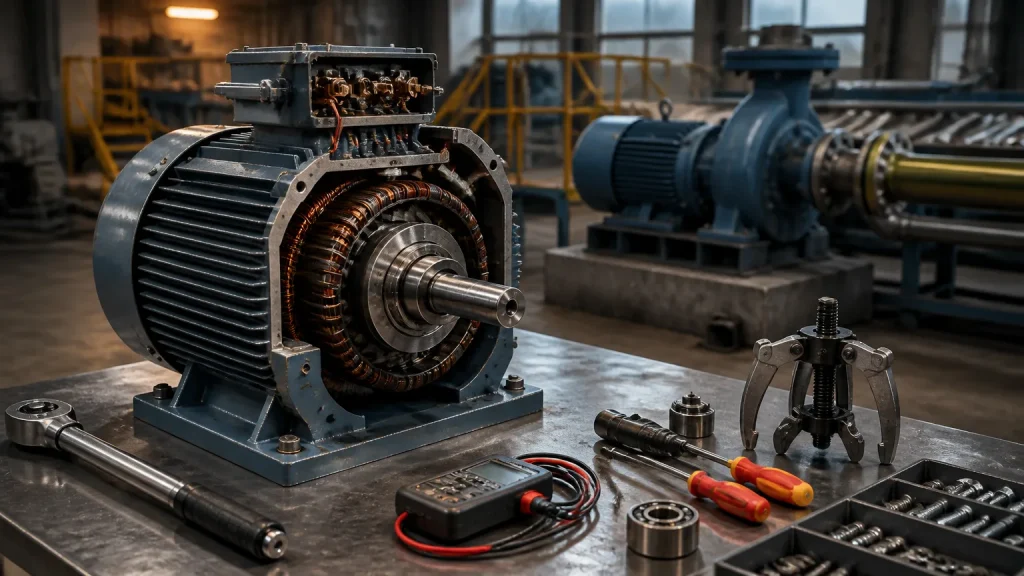
When an electric motor overheats, makes unusual noise, vibrates, trips breakers, loses torque, or will not start, replacement may not be the only answer. Electric motor rebuilding can restore motors used in pumps, compressors, conveyors, fans, machine tools, and outdoor equipment.
For contractors, manufacturers, and serious DIYers in southern Michigan, moisture, temperature swings, agricultural dust, and demanding work environments can accelerate wear. Even reliable Milwaukee outdoor power equipment eventually needs service. This guide explains what rebuilding involves, what it may cost, and when the benefits justify downtime and expense. You will also learn how proper testing and repairs can extend motor life instead of sending a workable unit to the scrap pile.
What Electric Motor Rebuilding Includes
Professional electric motor rebuilding starts with testing, not automatic parts replacement. The technician records the intake condition, verifies the nameplate, and documents frame size, voltage, phase, horsepower, RPM, enclosure type, and service factor.
Electrical testing checks winding resistance, ground faults, and insulation strength. The technician evaluates winding condition, inspects bearings and seals, and checks the rotor, shaft, housing, fan, and connections. These findings determine whether the motor needs a minor repair or a full rebuild.
A minor repair may involve replacing worn bearings, damaged seals, or a failed capacitor. A full rebuild addresses damaged windings, a failed rotor, severe contamination, or extensive mechanical wear. The motor is disassembled, cleaned, and inspected before repairs begin. Technicians remove varnish, carbon, dirt, and other contamination using the right abrasive tool for cleaning metal parts.
Common rebuilding work includes bearing and seal replacement, shaft or housing repair, and rewinding when testing confirms winding damage. The rotor may require balancing to reduce vibration and protect new bearings. After reassembly, the motor receives final electrical and operational tests.
Correct dimensions and ratings must remain verified before the motor returns to service. That includes the frame, voltage, phase, horsepower, RPM, enclosure, and service-factor details. Proper documentation helps match the rebuilt motor to its equipment and prevents costly installation errors.
Electric Motor Rebuilding Costs: What Determines the Price
The cost of electric motor rebuilding depends on the motor and the failure—not a standard flat rate. Horsepower, motor size, and single- or three-phase design affect labor, materials, and test requirements. Accessibility also matters, especially when technicians must remove guards, couplings, or other equipment before service.
The estimate may include diagnostic and teardown labor separately from parts and specialized services. Common charges include bearings, seals, shaft repairs, rewinding, machining, baking, varnishing, and dynamic balancing. Winding damage usually costs more than routine bearing replacement. Rush service and limited replacement-part availability can increase the final price. Corroded hardware may also require components that withstand demanding industrial conditions.
Compare the rebuild estimate with the delivered cost of a new motor. A replacement may require different mounting, controls, freight, setup changes, and equipment modifications. Those changes add labor and downtime that a rebuild may avoid.
Be cautious with unusually low estimates. They may exclude testing, balancing, upgraded insulation, or correction of the underlying failure. Request a written scope before approving work. It should identify the failure, replacement parts, tests, warranty terms, and expected turnaround time. That detail makes quotes easier to compare and supports a sound electric motor rebuilding decision.
When Rebuilding Beats Replacing the Motor
Electric motor rebuilding often makes sense when the motor has features that are difficult to match. Strong rebuild candidates include uncommon frames, older industrial designs, high-efficiency or specialty configurations, custom shafts, integrated brakes, and hard-to-source replacements. Preserving the exact fit can also protect pulley alignment, coupling geometry, mounting patterns, controls, and known performance characteristics.
Downtime matters, especially when one motor supports critical production equipment. A local rebuilder may return a specialized motor faster than you can source a dependable replacement. Confirm emergency turnaround, testing requirements, and parts availability before approving the work. For maintenance teams comparing professional cordless tool systems for maintenance work, the same planning discipline applies: match equipment to the job before downtime becomes urgent.
Replacement is usually smarter when the housing is severely damaged or obsolete components have no viable repair path. Repeated failures from an undersized motor also point to a capacity problem, not a rebuilding problem. Likewise, replace the motor when rebuilding costs approach a dependable new unit.
Compare total operating cost, not purchase price alone. Include energy efficiency, expected service life, warranty coverage, and the cost of another failure. A written rebuild scope and verified testing results help you make that decision with confidence.
Benefits and Best Practices After a Rebuild
A properly rebuilt motor costs less than many replacements and creates less waste. It also preserves custom equipment, reduces sourcing delays, and restores reliable service. Rebuilding provides an opportunity to correct worn bearings, damaged insulation, or loose connections before they cause a larger failure.
Before startup, require documented testing. Results should include insulation resistance, winding resistance, no-load current, vibration, temperature, and rotation checks. Complete load testing when the application requires it. Also verify alignment, coupling or belt tension, lubrication, overload settings, grounding, ventilation, and the driven equipment. For choosing the right fastener for equipment assembly, confirm hardware is secure and properly matched.
A rebuilt motor cannot overcome voltage imbalance, overloading, blocked cooling passages, poor alignment, excessive cycling, or contamination nearby. DIYers can safely record wiring, label parts, and clean accessible components. Leave energized circuits, rewinding, machining, and high-voltage testing to qualified professionals. Follow the test report and address every exception before returning the motor to service.
Make the Rebuild-or-Replace Decision With Better Information
Electric motor rebuilding is a condition-based decision. Consider the failure mode, repair scope, replacement availability, equipment fit, downtime impact, and expected service life. Before requesting an estimate, gather the nameplate data, application details, operating symptoms, maintenance history, and clear photos.
Contractors, manufacturers, and serious DIYers in southern Michigan can reduce surprises by comparing a documented rebuild scope with the true installed cost of replacement.