
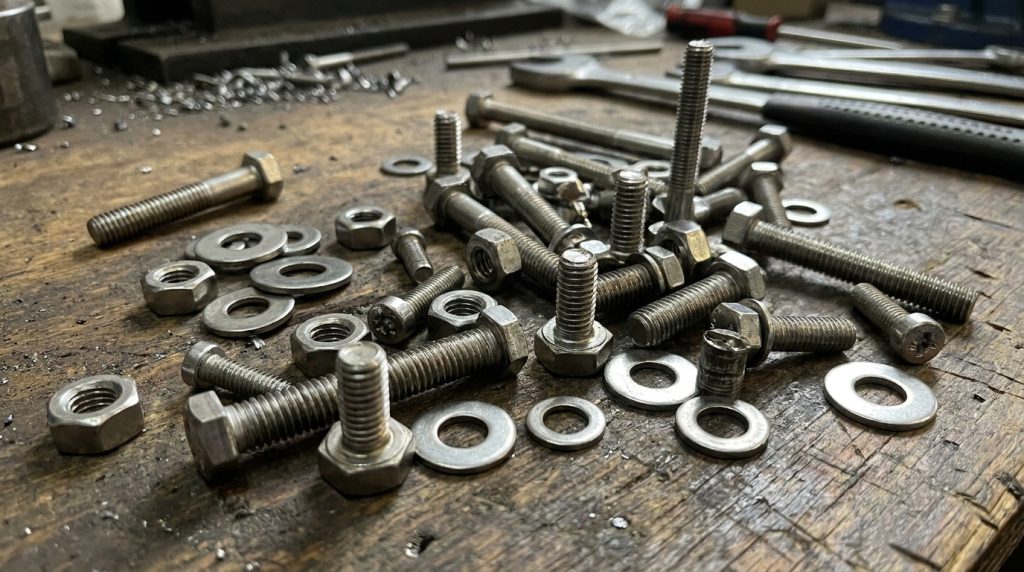
Stainless steel fasteners are essential components in construction, manufacturing, equipment maintenance, marine work, food processing, automotive repair, and countless industrial applications. When bolts, screws, nuts, washers, anchors, rivets, and threaded rods are exposed to moisture, chemicals, temperature changes, or outdoor conditions, choosing the right material can determine whether an assembly lasts for years or fails prematurely.
For contractors, maintenance professionals, manufacturers, mechanics, and industrial buyers, stainless steel fasteners offer a strong balance of corrosion resistance, durability, clean appearance, and long-term value. However, not every stainless fastener is the same. Different grades, finishes, thread types, and installation environments all affect performance.
This guide explains the key benefits and uses of stainless steel fasteners, how they compare with other fastener materials, which grades are commonly used, and how to choose the right option for your application.
Stainless steel fasteners are mechanical fastening components made from stainless steel alloys. These alloys contain iron, chromium, and other elements such as nickel, molybdenum, or manganese. The chromium content helps form a thin, protective oxide layer on the surface of the metal, which improves resistance to rust and corrosion.
Common stainless steel fasteners include:
- Bolts
- Screws
- Nuts
- Washers
- Threaded rods
- Studs
- Anchors
- Rivets
- Socket head cap screws
- Machine screws
- Self-tapping screws
- Wood screws
- Sheet metal screws
Stainless steel fasteners are used anywhere strong, dependable, corrosion-resistant connections are required. They are especially valuable in wet, outdoor, sanitary, high-humidity, and chemically exposed environments.
How Stainless Steel Resists Corrosion
The main reason stainless steel fasteners resist corrosion is their chromium content. When exposed to oxygen, chromium creates a passive oxide layer on the surface. If the surface is scratched or mildly damaged, this layer can reform under suitable conditions.
This does not mean stainless steel is completely immune to corrosion. Chlorides, harsh acids, stagnant water, improper installation, contamination from carbon steel tools, and poor grade selection can still cause staining, pitting, or crevice corrosion. However, stainless steel generally performs far better than plain carbon steel in corrosive environments.
Common Stainless Steel Fastener Forms
Different fastener styles are designed for different loads, materials, and installation methods.
| Fastener Type | Common Uses | Typical Applications |
|---|---|---|
| Stainless steel bolts | High-strength structural and mechanical assemblies | Structural brackets, industrial machinery, equipment frames, and heavy-duty connections |
| Stainless steel screws | General-purpose fastening | Panels, covers, wood, sheet metal, equipment housings, and enclosures |
| Stainless steel nuts | Securing threaded assemblies | Used with bolts, studs, threaded rod, and other threaded fasteners |
| Stainless steel washers | Load distribution and surface protection | Bolted joints, vibration-prone assemblies, and applications requiring improved clamping force |
| Stainless steel threaded rod | Adjustable fastening and suspension systems | Pipe supports, HVAC installations, construction, and industrial maintenance |
| Stainless steel anchors | Fastening into concrete and masonry | Outdoor structures, railings, equipment bases, and structural mounting |
| Stainless steel rivets | Permanent fastening | Sheet metal fabrication, marine panels, enclosures, and equipment assemblies |
For product selection pages, useful internal linking opportunities may include stainless steel bolts, stainless steel nuts, stainless steel washers, and threaded rod.
Stainless steel fasteners are renowned for their durability and resistance to corrosion, making them an ideal choice for various applications in construction, automotive, and marine industries. For those interested in understanding the intricacies of fasteners and how to effectively use them, a related article discusses the differences between Phillips and JIS screwdrivers and their impact on screw stripping. You can read more about it in this informative piece: Phillips vs. JIS: Why You Strip Screws.
Key Benefits of Stainless Steel Fasteners
Stainless steel fasteners are often selected because they reduce maintenance, improve service life, and perform reliably in demanding environments. While they may cost more upfront than zinc-plated or plain steel fasteners, they can reduce replacement costs and downtime in the right applications.
Excellent Corrosion Resistance
Corrosion resistance is the primary advantage of stainless steel fasteners. In outdoor, washdown, marine, and humid environments, carbon steel fasteners can rust quickly if the coating is damaged. Stainless steel provides corrosion resistance throughout the material, not just on the surface.
This makes stainless steel useful for:
- Outdoor construction
- Coastal buildings
- Marine hardware
- Food processing equipment
- Chemical processing
- Water treatment facilities
- HVAC systems
- Agricultural equipment
- Transportation and fleet maintenance
In applications where rust stains, seized threads, or weakened fasteners are unacceptable, stainless steel is often the preferred choice.
Long Service Life
Because stainless steel resists rust and environmental damage, it often provides a longer service life than coated carbon steel in corrosive conditions. This can be especially important for hard-to-access installations where replacement is expensive or disruptive.
Examples include:
- Rooftop HVAC supports
- Bridge and railing hardware
- Marine dock assemblies
- Conveyor systems in washdown areas
- Outdoor signage
- Equipment mounted in processing plants
Longer service life can reduce labor costs, downtime, inspection frequency, and emergency repairs.
Clean, Professional Appearance
Stainless steel fasteners have a bright, clean appearance that works well in visible installations. They are commonly used in architectural, commercial, and consumer-facing applications where both function and appearance matter.
Typical visible applications include:
- Handrails and guardrails
- Commercial kitchens
- Retail fixtures
- Stainless steel panels
- Outdoor furniture
- Decorative hardware
- Boat fittings
- Equipment covers and access panels
Stainless steel is also less likely to leave red-brown rust staining on surrounding materials compared with carbon steel fasteners.
Strength and Mechanical Reliability
Stainless steel fasteners provide reliable strength for many industrial and construction applications. However, strength depends heavily on the stainless grade, fastener specification, diameter, thread design, and manufacturing method.
For many applications, 18-8 stainless steel, 304 stainless steel, and 316 stainless steel provide suitable strength and corrosion resistance. For high-strength structural or critical load-bearing assemblies, engineers and buyers should verify mechanical properties, applicable standards, and code requirements before selecting a fastener.
Temperature Performance
Stainless steel fasteners can perform well across a broad temperature range, depending on the grade. They are commonly used in environments where fasteners may be exposed to heat, cold, or thermal cycling.
Examples include:
- Exhaust components
- Industrial ovens
- Food processing equipment
- Outdoor structures in freeze-thaw climates
- Heat exchangers
- Boiler rooms
- Mechanical systems
For elevated-temperature applications, confirm the fastener grade and specification with the manufacturer or an engineer.
Low Maintenance Requirements
Stainless steel fasteners typically require less maintenance than plain steel or coated fasteners in corrosive environments. They do not depend on a thin plating layer for corrosion protection, so minor surface scratches are less likely to compromise performance.
Maintenance teams often choose stainless fasteners to reduce:
- Rust-related failures
- Thread seizure from corrosion
- Replacement frequency
- Visual deterioration
- Downtime during inspections and repairs
Common Grades of Stainless Steel Fasteners
Selecting the right stainless steel grade is one of the most important decisions when buying fasteners. The grade affects corrosion resistance, strength, cost, and suitability for specific environments.
18-8 Stainless Steel Fasteners
The term “18-8 stainless steel” generally refers to stainless steel containing approximately 18% chromium and 8% nickel. It is commonly associated with the 300 series, including 304 stainless steel.
18-8 stainless steel fasteners are widely used for general-purpose corrosion resistance. They are suitable for many indoor, outdoor, and mildly corrosive environments.
Common uses include:
- General maintenance
- Machinery assembly
- Commercial equipment
- Indoor and outdoor fixtures
- Light construction
- Sheet metal work
18-8 fasteners are a practical choice when corrosion resistance is needed but exposure to saltwater or harsh chemicals is limited.
304 Stainless Steel Fasteners
304 stainless steel is one of the most common stainless grades for fasteners. It offers good corrosion resistance, formability, and availability. It is widely used in construction, manufacturing, and maintenance.
304 stainless steel fasteners are commonly found in:
- Food service equipment
- Architectural hardware
- General industrial assemblies
- Outdoor equipment
- HVAC components
- Electrical enclosures
- Light marine environments above the waterline
304 stainless is often a strong all-around choice, but it may not be the best option for chloride-heavy environments such as coastal areas, pools, or saltwater exposure.
316 Stainless Steel Fasteners
316 stainless steel contains molybdenum, which improves resistance to pitting and crevice corrosion, especially in chloride-rich environments. For marine, coastal, chemical, and washdown applications, 316 stainless steel fasteners are often preferred over 304.
Common uses for 316 stainless steel fasteners include:
- Marine hardware
- Boat building and repair
- Docks and piers
- Coastal construction
- Chemical processing equipment
- Wastewater treatment plants
- Pool and spa equipment
- Food and beverage washdown areas
316 stainless steel fasteners generally cost more than 304, but the added corrosion resistance can provide better long-term value in aggressive environments.
410 Stainless Steel Fasteners
410 stainless steel is a martensitic stainless grade that offers higher hardness and strength than many 300-series stainless steels, but lower corrosion resistance. It is often used in self-drilling screws, tapping screws, and applications where hardness is needed.
Common uses include:
- Self-drilling screws
- Sheet metal fastening
- Roofing and siding applications
- HVAC ductwork
- Light-gauge steel fastening
Because 410 stainless is magnetic and less corrosion resistant than 304 or 316, it should be used carefully in wet or chloride-rich environments.
Stainless Steel Grade Comparison
| Grade | Corrosion Resistance | Strength / Hardness | Best Uses | Notes |
|---|---|---|---|---|
| 18-8 | Good | Moderate | General-purpose industrial and commercial fastening | Broad stainless steel category with properties similar to 304 stainless steel |
| 304 | Good to very good | Moderate | Construction, food processing equipment, outdoor applications, and industrial machinery | Excellent general-purpose corrosion resistance, but not ideal for prolonged saltwater or chloride exposure |
| 316 | Very good | Moderate | Marine, coastal, chemical processing, and washdown environments | Contains molybdenum for improved resistance to chlorides and corrosive chemicals |
| 410 | Moderate | Higher hardness | Self-drilling screws, self-tapping screws, and wear-resistant fasteners | Offers greater hardness and strength than 300-series stainless steels but lower corrosion resistance |
For more articles on industrial supply, visit https://cemindustrialsupply.com/news/ for the latest updates.
Common Uses of Stainless Steel Fasteners by Industry
Stainless steel fasteners are used across many trades and industries because they solve practical problems: corrosion, sanitation, appearance, durability, and maintenance access.
Construction and General Contracting
Contractors use stainless steel fasteners where outdoor exposure, moisture, treated lumber, masonry, or architectural appearance is important.
Common construction applications include:
- Decking hardware
- Exterior railings
- Concrete anchors
- Facade systems
- Roof access equipment
- Outdoor stairs
- Structural brackets
- Signage and lighting supports
- Masonry attachments
For treated lumber and exterior wood construction, stainless fasteners are often used because some wood preservatives can accelerate corrosion in incompatible metals. Contractors should confirm fastener compatibility with lumber treatment, local code requirements, and project specifications.
Internal linking opportunities may include deck screws, concrete anchors, and structural fasteners.
Manufacturing and OEM Assembly
Manufacturers use stainless steel fasteners in equipment and products where corrosion resistance, appearance, and cleanliness are important. Stainless hardware is common in both finished consumer products and industrial machinery.
Typical OEM applications include:
- Equipment frames
- Enclosures and cabinets
- Pumps and valves
- Conveyors
- Control panels
- Stainless guards and covers
- Packaging machinery
- Material handling equipment
For production buyers, consistency matters. Fastener dimensions, thread quality, finish, traceability, and packaging can affect assembly speed and product reliability. Many manufacturers source stainless steel fasteners in bulk to maintain inventory and reduce line interruptions.
Maintenance, Repair, and Operations
Maintenance professionals often replace rusted or damaged fasteners with stainless steel to prevent repeat failures. This is especially common in facilities with washdown operations, outdoor equipment, chemical exposure, or high humidity.
MRO applications include:
- Replacing corroded bolts on equipment
- Repairing guards, panels, and covers
- Securing pipe clamps and hangers
- Maintaining pumps and motors
- Installing brackets and supports
- Repairing carts, racks, and fixtures
- Maintaining HVAC equipment
When replacing existing fasteners, maintenance teams should match thread size, length, head style, strength requirements, and material compatibility. In critical equipment, verify specifications before changing fastener material.
Automotive, Truck, and Equipment Repair
Mechanics use stainless steel fasteners for corrosion-prone areas on vehicles and equipment. While stainless fasteners are not always suitable for high-stress engine or suspension components unless specified, they are useful in many non-critical and exposed locations.
Common uses include:
- Exhaust brackets and clamps
- Body panels
- Trim hardware
- Battery boxes
- Skid plates
- Trailer hardware
- Motorcycle accessories
- Marine engines and boat trailers
- Off-road equipment accessories
Mechanics should be careful when using stainless bolts in high-heat, high-load, or safety-critical areas. Always match the original fastener specification when strength and torque values are critical.
Marine and Coastal Applications
Marine environments are among the most demanding for fasteners. Saltwater, salt spray, humidity, and oxygen exposure can quickly attack unprotected steel. For these conditions, 316 stainless steel fasteners are commonly selected.
Marine applications include:
- Boat hardware
- Cleats and railings
- Dock hardware
- Piers and gangways
- Ladders and swim platforms
- Marine electrical enclosures
- Boat trailers
- Coastal fencing and signage
Even 316 stainless can corrode under certain conditions, especially in stagnant saltwater or tight crevices with limited oxygen. Regular inspection and proper installation are still important.
Food, Beverage, and Sanitary Processing
Stainless steel fasteners are widely used in food and beverage facilities because they resist corrosion and support cleanability. Fasteners in these environments may be exposed to water, steam, cleaning chemicals, food acids, and regular washdowns.
Common sanitary applications include:
- Conveyors
- Mixers
- Packaging machinery
- Stainless work tables
- Processing tanks
- Guards and access panels
- Drainage systems
- Commercial kitchen equipment
For sanitary environments, buyers should consider fastener head style, surface finish, thread exposure, and cleanability. Socket, button, and low-profile heads may be selected depending on the application.
Stainless steel fasteners are widely recognized for their durability and resistance to corrosion, making them an ideal choice for various applications in construction and manufacturing. For those interested in exploring the tools that complement these fasteners, a related article discusses the differences between various types of wrenches, which can be essential for proper installation and maintenance. You can read more about this topic in the article on wrenches, which provides insights into choosing the right tool for your needs here.
Stainless Steel Fasteners vs. Other Fastener Materials
Stainless steel is not the only fastener material available. Carbon steel, alloy steel, zinc-plated steel, galvanized steel, brass, aluminum, and coated fasteners each have advantages. The right choice depends on strength, environment, cost, appearance, and compliance requirements.
Stainless Steel vs. Zinc-Plated Steel
Zinc-plated steel fasteners are common and cost-effective for indoor or mildly corrosive environments. The zinc coating provides sacrificial corrosion protection, but once the coating is damaged or consumed, the underlying steel can rust.
| Feature | Stainless Steel | Zinc-Plated Steel |
|---|---|---|
| Corrosion resistance | Good to excellent, depending on the stainless steel grade | Fair to good in mild, non-corrosive environments |
| Protection type | Inherent corrosion resistance from the alloy itself | Protective zinc coating over a carbon steel base |
| Outdoor use | Excellent when the appropriate grade is selected (such as 304 or 316) | Limited to mild outdoor exposure; prolonged exposure can lead to coating deterioration |
| Appearance | Clean, bright finish that maintains its appearance over time | Bright, shiny finish initially but may dull or develop corrosion as the coating wears |
| Cost | Higher initial cost | Lower initial cost |
| Best for | Wet environments, outdoor installations, food processing, marine applications, and chemical exposure | Indoor equipment, general-purpose fastening, and cost-sensitive applications in dry environments |
Stainless Steel vs. Galvanized Steel
Galvanized steel fasteners have a thicker zinc coating than standard zinc-plated fasteners, making them better suited for outdoor use. Hot-dip galvanized fasteners are often used in construction, utility, and exterior structural applications.
| Feature | Stainless Steel | Hot-Dip Galvanized Steel |
|---|---|---|
| Corrosion resistance | Excellent in many environments, depending on the grade | Good long-term corrosion resistance in outdoor environments |
| Coating thickness | No separate coating required; corrosion resistance is inherent to the alloy | Thick zinc coating provides sacrificial corrosion protection |
| Appearance | Smooth, clean, and bright finish | Duller, rougher, matte gray finish |
| Thread fit | Consistent dimensions when properly manufactured | Thicker zinc coating can affect thread fit and may require oversized nuts |
| Marine performance | 316 stainless steel is preferred for saltwater and coastal environments | Suitable for many outdoor applications, but prolonged salt exposure can shorten service life |
| Best for | Architectural projects, marine environments, food processing, chemical plants, and visible installations | Outdoor construction, structural steel, utility infrastructure, fencing, and heavy timber construction |
Stainless Steel vs. Alloy Steel
Alloy steel fasteners are often used where high tensile strength is required. Common examples include Grade 8 bolts and socket head cap screws made from alloy steel. However, alloy steel usually requires a coating or finish for corrosion protection.
Stainless steel is often preferred where corrosion resistance is more important than maximum strength. Alloy steel is often preferred where high clamp load, fatigue resistance, or engineered structural performance is required.
For safety-critical applications, do not substitute stainless steel for alloy steel without engineering approval.
When considering the advantages of stainless steel fasteners, it’s essential to explore their various applications and benefits in different industries. For instance, a related article discusses the importance of proper gearbox identification, which can significantly impact the selection of fasteners in mechanical assemblies. Understanding the specifics of gearbox components, such as nameplate details and shaft dimensions, can help ensure that the right stainless steel fasteners are used for optimal performance. You can read more about this topic in the article on gearbox identification.
How to Choose the Right Stainless Steel Fastener
Choosing stainless steel fasteners involves more than selecting a diameter and length. The application environment, load requirements, grade, thread type, head style, and installation method all matter.
Match the Grade to the Environment
The first step is identifying the exposure conditions.
Use 304 or 18-8 stainless steel for:
- General outdoor use
- Indoor industrial equipment
- Mild moisture exposure
- Commercial fixtures
- Food service equipment with moderate exposure
Use 316 stainless steel for:
- Saltwater environments
- Coastal construction
- Chemical exposure
- Pool and spa areas
- Wastewater treatment
- Heavy washdown operations
Use 410 stainless steel for:
- Self-drilling applications
- Applications requiring increased hardness
- Light corrosion exposure where 410 is suitable
Consider Load and Strength Requirements
Fasteners are load-bearing components. Selecting the wrong fastener can cause loosening, joint failure, leaks, equipment damage, or safety hazards.
Evaluate:
- Tensile strength
- Shear load
- Clamp load
- Vibration exposure
- Fatigue conditions
- Temperature
- Joint material
- Torque requirements
- Applicable standards or codes
If the fastener is used in a structural, lifting, pressure-containing, transportation, or safety-critical assembly, consult engineering specifications before substituting materials.
Choose the Correct Thread Type
Thread selection affects installation, holding power, and compatibility.
Common thread types include:
- UNC coarse threads for general fastening
- UNF fine threads for increased thread engagement and adjustment
- Machine screw threads for tapped holes and nuts
- Self-tapping threads for sheet metal and plastics
- Lag screw threads for wood
- Threaded rod for adjustable fastening and hanging
For replacement work, match the existing thread pitch carefully. Mixing metric and inch fasteners or coarse and fine threads can damage parts and create unsafe assemblies.
Select the Right Head Style and Drive
Fastener head style affects accessibility, torque transfer, appearance, and clearance.
Common stainless fastener head styles include:
- Hex head bolts for high torque and wrench installation
- Socket head cap screws for compact, high-access assemblies
- Button head screws for low-profile appearance
- Flat head screws for countersunk flush installation
- Pan head screws for general-purpose fastening
- Truss head screws for wide bearing surface
- Carriage bolts for wood and tamper-resistant applications
Common drive types include:
- Hex
- Socket/Allen
- Phillips
- Slotted
- Torx/star
- Square
- Combination drives
For production environments, drive type can affect installation speed, tool wear, and cam-out risk.
Account for Galling
Galling is a form of thread damage that can occur when stainless steel fasteners are tightened, especially stainless-on-stainless assemblies. Under pressure and friction, threads can seize or weld together.
To reduce the risk of galling:
- Use proper lubrication or anti-seize when appropriate
- Avoid excessive installation speed
- Use correct torque values
- Keep threads clean
- Consider dissimilar stainless grades where suitable
- Avoid damaged or contaminated threads
Galling is especially important for maintenance teams and installers working with stainless steel bolts and nuts in field conditions.
Installation and Maintenance Best Practices
Proper installation helps stainless steel fasteners perform as intended. Even high-quality fasteners can fail early if installed incorrectly.
Use Compatible Tools and Materials
Avoid contaminating stainless steel fasteners with carbon steel particles. Using dirty tools, carbon steel wire brushes, or grinding dust near stainless hardware can lead to surface rust staining.
Best practices include:
- Use clean tools when working with stainless
- Avoid carbon steel wire brushes on stainless surfaces
- Store stainless fasteners separately from plain steel hardware
- Keep fasteners dry and clean before installation
- Remove metal shavings and debris from installation areas
Apply Proper Torque
Over-tightening can strip threads, stretch fasteners, damage joint materials, or increase galling risk. Under-tightening can allow loosening, vibration, leaks, or joint movement.
Use manufacturer torque guidance when available. Torque values can vary based on:
- Fastener size
- Grade
- Thread condition
- Lubrication
- Washer use
- Joint material
- Plating or finish
- Application requirements
For critical assemblies, use calibrated torque tools and documented procedures.
Use Washers When Needed
Stainless steel washers help distribute load, protect surfaces, and improve joint performance. They are especially useful when fastening into softer materials or slotted holes.
Common washer types include:
- Flat washers
- Fender washers
- Lock washers
- Sealing washers
- Belleville washers
- Structural washers
In vibration-prone environments, consider mechanical locking features, thread-locking compounds compatible with stainless steel, prevailing torque nuts, or engineered locking washers.
Inspect Fasteners Regularly
Stainless steel fasteners require less maintenance than many alternatives, but they should still be inspected in demanding environments.
Look for:
- Pitting
- Crevice corrosion
- Rust staining
- Loose nuts or bolts
- Cracked washers
- Thread damage
- Deformation
- Signs of vibration or movement
- Chemical attack
Marine, chemical, and washdown environments should be inspected more frequently than mild indoor applications.
Buying Considerations for Industrial Buyers
For purchasing teams and industrial buyers, stainless steel fastener selection affects cost, inventory, uptime, compliance, and vendor reliability. Buying only on price can create problems if the product does not match the application.
Verify Specifications and Standards
Before ordering, confirm:
- Material grade, such as 304 or 316 stainless steel
- Fastener standard, such as ASTM, ASME, SAE, DIN, or ISO where applicable
- Diameter and thread pitch
- Length measurement method
- Head style and drive type
- Finish or passivation requirements
- Strength class or mechanical properties
- Quantity and packaging
- Certifications or traceability needs
For regulated industries, documentation may be required. This can include material test reports, certificates of conformance, country of origin, or lot traceability.
Balance Upfront Cost and Lifecycle Cost
Stainless steel fasteners usually cost more than basic carbon steel or zinc-plated fasteners. However, lifecycle cost may be lower in corrosive or high-maintenance environments.
Consider the cost of:
- Replacement labor
- Equipment downtime
- Corrosion-related failures
- Product contamination
- Customer complaints
- Rust staining on finished work
- Inventory complexity
- Emergency repairs
For example, a contractor installing exterior railings near the coast may pay more for 316 stainless steel fasteners upfront, but avoid callbacks caused by rust staining or premature corrosion.
Standardize Common Sizes
Maintenance departments and manufacturers can reduce purchasing complexity by standardizing common stainless fastener sizes.
Common categories to standardize include:
- Hex bolts
- Machine screws
- Socket head cap screws
- Flat washers
- Lock washers
- Hex nuts
- Nylock nuts
- Threaded rod
- Self-tapping screws
Internal linking opportunities for buyers include bulk fasteners, industrial fastener supply, and fastener size charts.
Work With Knowledgeable Suppliers
A reliable fastener supplier can help identify grade options, equivalent products, lead times, and cost-saving alternatives. For critical applications, suppliers should be able to provide documentation and technical support.
Look for suppliers that offer:
- Clear material specifications
- Broad inventory
- Consistent quality
- Lot traceability when needed
- Bulk pricing
- Fast fulfillment
- Application guidance
- Custom packaging or kitting
- Support for OEM and MRO programs
Common Mistakes to Avoid With Stainless Steel Fasteners
Even experienced installers and buyers can run into problems when stainless steel fasteners are selected or installed incorrectly.
Using the Wrong Stainless Grade
One of the most common mistakes is using 304 stainless steel in a chloride-heavy environment where 316 stainless steel would be more appropriate. Coastal, pool, chemical, and marine applications often require higher corrosion resistance.
Assuming Stainless Steel Cannot Rust
Stainless steel is corrosion resistant, not corrosion proof. Poor installation, contamination, stagnant water, chemical exposure, and crevices can still cause corrosion. Correct grade selection and maintenance are important.
Replacing High-Strength Bolts Without Verification
Stainless steel should not automatically replace Grade 5, Grade 8, alloy steel, or structural bolts. Mechanical properties may differ significantly. For load-critical applications, confirm engineering requirements before substitution.
Ignoring Galling Risk
Stainless-on-stainless threaded assemblies can seize during installation. Lubrication, proper torque, clean threads, and controlled installation speed help reduce this risk.
Mixing Incompatible Metals
When stainless steel contacts dissimilar metals in the presence of an electrolyte such as water, galvanic corrosion may occur. This is especially important in marine, exterior, and industrial environments. Use compatible materials, isolation washers, coatings, or engineering guidance where needed.
Frequently Asked Questions About Stainless Steel Fasteners
Are stainless steel fasteners stronger than regular steel fasteners?
Not always. Stainless steel fasteners provide excellent corrosion resistance, but some carbon steel and alloy steel fasteners have higher tensile strength. Strength depends on the specific grade and fastener specification. Always verify mechanical requirements before substituting stainless steel for high-strength steel fasteners.
What is the best stainless steel fastener grade for outdoor use?
For general outdoor use, 304 or 18-8 stainless steel is often suitable. For coastal, marine, pool, or chemical environments, 316 stainless steel is typically a better choice due to improved chloride resistance.
Can stainless steel fasteners be used with aluminum?
Stainless steel fasteners are often used with aluminum, but galvanic corrosion can occur in wet or salty environments. To reduce risk, use isolation materials, sealants, coatings, or washers where appropriate. In critical applications, consult corrosion compatibility guidance.
Why do stainless steel bolts and nuts seize?
Stainless steel bolts and nuts can seize due to galling, which happens when thread surfaces bind under friction and pressure. Clean threads, proper lubrication, slower installation speed, and correct torque can help prevent galling.
Are stainless steel fasteners magnetic?
Some stainless steel fasteners are magnetic, and some are not. 300-series stainless steels such as 304 and 316 are generally non-magnetic or only slightly magnetic after cold working. 410 stainless steel is magnetic.
When should I use 316 stainless steel instead of 304?
Use 316 stainless steel when fasteners will be exposed to saltwater, coastal air, chlorides, harsh cleaning chemicals, wastewater, or other aggressive environments. For mild indoor or general outdoor use, 304 may be sufficient.
Conclusion: Choose Stainless Steel Fasteners for Durable, Corrosion-Resistant Connections
Stainless steel fasteners are a dependable choice for contractors, maintenance teams, manufacturers, mechanics, and industrial buyers who need corrosion resistance, clean appearance, and long-term performance. From exterior construction and marine hardware to food processing equipment and OEM assemblies, the right stainless fastener can reduce maintenance, improve reliability, and extend service life.
The key is choosing the correct grade, size, thread, head style, and installation method for the job. Use 304 or 18-8 stainless steel for general corrosion resistance, consider 316 stainless steel for marine and chemical exposure, and verify strength requirements for critical applications.
If you are sourcing stainless steel fasteners for construction, maintenance, repair, or production, review your environment, load requirements, and documentation needs before ordering. For help selecting the right stainless bolts, screws, nuts, washers, anchors, or threaded rod, work with a knowledgeable fastener supplier that can support your application from specification to delivery.