
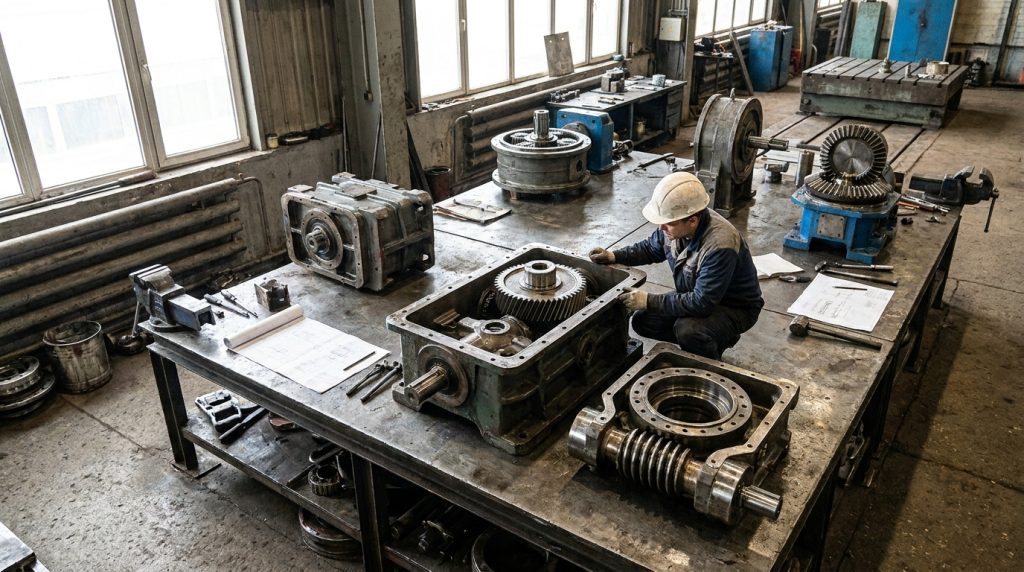
Understanding Industrial Gearbox Types: A Comprehensive Guide for Optimal Performance
In the intricate world of industrial machinery, the industrial gearbox stands as a critical component, silently orchestrating the power and speed of countless operations. From the relentless demands of heavy manufacturing to the precise movements required in automation, gearboxes are the unsung heroes that enable efficient torque transfer and speed reduction. Selecting the right type of industrial gearbox is not merely a matter of specification; it’s a strategic decision that directly impacts operational efficiency, equipment lifespan, energy consumption, and overall profitability. For plant managers, maintenance professionals, industrial engineers, and equipment buyers across diverse sectors like manufacturing, agriculture, and beyond, a thorough understanding of the various types of industrial gearboxes is paramount. This comprehensive guide, brought to you by CEM Industrial Supply, your trusted partner in Coldwater, Michigan, delves deep into the characteristics, applications, and selection criteria of the most prevalent industrial gearbox designs. Our aim is to equip you with the knowledge to make informed decisions, optimize your machinery, and ensure reliable, long-term performance.
In addition to exploring the various types of industrial gearboxes, you may find it beneficial to read about the importance of using the correct tools for specific tasks, such as screwdrivers. A related article titled “Phillips vs. JIS: Why You Strip Screws” provides valuable insights into the differences between these two types of screwdrivers and how using the wrong tool can lead to damage and inefficiency. For more information, you can check out the article here: Phillips vs. JIS: Why You Strip Screws.
The Fundamental Role of Industrial Gearboxes in Power Transmission
At its core, an industrial gearbox is a mechanical system designed to transmit rotational power from a prime mover (typically an electric motor or engine) to a driven load. Its primary functions are to:
Torque Amplification and Speed Reduction
The most fundamental purpose of a gearbox is to increase torque while simultaneously reducing rotational speed. This is crucial because most industrial electric motors operate at high speeds but produce relatively low torque. By employing a gear train, the gearbox multiplies the available torque at a lower, more manageable speed, allowing machinery to perform tasks requiring significant force, such as lifting heavy loads, crushing materials, or driving large conveyor belts. The relationship is generally inverse: as speed decreases, torque increases proportionally, assuming ideal conditions.
Changing Rotational Direction
Gearboxes can also be configured to alter the direction of rotation. For instance, a simple bevel gear setup can take a horizontal input shaft and produce a vertical output shaft, or vice versa, enabling complex motion control within a machine. This flexibility is essential for various material handling systems, processing equipment, and robotic applications.
Modifying Shaft Orientation
Similar to changing rotational direction, gearboxes can alter the spatial orientation of shafts. Spur gears, for example, have parallel input and output shafts, while worm gears can have perpendicular shafts, offering significant design advantages in confined spaces or specific operational layouts.
Enhancing Load Capacity and Efficiency
By distributing the load across multiple gear teeth and utilizing carefully selected materials and lubrication, gearboxes can handle immense forces that would otherwise overload the prime mover. Furthermore, a well-designed and properly maintained gearbox operates with high efficiency, minimizing energy losses and reducing operational costs.
The selection of the appropriate industrial gearbox type hinges on a detailed analysis of these functional requirements, alongside considerations of load, duty cycle, operating environment, and maintenance accessibility.
Exploring the Main Types of Industrial Gearboxes and Their Applications
The landscape of industrial gearbox technology is diverse, with each type offering unique advantages suited to specific applications. Understanding these distinctions is key to making the optimal choice.
Spur Gearboxes
Spur gearboxes are characterized by their cylindrical gears with teeth cut parallel to the axis of rotation. They are the simplest and most common type of industrial gearbox.
Design and Functionality
In a spur gearbox, gears mesh with their teeth aligned in a straight line. This direct meshing creates a positive drive, meaning the output shaft’s rotation is directly dictated by the input shaft’s rotation and the gear ratio. They are known for their high efficiency, often exceeding 95% for single-stage units.
Advantages
- High Efficiency: Minimal energy loss during power transmission.
- Cost-Effectiveness: Relatively simple to manufacture, making them an economical choice.
- Ease of Maintenance: Simpler designs generally lead to easier repair and part replacement.
- Quiet Operation: Compared to some other gear types, spur gears tend to operate more quietly.
- High Load Capacity: Can handle significant torque loads when appropriately sized.
Disadvantages
- Limited Gear Ratios: Achieving very high gear ratios typically requires multiple stages, increasing size and complexity.
- Parallel Shafts Only: Cannot change the orientation of the input and output shafts; they must remain parallel.
- Potential for Noise at High Speeds: While generally quiet, high-speed operation can introduce audible noise.
Common Applications
Spur gearboxes are ubiquitous in a wide range of industries due to their versatility and cost-effectiveness. They are commonly found in:
- Conveyor Systems: Driving belts and rollers in manufacturing and distribution centers.
- Packaging Machinery: Providing precise speed and torque for filling, sealing, and labeling.
- Textile Machinery: Regulating the speed of spinning and weaving operations.
- Machine Tools: Powering spindles and feed mechanisms.
- Small Appliances and Consumer Goods: Used in washing machines, blenders, and other household items where compactness and cost are key.
Helical Gearboxes
Helical gearboxes utilize gears with teeth cut at an angle to the axis of rotation. This helical design offers smoother and quieter operation compared to spur gears.
Design and Functionality
The angled teeth of helical gears engage gradually and smoothly. Instead of the entire tooth face meshing at once, the contact starts at one end of the tooth and progresses across its length. This gradual engagement reduces shock and vibration, leading to quieter operation and increased load-carrying capacity. Like spur gears, helical gears typically have parallel shafts.
Advantages
- Quieter Operation: Significantly less noise and vibration than spur gears.
- Higher Load Capacity: The gradual engagement allows for more teeth to be in contact simultaneously, distributing the load more effectively.
- Smoother Power Transmission: Reduced shock leads to a more consistent and stable output.
- Increased Durability: The smoother operation contributes to longer gear life.
Disadvantages
- Axial Thrust: The helical angle creates an axial thrust force along the shaft, which requires robust bearing support to counteract.
- Lower Efficiency (Slightly): Due to the angled tooth engagement and friction, helical gearboxes are generally slightly less efficient than spur gearboxes, though the difference is often negligible in practical applications.
- Higher Cost: The more complex tooth geometry can make them slightly more expensive to manufacture than spur gears.
Common Applications
Helical gearboxes are a preferred choice when smooth, quiet, and high-torque applications are required. They are prevalent in:
- Industrial Drives: For pumps, fans, and compressors in manufacturing plants.
- Heavy-Duty Conveyors: Where smooth acceleration and deceleration are critical.
- Elevators and Escalators: Providing reliable and quiet power for passenger transport.
- Gearmotors: Often integrated with motors for compact power transmission solutions.
- Automotive Transmissions: Though often more complex, the principle of helical gearing is widely used.
Bevel Gearboxes
Bevel gearboxes are designed to transmit power between shafts that intersect, most commonly at a 90-degree angle.
Design and Functionality
Bevel gears have a conical shape, with teeth cut along the conical surface. When two bevel gears mesh, their apexes meet at a single point, allowing for power transmission between intersecting shafts. The most common type is the straight bevel gear, but spiral bevel gears offer smoother and quieter operation due to their curved teeth, similar to helical gears.
Advantages
- Shaft Angle Change: The primary advantage is the ability to transmit power between intersecting shafts, typically at 90 degrees.
- Compact Design: Can offer a more compact solution when a change in shaft orientation is needed compared to using universal joints with parallel shaft gearboxes.
- High Torque Transmission: Capable of handling significant torque loads.
Disadvantages
- Lower Efficiency: Generally less efficient than spur or helical gearboxes due to the complex tooth geometry and contact patterns.
- Increased Noise and Vibration: Especially straight bevel gears can be noisy and prone to vibration. Spiral bevel gears mitigate this but are more complex.
- Precision Machining Required: Accurate meshing is critical for proper function, requiring precise manufacturing.
- Axial Thrust: Similar to helical gears, bevel gears generate axial thrust, requiring specialized bearings.
Common Applications
Bevel gearboxes are essential in applications where a change in shaft direction is necessary without compromising power transmission capabilities. They are found in:
- Industrial Mixers and Agitators: Changing the orientation of drive shafts for mixing tanks.
- Automotive Differentials: Allowing wheels to rotate at different speeds while transmitting power from the engine.
- Agricultural Machinery: Such as PTO (Power Take-Off) drives for implements.
- Machine Tools: For driving cutting tools or workpieces at different angles.
- Offset Drives: In various industrial equipment where space constraints dictate a non-linear power flow.
Worm Gearboxes
Worm gearboxes feature a screw-like component (the worm) that meshes with a gear (the worm wheel). They are known for their ability to achieve very high gear ratios in a single stage and their self-locking capabilities.
Design and Functionality
The worm, resembling a screw thread, drives the worm wheel, which is typically a bronze alloy with a concave tooth profile to maximize contact. The motion is perpendicular between the input (worm) and output (worm wheel) shafts. The sliding friction between the worm and wheel is significant.
Advantages
- Very High Gear Ratios: Capable of achieving extremely high reduction ratios in a single stage, making them ideal for applications requiring significant speed reduction.
- Self-Locking Capability: In many configurations, the worm gear arrangement is self-locking, meaning the output shaft cannot drive the input shaft backwards. This is a crucial safety feature in applications like hoists and cranes.
- Compact Design: Can provide high reduction ratios in a relatively small package.
- Quiet Operation: Generally operate very quietly due to the sliding contact.
Disadvantages
- Low Efficiency: The sliding friction between the worm and wheel results in lower efficiency, typically ranging from 50% to 90% depending on the ratio and configuration. This can lead to higher energy consumption and heat generation.
- Heat Generation: The inherent inefficiency leads to significant heat generation, often requiring specific lubrication and cooling strategies.
- Wear: The bronze worm wheel is designed to wear down over time, acting as a sacrificial component to protect the harder steel worm. This necessitates periodic replacement of the worm wheel.
- Single Direction of Engagement: Generally, the worm drives the wheel, but not vice-versa, especially in self-locking configurations.
Common Applications
Worm gearboxes are chosen for applications demanding high reduction ratios, precise positioning, or the need for self-locking mechanisms. They are found in:
- Lifting Equipment: Hoists, cranes, and winches, utilizing their self-locking feature for safety.
- Conveyor Systems: Particularly for precise speed control and holding loads.
- Indexing Tables: For precise rotational positioning in manufacturing processes.
- Actuators: Providing controlled linear or rotary motion.
- Material Handling Equipment: Where accurate and controlled movement is paramount.
Planetary Gearboxes
Planetary gearboxes, also known as epicyclic gearboxes, are highly efficient and compact power transmission devices that use a sun gear, planet gears, and a ring gear.
Design and Functionality
The core of a planetary gearbox consists of a central sun gear, several planet gears that orbit the sun gear, and an outer ring gear with internal teeth. The planet gears are mounted on a carrier. By holding or driving different components (sun, ring, or carrier), various gear ratios and output configurations can be achieved.
Advantages
- High Power Density: Can transmit significant torque in a very compact and lightweight package.
- High Efficiency: Typically offer high efficiency due to the load being distributed among multiple planet gears.
- Coaxial Input/Output Shafts: The input and output shafts are concentric, simplifying system design.
- Versatility: Can be configured to provide reduction, increase, or reversal of rotation.
- Durability: Even load distribution leads to reduced wear on individual components.
Disadvantages
- Complexity: The intricate arrangement of components makes them more complex to manufacture and potentially more expensive than simpler gearbox types.
- Maintenance: While durable, servicing complex internal components can be more challenging.
- Cost: Generally more expensive than spur or helical gearboxes due to their complexity and precision requirements.
Common Applications
Planetary gearboxes are favored in applications where high torque, compactness, and efficiency are critical. They are widely used in:
- Robotics: Providing precise and powerful motion for robotic arms.
- Aerospace: In landing gear systems and other critical flight controls.
- Automotive Transmissions: Especially in automatic transmissions for smooth shifting and efficiency.
- Industrial Automation: For servo drives and precision positioning systems.
- Wind Turbines: For converting the low-speed rotation of the rotor to the high speed required by the generator.
- Construction Equipment: In heavy-duty vehicles for drivetrain applications.
Choosing the Right Industrial Gearbox: Key Selection Criteria
Selecting the optimal industrial gearbox requires a systematic approach, considering a multitude of factors beyond just the desired gear ratio.
Load Requirements
- Torque: The most critical factor. Determine the peak torque, continuous torque, and starting torque required by the driven equipment. Ensure the gearbox is rated to handle these loads with an appropriate service factor.
- Speed: Specify the input speed from the prime mover and the desired output speed for the application. Calculate the required gear ratio (Input Speed / Output Speed).
- Duty Cycle: Consider how often and for how long the equipment will operate. Continuous duty (24/7) requires a more robust gearbox than intermittent duty.
Application-Specific Factors
- Environment: The operating environment plays a significant role. Consider temperature extremes, dust, moisture, corrosive elements, and potential for shock loads. Special seals, materials, or coatings may be necessary.
- Shaft Orientation: Determine if the input and output shafts need to be parallel (spur, helical), intersecting (bevel), or can be coaxial (planetary, some worm).
- Noise and Vibration: In noise-sensitive environments or applications requiring smooth operation, helical or planetary gearboxes may be preferred over spur or straight bevel gears.
- Efficiency Requirements: For energy-intensive applications, higher efficiency gearboxes (spur, helical, planetary) can lead to substantial long-term cost savings.
- Space Constraints: Compactness is a key consideration in many applications. Planetary and worm gearboxes often offer high power density for their size.
- Backlash: The amount of “play” between gear teeth. For precision applications like robotics or indexing, minimal backlash is crucial. Planetary gearboxes generally offer low backlash.
Maintenance and Reliability
- Maintenance Accessibility: Consider how easily the gearbox can be accessed for lubrication, inspection, and repair.
- Lubrication Requirements: Different gearbox types and operating conditions require specific types and schedules of lubrication.
- Expected Lifespan: The durability and expected service life of the gearbox are crucial for total cost of ownership.
- Availability of Spare Parts: Ensure that spare parts are readily available to minimize downtime in case of failure.
Power Source and Mounting
- Prime Mover Type: The type and power of the motor or engine will influence gearbox selection.
- Mounting Configuration: Consider how the gearbox will be mounted – foot-mounted, flange-mounted, or shaft-mounted.
Technical Standards: Adherence to relevant technical standards, such as AGMA (American Gear Manufacturers Association) standards, ensures that gearboxes are designed and manufactured to specified performance and quality levels. CEM Industrial Supply works with manufacturers who adhere to these critical industry benchmarks.
When exploring the various types of industrial gearboxes, it’s also beneficial to consider how to maintain the equipment that relies on these components for optimal performance. For instance, an insightful article on power tool maintenance offers valuable tips to extend the life of your equipment, which can be crucial for ensuring the longevity of gearboxes as well. You can read more about these essential maintenance practices in the article found here.
Troubleshooting Common Industrial Gearbox Issues
Even the most robust industrial gearboxes can encounter issues over time. Proactive troubleshooting and understanding common problems can prevent minor issues from escalating into costly failures.
Excessive Noise and Vibration
- Causes: Misalignment, worn or damaged gears, insufficient lubrication, loose mounting, bearing failure, or imbalance in rotating components.
- Troubleshooting Steps:
- Check alignment of input and output shafts.
- Inspect gears for wear, pitting, or broken teeth.
- Verify lubrication levels and type.
- Ensure all mounting bolts are secure.
- Listen for specific sounds (grinding, knocking) that can indicate bearing issues.
- CEM Insight: Misalignment is a frequent culprit for noise and premature wear. Regular alignment checks are essential.
Overheating
- Causes: Insufficient lubrication, incorrect lubricant type, excessive load, high ambient temperature, or internal friction from worn components.
- Troubleshooting Steps:
- Check oil level and condition. Change lubricant if it appears degraded or contaminated.
- Verify the gearbox is not overloaded.
- Ensure adequate ventilation around the gearbox.
- Inspect for internal wear that could be increasing friction.
- CEM Insight: Overheating can rapidly degrade lubricant and damage internal components. Prompt attention is required.
Oil Leaks
- Causes: Worn or damaged seals, loose gaskets, cracked housing, or overfilling of lubricant.
- Troubleshooting Steps:
- Inspect all seals (shaft seals, housing seals) for damage or wear.
- Check tightness of all bolts and covers.
- Ensure the correct amount of lubricant is used.
- CEM Insight: Oil leaks not only lead to lubricant loss but can also introduce contaminants into the gearbox.
Inconsistent Output Speed or Torque
- Causes: Slipping clutches (if applicable), worn gears, lubrication issues, or issues with the prime mover.
- Troubleshooting Steps:
- Check the condition of gears and mating surfaces.
- Review lubrication practices.
- Ensure the prime mover is operating at a consistent speed.
- CEM Insight: This symptom can sometimes indicate developing internal wear or a problem with the power source.
Industrial Gearbox Maintenance and Longevity
Proper maintenance is the cornerstone of extending the lifespan and ensuring the reliable operation of any industrial gearbox. A structured preventive maintenance program can significantly reduce the likelihood of unexpected failures.
Lubrication Management
- Regular Checks: Visually inspect oil levels and color for signs of contamination or degradation at scheduled intervals.
- Correct Lubricant: Use only the lubricant recommended by the manufacturer for the specific gearbox type and operating conditions. Factors like viscosity, temperature range, and EP (Extreme Pressure) additives are critical.
- Scheduled Oil Changes: Adhere to manufacturer-recommended oil change intervals. These intervals are often based on operating hours, load, and environmental conditions.
- Filtration: Consider using external oil filters for critical applications to maintain lubricant cleanliness.
Alignment and Mounting Integrity
- Periodic Alignment Checks: Ensure the gearbox remains properly aligned with the motor and driven equipment. Misalignment is a leading cause of premature failure.
- Bolt Tightness: Regularly check and tighten mounting bolts and fasteners to prevent vibration and looseness.
Inspection and Monitoring
- Visual Inspections: Conduct regular visual inspections for oil leaks, external damage, unusual noises, or vibrations.
- Vibration Analysis: For critical applications, periodic vibration analysis can detect early signs of bearing wear or gear damage.
- Temperature Monitoring: Use infrared thermometers or embedded sensors to monitor gearbox operating temperatures. Sudden spikes can indicate a problem.
Cleaning and Environment Control
- External Cleaning: Keep the exterior of the gearbox clean to prevent dust and debris from entering through seals.
- Ventilation: Ensure adequate ventilation around the gearbox to dissipate heat.
Safety Considerations for Industrial Gearboxes
Working with industrial machinery inherently carries risks, and industrial gearboxes are no exception. Adhering to strict safety protocols is non-negotiable.
- Lockout/Tagout (LOTO): Always ensure that the power source is de-energized and locked out before performing any maintenance, inspection, or repair on a gearbox or connected equipment.
- Personal Protective Equipment (PPE): Wear appropriate PPE, including safety glasses, gloves, and hearing protection, when working near operating machinery or performing maintenance.
- Guardrails and Guards: Ensure that all rotating components are properly guarded to prevent accidental contact.
- Hot Surfaces: Be aware that gearboxes can operate at high temperatures. Allow sufficient time for cooling before touching any components.
- Lubricant Handling: Handle lubricants responsibly, following safety data sheets (SDS) for proper disposal and avoiding skin contact.
- Qualified Personnel: Only trained and qualified personnel should perform maintenance or repairs on industrial gearboxes.
CEM Industrial Supply: Your Partner for Gearbox Solutions in Coldwater, Michigan
At CEM Industrial Supply, we understand the critical role that reliable industrial gearboxes play in the success of your operations. Based here in Coldwater, Michigan, we are dedicated to providing our clients with top-tier products and expert services to keep your machinery running efficiently and safely.
Whether you are facing a sudden breakdown or planning for proactive maintenance, our team has the knowledge and resources to assist you. We offer a comprehensive range of industrial gearboxes from reputable manufacturers, catering to the diverse needs of manufacturing, agriculture, and beyond.
Need Industrial Gearbox Repair or Rebuilding Services?
Unexpected gearbox failures can bring your entire production line to a halt. CEM Industrial Supply offers expert industrial gearbox repair and rebuilding services. Our experienced technicians can diagnose issues, perform necessary repairs, and ensure your gearbox is restored to optimal performance. We handle a wide variety of gearbox types, bringing them back to life with precision and efficiency.
Custom Gearbox Solutions:
For unique applications or when off-the-shelf solutions don’t quite fit, CEM Industrial Supply can help explore custom gearbox solutions. We work with you to understand your specific requirements and connect you with the right engineering and manufacturing capabilities to design and deliver a tailored gearbox that meets your exact needs.
Frequently Asked Questions About Industrial Gearboxes
This section addresses common queries regarding industrial gearboxes to provide further clarity.
1. How do I calculate the correct gear ratio for my application?
The gear ratio is calculated by dividing the input speed (from the motor) by the desired output speed (for the driven equipment). For example, if your motor runs at 1800 RPM and you need an output speed of 300 RPM, your required gear ratio is 1800 / 300 = 6:1. Always factor in potential speed variations and consider service factors when determining the final gearbox selection.
2. What is a “service factor” in relation to industrial gearboxes?
A service factor is a multiplier that accounts for varying operating conditions, load fluctuations, and the duty cycle of the application. It’s used to increase the required capacity of the gearbox beyond the calculated base torque. A higher service factor indicates a more demanding application, requiring a more robust gearbox than the nominal rating might suggest. For instance, a moderate shock load application might require a service factor of 1.25, while a heavy shock load could necessitate a factor of 2.0 or higher.
3. How often should I lubricate my industrial gearbox?
Lubrication intervals depend heavily on the gearbox type, manufacturer recommendations, operating conditions (temperature, load, speed), and the type of lubricant used. For many industrial gearboxes, regular checks should be performed daily or weekly, with scheduled oil changes ranging from several hundred to several thousand operating hours. Always consult the manufacturer’s documentation for precise lubrication schedules.
4. What is the difference between a right-angle and a parallel-shaft gearbox?
A parallel-shaft gearbox transmits power between shafts that are parallel to each other, such as in spur and helical gearboxes. A right-angle gearbox, like a bevel gearbox, transmits power between shafts that intersect, most commonly at a 90-degree angle. This distinction is fundamental to how power is routed within a machine.
5. Can I use a standard electric motor with any industrial gearbox?
While standard electric motors are common prime movers, compatibility with a specific industrial gearbox depends on matching the motor’s shaft size, mounting pattern, and rotational speed to the gearbox’s input specifications. Often, gearboxes are supplied as integrated gearmotors, where the motor and gearbox are designed to work together seamlessly.
Conclusion: Optimizing Your Operations with the Right Gearbox Solution
The selection, operation, and maintenance of industrial gearboxes are foundational to the efficiency and longevity of your industrial equipment. By understanding the nuances of different types of industrial gearboxes, adhering to best practices in maintenance and safety, and proactively addressing potential issues, you can significantly enhance your operational performance.
CEM Industrial Supply is your trusted resource for all your industrial gearbox needs. Whether you require expert advice on selecting the perfect gearbox for a new application, need prompt and reliable industrial gearbox repair, or are seeking custom solutions, our team in Coldwater, Michigan, is ready to assist.
Don’t let gearbox inefficiencies or failures impact your productivity. Contact CEM Industrial Supply today to discuss your specific requirements and discover how our expertise can help you achieve optimal performance and a robust return on your industrial equipment investment.