
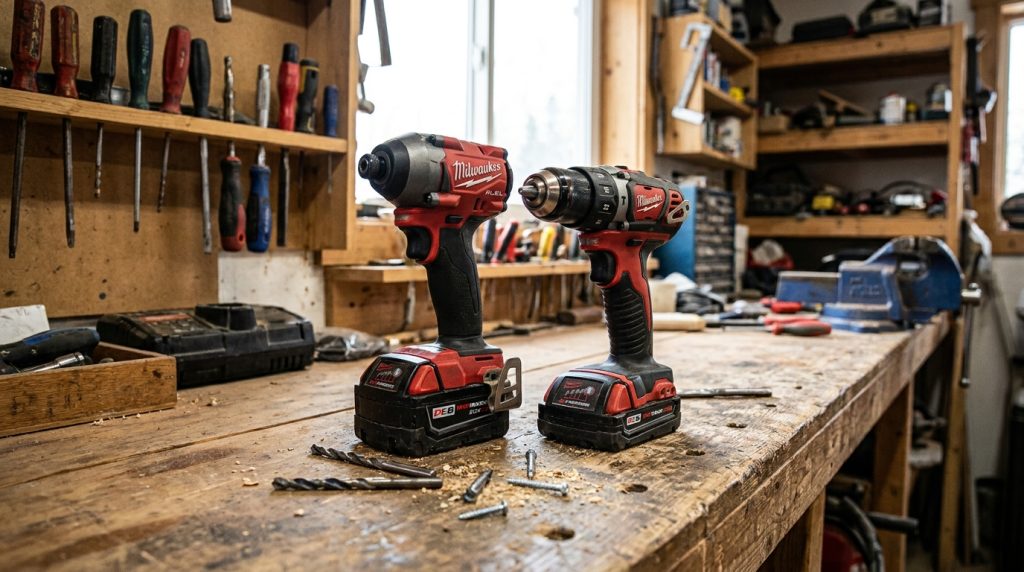
If you work in maintenance, fabrication, construction, agriculture, automotive repair, facilities management, or plant operations, you’ve probably compared Milwaukee’s M18 and M12 cordless tool systems at some point. Both are professional-grade platforms. Both have deep tool lineups. Both are widely used across industrial shops, service trucks, job sites, and maintenance departments throughout Coldwater, Branch County, and Southern Michigan.
The short version:
- Milwaukee M18 tools are built for higher power, longer runtime, and heavier-duty applications.
- Milwaukee M12 tools are built for compact size, lighter weight, tight spaces, and daily service work.
The best choice is not always “the bigger battery.” The right platform depends on the work you do, how long you run tools between charges, how much torque you need, and whether portability or maximum output matters more.
At CEM Industrial Supply, we help contractors, maintenance teams, farmers, manufacturers, municipalities, and tradespeople choose cordless tools, batteries, chargers, abrasives, cutting tools, PPE, fasteners, and shop supplies that make sense for real work—not just spec sheets. This guide breaks down M18 vs M12 in practical terms so you can buy confidently.
When comparing the M18 and M12 platforms, it’s essential to consider their applications and performance characteristics. For those interested in understanding more about motor repairs and the decision-making process involved in whether to rewind, repair, or replace a motor, a related article can provide valuable insights. You can read more about this topic in the article titled “Motor Repair: When to Rewind, Repair, or Replace” available at this link.
Understanding the Milwaukee M18 Platform
Milwaukee’s M18 system is an 18-volt cordless tool platform designed for professional and industrial use. It includes drills, impact drivers, grinders, saws, rotary hammers, impact wrenches, lighting, pumps, outdoor power equipment, and specialty trade tools.
What M18 Tools Are Best Known For
M18 tools are known for:
- Higher torque and cutting power
- Longer runtime with larger battery packs
- Better performance for heavy-duty work
- A wide selection of jobsite and industrial tools
- Excellent compatibility across the M18 battery system
If you are drilling large holes, cutting steel, grinding welds, driving structural fasteners, running an impact wrench, or working all day away from a charger, M18 is usually the stronger choice.
Common M18 Applications
M18 cordless tools are commonly used for:
- Industrial maintenance
- Metal fabrication
- Concrete drilling and anchoring
- Automotive and fleet repair
- Agricultural equipment maintenance
- Electrical and mechanical contracting
- Construction and remodeling
- Municipal and utility work
- Heavy fastening and drilling
- Cutting pipe, strut, lumber, and metal stock
For many CEM customers in Coldwater and Branch County, M18 tools are the backbone of service trucks, maintenance shops, and field repair kits.
M18 Battery Options
The M18 platform offers multiple battery sizes, including compact packs and high-output batteries. Larger amp-hour batteries provide more runtime and better sustained performance for demanding tools.
Typical M18 battery categories include:
| Battery Type | Best For | Key Advantage |
||||
| Compact M18 batteries | Drills, drivers, lights | Lower weight |
| XC extended capacity batteries | Saws, grinders, impacts | More runtime |
| High Output batteries | Heavy-duty cutting, grinding, drilling | Higher sustained power |
| Forge-style advanced packs | Maximum output and faster productivity | Premium performance |
A compact M18 battery can make a drill feel more balanced, while a high-output battery can dramatically improve performance on tools like grinders, circular saws, and rotary hammers.
Understanding the Milwaukee M12 Platform
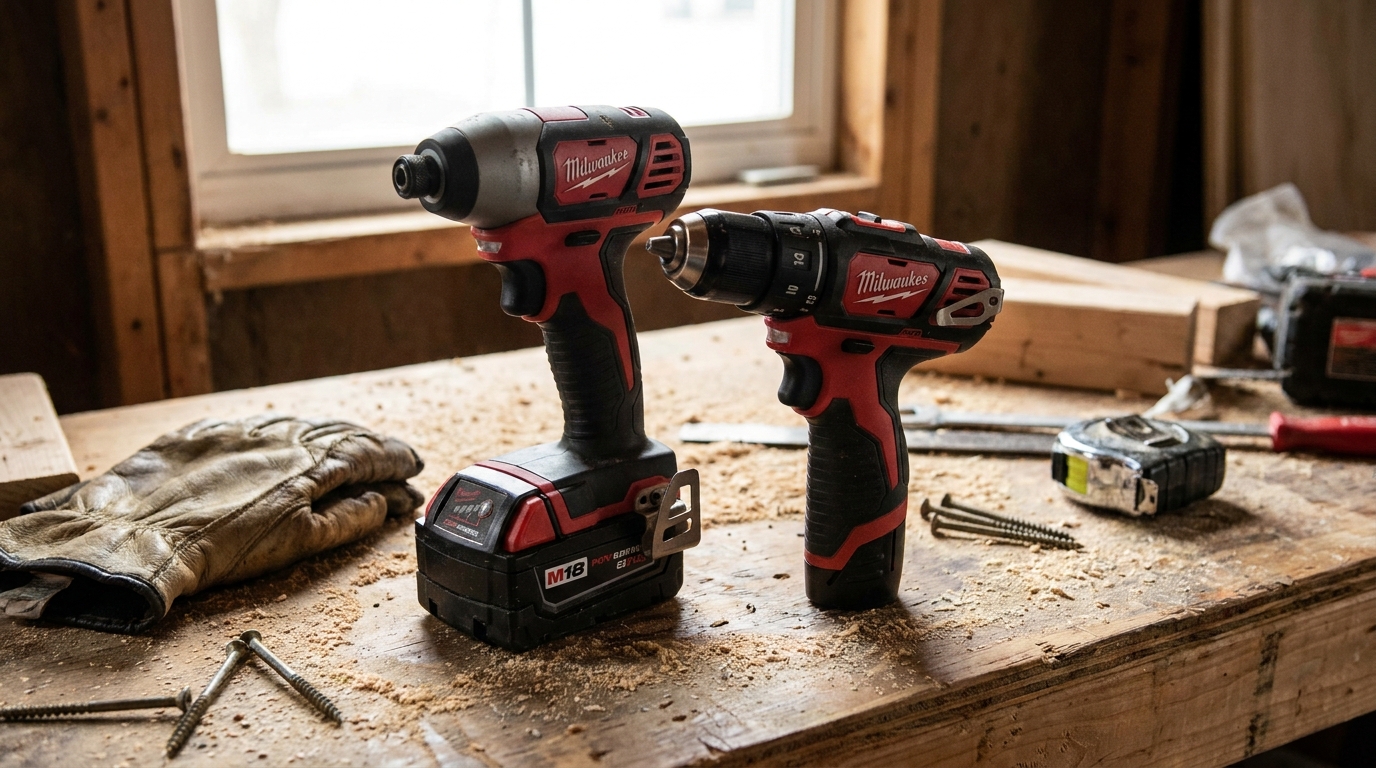
Milwaukee’s M12 system is a 12-volt cordless platform designed around compact size, control, and accessibility. Despite being smaller than M18, M12 tools are not “homeowner only” tools. Many professional technicians rely on M12 every day.
What M12 Tools Are Best Known For
M12 tools are known for:
- Compact size
- Lightweight design
- Excellent access in tight spaces
- Lower fatigue during repetitive tasks
- Precision and control
- Strong performance for service and maintenance work
M12 is especially valuable when you are working under dashboards, inside control cabinets, around machinery, in mechanical rooms, or on overhead tasks where every ounce matters.
Common M12 Applications
M12 cordless tools are commonly used for:
- Electrical service
- HVAC maintenance
- Automotive interiors and engine bay work
- Light assembly
- Instrumentation and controls
- Cabinet and fixture installation
- Plumbing service
- Low-voltage and telecom work
- Preventive maintenance routes
- Light drilling and fastening
In many industrial environments, M12 is the platform technicians keep close because it is fast, comfortable, and easy to carry.
M12 Battery Options
M12 batteries are smaller than M18 batteries and insert into the handle of most M12 tools. They are available in compact and extended-capacity versions.
| Battery Type | Best For | Key Advantage |
||||
| Compact M12 batteries | Screwdrivers, ratchets, lights | Minimal weight |
| XC M12 batteries | Impacts, saws, specialty tools | More runtime and stability |
| High Output M12 batteries | Higher-demand M12 tools | Improved power delivery |
An M12 compact battery is excellent for low-fatigue fastening. An M12 XC battery can improve grip stability and runtime on tools like M12 impact drivers, ratchets, and cutoff tools.
Please visit our latest post at https://cemindustrialsupply.com/news/ for more information.
M18 vs M12: Side-by-Side Comparison
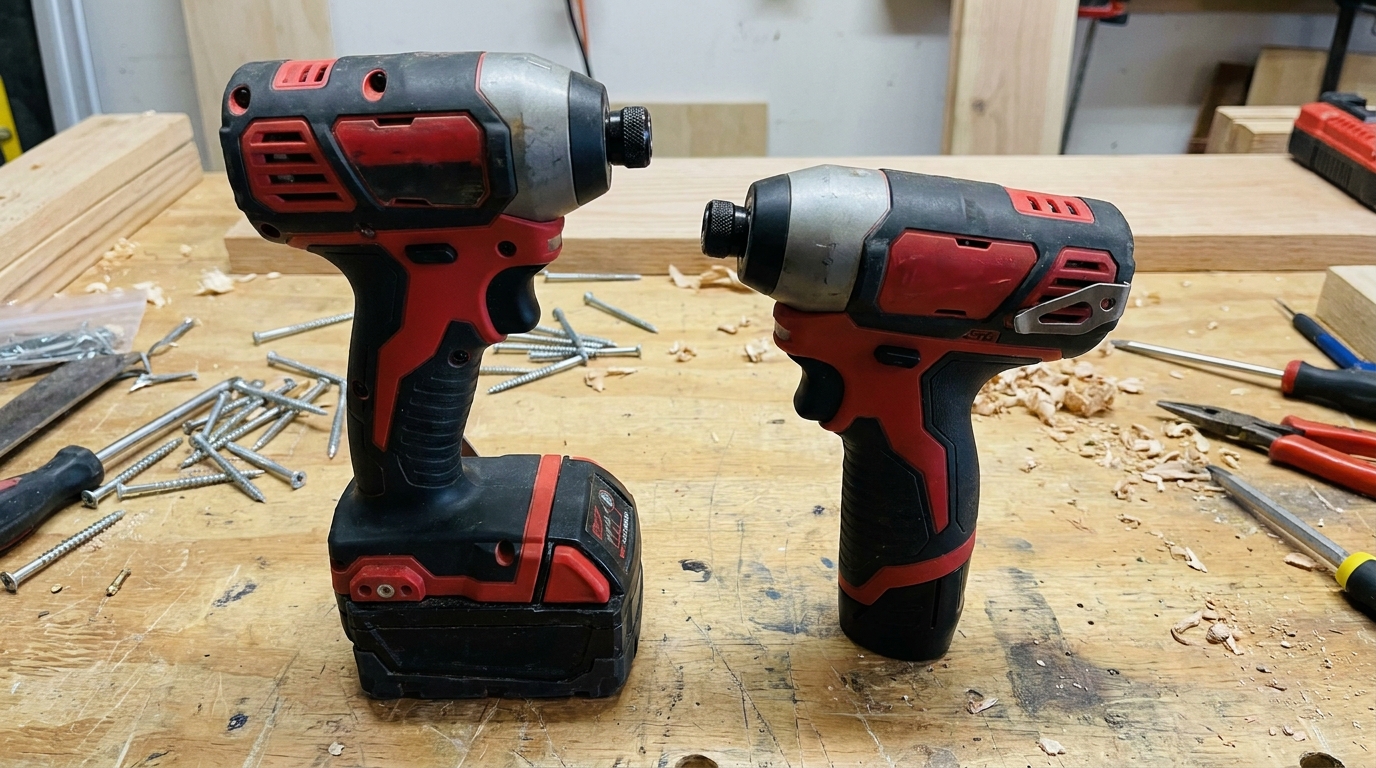
Choosing between M18 and M12 is easier when you compare the platforms by real-world factors: power, runtime, weight, tool selection, cost, and job type.
Quick Comparison Table
| Category | Milwaukee M18 | Milwaukee M12 |
||||
| Voltage | 18V | 12V |
| Best For | Heavy-duty work | Compact service work |
| Power | Higher | Moderate to strong |
| Runtime | Longer with larger packs | Shorter, but efficient |
| Weight | Heavier | Lighter |
| Tool Size | Larger | Smaller |
| Tight-Space Access | Good, but limited by size | Excellent |
| Fatigue Reduction | Depends on battery/tool | Excellent |
| Cost | Usually higher | Often lower |
| Battery Size | Larger | Smaller |
| Industrial Use | Excellent | Excellent for service tasks |
| Best Users | Contractors, fabricators, mechanics, maintenance crews | Technicians, electricians, HVAC, automotive, assembly |
Power and Torque
If you need maximum torque, M18 usually wins. This matters for:
- Removing rusted bolts
- Driving large lag screws
- Drilling big holes
- Cutting heavy material
- Grinding welds
- Anchoring into concrete
- Using high-demand saws
M12 tools are impressive for their size, but they are not intended to replace M18 in every high-load application. For example, an M12 impact driver may be perfect for small fasteners and electrical work, while an M18 impact driver is better for larger structural screws and repetitive heavy fastening.
Size and Weight
M12 wins when size and weight are the priority.
That matters when you are:
- Working overhead
- Carrying tools all day
- Working inside machinery
- Accessing tight spaces
- Reaching under vehicles
- Completing repetitive fastening tasks
- Working from ladders or lifts
A smaller tool can improve safety and productivity because the operator has better control and experiences less fatigue.
Runtime
M18 generally provides longer runtime, especially with XC and High Output batteries. This is important for:
- All-day field work
- Remote farm repairs
- Construction sites without easy power access
- Municipal maintenance routes
- Heavy grinding or cutting
- Repeated drilling and fastening
M12 runtime is very good for its size, but the smaller battery capacity means you may want extra charged batteries if you use M12 tools heavily throughout the day.
Tool Selection
Both platforms have large tool selections, but they serve different purposes.
M18 has more heavy-duty tools such as:
- Circular saws
- Reciprocating saws
- Grinders
- Rotary hammers
- High-torque impact wrenches
- Outdoor power equipment
- Larger lighting systems
- Pumps and jobsite equipment
M12 has many compact specialty tools such as:
- Ratchets
- Screwdrivers
- Inspection tools
- Tubing cutters
- Compact impacts
- Installation drivers
- Soldering irons
- Heated gear
- Compact lights
- Specialty trade tools
For many professionals, the real answer is not M18 or M12. It is M18 and M12, using each platform where it performs best.
When comparing the M18 and M12 tool systems, it’s essential to consider their respective advantages and applications for different projects. For a deeper understanding of how to effectively choose tools for your needs, you can refer to a comprehensive guide that discusses various aspects of tool selection. This article provides valuable insights that can help you make informed decisions about which system might be best suited for your tasks. You can read more about it in this guide to choosing tools effectively.
Which Platform Is Better for Industrial and Maintenance Work?
Industrial work often includes a wide range of tasks. One hour you may be opening machine guards and replacing sensors. The next hour you may be drilling steel brackets, cutting threaded rod, or removing stubborn fasteners from equipment.
That is why many maintenance departments use both platforms.
When M18 Is the Better Choice
Choose M18 when you need:
- Maximum power
- Longer runtime
- Heavy drilling capability
- Stronger cutting performance
- Better grinding performance
- Higher torque impact wrenches
- Better performance with larger bits and blades
- Fewer battery changes during demanding work
M18 is typically the better platform for heavy-duty maintenance involving conveyors, pumps, motors, steel frames, machine bases, agricultural equipment, trucks, trailers, and plant infrastructure.
When M12 Is the Better Choice
Choose M12 when you need:
- Compact access
- Lighter tools
- Better control
- Reduced fatigue
- Precision fastening
- Daily service convenience
- Easier storage in a tool bag
- A practical option for mobile technicians
M12 is excellent for controls work, light mechanical service, small fasteners, panels, fixtures, automotive interiors, HVAC service, and general preventive maintenance.
Best Setup for Maintenance Teams
A strong maintenance setup may include:
| Tool Need | Recommended Platform |
|||
| General drill/driver | M18 or M12 depending on workload |
| Compact screwdriver | M12 |
| Impact driver | M18 for heavy fastening, M12 for light/medium |
| Impact wrench | M18 for high torque, M12 for compact access |
| Grinder | M18 |
| Reciprocating saw | M18 |
| Ratchet | M12 |
| Work light | Either platform |
| Inspection camera | M12 |
| Rotary hammer | M18 |
| Cutoff tool | M12 for compact, M18 for heavier cutting |
For facilities in Southern Michigan that maintain production equipment, farm machinery, fleet vehicles, and building systems, this blended approach often delivers the best productivity.
M18 vs M12 for Specific Trades and Applications
Different trades need different tools. Here is how M18 and M12 compare in common professional environments.
Automotive and Fleet Repair
Automotive technicians often love M12 because compact tools fit into engine bays, wheel wells, dashboards, and underbody spaces.
Best M12 choices for automotive work include:
- M12 ratchets
- M12 stubby impact wrenches
- M12 screwdrivers
- M12 lights
- M12 die grinders or cutoff tools
- M12 inspection tools
However, M18 is better for heavier jobs such as:
- Lug nuts
- Suspension fasteners
- Rusted bolts
- Truck and trailer work
- Agricultural equipment repair
- Heavy fleet maintenance
For shops in Branch County working on pickups, semis, trailers, tractors, and industrial equipment, an M12 ratchet plus an M18 impact wrench is a very practical combination.
Electrical and Controls Work
M12 is often the preferred platform for electricians and controls technicians because it is compact and precise.
M12 works well for:
- Panel work
- Device installation
- Conduit strap fastening
- Low-voltage systems
- Sensor replacement
- Control cabinet maintenance
- Overhead light-duty fastening
M18 becomes important for:
- Drilling larger holes
- Running hole saws
- Driving anchors
- Cutting strut
- Using rotary hammers
- Pulling wire with powered equipment
A good electrical kit may include an M12 installation driver, M12 screwdriver, M18 hammer drill, M18 bandsaw, and M18 rotary hammer.
HVAC and Plumbing
HVAC and plumbing technicians often benefit from both platforms.
M12 is ideal for:
- Service calls
- Tight mechanical rooms
- Thermostat and control work
- Light fastening
- Tubing tools
- Compact lights
M18 is better for:
- Larger drilling
- Cutting pipe
- Anchoring equipment
- Installing supports
- Heavy-duty saw work
- Outdoor equipment installation
For service vehicles around Coldwater and Southern Michigan, compact M12 tools save space while M18 tools provide power when the job becomes more demanding.
Metal Fabrication and Welding Shops
In fabrication environments, M18 is generally the primary platform. Grinding, cutting, drilling, and heavy fastening require more power and runtime.
M18 is better for:
- Angle grinders
- Reciprocating saws
- Circular saws
- Magnetic drill alternatives for light work
- Heavy-duty drills
- Impact wrenches
- Rotary hammers
M12 still has a place for:
- Deburring light material
- Small fasteners
- Inspection lighting
- Toolroom work
- Fixture adjustment
CEM Industrial Supply also supports fabrication teams with related categories such as abrasives, cutting tools, drill bits, taps, PPE, gloves, eye protection, welding supplies, layout tools, and shop consumables.
Construction and Remodeling
For construction, M18 is usually the primary platform because of its strength and tool range.
M18 is better for:
- Framing
- Decking
- Concrete anchoring
- Cutting lumber
- Cutting metal
- Demolition
- Structural fastening
- Heavy drilling
M12 is useful for:
- Finish work
- Cabinet installation
- Punch-list tasks
- Service work
- Light-duty fastening
- Working in tight spaces
Contractors often keep M12 tools in the finish bag and M18 tools in the main jobsite kit.
Buying Guide: How to Choose Between M18 and M12
Before you buy into either platform—or expand your current setup—ask a few practical questions.
1. What Material Do You Work With Most?
If you mostly work with wood, sheet metal, light fasteners, panels, and equipment covers, M12 may handle much of your workload.
If you regularly work with steel, concrete, large fasteners, heavy pipe, machinery, and structural materials, M18 is the safer choice.
2. How Often Do You Use the Tool?
For occasional light tasks, M12 is convenient and cost-effective. For daily heavy use, M18 generally provides better durability, runtime, and output.
3. Do You Work in Tight Spaces?
If access is limited, M12 can be a major advantage. A smaller tool can fit where an M18 tool cannot.
Examples include:
- Inside electrical panels
- Under sinks
- Behind equipment
- Inside vehicles
- Around pumps and motors
- Above ceiling grids
- In control cabinets
4. Is Weight a Concern?
Tool weight affects safety and productivity. If you work overhead or carry tools all day, M12 may reduce fatigue.
However, don’t choose a lighter tool if it will be overloaded. A tool that is too small for the job can overheat, drain batteries quickly, and slow down the work.
5. Do You Already Own Batteries?
Battery compatibility matters. If your shop already has M18 batteries and chargers, expanding M18 may be more economical. If your technicians already use M12 tools, adding more M12 bare tools can be cost-effective.
Many Milwaukee chargers can charge both M18 and M12 batteries, which makes a mixed platform easier to manage.
6. What Is Your Budget?
M12 tools are often less expensive than comparable M18 tools. M18 batteries, especially larger high-output packs, can also cost more.
But value should be measured by productivity. If an M18 grinder completes a job twice as fast as a smaller tool, the higher upfront cost may pay for itself quickly.
Recommended M18 and M12 Starter Kits
The right kit depends on your work. Below are practical examples for common users.
General Maintenance Starter Kit
| Tool | Platform |
|||
| Drill/driver | M18 |
| Impact driver | M18 |
| Ratchet | M12 |
| Compact screwdriver | M12 |
| Work light | M12 or M18 |
| Reciprocating saw | M18 |
| Angle grinder | M18 |
This gives maintenance teams a strong balance of power and access.
Automotive Service Kit
| Tool | Platform |
|||
| Stubby impact wrench | M12 |
| High-torque impact wrench | M18 |
| Ratchet | M12 |
| Compact light | M12 |
| Drill/driver | M12 or M18 |
| Cutoff tool | M12 |
| Grinder | M18 |
This setup handles both tight-space service and heavy fastener removal.
Contractor Kit
| Tool | Platform |
|||
| Hammer drill | M18 |
| Impact driver | M18 |
| Circular saw | M18 |
| Reciprocating saw | M18 |
| Rotary hammer | M18 |
| Installation driver | M12 |
| Compact light | M12 |
M18 carries the heavy work, while M12 supports finish and punch-list tasks.
Electrical and Controls Kit
| Tool | Platform |
|||
| Installation driver | M12 |
| Screwdriver | M12 |
| Compact impact | M12 |
| Hammer drill | M18 |
| Bandsaw | M18 |
| Rotary hammer | M18 |
| Inspection light | M12 |
This is a strong setup for both panel work and field installation.
Battery and Charger Considerations
Cordless tools are only as productive as the batteries behind them. Choosing the right battery can make a major difference in tool performance.
Amp-Hours Explained
Amp-hours, often listed as Ah, measure battery capacity. In simple terms:
- Higher Ah usually means longer runtime.
- Higher Ah batteries are usually larger and heavier.
- Some high-output batteries also deliver better sustained power.
A compact battery may be ideal for a drill used overhead. A larger battery may be better for a saw or grinder that draws more current.
Don’t Oversize Every Battery
It is tempting to put the largest battery on every tool, but that is not always best. A large battery on a compact driver can make the tool bulky and awkward.
Use compact batteries for:
- Screwdrivers
- Light drilling
- Overhead work
- Tight-space fastening
- Short service tasks
Use larger batteries for:
- Grinders
- Saws
- Rotary hammers
- High-torque impacts
- Heavy drilling
- Long work sessions
Charger Planning for Crews
If you manage a crew or maintenance department, battery charging becomes a workflow issue.
Consider:
- Number of technicians
- Number of tools per person
- Daily runtime demands
- Availability of power on site
- Charging station location
- Spare battery inventory
- Dual-platform charging needs
For Southern Michigan shops and service trucks, it often makes sense to keep a dedicated charging area with labeled batteries, plus vehicle chargers for mobile work.
Maintenance Tips for M18 and M12 Tools
Good tool maintenance extends service life, improves safety, and reduces downtime.
Daily Tool Care
At the end of each shift or job:
- Wipe dust, oil, and debris from tools
- Check vents for blockage
- Inspect battery contacts
- Remove batteries before storage
- Look for cracked housings or loose parts
- Check bits, blades, and accessories for wear
- Store tools in a dry location
Battery Care
To protect battery life:
- Avoid leaving batteries in extreme heat or cold
- Do not store batteries on wet surfaces
- Keep contacts clean
- Use compatible chargers
- Avoid running batteries completely dead repeatedly
- Let overheated batteries cool before charging
- Rotate batteries so one pack is not used constantly
Cold weather can reduce battery performance temporarily. In Branch County winters, store batteries indoors when possible and keep spares warm until needed.
Accessory Maintenance
Tool performance depends heavily on accessories. A premium cordless drill will still perform poorly with a dull bit.
Inspect and replace:
- Drill bits
- Hole saws
- Driver bits
- Saw blades
- Grinding wheels
- Cutoff wheels
- Sanding discs
- Fastener sockets
- Impact-rated adapters
CEM Industrial Supply can support tool performance with related industrial supply categories such as abrasives, cutting tools, fasteners, anchors, hand tools, lubricants, safety products, and shop supplies.
Safety Tips for M18 and M12 Cordless Tools
Cordless does not mean risk-free. M18 and M12 tools are powerful enough to cause serious injury if used incorrectly.
Personal Protective Equipment
Use the right PPE for the task, including:
- Safety glasses
- Face shields for grinding and cutting
- Hearing protection
- Cut-resistant gloves where appropriate
- Respiratory protection for dust-producing work
- Steel-toe or safety footwear
- Hi-vis gear for jobsite or roadside work
For grinding, cutting, drilling overhead, and metalworking, eye and face protection are especially important.
Safe Tool Operation
Follow these basic rules:
- Use the correct tool for the job
- Match accessories to tool speed ratings
- Use impact-rated sockets on impact wrenches
- Secure the workpiece before cutting or drilling
- Keep hands away from blades, bits, and wheels
- Remove battery before changing accessories
- Do not bypass guards
- Do not use damaged batteries
- Keep cords from chargers away from wet areas
- Read manufacturer instructions before use
Avoid Overloading the Tool
If a tool is slowing down, overheating, or draining batteries unusually fast, it may be undersized for the task.
For example:
- Use M18 instead of M12 for heavy drilling.
- Use a larger battery on high-draw tools.
- Use sharp blades and bits.
- Let the tool do the work instead of forcing it.
- Step up to a corded or pneumatic tool when required.
Choosing the correct platform is a safety decision as much as a productivity decision.
Practical Checklist: M18 or M12?
Use this checklist before buying.
Choose M18 If You Need:
- Heavy-duty cutting
- High torque
- Long runtime
- Concrete drilling
- Grinding capability
- Large hole drilling
- Structural fastening
- Industrial maintenance power
- Outdoor power equipment options
- Better performance under load
Choose M12 If You Need:
- Compact size
- Light weight
- Tight-space access
- Lower fatigue
- Precision control
- Service and repair convenience
- Tool bag portability
- Automotive and controls work
- Small fastener productivity
- Lower-cost entry into cordless tools
Choose Both If You Need:
- A full professional setup
- Heavy power and compact access
- Service truck versatility
- Maintenance department flexibility
- Electrical, mechanical, and facility coverage
- Better productivity across many job types
For many professionals, the best M18 vs M12 decision is not about choosing one forever. It is about building the right cordless system around your work.
Local Buying Considerations for Coldwater, Branch County, and Southern Michigan
Tool needs in Southern Michigan are practical and varied. Around Coldwater and Branch County, many professionals support agriculture, manufacturing, transportation, construction, property maintenance, and municipal services. That mix often requires both compact service tools and heavy-duty cordless power.
Why Local Support Matters
Buying tools locally or through a knowledgeable industrial supplier can help with:
- Choosing the right platform
- Matching batteries to tools
- Selecting correct blades, bits, and abrasives
- Finding PPE for the application
- Reducing downtime
- Supporting urgent maintenance needs
- Standardizing tools across a crew
- Improving inventory control
A tool is only one part of the job. You may also need drill bits, anchors, cutting wheels, gloves, safety glasses, lubricants, storage, fasteners, and other consumables. CEM Industrial Supply helps connect those categories so your team has what it needs to finish the work.
Common Southern Michigan Use Cases
M18 is often preferred for:
- Farm equipment repairs
- Trailer maintenance
- Steel fabrication
- Plant maintenance
- Concrete anchors
- Construction framing
- Fleet work
- Heavy-duty cutting and grinding
M12 is often preferred for:
- Service calls
- Controls work
- HVAC repair
- Light assembly
- Automotive tight spaces
- Facility inspections
- Small fastener work
- Preventive maintenance
The climate also matters. Cold winters can reduce battery performance, so it is smart to keep extra batteries charged and stored properly.
Cost and Value: Which Platform Saves More Money?
M12 tools often cost less upfront. They are smaller, lighter, and use less expensive batteries in many cases. For technicians doing light-to-medium work, M12 can deliver excellent value.
M18 costs more in many categories, but it can save money by increasing productivity on heavier tasks. If a tool completes work faster, avoids overload, and reduces downtime, it may be the better investment.
Total Cost of Ownership
When comparing M18 vs M12, consider:
- Tool price
- Battery price
- Charger compatibility
- Accessory cost
- Runtime requirements
- Downtime risk
- Technician productivity
- Tool lifespan
- Number of batteries needed
- Whether the platform fits future tool purchases
The cheapest tool is not always the lowest-cost tool over time. In industrial settings, downtime is often more expensive than the equipment.
Standardizing Across a Team
If you manage multiple technicians, standardization matters.
Benefits include:
- Fewer battery types
- Easier charging
- Less confusion
- Simplified purchasing
- Better tool sharing
- Reduced inventory complexity
Some teams standardize on M18 for heavy maintenance and issue M12 kits to service technicians. Others maintain both platforms at a central tool crib.
M18 vs M12: Final Recommendation
If you need a single platform for heavy-duty industrial, construction, fabrication, or agricultural work, choose M18. It provides more power, longer runtime, and better performance on demanding applications.
If you need compact tools for service, maintenance, electrical, HVAC, automotive, controls, and tight-space work, choose M12. It is lighter, easier to carry, and excellent for precision tasks.
If your work includes both heavy repair and detailed service tasks, use both M18 and M12. That combination gives you the most flexibility and productivity.
For many CEM Industrial Supply customers in Coldwater, Branch County, and Southern Michigan, the ideal cordless setup includes:
- M18 for drilling, cutting, grinding, sawing, and high-torque fastening
- M12 for ratchets, screwdrivers, compact impacts, lights, and specialty service tools
- The right batteries and chargers for the workload
- Quality accessories and PPE to keep the job safe and efficient
FAQs About M18 vs M12
Is M18 more powerful than M12?
Yes. M18 tools generally provide more power, torque, and runtime than M12 tools. They are better suited for heavy-duty drilling, cutting, grinding, and fastening.
Is M12 strong enough for professional use?
Yes. M12 tools are widely used by professionals, especially electricians, HVAC technicians, automotive technicians, maintenance personnel, and service contractors. They are best for compact and light-to-medium-duty work.
Can M18 and M12 batteries be used interchangeably?
No. M18 and M12 batteries are different voltages and physical designs. M18 batteries fit M18 tools, and M12 batteries fit M12 tools. However, some Milwaukee chargers can charge both battery types.
Should I buy M18 or M12 first?
If you do heavy construction, fabrication, farm repair, or industrial maintenance, start with M18. If you do service work, electrical, HVAC, automotive, or light maintenance, M12 may be the better first purchase.
Do M12 tools last as long as M18 tools?
M12 tools can last a long time when used within their intended range. However, if you regularly push M12 tools into heavy-duty applications, they may wear faster. Use M18 for high-load tasks.
Which is better for automotive work, M18 or M12?
Both are useful. M12 is excellent for ratchets, compact impacts, and tight-space work. M18 is better for lug nuts, suspension work, rusted fasteners, and heavy fleet or agricultural equipment repair.
Which platform is better for maintenance departments?
Most maintenance departments benefit from both. M18 handles heavy drilling, cutting, and grinding. M12 handles compact fastening, controls work, inspections, and tight-space repairs.
Are M18 tools too heavy for everyday use?
Not necessarily, but they are heavier than M12 tools. For overhead or repetitive light-duty work, M12 may reduce fatigue. For demanding tasks, the added weight of M18 is usually worth the extra power.
What batteries should I buy with M18 and M12 tools?
Use compact batteries for lightweight tasks and larger XC or High Output batteries for high-demand tools. For M18 grinders, saws, and rotary hammers, larger batteries are usually recommended. For M12 screwdrivers and ratchets, compact batteries are often ideal.
Where can I get help choosing M18 vs M12 in Coldwater, Michigan?
CEM Industrial Supply serves customers in Coldwater, Branch County, and Southern Michigan with industrial tools, safety supplies, abrasives, cutting tools, fasteners, and related shop products. A knowledgeable supplier can help match the right cordless platform and accessories to your work.
FAQs
1. What are M18 and M12 in the context of tools?
M18 and M12 refer to the voltages of cordless power tools. M18 tools operate on an 18-volt battery system, while M12 tools operate on a 12-volt battery system.
2. What are the main differences between M18 and M12 tools?
The main difference between M18 and M12 tools is the voltage of the battery system. M18 tools provide more power and are generally larger and heavier, while M12 tools are more compact and lightweight.
3. What are the advantages of using M18 tools?
M18 tools offer more power and longer runtime compared to M12 tools. They are suitable for heavy-duty applications and can handle larger tasks with ease.
4. What are the advantages of using M12 tools?
M12 tools are more compact and lightweight, making them easier to handle in tight spaces. They are also more affordable and suitable for lighter tasks or DIY projects.
5. Can M18 and M12 batteries be used interchangeably?
No, M18 and M12 batteries are not interchangeable. Each tool is designed to work with a specific voltage battery system, and using the wrong battery can damage the tool and pose a safety risk.