
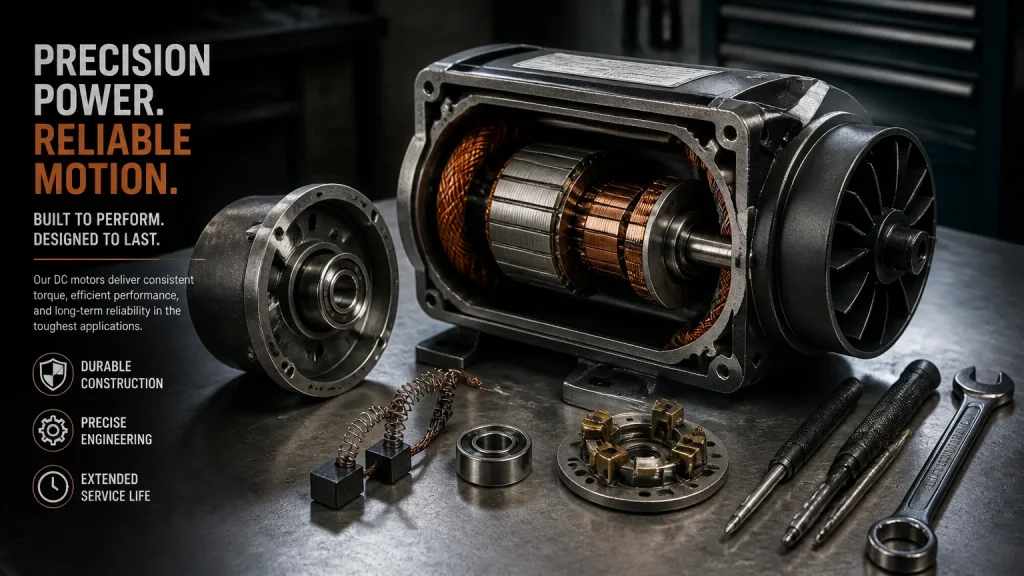
DC motor repair can protect the tools, conveyors, pumps, lifts, and production equipment Southern Michigan businesses rely on every day. A motor may keep running while brush wear, bearing damage, commutator issues, winding faults, or cooling problems continue developing. Recognizing early symptoms can prevent a minor repair from becoming a costly motor or equipment replacement.
This guide covers practical warning signs for contractors, manufacturers, and serious DIYers. You’ll learn when routine maintenance may help and when professional testing is safer than trial-and-error repairs involving energized equipment, stored charge, or high-current batteries. For related three-phase equipment, review these AC motor repair warning signs before troubleshooting. Acting early helps protect uptime, productivity, and your repair budget.
1. The Motor Runs Hot or Trips Protection
Excessive heat is one of the clearest signs your DC motor needs service. Extended runtime, heavy loads, dusty job sites, enclosed cabinets, and southern Michigan’s seasonal temperature swings can all push temperatures higher.
Overloading, blocked ventilation, failing bearings, damaged windings, or incorrect voltage may cause overheating. Worn brushes or a damaged commutator can also increase resistance and heat. If an overload, breaker, thermal protector, or battery cutoff trips, stop and inspect the equipment. Do not keep resetting it.
Safely clean external vents, verify the load, and check for discoloration or a burnt odor. Current-draw measurements and insulation testing require qualified service personnel. Continuing to operate the motor can turn a manageable issue into major DC motor repair.
Use the same discipline with pressure washers. Cooling, cleanliness, and routine inspections help prevent failures. Follow these equipment maintenance practices to protect motor-driven equipment and maintain reliable performance.
2. You Hear Grinding, Humming, or Intermittent Noise
A DC motor’s normal sound should remain steady and predictable. New grinding, squealing, clicking, growling, or a louder low electrical hum signals a potential problem. Worn bearings, misalignment, loose mounts, damaged gears, or armature rubbing can create mechanical noise. Commutation issues may produce buzzing, crackling, or intermittent electrical sounds.
Document the sound before disassembly. Note when it starts, whether it changes with speed, and if vibration increases under load. These details help a technician identify the fault faster. Do not assume the motor is responsible. A coupling, gearbox, belt, fan, or driven load can produce similar symptoms.
Inspect transmission components and review gearbox oil and lubrication intervals. Incorrect lubricant or delayed service can damage gears while mimicking motor failure. Stop operation if noise worsens quickly, vibration becomes severe, or the motor overheats. Prompt DC motor repair can prevent damage to connected equipment and reduce downtime.
3. The Motor Loses Speed, Torque, or Runtime
A motor that slows gradually under normal load may be operating within its limits. A sudden torque loss, surge, stall, or inconsistent speed points to trouble. Worn brushes, a damaged commutator, weak magnets, or failing windings can reduce performance and signal the need for DC motor repair. Voltage drop or a mechanically restricted load can create similar symptoms.
For battery-powered tools, check the battery condition, terminals, cable connections, and charger first. A weak battery or poor connection can mimic motor failure. If you are weighing repair against replacement, compare the motor’s condition with available Milwaukee tools in Coldwater.
For industrial equipment, record supply voltage, load conditions, and duty cycle. Note whether the problem appears hot, cold, or under sustained operation. These details help technicians isolate electrical, mechanical, and thermal causes before costly parts are replaced.
4. You See Excessive Sparking, Arcing, or a Burnt Smell
Small, even arcing at the brush area can occur during normal operation. Bright, uneven, or rapidly worsening sparks are different. Smoke, ozone, or a burnt electrical odor signals an urgent problem.
Common causes include worn or incorrectly seated brushes, a rough commutator, contaminated internals, incorrect brush tension, overload, or winding faults. Continued operation can damage the armature, controller, wiring, and nearby equipment. It can also turn a manageable issue into major DC motor repair.
Disconnect power immediately. Isolate batteries and capacitors where applicable, and do not open the equipment until it is safely discharged. In plants and job sites, arcing can ignite combustible dust, solvents, agricultural debris, or other flammable materials.
If the motor supports critical equipment, document the load, duty cycle, and operating conditions for your technician. Use Branch County contractor supply resources to plan parts and service support before restarting the equipment.
5. The Motor Starts Reliably Only Sometimes—or Will Not Start
Intermittent starting, hesitation, repeated clicking, or a complete no-start condition requires service. Worn brushes, dead spots on the commutator, loose terminals, failed relays, controller faults, blown fuses, and inadequate voltage can all interrupt starting.
After lockout and power isolation, inspect connectors, fuses, switches, and cables for damage or loose connections. Check the control circuit before blaming the motor. A failed switch, relay, battery, controller, or cable may prevent the motor from receiving power.
Do not repeatedly tap the motor, jump-start it, bypass the controller, or install a larger fuse. These shortcuts can turn an intermittent fault into severe equipment damage or a safety incident.
Professional DC motor repair testing finds the actual cause faster. Technicians can perform continuity checks, voltage-drop testing, current measurement, insulation testing, and internal inspection. These tests distinguish a motor fault from a supply or control problem, helping you replace only the parts that failed.
Know When to Stop Running the Motor
Heat, abnormal noise, performance loss, severe sparking, and unreliable starting are service signals. Stop the equipment, document the symptom, and isolate it safely before damage spreads.
Record the motor’s model, voltage, horsepower, duty cycle, application, and recent maintenance. Then contact a qualified DC motor repair provider. Dependable contractor supply and local repair support matter when southern Michigan jobs, production schedules, or DIY projects cannot afford extended downtime.