
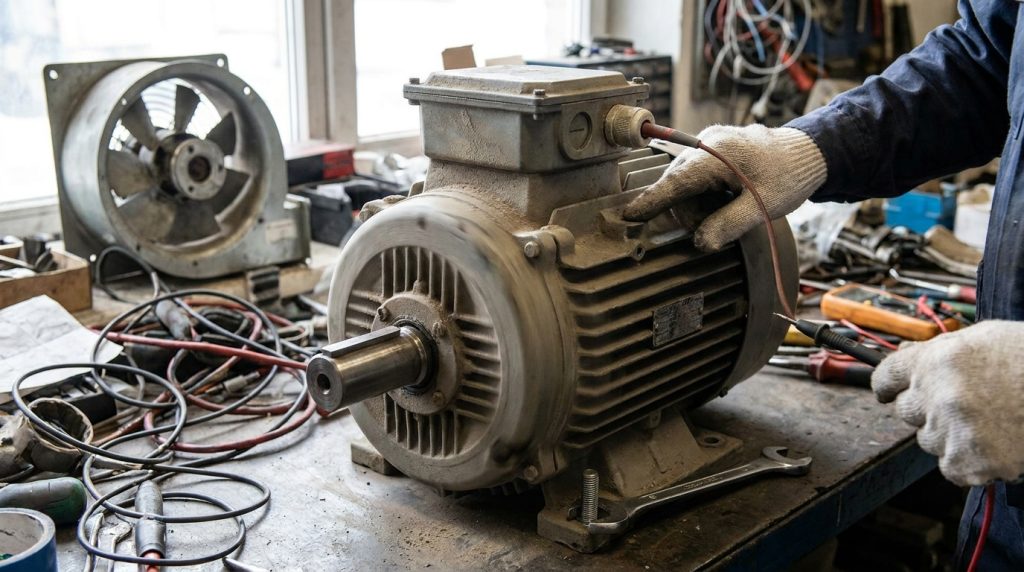
Understanding Electric Motor Humming but Not Starting: A Troubleshooting Guide for Industrial Professionals
In the demanding world of industrial operations, unexpected equipment downtime can translate directly into significant financial losses. One of the most perplexing and frustrating issues an industrial maintenance technician, plant manager, or electrician can face is an electric motor that hums but refuses to start. This common symptom can arise from a variety of underlying problems, ranging from simple electrical faults to more complex mechanical failures. At CEM Industrial Supply (cemindustrialsupply.com), we understand the urgency of getting your operations back online. This comprehensive guide will equip you with the knowledge to diagnose, troubleshoot, and potentially resolve the “electric motor humming but not starting” dilemma, ensuring minimal disruption to your plant’s productivity.
The hum you hear is the motor’s stator windings attempting to create a magnetic field. However, without proper rotation or sufficient power to overcome inertia and load, the rotor remains stationary, resulting in that distinctive, often unsettling, noise. Identifying the root cause is crucial for efficient repair and preventing future occurrences. This article will delve into the common culprits behind this issue, provide step-by-step troubleshooting procedures, outline preventative maintenance strategies, and emphasize critical safety precautions.
If you’re experiencing an issue with your electric motor humming but not starting, it may be helpful to explore related resources that can provide insights into potential causes and solutions. One such article can be found at CEM Industrial Supply, which offers a comprehensive overview of industrial equipment and supplies, including troubleshooting tips for electric motors. This resource can assist you in diagnosing the problem and finding the right parts or solutions to get your motor running smoothly again.
## Common Causes of an Electric Motor Humming But Not Starting
Several factors can lead to an electric motor exhibiting a humming sound without initiating rotation. Understanding these common causes is the first step in effective diagnosis.
### Electrical Supply Issues
The most straightforward explanations often lie in the electrical supply to the motor.
#### Insufficient Voltage
Electric motors require a specific voltage range to operate correctly. If the voltage supplied to the motor is significantly lower than its nameplate rating, the stator windings may not generate a strong enough magnetic field to start the rotor. This can be due to overloaded circuits, undersized wiring, faulty connections, or problems with the power source itself. The resulting insufficient magnetic flux can cause the motor to hum as it attempts to energize.
#### Single-Phasing (Three-Phase Motors)
For three-phase motors, a loss of one phase of power is a very common cause of humming without starting. When a phase is lost, the motor receives unbalanced power, creating a strong magnetic field in the stator but preventing the rotor from rotating smoothly. Instead, the unbalanced field causes the rotor to vibrate and produce a loud hum. This is a critical issue that can quickly lead to motor overheating and damage if not addressed promptly.
#### Incorrect Wiring or Connections
Incorrect wiring, especially in new installations or after maintenance work, can prevent a motor from starting. This could involve reversed phase connections in three-phase motors, incorrect connections for dual-voltage motors, or loose terminal connections. Loose connections create high resistance, leading to voltage drop and inadequate power delivery to the windings, manifesting as a hum.
#### Faulty Capacitor (Single-Phase Motors)
Many single-phase AC motors utilize capacitors to provide the necessary starting torque. A faulty starting capacitor can fail to deliver the required electrical charge to the start winding, preventing the motor from rotating. The capacitor might be short-circuited, open-circuited, or have lost its capacitance over time. In such cases, the motor will energize but lack the push to overcome inertia.
#### Faulty Centrifugal Switch (Single-Phase Motors)
Single-phase motors often employ a centrifugal switch that disconnects the start winding and capacitor once the motor reaches a certain speed. If this switch fails to open or close properly, it can lead to the start winding remaining energized, causing overheating and a hum, or preventing proper operation if it fails to engage the start circuit.
### Mechanical Obstructions and Load Issues
Beyond electrical problems, mechanical issues are also frequent culprits.
#### External Load Too High
The motor might be mechanically sound, but the load it’s designed to drive is simply too heavy or has become jammed. If the external load exceeds the motor’s starting torque capability, it will hum but be unable to turn. This can happen due to material jams, seized bearings in driven equipment, or misaligned couplings.
#### Internal Mechanical Binding
The motor itself might have internal mechanical issues preventing rotation. This could include seized rotor bearings, a rotor rubbing against the stator (due to damage or misalignment), or foreign objects lodged within the motor housing. These obstructions resist rotation, causing the motor to hum under power.
#### Rotor Damage
Although less common, severe rotor damage, such as cracked rotor bars in a squirrel cage induction motor, can impede rotation. This type of damage can lead to unbalanced magnetic forces and mechanical stress, resulting in a hum without starting.
### Overheating and Thermal Protection
Motors are equipped with thermal protection to prevent damage.
#### Tripped Thermal Overload Protector
Motors often have built-in thermal overload protectors that trip when the motor draws excessive current or overheats. If the motor has recently run and overheated, or if there’s an underlying issue causing it to draw too much current, the overload protector might trip, preventing it from restarting even when power is applied. The hum could be the initial attempt to start before the protector trips.
#### Overheating from Previous Operation
If a motor was run to failure or experienced significant overheating prior to the current issue, internal damage (like insulation breakdown) might have occurred, leading to a situation where it hums but cannot start.
## Troubleshooting Electric Motors Humming But Not Starting
A systematic approach to troubleshooting is essential to efficiently identify and resolve the problem. Always prioritize safety.
### Safety Precautions: The Absolute First Step
Before touching any electrical component or attempting any mechanical inspection, always disconnect the power supply to the motor at the main disconnect switch or circuit breaker. Verify with a non-contact voltage tester that the power is indeed off. Wear appropriate personal protective equipment (PPE), including safety glasses, insulated gloves, and appropriate footwear. If you are unsure about any step, consult a qualified electrician or contact CEM Industrial Supply for expert assistance.
### Step-by-Step Diagnostic Process
- Visual Inspection:
- External Obstructions: Check the driven equipment and the motor shaft for any visible signs of jamming, foreign objects, or misalignment.
- Motor Condition: Look for signs of physical damage, burnt smells, or excessive dirt and debris around the motor and its cooling fins.
- Connections: Inspect external electrical connections for looseness, corrosion, or signs of overheating.
- Electrical Power Verification (with Power OFF):
- Voltage Supply: Use a multimeter to measure the voltage at the motor’s terminal box. Compare this to the motor’s nameplate voltage. If it’s significantly low, investigate the supply circuit, including the circuit breaker, fuses, and upstream wiring.
- Resistance Checks (Motor Windings): With the power disconnected and the motor leads disconnected from the electrical supply, measure the resistance between the motor windings. For three-phase motors, check resistance between each pair of leads (e.g., T1-T2, T2-T3, T1-T3). For single-phase motors, resistance checks will depend on the specific wiring diagram and components. Compare these readings to specifications or to a known good motor of the same type. An open circuit (infinite resistance) indicates a broken winding. A significantly low resistance might indicate a short circuit.
- Testing for Single-Phasing (Three-Phase Motors):
- With power safely re-applied (and observing extreme caution), use a multimeter capable of measuring AC voltage to measure the voltage between each pair of phases at the motor terminal box (e.g., L1-L2, L2-L3, L1-L3). If one of these readings is significantly lower or zero compared to the others, you likely have a single-phased condition.
- Checking Thermal Overload Protection:
- Locate the thermal overload protector on the motor or starter. Many have a reset button. Try resetting it. If it trips again immediately or frequently, there’s an underlying problem.
- Testing Capacitors and Centrifugal Switches (Single-Phase Motors):
- Capacitor Test: With power disconnected, discharge the capacitor (if it’s a starting capacitor) by shorting its terminals with an insulated tool. Then, remove the capacitor and test its capacitance using a multimeter equipped with a capacitance testing function. Compare the reading to the nameplate value. If it’s significantly out of tolerance or reads zero, it needs replacement.
- Centrifugal Switch Test: This is more involved and may require opening the motor’s junction box. Observe the switch’s operation if possible. You can also test for continuity across its contacts with power off. It should be closed when the motor is at rest and open when the motor spins.
- Manual Rotation Test:
- With power disconnected, attempt to rotate the motor shaft by hand. It should turn freely, albeit with some resistance from the bearings. If it’s extremely stiff or won’t budge, it indicates a significant mechanical issue within the motor or the driven equipment.
- Measuring Current Draw (with Power ON and Extreme Caution):
- If the motor hums and you suspect an electrical issue but aren’t certain of single-phasing or severe overcurrent, you can carefully use a clamp-on ammeter to measure the current draw on each phase. Compare this to the motor’s nameplate full-load amps (FLA). Very high current draw on one or more phases, even without starting, points to severe electrical problems. This step requires experienced personnel and strict adherence to safety protocols.
## Common Motor Components and Their Role in Starting
Understanding the function of key motor components is vital for effective troubleshooting.
### Stator Windings
The stator contains the windings that, when energized by AC power, create a rotating magnetic field. This field induces currents in the rotor, generating the torque that causes it to spin. If the stator windings are damaged (shorted, open, or grounded), the magnetic field will be weak or absent, preventing startup and often resulting in a hum.
### Rotor
The rotor is the rotating part of the motor. In induction motors, it typically consists of a squirrel cage made of conductive bars. The rotating magnetic field from the stator induces currents in these bars, creating an opposing magnetic field that interacts with the stator field, causing rotation. If the rotor is damaged or obstructed, it cannot spin freely.
### Bearings
Bearings support the rotor and allow it to rotate smoothly with minimal friction. Worn, damaged, or improperly lubricated bearings can cause significant resistance, leading to a motor humming but not starting.
### Capacitors (Single-Phase Motors)
Starting capacitors provide a phase shift to the start winding, creating a stronger initial magnetic field and higher starting torque in single-phase motors. Run capacitors (found in some designs) help improve efficiency and power factor once the motor is running. A faulty capacitor can prevent the motor from getting the necessary “kick” to start.
### Centrifugal Switch (Single-Phase Motors)
This mechanical switch is designed to disconnect the starting circuit (start winding and capacitor) once the motor reaches approximately 75-80% of its rated speed. Its primary function is to prevent damage to the start winding, which is not designed for continuous operation. A malfunctioning centrifugal switch can leave the start winding energized, leading to overheating and a hum, or fail to engage, preventing starting torque.
If you’re experiencing an electric motor that is humming but not starting, it could be due to several factors such as a faulty capacitor or an overloaded circuit. Understanding the intricacies of electric motors can help you troubleshoot the issue effectively. For those looking to expand their knowledge on related topics, you might find it useful to read about how to choose the right size for power tools like angle grinders, which can also impact motor performance. You can check out the article here: how to choose the right size power and wheel.
## Preventing “Electric Motor Humming But Not Starting” Issues
Proactive maintenance is the most effective way to prevent costly downtime.
### Regular Inspections and Cleaning
- Visual Checks: Conduct regular visual inspections of motors for any signs of damage, leaks, loose connections, or unusual noises.
- Cleanliness: Keep motor exteriors and ventilation slots clean. Dust, dirt, and debris can impede airflow, leading to overheating and potential component failure.
### Lubrication and Bearing Maintenance
- Scheduled Lubrication: Follow the manufacturer’s recommendations for lubricating motor bearings. Over or under-lubrication can both lead to bearing failure.
- Bearing Inspections: Listen for unusual noises (grinding, squealing) from bearings, which can indicate wear or damage. Replace bearings proactively before they fail.
### Electrical System Monitoring
- Voltage Checks: Periodically check the voltage supplied to motors to ensure it’s within the acceptable range.
- Current Monitoring: For critical applications, consider installing current monitoring devices to detect abnormal current draws that could indicate developing problems.
- Connection Integrity: Regularly inspect and tighten electrical connections at motor terminal boxes and starter components.
### Load Management
- Avoid Overloading: Ensure that motors are not consistently operating under excessive loads, which can lead to overheating and premature failure.
- Alignment: For belt-driven or coupled equipment, ensure proper alignment to minimize stress on the motor and driven components. Misalignment is a common cause of premature bearing and coupling failure.
### Proper Motor Selection
- Matching Motor to Application: Ensure that the motor’s horsepower, speed, enclosure type, and voltage rating are appropriate for the application and the driven load. Selecting an undersized motor will lead to frequent overloads and reduced lifespan.
### Understanding Motor Specifications
- Nameplate Data: Familiarize yourself with the motor’s nameplate, which provides crucial information like voltage, amperage (FLA), horsepower, service factor, and RPM. This data is essential for troubleshooting and replacement.
## When to Call a Professional: Recognizing the Limits of DIY Troubleshooting
While this guide provides valuable insights, certain situations necessitate the expertise of a professional.
- Uncertainty and Lack of Experience: If you are not comfortable or experienced with electrical diagnostics and motor repair, it’s always best to err on the side of caution and contact a professional. Working with electricity can be dangerous.
- Complex Electrical Faults: Diagnosing issues like internal winding shorts, ground faults, or complex control circuit problems often requires specialized equipment and knowledge.
- Mechanical Damage: Significant mechanical damage, such as a seized rotor or cracked housing, typically requires professional repair or motor replacement.
- Safety Concerns: If you feel unsafe at any point during the troubleshooting process, stop immediately and call for professional help.
CEM Industrial Supply in Coldwater, Michigan, offers comprehensive electric motor repair services. Our experienced technicians can diagnose complex issues, perform quality repairs, and help you select the right replacement motor if needed. We understand the critical role electric motors play in your operations and are dedicated to getting them back online quickly and reliably.
## Frequently Asked Questions About Electric Motor Humming
Here are answers to some common questions regarding electric motors that hum but don’t start.
### Q1: Why does my single-phase motor hum but not start after it was working fine?
A1: This can be due to several reasons. The most common culprits are a failed starting capacitor, a faulty centrifugal switch, or an electrical supply issue like low voltage or a lost phase. Mechanical binding or an overloaded condition can also cause this.
### Q2: How do I know if my three-phase motor has lost a phase?
A2: If a three-phase motor hums but doesn’t start, it’s a strong indicator of single-phasing. You can confirm this by measuring the voltage between each pair of power leads at the motor’s terminal box. If one voltage reading is significantly lower or zero compared to the others, you have a lost phase.
### Q3: Can a motor that hums but won’t start be repaired, or does it need to be replaced?
A3: In many cases, yes, it can be repaired. Common repairs include replacing faulty capacitors, repairing or replacing centrifugal switches, fixing wiring issues, or addressing mechanical problems like bearing replacement. However, if the motor has suffered severe internal damage, such as burnt windings or a damaged rotor, replacement might be the more cost-effective option.
### Q4: What is the role of a capacitor in a single-phase motor?
A4: In single-phase AC induction motors, a starting capacitor is used to create a phase difference in the auxiliary (start) winding. This creates a rotating magnetic field that provides the necessary starting torque to get the rotor moving. Without a functioning capacitor, the motor may only hum.
### Q5: Is it safe to keep trying to start a motor that is humming but not rotating?
A5: No, it is not safe and can cause significant damage. Repeatedly energizing a motor that is humming but not rotating will cause excessive current draw. This can lead to overheating of the windings, insulation breakdown, and potentially a fire hazard. It can also damage other components like the starter or circuit breaker. Power should be immediately disconnected, and the motor should be diagnosed.
## Conclusion: Restoring Your Operations with Expert Motor Support
The symptom of an electric motor humming but not starting is a clear signal that something is amiss and requires immediate attention. Whether it’s a subtle voltage drop, a failed capacitor in a single-phase unit, or a critical single-phasing issue in a three-phase system, the underlying problem needs to be identified and resolved to prevent further damage and costly downtime.
At CEM Industrial Supply (cemindustrialsupply.com), we are your trusted partner for all your industrial supply and electric motor needs in Coldwater, Michigan, and surrounding areas. Our team of experienced technicians is equipped with the knowledge, tools, and expertise to diagnose and repair a wide range of electric motor problems, including those that present as humming but failing to start. We also stock a comprehensive inventory of industrial supplies and replacement motors to ensure you get back up and running as quickly as possible.
Don’t let motor malfunctions halt your productivity. If you are experiencing an electric motor that hums but won’t start, or if you require assistance with diagnostics, repair, or replacement parts, contact CEM Industrial Supply today at [Your Phone Number] or visit us at cemindustrialsupply.com. Let us help you keep your operations running smoothly and efficiently.