
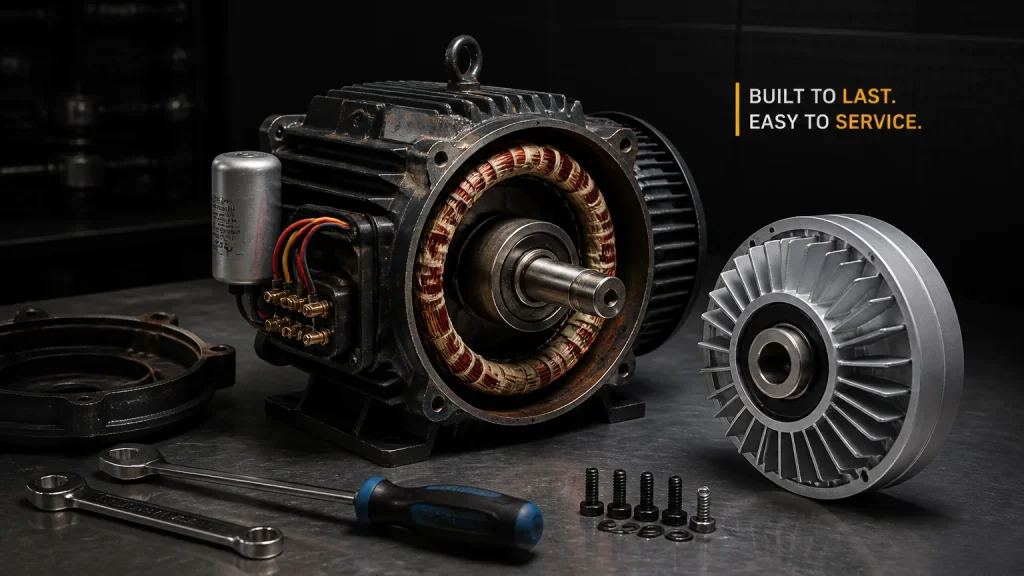
An electric motor rebuild is not always the first step—or the last. When a motor overheats, makes noise, loses power, or refuses to start, contractors, manufacturers, and serious DIYers must weigh the failure type, motor condition, downtime, and replacement cost.
Common failure points include bearings, windings, capacitors, brushes, seals, and cooling components. Bearing noise, vibration, and heat provide an early decision point. These symptoms may point to a correctable bearing problem rather than a failed motor. Review these signs you need bearing replacement before condemning the entire unit.
Some faults are economical to rebuild. Excessive wear, damaged insulation, or unsafe internal damage may make replacement the better choice. Always follow lockout/tagout procedures and use qualified electrical personnel for testing and repairs. The right decision keeps Southern Michigan jobsites and shops productive without creating unnecessary expense.
Start With a Proper Motor Failure Diagnosis
Before planning an electric motor rebuild, confirm the motor is actually the problem. A failed starter, damaged wiring, low voltage, misalignment, seized driven equipment, blocked ventilation, or an overloaded circuit can create similar symptoms.
Start with a visual inspection while the equipment is de-energized and locked out. Look for burned insulation, loose connections, damaged conduit, dirt buildup, blocked cooling openings, and signs of overheating. Discolored paint, a burnt odor, melted terminal insulation, or repeated thermal overload trips deserve close attention.
Record the motor’s horsepower, voltage, phase, RPM, frame size, enclosure type, service factor, and rotation before disassembly. This nameplate data helps match replacement parts or select a compatible motor.
A qualified professional should perform energized voltage checks and electrical testing. They can verify supply voltage, continuity, winding resistance, and insulation resistance with dependable meters and insulation testers. Experienced DIYers may handle unpowered visual and mechanical checks, using properly rated tools for electricians and insulated hand tools.
With power isolated, turn the shaft by hand if practical. Grinding, rough movement, excessive play, or a seized shaft points to bearing or mechanical damage. Also inspect the driven load for binding and verify alignment. Testing under normal load can reveal overheating caused by overload rather than internal motor failure.
When an Electric Motor Rebuild Makes Sense
An electric motor rebuild makes sense when the frame and core remain sound. Repair is also practical for specialized or hard-to-source motors, especially when replacement lead times threaten production. Compare the rebuild cost with a comparable new motor before deciding. A rebuild should provide meaningful savings, not just delay an inevitable replacement.
Preserving the existing motor can protect a difficult-to-match mounting pattern, shaft dimension, control setup, or duty rating. A rewind may also restore a critical motor without redesigning the driven equipment. However, rewinding is worthwhile only when the motor’s efficiency, remaining service life, and operating role justify the labor.
A professional rebuild involves more than replacing bearings. The technician should inspect the rotor, stator, shaft, laminations, windings, insulation, and balance. Testing should confirm temperature performance under operating conditions.
Depending on the findings, the rebuild may include new bearings, brushes, capacitors, seals, fans, terminal components, or damaged leads. It may also require cleaning, rewinding, varnishing, dynamic balancing, and electrical testing. Ask what work the shop will perform and request a written test report.
Reinstallation matters, too. Use the correct bolt torque for mounting hardware, then verify alignment and load conditions. These steps help prevent a sound rebuild from failing because of installation problems.
When Replacement Is the Better Investment
Replacement often makes more sense when damage extends beyond a few serviceable parts. Severe winding damage, burned insulation, major rotor-to-stator contact, cracked housings, damaged laminations, or a worn shaft can make an electric motor rebuild unreliable. Repeated overheating is another warning sign. Even if technicians can replace individual components, the motor may fail again under normal load.
Compare the rebuild estimate with a new motor that includes a warranty. This is especially important for common motors readily available through industrial suppliers. Factor in downtime, emergency labor, energy efficiency, warranty coverage, and future parts availability—not just the purchase price. A slightly higher upfront cost may protect production and reduce repeat service calls.
Obsolete designs can also justify replacement when bearings, controls, or replacement parts are difficult to source. Choose the replacement by more than horsepower alone. Match voltage, phase, horsepower, RPM, frame, enclosure, mounting, service factor, and environmental rating. Confirm the mounting hardware and review bolt identification and size before installation. When the frame or shaft is compromised, select a compatible new motor instead of risking another failure.
How to Make the Repair-or-Replace Decision in the Field
Start with comparable numbers. Request a documented electric motor rebuild estimate that separates parts, labor, testing, balancing, rewinding, and warranty coverage. Obtain an equivalent replacement quote, including delivery, installation, and controls. This prevents a low repair price from hiding added costs.
Repair a sound, valuable, specialized motor with a clearly defined fault. A rebuild may preserve the existing fit, controls, and installation time. Replace a motor with severe damage, poor efficiency, frequent failures, or an easily matched replacement. A new motor may reduce operating costs, especially after long daily run hours.
Account for urgency and local conditions. Southern Michigan operations face seasonal moisture, cold starts, dust, and agricultural exposure. Washdown areas may require a totally enclosed, washdown-rated motor. Confirm service availability before choosing a less common model. Also verify voltage, phase, frame, shaft, and mounting details, including fastener standards and equipment compatibility. When downtime costs more than the repair premium, replacement may be the practical choice.
Choose the Option That Restores Reliable Performance
Diagnose the motor before buying parts or a replacement. Choose an electric motor rebuild when the frame, shaft, windings, and repair cost support dependable service. Replace it when damage, poor efficiency, safety concerns, or downtime make repair a poor value.
Record specifications, photograph wiring and mounting, and verify rotation and alignment before installation. For cordless equipment, check battery condition before condemning the motor. Use qualified professionals for winding work, insulation testing, energized diagnostics, and commissioning.