
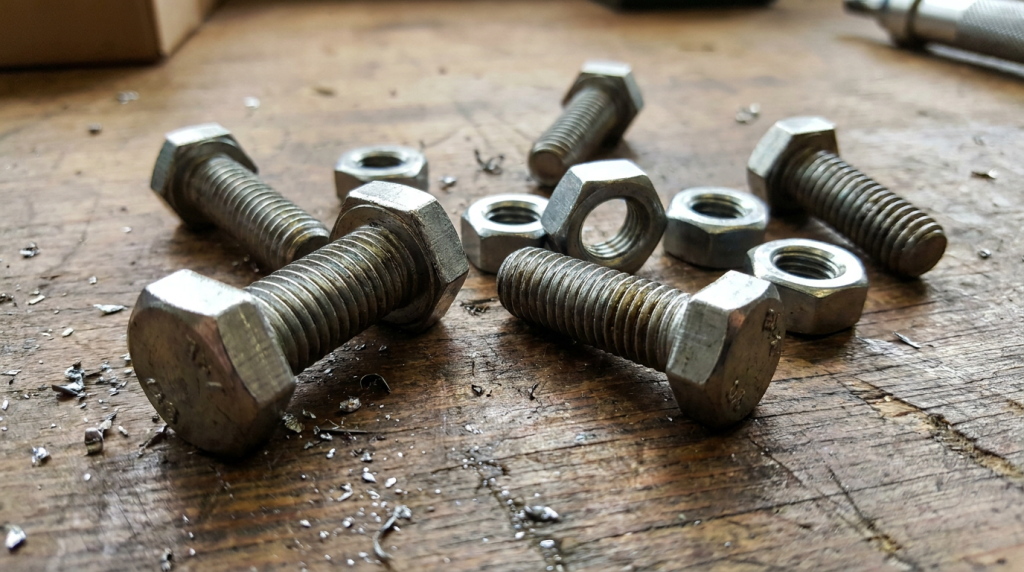
At The Bhakti House, we believe spiritual life can illuminate even the most practical parts of daily work. Whether you are repairing farm equipment, building a trailer, restoring a car, or simply learning how fasteners work, choosing the right bolt is an act of care. In Sanskrit, seva means “service,” and service often looks very ordinary: tightening what is loose, protecting what is precious, and doing our work with attention and humility.
When people compare Grade 5 vs Grade 8 bolts, they are usually asking a simple but important question: “Which bolt is stronger, and which one should I use?” The answer matters because bolts carry loads, resist vibration, hold assemblies together, and help keep people safe.
This guide explains the difference between Grade 5 and Grade 8 bolts in plain language, with practical details about strength, markings, materials, torque, applications, and common mistakes. Like Bhakti Yoga—the path of devotion, prayer, chanting, and loving service—the best mechanical decisions are made with sincerity, knowledge, and respect for purpose.
Bolt grades are strength classifications. In the United States, many common hex bolts are graded under SAE J429, a standard that defines mechanical properties such as tensile strength, proof load, yield strength, and hardness.
In simple terms, the grade tells you how much stress a bolt can handle before it begins to stretch permanently or break. Higher grade numbers generally indicate higher strength, but that does not automatically mean “better for every situation.”
The Purpose of Bolt Grading
A bolt is not just a piece of metal with threads. It is a carefully designed fastener meant to create clamping force. When properly tightened, the bolt stretches slightly, like a spring. That stretch creates tension, and the tension clamps the joined parts together.
This is why bolt grade matters. A bolt that is too weak may stretch, loosen, or fail. A bolt that is very strong but used incorrectly may damage softer materials, overload threads, or create a false sense of security.
In the Bhagavad-gita, Krishna teaches that each person and each action has a proper dharma, or purpose. In a similar practical sense, each bolt has a proper purpose. Grade 5 has its place. Grade 8 has its place. Wisdom is knowing the right application.
SAE Bolt Grades vs Metric Bolt Classes
Grade 5 and Grade 8 are SAE, or Society of Automotive Engineers, designations commonly used in North America. Metric bolts use property classes such as 8.8, 10.9, and 12.9.
A common comparison is:
- SAE Grade 5 is somewhat similar to metric Class 8.8.
- SAE Grade 8 is somewhat similar to metric Class 10.9.
These are not perfect one-to-one matches, so it is best not to substitute blindly. Always check the engineering requirements, especially for critical applications.
When comparing Grade 5 and Grade 8 bolts, it’s essential to understand their differences in strength and application. For a deeper insight into the importance of using the right fasteners in various projects, you can refer to an informative article on electric motor rewinding services. This article discusses the significance of quality components in ensuring the longevity and efficiency of electric motors. To read more, visit this link.
How to Identify Grade 5 vs Grade 8 Bolts
One of the easiest ways to tell Grade 5 and Grade 8 bolts apart is by looking at the head markings. These markings are usually raised radial lines on the top of the bolt head.
Grade 5 Bolt Markings
A Grade 5 bolt has three radial lines on the head.
These lines are spaced evenly around the bolt head. If you see three lines, you are likely looking at a Grade 5 fastener, assuming it is an SAE bolt and not a special or counterfeit product.
Grade 5 bolts are often made from medium carbon steel and are heat-treated. They are widely used in automotive, agricultural, construction, and general machinery applications.
Grade 8 Bolt Markings
A Grade 8 bolt has six radial lines on the head.
This is the easiest visual difference between Grade 5 and Grade 8 bolts. Six lines indicate a higher-strength bolt. Grade 8 bolts are typically made from medium carbon alloy steel and are also quenched and tempered through heat treatment.
Grade 8 bolts are commonly used where higher tensile strength and clamping force are required, such as heavy equipment, suspension components, and demanding mechanical assemblies.
Why Head Markings Matter
Head markings help mechanics, builders, and maintenance workers identify fasteners quickly. This matters because using the wrong grade can lead to failure.
However, head markings are only one part of the story. Bolt length, thread pitch, diameter, material, finish, nut grade, washer type, lubrication, and torque all matter too.
In Bhakti Yoga, japa means the meditative chanting of God’s names on beads. It teaches us attention. In the same spirit, careful attention to details—like bolt markings—can transform a rushed job into a safe and thoughtful one.
Strength Differences Between Grade 5 and Grade 8 Bolts
The biggest difference in the Grade 5 vs Grade 8 bolts discussion is strength. Grade 8 bolts are stronger than Grade 5 bolts in tensile strength, yield strength, and proof load.
Tensile Strength
Tensile strength is the maximum pulling force a bolt can withstand before breaking.
For common SAE sizes, Grade 5 bolts typically have a minimum tensile strength of about 120,000 psi. Grade 8 bolts typically have a minimum tensile strength of about 150,000 psi.
That means Grade 8 bolts can handle more pulling force before failure.
Yield Strength
Yield strength is the point at which a bolt begins to stretch permanently. Before yield, the bolt behaves like a spring and returns to its original shape when the load is removed. After yield, it has been permanently deformed.
Grade 5 bolts commonly have a yield strength around 92,000 psi. Grade 8 bolts commonly have a yield strength around 130,000 psi.
This is a significant difference. Grade 8 bolts can be tightened to create higher clamping force without permanently stretching, assuming the joint and threads are designed for it.
Proof Load
Proof load is the stress a bolt can handle without permanent deformation. It is a very important value when determining safe tightening and working load.
Grade 5 bolts commonly have a proof load around 85,000 psi. Grade 8 bolts commonly have a proof load around 120,000 psi.
For practical purposes, proof load helps determine how much preload or clamp force a bolt can safely hold.
Shear Strength
Shear strength refers to resistance against forces that try to cut or slide the bolt sideways. Many people ask whether Grade 8 bolts are stronger in shear than Grade 5 bolts. Generally, yes, Grade 8 bolts have higher shear strength because they have higher tensile strength.
A rough rule of thumb is that shear strength may be around 60% of tensile strength, though actual values depend on the material, bolt diameter, thread engagement, and whether the shear plane passes through the threaded or unthreaded portion of the bolt.
For critical shear applications, do not rely only on rough estimates. Use proper engineering tables or consult a qualified engineer.
Please check out our latest article at https://cemindustrialsupply.com/news/ for more information.
Material and Heat Treatment Differences
Grade 5 and Grade 8 bolts are not only different because of strength numbers. They are made and treated differently.
Grade 5 Bolt Material
Grade 5 bolts are typically made from medium carbon steel. They are quenched and tempered, meaning they are heated, rapidly cooled, and reheated in a controlled way to achieve specific strength and toughness.
This process makes Grade 5 bolts stronger than low-grade bolts, such as Grade 2, while still offering good ductility. Ductility means the bolt can stretch somewhat before breaking.
That stretch can be helpful because it may give warning before failure. A ductile bolt may bend or elongate before it breaks, depending on the situation.
Grade 8 Bolt Material
Grade 8 bolts are usually made from medium carbon alloy steel. The alloy content and heat treatment help produce higher strength and hardness.
Because Grade 8 bolts are stronger, they are often used where maximum clamping force and high load capacity are needed. They can resist greater tensile loads, but proper installation is essential.
A Grade 8 bolt used carelessly can still fail. Strength does not remove the need for wisdom.
Are Grade 8 Bolts More Brittle?
A common myth says Grade 8 bolts are “too brittle” and should be avoided. This is not completely accurate.
Grade 8 bolts are harder and stronger than Grade 5 bolts, and they may be less ductile. But a properly manufactured Grade 8 bolt is not simply brittle like glass. It is designed to meet specific toughness and strength requirements.
The real issue is application. In some situations, a more ductile bolt may be preferred. In other situations, the higher strength of Grade 8 is necessary. The correct choice depends on design, load type, vibration, installation, and safety factors.
In devotional life, humility means not pretending to know everything. The same humility helps in mechanical work. If the application is critical—brakes, steering, lifting equipment, structural supports—seek the correct specification rather than guessing.
When considering the differences between Grade 5 and Grade 8 bolts, it’s essential to understand their applications and strengths. For a deeper insight into the importance of selecting the right hardware for various projects, you can explore a related article on the gearbox build process. This resource provides valuable information on how the right components, including bolts, contribute to the overall performance and reliability of machinery. To read more about it, visit this article.
Grade 5 Bolt Applications
Grade 5 bolts are widely used because they provide a strong balance of strength, ductility, availability, and cost. They are often the right choice for medium-duty applications.
Automotive and General Repair
Grade 5 bolts are common in automotive repairs, especially for non-critical and moderate-load areas. They may be used for brackets, frames, supports, and general fastening where the original equipment specifications allow.
However, never assume Grade 5 is correct for every vehicle application. Suspension, steering, drivetrain, seat belt mounts, and braking systems may require specific fasteners.
Agricultural and Construction Equipment
Farm machinery, trailers, attachments, and construction equipment often use Grade 5 bolts in many locations. They are strong enough for many practical uses and have some ability to tolerate shock and vibration.
In environments where equipment experiences impact loads, choosing the right bolt and using proper nuts, washers, and torque is important.
Wood, Mild Steel, and General Fabrication
Grade 5 bolts are often used in fabrication projects where Grade 2 would be too weak but Grade 8 is unnecessary. They can work well with mild steel and many general assemblies.
If the connected material is softer than the bolt, a higher-strength bolt may not improve the joint. The material around the bolt may fail first.
When comparing Grade 5 and Grade 8 bolts, it’s essential to understand their differences in strength and application. For a deeper insight into the specifications and uses of these fasteners, you can refer to a related article that discusses various bolt grades and their appropriate applications. This information can be particularly useful for anyone involved in construction or mechanical projects. If you’re looking for more details, feel free to check out this resource for further guidance.
Grade 8 Bolt Applications
Grade 8 bolts are chosen when higher strength is required. They are common in demanding mechanical and industrial uses.
Heavy-Duty Machinery
Grade 8 bolts are used in equipment that experiences high loads, heavy vibration, and demanding service. Examples include bulldozers, excavators, industrial machines, and heavy truck components.
Their higher proof load allows stronger clamping force, which can help prevent joint movement when properly designed.
Suspension and High-Stress Automotive Uses
Many high-stress automotive applications may require Grade 8 or equivalent fasteners. This can include suspension components, drivetrain mounts, and other areas where high strength is critical.
But again, the safest rule is to match the manufacturer’s specification. A bolt is part of a system. The right grade, thread type, length, shoulder, nut, washer, and torque all matter.
Structural and Load-Bearing Assemblies
Grade 8 bolts may be appropriate for certain load-bearing assemblies, especially when high preload and strength are needed. However, for structural steel building connections, ASTM structural bolts such as A325 or A490 may be specified instead of SAE Grade 5 or Grade 8.
Do not substitute Grade 8 bolts for structural bolts unless the design allows it. Standards exist for a reason.
Torque, Clamp Load, and Installation
A strong bolt can fail if installed incorrectly. Proper torque and clamp load are just as important as bolt grade.
What Torque Really Does
Torque is the twisting force applied when tightening a bolt. But the goal is not torque itself. The goal is clamp load—the force that holds the parts together.
Torque is only an indirect way to estimate clamp load. Friction under the bolt head and in the threads absorbs much of the torque. This means lubrication, plating, surface condition, and thread quality can dramatically affect results.
Grade 5 vs Grade 8 Torque Values
Because Grade 8 bolts can handle higher proof loads, they are typically tightened to higher torque values than Grade 5 bolts of the same size and thread pitch.
For example, a 1/2-inch Grade 8 bolt usually has a higher recommended torque than a 1/2-inch Grade 5 bolt. But exact torque depends on whether the threads are dry or lubricated, the thread pitch, and the application.
Always use a reliable torque chart or manufacturer specification. Do not simply “tighten until it feels right,” especially for safety-critical work.
Lubrication and Plating
Lubricated threads reduce friction, which means the same torque can create much higher clamp load. This can be helpful when specified, but dangerous when not accounted for.
Zinc plating, oil, anti-seize, threadlocker, and other coatings all affect torque. Stainless steel, galvanized bolts, and cadmium-plated bolts also behave differently.
In Bhakti Yoga, sadhana means regular spiritual practice. It reminds us that steady, proper practice matters. In fastening, steady proper method matters too: clean threads, correct torque, matching hardware, and careful inspection.
Nuts, Washers, and Matching Hardware
A bolt is only as strong as the joint it belongs to. Using a Grade 8 bolt with a weak nut may not give you a Grade 8 connection.
Matching Nuts to Bolt Grade
Grade 5 bolts are often paired with Grade 5 or compatible nuts. Grade 8 bolts should be paired with high-strength nuts that can support the bolt’s load.
If the nut is too soft, its threads can strip before the bolt reaches proper clamp load. This can create a dangerous joint that looks tight but is not reliable.
Washer Selection
Washers help distribute load and protect surfaces. Hardened washers are often recommended with high-strength bolts, especially Grade 8, because softer washers may deform under high clamp load.
Using a soft washer with a high-strength bolt can reduce joint reliability. The washer may dish, crush, or settle, causing the bolt to lose preload over time.
Thread Engagement
Thread engagement means how much of the bolt thread is engaged with the nut or tapped hole. Too little thread engagement can strip threads or reduce load capacity.
As a general rule, full thread engagement equal to at least the diameter of the bolt is often desired in steel, but requirements vary depending on the material. Softer materials like aluminum may require more engagement or inserts.
Common Mistakes When Comparing Grade 5 vs Grade 8 Bolts
Many bolt failures happen not because people do not care, but because they misunderstand how bolts work. A little knowledge can prevent a lot of trouble.
Mistake 1: Assuming Grade 8 Is Always Better
Grade 8 is stronger, but not always better. If the connected material is weak, the stronger bolt may simply transfer stress elsewhere. If the design needs ductility, a Grade 5 bolt may be more appropriate.
Also, a Grade 8 bolt may require higher torque to perform properly. If the joint cannot handle that clamp load, damage can occur.
Mistake 2: Replacing OEM Bolts Without Checking Specs
Original equipment manufacturers choose fasteners for specific reasons. Replacing a factory bolt with a different grade, length, thread pitch, or head style can be risky.
For vehicles, machinery, and safety-critical equipment, use the specified fastener or an approved equivalent.
Mistake 3: Ignoring Threaded vs Unthreaded Shear Planes
If a bolt is loaded in shear, it is usually better for the unthreaded shank to carry the shear load rather than the threaded section. Threads reduce the effective cross-sectional area and create stress concentrations.
This is why bolt length and grip length matter. A stronger grade cannot fully compensate for poor fit.
Mistake 4: Reusing Damaged or Stretched Bolts
Bolts can be damaged by over-tightening, corrosion, fatigue, or previous overload. Some bolts are torque-to-yield and should not be reused.
Inspect threads, heads, shanks, and contact surfaces. If a bolt looks stretched, necked down, cracked, heavily corroded, or worn, replace it.
Mistake 5: Mixing Unknown Fasteners
Buckets of old bolts are common in garages and workshops. While reuse can be practical in non-critical applications, unknown fasteners should not be used where safety matters.
A bolt with unclear markings, questionable origin, or unknown material should be treated with caution.
Cost, Availability, and Practical Buying Advice
Both Grade 5 and Grade 8 bolts are easy to find, but there are differences in price and availability.
Cost Difference
Grade 8 bolts usually cost more than Grade 5 bolts because of stronger material and more demanding heat treatment. For small projects, the cost difference may be minor. For large projects with many fasteners, it can add up.
Still, cost should not be the deciding factor in critical applications. Safety and proper specification come first.
Buying From Reliable Sources
Buy bolts from reputable suppliers, especially when strength matters. Cheap, unverified bolts may have incorrect markings or inconsistent properties.
Look for clear grade markings, proper packaging, and supplier documentation when needed. For industrial or critical work, request certification or traceability.
Coatings and Corrosion Resistance
Grade 5 and Grade 8 bolts are often available with zinc plating, yellow zinc, black oxide, or other finishes. Coatings help resist corrosion but may affect torque.
If corrosion resistance is important, consider the environment. Outdoor, marine, chemical, or high-temperature settings may require special materials or coatings. Stainless steel is corrosion-resistant but does not match Grade 5 or Grade 8 strength automatically.
Quick Comparison: Grade 5 vs Grade 8 Bolts
Here is a simple summary to help you remember the main differences.
Grade 5 Bolts
Grade 5 bolts have three radial head markings. They are made from medium carbon steel and heat-treated. They typically offer about 120,000 psi minimum tensile strength for common sizes.
They are strong, versatile, and suitable for many medium-duty applications. They often provide a good balance of strength and ductility.
Grade 8 Bolts
Grade 8 bolts have six radial head markings. They are made from medium carbon alloy steel and heat-treated. They typically offer about 150,000 psi minimum tensile strength for common sizes.
They are stronger than Grade 5 bolts and are used in higher-load, high-strength applications. They require proper matching nuts, washers, and torque.
Main Practical Difference
If you need more strength and the joint is designed for it, Grade 8 may be the right choice. If you need a strong general-purpose bolt with good ductility and moderate cost, Grade 5 may be enough.
The best bolt is not the strongest bolt in isolation. The best bolt is the correct bolt for the whole assembly.
How to Choose the Right Bolt for Your Project
Choosing between Grade 5 and Grade 8 bolts becomes easier when you ask the right questions.
What Load Will the Bolt Carry?
Will the bolt carry tension, shear, vibration, impact, or a combination? Higher loads may require Grade 8, but design details matter.
For heavy equipment, suspension parts, towing components, and safety-related assemblies, do not guess. Follow specifications.
What Materials Are Being Joined?
If you are fastening mild steel, aluminum, wood, or cast iron, the material may fail before the bolt. Grade 8 strength may not help if the surrounding material is too soft.
Use appropriate washers, backing plates, inserts, or reinforcement when needed.
Is the Application Safety-Critical?
If failure could injure someone, cause a crash, drop a load, or damage expensive equipment, choose carefully. Consult manuals, standards, or qualified professionals.
Safety is a form of compassion. In Sanskrit, ahimsa means non-harming. Using the right fastener is a small but real expression of non-harming in practical life.
Are Torque Specs Available?
If torque specs are available, follow them. If not, use reputable torque charts as a starting point, while considering lubrication, plating, and joint material.
A torque wrench is a humble tool. It reminds us that “tight enough” should not always be left to feeling.
A Devotional Reflection on Strength and Service
It may seem unusual to speak about bolts and Bhakti Yoga in the same article. Yet spiritual life is not separate from work, tools, homes, vehicles, and responsibilities.
Bhakti means loving devotion. Yoga means connection. Bhakti Yoga is the path of connecting with God through love—through chanting sacred names, prayer, service, study, and offering our daily actions with sincerity.
A bolt serves quietly. When chosen and installed properly, it holds things together without asking for attention. In a small way, this can remind us of humble service. The strongest support is often unseen.
The Bhagavad-gita teaches that work can become sacred when offered with devotion. This does not mean every task must look religious on the outside. It means the heart can become prayerful even in simple duties. We can cook with love, repair with care, speak with kindness, and work with honesty.
So when comparing Grade 5 vs Grade 8 bolts, we are not only learning mechanical facts. We are practicing discernment. We are asking, “What is needed here? How can I serve well? How can I protect life and do this properly?”
Final Thoughts: Grade 5 vs Grade 8 Bolts
Grade 5 and Grade 8 bolts are both valuable fasteners. Grade 5 bolts are strong, practical, and widely used for medium-duty applications. Grade 8 bolts are stronger, with higher tensile strength, yield strength, and proof load, making them suitable for more demanding jobs.
The difference is easy to identify: Grade 5 bolts have three radial lines on the head, while Grade 8 bolts have six. Grade 8 is stronger, but not automatically better for every situation.
For best results, consider the full assembly: bolt grade, diameter, thread pitch, length, material, nut grade, washer hardness, torque, lubrication, corrosion, and load type. When in doubt, follow manufacturer specifications or ask a qualified professional.
May your work be safe, thoughtful, and sincere. Whether you are learning about fasteners, chanting God’s names, offering a prayer, serving your family, or taking one quiet step toward spiritual growth, you are welcome. Everyone, from every background, is invited to take one sincere step toward God today.
[fluentform id=”3″]
FAQs
What is the difference between Grade 5 and Grade 8 bolts?
Grade 5 bolts are made of medium carbon steel and have a tensile strength of 120,000 psi, while Grade 8 bolts are made of medium carbon alloy steel and have a tensile strength of 150,000 psi. Grade 8 bolts are stronger and more durable than Grade 5 bolts.
When should Grade 5 bolts be used?
Grade 5 bolts are suitable for applications where high strength is not required, such as light machinery, automotive parts, and construction equipment. They are commonly used in applications where the bolt will not be subjected to extreme stress or pressure.
When should Grade 8 bolts be used?
Grade 8 bolts are used in applications where high strength and durability are essential, such as in heavy machinery, automotive suspension systems, and structural steel connections. They are designed to withstand high stress and pressure.
Are Grade 5 bolts and Grade 8 bolts interchangeable?
Grade 5 bolts and Grade 8 bolts are not interchangeable due to their different tensile strengths. It is important to use the appropriate grade of bolt for the specific application to ensure safety and structural integrity.
How can I identify Grade 5 and Grade 8 bolts?
Grade 5 bolts are typically marked with three radial lines on the head, while Grade 8 bolts are marked with six radial lines. Additionally, Grade 8 bolts may also have a series of three dashes on the head to further distinguish them from Grade 5 bolts.