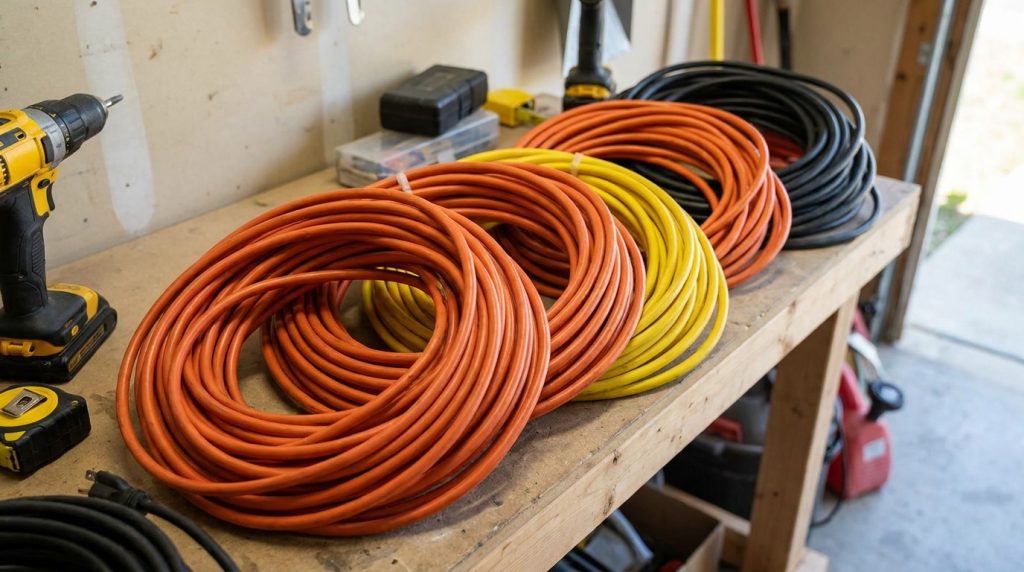
Choosing the right extension cord may seem like a small household detail, but small details can become acts of care. In Bhakti Yoga, the path of devotion, we learn to bring love, attention, and responsibility into everyday life. Whether we are plugging in a lamp for evening prayer, a speaker for kirtan—devotional chanting—or a tool for home maintenance, we can practice mindfulness and service.
Bhakti means loving devotion to God. Yoga means connection. So Bhakti Yoga is the path of reconnecting with the Divine through love, chanting, prayer, service, and sincere spiritual growth. Even practical choices, like using the proper extension cord size, can become part of seva, a Sanskrit word meaning loving service.
This extension cord size guide is written for everyone—homeowners, renters, temple volunteers, students, event organizers, and anyone who wants to use electricity safely and wisely. You do not need to be an electrician to understand the basics, but it is important to respect electricity and ask a qualified professional when needed.
As the Bhagavad-gita reminds us, “Yogaḥ karmasu kauśalam”—yoga is skill in action. In a practical sense, skill means doing things with care, awareness, and responsibility.
When selecting the appropriate extension cord for your needs, it’s essential to consider various factors such as length, gauge, and intended use. For a comprehensive understanding of how to choose the right tools for your projects, you may find the article on choosing CEM Industrial Supply tools effectively particularly helpful. You can read it here: Your Complete Guide to Choosing CEM Industrial Supply Tools Effectively. This resource provides valuable insights that complement the information found in the Extension Cord Size Guide.
Why Extension Cord Size Matters
Extension cords are not all the same. The right cord can safely carry power to your device. The wrong cord can overheat, damage equipment, trip breakers, or even create a fire hazard.
When we choose carefully, we protect people, property, and the sacred spaces where we live, serve, and gather.
The Three Main Factors: Gauge, Length, and Load
To choose the correct extension cord, you need to understand three basic factors:
- Wire gauge – how thick the wire is
- Cord length – how far the electricity must travel
- Electrical load – how much power the device needs
These three work together. A long, thin cord may not safely carry power to a high-wattage appliance. A short, heavy-duty cord can often handle more.
What “AWG” Means
Most extension cords in the United States use the term AWG, which stands for American Wire Gauge.
Here is the important part:
The lower the AWG number, the thicker the wire.
For example:
- 16-gauge cord: lighter duty
- 14-gauge cord: medium duty
- 12-gauge cord: heavy duty
- 10-gauge cord: extra heavy duty
A 12-gauge cord is thicker and can carry more electrical current than a 16-gauge cord.
This may feel backward at first, but once you remember that “lower number means thicker wire,” the extension cord size guide becomes much easier.
Understanding Amps, Watts, and Voltage
Before choosing an extension cord, it helps to understand a few simple electrical terms. We will keep this very practical.
What Are Amps?
Amps, short for amperes, measure electrical current. Think of amps as the amount of electricity flowing through the cord.
Many tools and appliances list their amperage on a label. For example:
- Small fan: 1–3 amps
- Laptop charger: 1–3 amps
- Electric drill: 5–8 amps
- Space heater: 12–15 amps
- Circular saw: 12–15 amps
The higher the amps, the stronger the extension cord needs to be.
What Are Watts?
Watts measure power. Many household devices list watts instead of amps.
Common examples:
- Phone charger: 5–30 watts
- Lamp: 40–100 watts
- Television: 100–400 watts
- Microwave: 700–1,500 watts
- Space heater: 1,500 watts
If you know watts but not amps, you can estimate amps with this formula:
Amps = Watts ÷ Volts
In many U.S. homes, standard voltage is about 120 volts.
So a 1,500-watt space heater uses:
1,500 ÷ 120 = 12.5 amps
That means it needs a heavy-duty cord, and in many cases, manufacturers recommend plugging space heaters directly into a wall outlet instead of using an extension cord.
What Is Voltage Drop?
Voltage drop happens when electricity loses strength as it travels through a cord, especially a long one.
The longer the cord, the more resistance it has. If the cord is too thin or too long for the device, the equipment may run poorly, overheat, or draw too much current.
This is why a 100-foot extension cord usually needs to be thicker than a 25-foot cord for the same tool.
In spiritual life, we learn that connection matters. In electrical life, connection matters too. A weak or improper connection can create difficulty. A strong, proper connection brings steadiness.
Please check out our latest article at https://cemindustrialsupply.com/news/ for more information.
Extension Cord Size Chart by Amps and Length
The following general extension cord size chart can help you choose the right cord. Always check the cord’s label and your device’s manual. When in doubt, choose a heavier-duty cord or ask an electrician.
General Extension Cord Gauge Guide
| Device Load | 25 Feet | 50 Feet | 100 Feet |
||:|:|:|
| Up to 5 amps | 16 AWG | 16 AWG | 14 AWG |
| 6–10 amps | 16 AWG | 14 AWG | 12 AWG |
| 11–13 amps | 14 AWG | 12 AWG | 10 AWG |
| 14–15 amps | 12 AWG | 12 AWG | 10 AWG |
This chart is a general guide for common household use. Some devices have special requirements, especially motors, heaters, air conditioners, refrigerators, and power tools.
Light-Duty Extension Cords
A light-duty extension cord is usually 16 AWG or thinner. These cords are best for small, low-power items.
Good uses may include:
- Phone chargers
- Lamps
- Small fans
- Holiday lights, if rated for the purpose
- Small electronics
Light-duty cords should not be used for high-power appliances, power tools, heaters, or kitchen equipment.
Medium-Duty Extension Cords
A medium-duty extension cord is often 14 AWG. This is a useful choice for many general household tasks.
Good uses may include:
- Larger fans
- Small power tools
- Computers and office equipment
- Audio equipment for small gatherings
- Some outdoor tools, depending on amperage and length
For devotional gatherings, a 14-gauge cord may support modest sound equipment or lighting, but always check the wattage and total load.
Heavy-Duty Extension Cords
A heavy-duty extension cord is usually 12 AWG. This is a strong option for many tools and higher-power devices.
Good uses may include:
- Circular saws
- Shop vacuums
- Lawn equipment
- Larger audio systems
- Certain kitchen or event appliances, if approved
For a community program, festival, or kirtan event, heavy-duty cords are often safer and more reliable than light cords.
Extra Heavy-Duty Extension Cords
An extra heavy-duty cord may be 10 AWG. These cords are thick, more expensive, and less flexible, but they are helpful when power must travel a longer distance or support higher loads.
Common uses may include:
- Long outdoor runs
- Contractor tools
- High-power equipment
- Certain temporary event setups
If you believe you need a 10-gauge cord for a major load, it is wise to consult an electrician or experienced event power professional.
When selecting the right extension cord for your needs, it’s essential to understand the various factors that influence cord size and capacity. For a more in-depth exploration of this topic, you can refer to a related article that provides valuable insights on industrial equipment and supplies. This resource can help you make informed decisions about the best extension cords for your specific applications. To learn more, check out this guide on industrial equipment and supplies.
Choosing the Right Extension Cord for Common Devices
Different devices have different needs. Some are gentle on cords. Others require great caution.
Extension Cord for Lamps and Small Electronics
For lamps, phone chargers, small fans, and simple electronics, a 16-gauge extension cord is often enough, especially at shorter lengths.
Still, avoid overloading one cord with too many devices. A power strip full of chargers is usually low load, but a power strip full of appliances is not.
For a meditation room, altar area, or peaceful reading corner, keep cords tidy and avoid creating tripping hazards. In Bhakti, beauty and safety can go together. A clean, thoughtful space supports remembrance of God.
Extension Cord for Power Tools
Power tools often require more current, especially when they start. A drill, saw, grinder, or compressor can draw a surge of power.
For many power tools:
- Use 14 AWG for shorter, lighter use
- Use 12 AWG for heavier tools or longer distances
- Use 10 AWG for long runs or high-demand tools
If the tool seems weak, the cord feels warm, or the motor sounds strained, stop using it. You may need a shorter or heavier cord.
In the spirit of seva, if you are repairing a temple, community space, or home, let careful tool use be part of your offering.
Extension Cord for Space Heaters
Space heaters are one of the most dangerous devices to use with extension cords.
Many space heater manufacturers say:
Do not use an extension cord. Plug directly into a wall outlet.
A typical space heater uses about 1,500 watts, or 12.5 amps. This is a heavy load. If an extension cord is too small, it can overheat.
If you absolutely must use an extension cord for a heater and the manufacturer allows it, use only a short, heavy-duty cord rated for at least the heater’s amperage—often 12 AWG or heavier. But again, the safest guidance is usually to plug the heater directly into the wall.
Never run a space heater while sleeping or unattended.
Extension Cord for Refrigerators and Freezers
Refrigerators and freezers have motors that need extra power when starting. If possible, plug them directly into a wall outlet.
If an extension cord is temporarily necessary, use a heavy-duty grounded cord, usually 12 AWG, and keep it as short as possible.
Do not use a thin household cord for a refrigerator or freezer.
Extension Cord for Outdoor Tools
Outdoor tools like lawn mowers, trimmers, leaf blowers, and pressure washers can require significant power.
Use only cords marked for outdoor use. Outdoor extension cords are built with insulation designed to handle moisture, sunlight, and rougher conditions.
For outdoor tools:
- Use 14 AWG for lighter tools and shorter distances
- Use 12 AWG for higher-power tools or longer runs
- Use 10 AWG for long distances or heavy-duty equipment
Always use a GFCI-protected outlet outdoors. GFCI stands for ground-fault circuit interrupter. It helps protect people from electric shock.
Indoor vs. Outdoor Extension Cords
One of the most important safety rules is simple:
Do not use indoor extension cords outdoors.
Outdoor cords are made to handle harsher conditions. Indoor cords are not.
How to Identify an Outdoor Extension Cord
Outdoor extension cords often have markings on the jacket. You may see letters such as:
- W – rated for outdoor use
- SJTW – service junior, thermoplastic, weather-resistant
- SJEOW – outdoor and oil-resistant qualities
You do not need to memorize all the letters, but look for packaging or labels that clearly say outdoor use.
Grounded vs. Ungrounded Cords
A grounded extension cord has three prongs. The third prong is for grounding, which adds a layer of safety.
Use grounded cords for:
- Power tools
- Appliances
- Outdoor equipment
- Computers and electronics with three-prong plugs
- Event sound systems
Never remove the third prong to fit a two-prong outlet. That grounding prong exists for safety.
If your home or building has older outlets, ask an electrician about safe options.
Water, Weather, and Moisture
Water and electricity are a dangerous combination.
When using outdoor extension cords:
- Keep connections off wet ground
- Use weather-resistant covers when appropriate
- Do not use damaged cords
- Do not run cords through puddles
- Unplug cords before heavy rain if the setup is not weather-protected
For outdoor devotional programs, festivals, or community gatherings, assign a responsible person to inspect power connections. This is a humble but very important form of service.
Extension Cord Safety Rules Everyone Should Know
Safety is not fear. Safety is care. In Bhakti Yoga, we try to see every person as a beloved child of God. Protecting others from harm is part of love.
Never Overload an Extension Cord
Each extension cord has a maximum rating. This may be listed in amps, watts, or both.
For example, a cord might say:
- 13 amps maximum
- 1,625 watts maximum at 125 volts
Do not exceed that rating.
Also remember that if you plug a power strip into an extension cord and then connect many items, the total load still counts. The cord does not care how many outlets are involved. It only carries the combined current.
Do Not Daisy-Chain Extension Cords
“Daisy-chaining” means plugging one extension cord into another, or connecting multiple power strips together.
This is unsafe and can cause overheating or fire risk.
If you need more length, use one properly rated cord of the correct length and gauge.
Do Not Run Cords Under Rugs or Carpets
Running extension cords under rugs is dangerous because heat cannot escape. The cord can also become damaged without anyone seeing it.
Avoid placing cords:
- Under rugs
- Under furniture legs
- Through doorways
- Across sharp edges
- Where people walk frequently
If a cord must cross a walkway temporarily, use a proper cord cover designed for that purpose.
Check for Damage Before Use
Before using an extension cord, look for:
- Cracked insulation
- Exposed wires
- Loose plugs
- Burn marks
- Melted areas
- Bent or missing prongs
If a cord is damaged, do not repair it with tape for continued use. Replace it.
Warm Cords Are a Warning Sign
A cord may become slightly warm with use, but it should never become hot.
If a cord feels hot, unplug it immediately. The device may be drawing too much power, the cord may be too small, or the cord may be damaged.
A hot plug or outlet is also a serious warning sign. Stop using it and seek professional help.
Reading Extension Cord Labels
Extension cord labels contain valuable information. Learning to read them can prevent mistakes.
Check the Gauge and Wire Count
You may see something like:
12/3
This means:
- 12 = 12-gauge wire
- 3 = three conductors, usually hot, neutral, and ground
A 12/3 cord is a heavy-duty grounded extension cord.
A 16/2 cord is a lighter-duty cord with two conductors and no ground.
Check the Amp and Watt Rating
The packaging or cord tag may say how many amps or watts the cord can handle.
Always match the cord rating to the device. If your appliance uses 12 amps, do not use a cord rated for only 10 amps.
Check Certifications
Look for safety marks such as UL, ETL, or another recognized testing label. These show that the cord has been tested to safety standards.
Avoid unknown, cheaply made cords with no certification. A low price is not worth a safety risk.
Extension Cord Size Guide for Events and Gatherings
Many spiritual communities, yoga centers, temples, churches, homes, and retreat spaces use extension cords for gatherings. There may be lights, microphones, speakers, projectors, cooking equipment, fans, or outdoor decorations.
A little planning can prevent a lot of stress.
Make a Power Plan
Before an event, list everything that needs power:
- Sound system
- Microphones
- Speakers
- Projector
- Lamps or string lights
- Fans or heaters
- Cooking appliances
- Phone charging station
- Outdoor lighting
Then check the wattage or amperage of each item. Add up the total load for each outlet or circuit.
If you are not sure how to do this, ask someone qualified. For large events, hire a professional.
Separate High-Power Appliances
Do not plug high-power cooking equipment, heaters, or large appliances into the same cord or circuit as sound equipment.
For example, a hot plate or electric kettle can draw a lot of power. If it shares a circuit with speakers, the breaker may trip, or the cord may overload.
Keep high-load devices separate.
Protect People from Tripping
At gatherings, people may be walking, dancing, serving food, or carrying children. Loose cords can become hazards.
Use:
- Cord covers
- Tape designed for temporary cable management
- Clear pathways
- Proper routing along walls
- Signs or barriers if needed
In kirtan, people may close their eyes, chant, clap, or dance. Safe cord placement helps everyone participate peacefully.
Common Extension Cord Mistakes to Avoid
Sometimes we make mistakes not because we are careless, but because no one has taught us. Learning is part of growth.
Using a Cord That Is Too Thin
A thin cord may work for a while, but that does not mean it is safe. If the cord is carrying more current than it was designed for, it may overheat.
For high-power devices, choose a thicker gauge.
Using a Cord That Is Too Long
Long cords create voltage drop. If you only need 25 feet, do not use 100 feet coiled up.
A cord that is too long can reduce performance and create heat, especially if left coiled.
Leaving a Cord Coiled During Use
When a cord is coiled, heat can build up. For high-power devices, always uncoil the cord fully before use.
Using Extension Cords Permanently
Extension cords are meant for temporary use. They are not a replacement for proper wiring.
If you always need an extension cord in the same place, consider having a new outlet installed by a licensed electrician.
Ignoring Manufacturer Instructions
Some devices clearly say not to use extension cords. This is common with space heaters, air conditioners, microwaves, and other high-power appliances.
Follow the manufacturer’s instructions.
A Simple Step-by-Step Extension Cord Size Guide
If you feel overwhelmed, here is a simple process.
Step 1: Find the Device’s Amps or Watts
Look at the label on the device or the owner’s manual.
If you see watts, divide by 120 to estimate amps in a standard U.S. household setting.
Step 2: Decide the Cord Length
Choose the shortest cord that safely reaches. Avoid unnecessary extra length.
Step 3: Match the Gauge to the Load
Use the general guide:
- Low-power devices: often 16 AWG
- Medium loads: often 14 AWG
- Heavy loads: often 12 AWG
- Long or very heavy loads: often 10 AWG
Step 4: Choose Indoor or Outdoor Rating
If using the cord outside, choose a cord clearly rated for outdoor use.
Step 5: Inspect Before Use
Look for damage. If anything seems unsafe, do not use the cord.
Step 6: Use with Awareness
Do not overload, daisy-chain, cover, or ignore heat. When finished, unplug and store the cord properly.
Caring for Your Extension Cords
A good extension cord can last a long time if treated well.
Store Cords Properly
Wrap cords loosely. Avoid sharp bends, tight knots, or pulling on the plug.
Store them in a dry place, away from direct sunlight, moisture, and pests.
Keep Cords Clean and Dry
After outdoor use, wipe cords dry before storing. Dirt, water, and debris can shorten the life of the cord.
Label Your Cords
For homes, community centers, and temples, labeling cords can be very helpful.
You might label:
- 16 AWG light duty
- 14 AWG medium duty
- 12 AWG heavy duty
- Outdoor only
- Sound system
- Kitchen use
This helps volunteers make better choices quickly.
Bhakti, Safety, and Everyday Devotion
At first, an extension cord size guide may not seem spiritual. But Bhakti Yoga invites us to offer our whole life to God—not only formal worship, but also daily actions.
In the Bhagavad-gita, Krishna teaches that whatever we do can be offered with devotion. In one well-loved verse, He says that even a leaf, flower, fruit, or water offered with love is accepted. The heart of the teaching is simple: God receives our sincerity.
So if we arrange a room safely for prayer, that can be an offering. If we protect guests at a gathering, that can be an offering. If we learn the right way to use a cord so that no one is harmed, that too can be seva.
Chanting While Serving
Bhakti practice includes chanting sacred names of God, often called mantra meditation. A mantra is a sacred sound that helps focus the heart and mind on the Divine.
Many practitioners chant the Hare Krishna maha-mantra:
Hare Krishna, Hare Krishna, Krishna Krishna, Hare Hare
Hare Rama, Hare Rama, Rama Rama, Hare Hare
“Maha-mantra” means great mantra. It is a prayer asking to be lovingly engaged in divine service.
Whether we are setting up chairs, preparing food, checking extension cords, cleaning a floor, or welcoming guests, chanting can help us remember that service is not ordinary when offered with love.
Prayer Before Action
Before beginning a task, we can pause and pray:
“Dear Lord, please help me serve with care. Please protect everyone who enters this space. Please let my work be useful and pleasing to You.”
This small prayer can transform a practical duty into devotional practice.
Final Thoughts: Choose Carefully, Serve Lovingly
The right extension cord size depends on the wire gauge, cord length, and electrical load. A 16-gauge cord may be fine for a lamp, while a 12-gauge or 10-gauge cord may be needed for tools, outdoor equipment, or longer distances. High-power appliances require special caution, and many should be plugged directly into a wall outlet.
Use this extension cord size guide as a starting point, but always read labels, follow manufacturer instructions, and consult a qualified electrician when unsure.
In Bhakti Yoga, we learn that love becomes real through action. Careful action. Humble action. Service-minded action. Even choosing the right cord can be part of creating a safe, welcoming, God-centered environment.
Wherever you are on your journey—new to spiritual life, returning after many years, curious, devoted, uncertain, or simply trying to live with more care—you are welcome. Take one sincere step toward God today. Chant a holy name, offer a prayer, serve someone with kindness, or bring more awareness into one small task. Every sincere step matters.
[fluentform id=”3″]
FAQs
What is an extension cord size guide?
An extension cord size guide is a resource that provides information on the appropriate size and capacity of extension cords for different types of electrical devices and appliances.
Why is it important to use the correct size extension cord?
Using the correct size extension cord is important to ensure safety and prevent electrical hazards. Using an undersized extension cord can lead to overheating and potential fire hazards, while using an oversized cord can be inefficient and costly.
How do I determine the right size extension cord for my needs?
To determine the right size extension cord, consider the power requirements of the device or appliance you will be using, the length of the cord needed, and the type of environment it will be used in. Refer to the extension cord size guide for specific recommendations.
What are the common sizes of extension cords available?
Extension cords are available in various sizes, typically ranging from 16 gauge to 10 gauge. The lower the gauge number, the thicker the wire and the higher the capacity of the cord.
Where can I find a reliable extension cord size guide?
Reliable extension cord size guides can be found online through reputable electrical safety organizations, hardware stores, and manufacturer websites. It’s important to refer to trusted sources for accurate information.
