
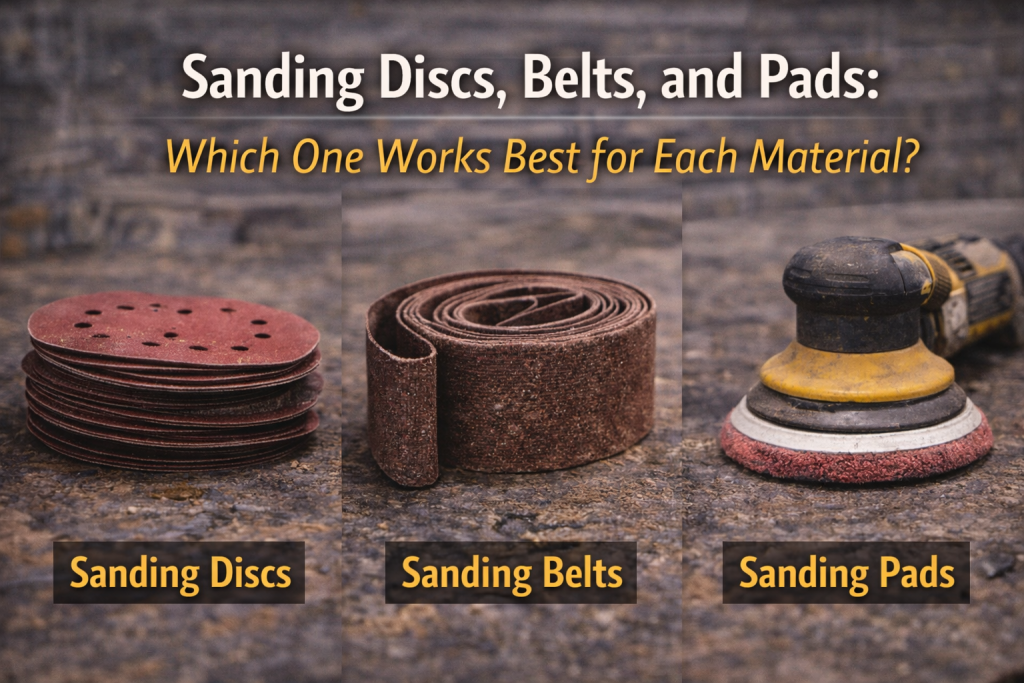
Sanding looks simple, but choosing the wrong abrasive wastes time, clogs discs, overheats material, and leaves inconsistent finishes. Discs, belts, and pads are designed for very different tasks, and understanding those differences makes sanding faster, cleaner, and far less frustrating.
At CEM Industrial Supply, sanding problems are one of the most common causes of rework we see. Here’s how to choose the right option the first time.
Sanding Discs: Speed and Versatility
Sanding discs are the most common choice for grinders, random orbit sanders, and angle sanders. They’re fast, easy to swap, and available in a wide range of grits.
Sanding discs work best for:
- Surface prep
- Paint and coating removal
- Light material removal
- Blending and smoothing
Use open-coat discs for soft metals and wood to reduce loading. Use closed-coat discs for harder materials where aggressive cutting is needed.
Sanding Belts: Aggressive Material Removal
Sanding belts are designed for belt sanders and excel at removing material quickly and consistently.
Sanding belts work best for:
- Heavy stock removal
- Shaping metal or wood
- Leveling welds
- Flattening surfaces
Because belts run cooler and distribute wear evenly, they’re ideal for continuous sanding applications where discs would overheat or wear unevenly.
Sanding Pads: Control and Finish Quality
Sanding pads are designed for finishing and surface refinement rather than aggressive removal.
Sanding pads work best for:
- Final surface prep
- Contour sanding
- Polishing and blending
- Finishing visible surfaces
Pads conform to surfaces better than discs or belts, making them ideal for curved or irregular shapes.
Match the Abrasive to the Material
Different materials respond differently to friction.
- Metal: Use ceramic or zirconia abrasives for durability and cooler cutting
- Stainless steel: Use finer grit progressions and avoid excessive pressure
- Wood: Open-coat abrasives reduce clogging
- Paint and coatings: Start coarse, finish fine
Using the wrong abrasive loads discs quickly and produces uneven results.
Grit Progression Saves Time
Jumping from coarse to fine grits skips important steps and forces abrasives to work too hard.
A proper progression:
- Shapes with coarse grit
- Smooths with medium grit
- Finishes with fine grit
This approach produces better finishes and extends abrasive life.
The Bottom Line
Discs, belts, and pads aren’t interchangeable. Each has a role, and choosing correctly saves time, improves finish quality, and reduces tool wear.
If sanding jobs are taking longer than they should, CEM Industrial Supply can help you match abrasives to your tools, materials, and workload.