
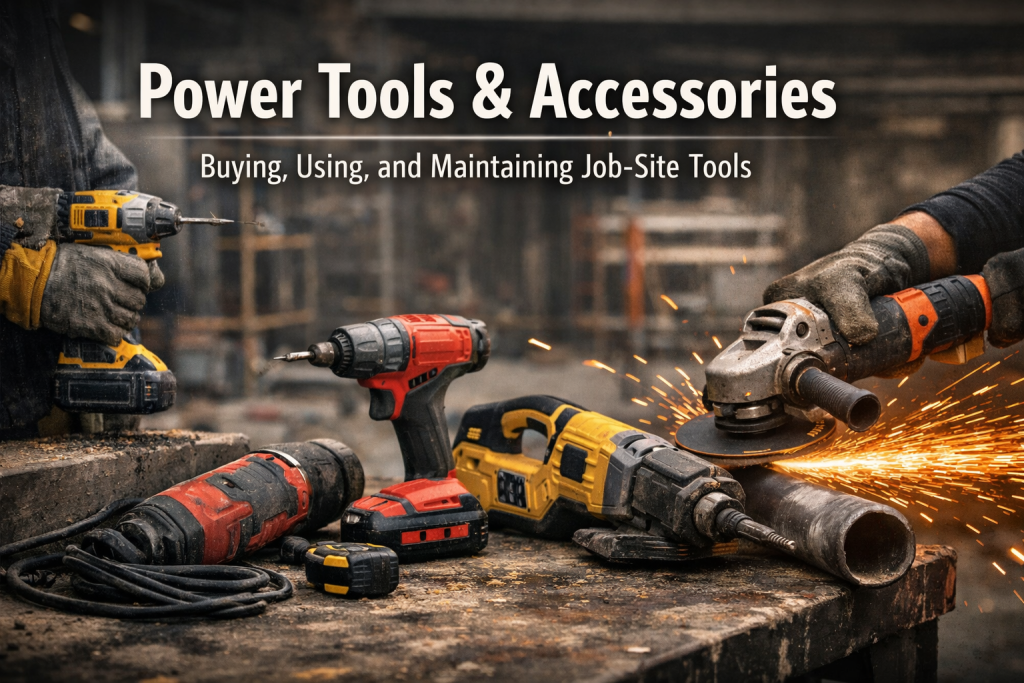
Power tools are where time, labor, and results collide. The right tool makes a crew faster, safer, and more consistent. The wrong tool burns batteries, strips fasteners, overheats motors, and costs you downtime. This hub is your practical guide to choosing job-site power tools and the accessories that actually hold up in the real world, plus the maintenance habits that keep them running longer.
At CEM Industrial Supply (Coldwater, MI), we stock tools and accessories built for tradespeople, maintenance teams, and serious DIYers who need reliable performance, not “good enough for one project.”
What This Guide Covers
Use this page as your starting point. Each section links out to deeper articles and product guides:
- Choosing power tools by application, power, and duty cycle
- Corded vs cordless decisions that affect productivity and long-term cost
- Accessories that actually matter: blades, bits, grinding wheels, sanding discs, and abrasives
- Maintenance and safety basics that prevent early tool failure
- Pro-level buying advice to help you avoid repeat purchases
Choosing the Right Power Tool for the Job
Before comparing brands or prices, define what the tool must survive on your jobsite.
Start with the application. Cutting, grinding, drilling, fastening, polishing, and heating all place different stresses on motors and gearboxes. A tool designed for light-duty work will fail quickly in industrial or contractor use.
Next, consider duty cycle. If a tool will run intermittently, cordless may be ideal. If it runs continuously, corded tools often last longer and cost less over time.
Finally, match power to workload. Overworking an underpowered tool leads to heat buildup, battery failure, and shortened motor life.
Corded vs Cordless Power Tools
Cordless tools offer mobility and speed, especially for service calls and construction work. They shine where outlets are limited or work locations change frequently.
Corded tools still dominate in grinding, sanding, cutting, and other continuous-load applications. They provide consistent power without battery downtime and typically have a longer service life for high-demand tasks.
The smartest setups use both. Cordless for mobility and fast tasks, corded for heavy-duty or all-day use.
Power Tool Accessories That Make or Break Performance
Accessories are where most tool failures actually begin. Cheap blades, discs, and bits overload motors, increase vibration, and create safety risks.
Quality accessories provide cleaner cuts, faster material removal, and less strain on the tool. This includes grinding wheels rated for the correct RPM, sanding discs matched to material type, and cutting blades designed for the metal or surface being worked.
Using the right accessory is often more important than upgrading the tool itself.
Maintenance Habits That Extend Tool Life
Simple maintenance dramatically increases tool lifespan.
Clean tools after use. Dust, grit, and metal shavings trap heat and wear components prematurely.
Inspect cords, batteries, and housings regularly. Small cracks and loose connections turn into failures under load.
Replace worn accessories early. Forcing a dull disc or blade damages bearings and motors faster than most people realize.
Store tools properly. Moisture, cold, and impacts shorten the life of even the best equipment.
Safety Isn’t Optional
Power tools demand respect. Always verify accessory RPM ratings, use guards and PPE, and never defeat built-in safety features.
Many jobsite injuries come from improper accessories, missing guards, or tools pushed beyond their intended use.
Explore Related Guides
From this hub, you can dive deeper into specific topics including power tool maintenance, cutting and grinding accessories, jobsite safety, and brand comparisons. Each guide is written from real counter experience, not marketing copy.
If you need help choosing the right tool or accessory for your application, stop in or call CEM Industrial Supply. We’ll help you buy the right tool the first time—and keep it working.