
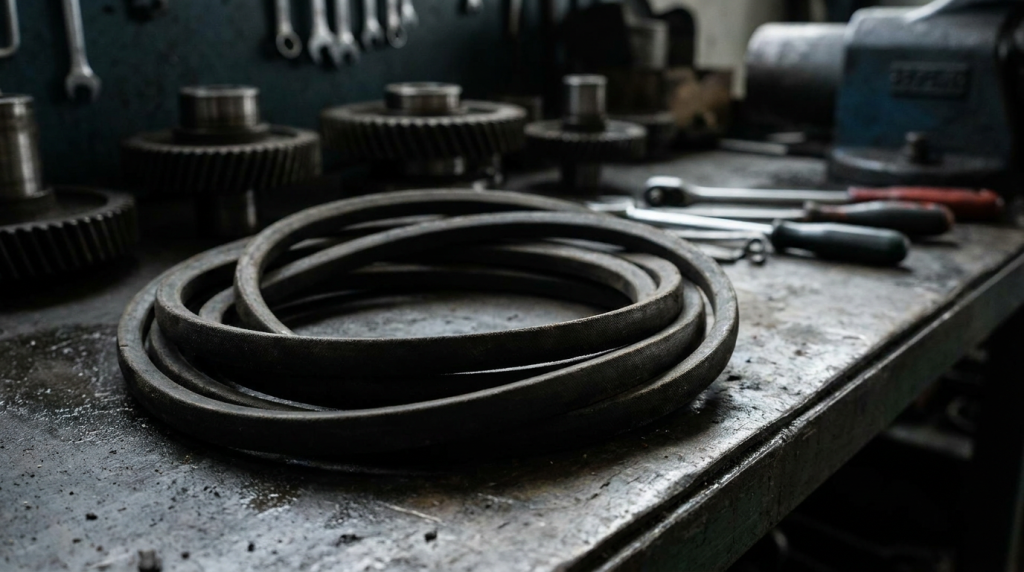
Choosing the right V-belt may seem like a small technical decision, but in a workshop, factory, farm, or home garage, small choices often carry great responsibility. A properly selected V-belt helps machines run smoothly, safely, and efficiently. A poorly chosen belt can slip, wear out quickly, waste energy, damage pulleys, or stop production at the worst possible time.
In the spirit of Bhakti Yoga—the path of loving service—we can approach even practical tasks with care, humility, and attention. Bhakti means devotion, and seva means service. When we maintain tools, protect workers, reduce waste, and keep equipment reliable, we are also practicing a kind of mindful service. The Bhagavad-gītā teaches that work done with sincerity and dedication can become sacred. In that mood, let us walk through how to choose the right V-belt with clarity and care.
A V-belt is a flexible power transmission belt with a trapezoid-shaped cross-section. It is called a “V-belt” because its sides fit into a V-shaped groove on a pulley. As the belt wedges into the pulley groove, it creates friction, allowing power to transfer from one rotating shaft to another.
V-belts are commonly used in air compressors, HVAC systems, lawn equipment, industrial machinery, agricultural equipment, pumps, fans, and automotive engines. They are popular because they are durable, relatively affordable, easy to install, and effective for many power transmission needs.
How a V-Belt Works
A V-belt works by gripping the sides of the pulley groove. Unlike flat belts, which rely mostly on surface contact, V-belts use wedging action. This gives them better traction and reduces slipping.
When the motor pulley turns, the belt moves with it and transfers rotational force to the driven pulley. The driven pulley may operate a fan, pump, blade, alternator, compressor, or other machine component.
Why the Right V-Belt Is Important
Choosing the correct V-belt affects:
- Machine efficiency
- Belt life
- Pulley life
- Energy use
- Noise and vibration
- Safety
- Downtime and repair costs
A belt that is too loose can slip. A belt that is too tight can overload bearings and shafts. A belt with the wrong profile may not sit correctly in the pulley. A belt made from the wrong material may crack, swell, or fail in heat, oil, moisture, or abrasive environments.
In simple terms, the right belt brings harmony to the system. Just as Bhakti Yoga encourages alignment of heart, words, and actions, a good power transmission system depends on proper alignment, correct tension, and the right match between belt and pulley.
When selecting the appropriate V-belt for your machinery, it’s essential to consider not only the belt itself but also the overall maintenance of your equipment to ensure optimal performance. A related article that delves into the importance of proper maintenance is available at this link: How Improper Grinding Destroys Bearings and How to Prevent It. This resource provides valuable insights into how neglecting certain aspects of machinery care can lead to significant issues, including bearing damage, which can ultimately affect the efficiency of your V-belt system.
Identify the Correct V-Belt Type
Before measuring or buying, you need to know which type of V-belt your machine requires. Not all V-belts are the same. They may look similar at first glance, but differences in width, height, angle, flexibility, and construction matter greatly.
Classical V-Belts
Classical V-belts are among the most common. They are often labeled with sections such as A, B, C, D, and E. These belts are used in many general industrial and agricultural applications.
Common classical V-belt sections include:
- A section
- B section
- C section
- D section
- E section
Each section has a different width and depth. For example, an A-section belt is smaller than a B-section belt. If your pulley is made for a B-section belt, an A-section belt will sit too low and may slip or wear unevenly.
Narrow V-Belts
Narrow V-belts are designed to transmit more power in a smaller space. They are often labeled as 3V, 5V, and 8V. These belts are common in industrial applications where higher horsepower and compact drive design are needed.
Narrow V-belts can often handle more load than classical belts of similar size because of their improved geometry and construction.
Cogged or Notched V-Belts
Cogged V-belts, sometimes called notched V-belts, have grooves or notches along the inner side. These notches allow the belt to bend more easily around smaller pulleys and run cooler.
They are helpful when:
- Pulley diameters are small
- Higher flexibility is needed
- Heat buildup is a concern
- Energy efficiency matters
- The drive system runs at higher speeds
Cogged belts can often replace standard wrapped V-belts if the size and profile are correct.
Banded V-Belts
Banded V-belts are multiple V-belts joined together with a common backing. They are used when vibration, shock loads, or belt rollover may be a problem.
They are often found in:
- Heavy-duty industrial drives
- Agricultural machinery
- Crushers
- Compressors
- High-load equipment
If your system originally uses a banded belt, it is usually wise to replace it with the same style unless a qualified technician recommends otherwise.
Variable Speed V-Belts
Variable speed belts are wider and designed for adjustable pulley systems. They are often used in equipment where speed changes during operation, such as some lathes, scooters, snowmobiles, and industrial variable-speed drives.
These belts must be chosen carefully because width, angle, and length are especially important.
Measure the V-Belt Correctly
Measurement is one of the most important steps when choosing the right V-belt. Many belt problems begin with guessing. A sincere and careful measurement can save time, money, and frustration.
Check the Existing Belt Number
The easiest way to choose a replacement V-belt is to read the number printed on the old belt. This number may include letters and numbers that identify the belt section and length.
For example:
- A38
- B52
- 5V800
- AX41
- 3L350
The letters often indicate the belt profile or type, and the numbers usually relate to length. However, markings can wear off over time. If the old belt is cracked, stretched, or unreadable, you will need to measure it manually.
Measure the Belt Width
Use a ruler or caliper to measure the top width of the belt. The top width helps identify the belt section.
Approximate examples:
- 3L belt: 3/8 inch top width
- 4L or A belt: 1/2 inch top width
- 5L or B belt: 5/8 inch top width
- C belt: 7/8 inch top width
These are general references, but always confirm with manufacturer specifications.
Measure the Belt Length
V-belt length can be described in different ways:
- Inside length
- Outside length
- Pitch length
- Effective length
This can be confusing. The same belt may have different length values depending on the measurement method. If you are replacing a belt, try to match the manufacturer’s part number rather than relying only on physical measurement.
If no number is available, you can wrap a flexible tape around the belt to estimate outside length. For more accuracy, use a belt measuring tool or consult a supplier.
Measure the Pulley Groove
The belt must match the pulley groove. If the belt is too narrow, it will sit too deep in the groove. If it is too wide, it may ride too high. In either case, the belt will not grip properly.
Look for signs of mismatch:
- Belt bottom touches the bottom of the pulley groove
- Belt rides above the pulley rim
- Uneven wear on belt sides
- Excessive belt dust
- Slipping even with proper tension
- Squealing noise
A V-belt should grip the sides of the pulley, not the bottom of the groove.
Please check out our latest article at https://cemindustrialsupply.com/news/ for more information.
Consider Load, Horsepower, and Speed Requirements
A V-belt must be strong enough for the power it needs to transmit. Choosing a belt only by length and width is not always enough. You must also consider load, speed, and operating conditions.
Determine Horsepower Requirements
The belt must handle the horsepower of the motor or engine. A small belt on a high-horsepower drive may overheat, stretch, slip, or fail.
Check:
- Motor horsepower
- RPM of the driver pulley
- RPM of the driven pulley
- Pulley diameters
- Number of belts used
- Service factor
The service factor adjusts for real-world conditions such as shock loads, long operating hours, or frequent starts and stops.
Understand Light-Duty vs Heavy-Duty Use
A V-belt for a small household appliance is not the same as a belt for a grain auger, industrial pump, or rock crusher.
Light-duty applications may include:
- Small fans
- Light lawn equipment
- Household tools
Heavy-duty applications may include:
- Industrial compressors
- Agricultural machinery
- Conveyors
- High-load pumps
- Manufacturing equipment
When in doubt, choose a belt rated for the actual duty cycle and load conditions, not just the physical size.
Account for Shock Loads
Some machines do not apply power smoothly. Equipment such as crushers, chippers, and agricultural machines may create sudden load changes. These shock loads can stretch or damage ordinary belts.
For shock-loading conditions, consider:
- Banded V-belts
- Heavy-duty wrapped belts
- Cogged raw-edge belts
- Multiple belt drives
- Manufacturer-recommended upgrades
A belt that works well in a smooth fan drive may fail quickly in a heavy shock-load application.
When selecting the appropriate V-belt for your machinery, it’s essential to consider various factors such as the type of application and the environmental conditions. For those interested in maintaining their equipment effectively, you might find it helpful to read a related article that compares different cleaning products for industrial use. This article discusses the strengths and weaknesses of various brands, which can be crucial for keeping your machinery in top shape. You can check it out here: cleaning products for industrial use.
Choose the Right Material and Construction
V-belts are made from rubber compounds, synthetic materials, tensile cords, fabric covers, and sometimes special heat- or oil-resistant materials. The right construction depends on the environment and application.
Rubber V-Belts
Standard rubber V-belts are suitable for many common applications. They offer good flexibility, grip, and durability under normal conditions.
However, standard rubber may not perform well when exposed to:
- Excessive heat
- Oil
- Chemicals
- Ozone
- Outdoor weathering
- Extreme cold
If your machine operates in a harsh environment, look for specialty belt materials.
Neoprene and Synthetic Belts
Many modern V-belts use neoprene or other synthetic rubber compounds. These can provide better resistance to heat, oil, and aging than traditional rubber.
Synthetic belts are often used in industrial and automotive settings where durability and consistent performance matter.
Kevlar or Aramid Cord Belts
Some V-belts use aramid or Kevlar tensile cords. These cords are strong, stretch-resistant, and useful for demanding applications.
Aramid cord belts are often helpful for:
- Lawn and garden equipment
- Clutching applications
- Heavy shock loads
- High-strength requirements
- Long service life
They usually cost more but may save money by reducing downtime and replacements.
Wrapped vs Raw-Edge Belts
Wrapped V-belts have a fabric cover around the belt. They are durable, smooth-running, and resistant to contamination.
Raw-edge belts have exposed sidewalls that can provide better grip and improved efficiency. Cogged raw-edge belts can also run cooler and flex more easily.
The best choice depends on the drive design, pulley condition, load, and environment.
When selecting the appropriate V-belt for your machinery, it can be helpful to explore additional resources that provide valuable insights. For instance, an informative article on the importance of proper belt tension can enhance your understanding of V-belt performance. You can read more about this topic in the article here, which discusses how maintaining the right tension can significantly extend the lifespan of your belts and improve overall efficiency.
Evaluate the Operating Environment
A V-belt lives in the environment around it. Heat, dust, oil, moisture, chemicals, and sunlight can all affect performance. Before choosing a belt, pause and observe the real conditions of your machine.
In Bhakti practice, there is a helpful principle of awareness. Japa, or meditative chanting of God’s names, teaches us to notice where the mind wanders and gently bring it back. In the same way, good maintenance begins with noticing what is actually happening—not what we assume is happening.
Heat and Temperature
Heat is one of the greatest enemies of V-belts. Excessive heat can harden rubber, reduce flexibility, and cause cracking. A belt that runs too hot may fail long before its expected service life.
Heat may come from:
- High ambient temperature
- Friction from slipping
- Small pulley diameters
- Poor ventilation
- Over-tensioning
- Heavy loads
If heat is a concern, consider cogged belts, heat-resistant materials, proper ventilation, and correct tension.
Oil and Chemical Exposure
Oil can cause some belts to swell, soften, or lose grip. Chemical exposure may also degrade the belt material.
If your equipment operates near oil, grease, solvents, fertilizers, or cleaning chemicals, choose a belt with oil and chemical resistance. Also repair leaks when possible. A better belt helps, but it should not be asked to suffer unnecessarily.
Dust, Dirt, and Abrasion
Dusty environments can shorten belt life, especially when abrasive particles enter the pulley grooves. This is common in agriculture, woodworking, mining, and construction.
To reduce wear:
- Keep guards in place
- Clean pulleys regularly
- Use appropriate belt covers
- Inspect for debris buildup
- Replace worn pulleys
Outdoor and Weather Exposure
Outdoor equipment may face rain, sunlight, ozone, and temperature changes. Choose belts designed for outdoor durability when needed. Store spare belts in a cool, dry place away from direct sunlight and electric motors, which can produce ozone.
Check Pulley Condition and Alignment
Even the best V-belt will fail early if the pulleys are worn, misaligned, or damaged. Choosing the right V-belt includes checking the entire drive system.
Inspect Pulley Grooves
Pulley grooves should be smooth and properly shaped. Over time, grooves can become worn, polished, rough, or widened. A worn pulley may cause a new belt to slip or wear unevenly.
Look for:
- Sharp edges
- Cracks
- Rust
- Groove wear
- Wobbling pulleys
- Polished or glazed surfaces
- Belt dust accumulation
If pulleys are badly worn, replacing only the belt may not solve the problem.
Check Alignment
Misalignment causes belts to twist, run hot, and wear on one side. It can also increase vibration and damage bearings.
Types of misalignment include:
- Angular misalignment
- Parallel misalignment
- Pulley wobble
- Incorrect shaft positioning
Use a straightedge, laser alignment tool, or manufacturer-recommended method to check alignment.
Confirm Pulley Diameter
Every belt type has a minimum pulley diameter. If the pulley is too small, the belt must bend sharply, creating stress and heat. Cogged belts are often better for smaller pulleys, but every belt has limits.
Before switching belt types, confirm that the belt is compatible with the pulley diameters in your system.
Understand Belt Tension and Installation
Correct installation is just as important as correct selection. A good belt installed poorly may fail quickly. This is a place where patience becomes practical wisdom.
Avoid Over-Tensioning
Many people think tighter is better, but too much tension can cause serious problems.
Over-tensioning may lead to:
- Bearing damage
- Shaft stress
- Excessive heat
- Belt stretching
- Premature failure
- Motor overload
A V-belt should be tight enough to transmit power without slipping, but not so tight that it strains the system.
Avoid Under-Tensioning
A loose belt can slip, squeal, vibrate, and overheat. Slipping creates friction, which can glaze the belt and pulley surfaces. Once glazing occurs, the belt may continue slipping even after adjustment.
Signs of under-tensioning include:
- Squealing at startup
- Burning rubber smell
- Low machine output
- Belt dust
- Visible fluttering
- Hot belt surface
Use Proper Installation Methods
Never force a V-belt onto a pulley with a screwdriver or pry bar. This can damage the belt cords and shorten belt life. Instead, loosen the motor mount or tension adjustment, place the belt properly, and then re-tension.
After installation:
- Rotate the drive by hand if safe
- Check belt seating
- Confirm alignment
- Set correct tension
- Run briefly and recheck
- Re-tension after break-in if recommended
Always follow lockout and safety procedures before working on machinery.
Match Brand, Quality, and Standards
Not all V-belts are equal. A low-cost belt may be acceptable for light use, but for critical equipment, belt quality matters. A better belt can reduce downtime, improve efficiency, and last longer.
OEM vs Aftermarket Belts
OEM means Original Equipment Manufacturer. An OEM belt is supplied or recommended by the equipment maker. It is often the safest choice when you want an exact replacement.
Aftermarket belts can also be excellent, especially from trusted manufacturers. When choosing aftermarket, make sure the belt matches the correct size, profile, construction, and performance rating.
Look for Reliable Manufacturers
Reputable belt manufacturers provide clear specifications, engineering data, and application guidance. This helps you choose confidently.
A quality belt usually has:
- Clear markings
- Consistent dimensions
- Strong tensile cords
- Good heat resistance
- Reliable construction
- Documented specifications
Avoid Choosing by Price Alone
It is natural to be careful with money. Simplicity and wise spending are honorable. But the cheapest belt may cost more if it fails quickly or damages equipment.
Consider total value:
- Belt lifespan
- Downtime cost
- Energy efficiency
- Maintenance labor
- Machine protection
- Safety risk
In the Bhagavad-gītā, wisdom is often connected with seeing beyond the immediate surface. In practical terms, a wise purchase considers long-term results, not only today’s price.
Know When to Replace a V-Belt
Sometimes the question is not only how to choose the right V-belt, but when to replace the old one. Waiting too long can lead to sudden failure.
Common Signs of V-Belt Wear
Replace a V-belt if you notice:
- Cracks
- Fraying
- Glazing
- Missing chunks
- Uneven wear
- Excessive stretching
- Hard or brittle rubber
- Squealing that adjustment does not fix
- Belt slipping under normal load
A belt may also need replacement if it has been contaminated with oil or chemicals.
Replace Multiple Belts Together
If your drive uses multiple belts side by side, replace them as a matched set. Mixing old and new belts can create uneven load sharing. The new belt may carry more load and wear prematurely.
Even if only one belt appears damaged, the others may be stretched or worn too.
Keep Maintenance Records
Good records help you understand belt life and recurring problems. Write down:
- Belt part number
- Installation date
- Tension setting
- Operating hours
- Failure symptoms
- Pulley condition
- Environmental conditions
If belts keep failing early, records can help identify the root cause.
Practical Step-by-Step Guide to Choosing the Right V-Belt
Here is a simple process you can follow with steadiness and care.
Step 1: Identify the Machine Requirements
Start with the equipment manual. Look for the recommended belt part number, type, and size. If the manual is not available, check the old belt and pulley system.
Step 2: Read the Belt Markings
If visible, write down all letters and numbers printed on the old belt. Include brand names, section codes, and length codes.
Step 3: Measure the Belt and Pulley
Measure the top width, approximate length, and pulley groove. Confirm that the belt profile matches the pulley.
Step 4: Consider the Application
Ask:
- What horsepower is being transmitted?
- Is the load smooth or shock-heavy?
- How many hours does it run?
- Is the environment hot, oily, dusty, or wet?
- Are small pulleys involved?
- Is vibration a problem?
Step 5: Choose the Correct Belt Construction
Based on your answers, choose standard, cogged, banded, heavy-duty, oil-resistant, heat-resistant, or aramid cord construction as needed.
Step 6: Inspect the Drive System
Before installing the new belt, inspect pulleys, alignment, bearings, guards, and tensioning mechanisms.
Step 7: Install and Tension Properly
Install without prying. Set the correct tension. Run the machine briefly and recheck. Follow all safety procedures.
Common Mistakes to Avoid
Many V-belt problems come from small mistakes. With a little attention, they are easy to avoid.
Using the Wrong Belt Profile
A belt that is close in size is not always correct. The belt must match the pulley groove and application.
Ignoring Pulley Wear
A new belt on a worn pulley may fail quickly. Always inspect the pulley.
Mixing Old and New Belts
In multi-belt drives, replace all belts together with a matched set.
Over-Tightening the Belt
Too much tension can damage bearings, shafts, and the belt itself.
Forgetting Environmental Conditions
Heat, oil, chemicals, and dust can change which belt is best.
Buying Only by Length
Length matters, but so do width, profile, material, construction, horsepower rating, and pulley compatibility.
A Devotional Reflection on Careful Work
Bhakti Yoga is often expressed through chanting, prayer, service, and remembrance of God. Yet devotion is not limited to temples or meditation spaces. It can enter the workshop, the farm, the factory floor, and the repair bench.
When we choose the right V-belt, we are practicing responsibility. When we maintain equipment safely, we protect people. When we avoid waste, we honor resources. When we work honestly, we serve others.
The Sanskrit word sādhana means spiritual practice. For some, sādhana includes chanting sacred names, reading scripture, offering food with gratitude, or praying each morning. But our daily work can also become part of our spiritual growth when it is done with sincerity, humility, and a desire to serve.
The Bhagavad-gītā offers a beautiful principle: offer your work to the Divine. This does not mean we must change our profession or pretend practical tasks are not practical. It means we can bring love, attention, and integrity into what is already before us.
Choosing the right V-belt is a technical task. But the heart behind the task can still be devotional.
Final Checklist Before Buying a V-Belt
Before you purchase, review this checklist:
- Do you know the old belt number?
- Have you confirmed the belt profile?
- Have you measured top width and length?
- Does the belt match the pulley groove?
- Is it rated for the horsepower and load?
- Is the construction suitable for the environment?
- Are pulleys clean, aligned, and unworn?
- Do you need cogged, banded, or heavy-duty construction?
- Are you replacing all belts in a multi-belt drive?
- Do you have the proper tools for safe installation?
If you are unsure, bring the old belt, pulley measurements, equipment model, and application details to a knowledgeable supplier or technician. There is humility in asking for help. In both spiritual life and practical work, guidance can save us from unnecessary struggle.
Everyone Can Take One Sincere Step
Choosing the right V-belt is about fit, function, and faithful attention to detail. In a similar way, spiritual life begins by finding a simple, sincere practice that fits into our daily life—chanting a holy name, offering a prayer, serving someone with kindness, reading a verse of wisdom, or pausing with gratitude before beginning work.
At The Bhakti House, all are welcome—every background, every question, every stage of the journey. Whether you are maintaining a machine, caring for a family, running a business, or seeking deeper meaning, you can take one sincere step toward God today. No step is too small when it is offered with love.
[fluentform id=”3″]
FAQs
What is a V-Belt?
A V-belt is a type of power transmission belt that is commonly used in industrial machinery to transfer power from a motor to various mechanical components.
What are the different types of V-Belts?
There are several types of V-belts, including classical V-belts, narrow V-belts, cogged V-belts, and banded V-belts. Each type is designed for specific applications and load requirements.
How do I choose the right V-Belt for my application?
To choose the right V-belt for your application, you need to consider factors such as the amount of power to be transmitted, the speed of the drive, the center distance between the pulleys, and the environmental conditions in which the belt will operate.
What are the common materials used in V-Belts?
V-belts are commonly made from materials such as rubber, neoprene, and polyurethane. The choice of material depends on the specific application and the operating conditions.
How do I maintain and prolong the life of V-Belts?
To maintain and prolong the life of V-belts, it is important to regularly inspect them for wear and damage, ensure proper tensioning, and keep them clean and free from contaminants. Lubrication may also be necessary for certain types of V-belts.