
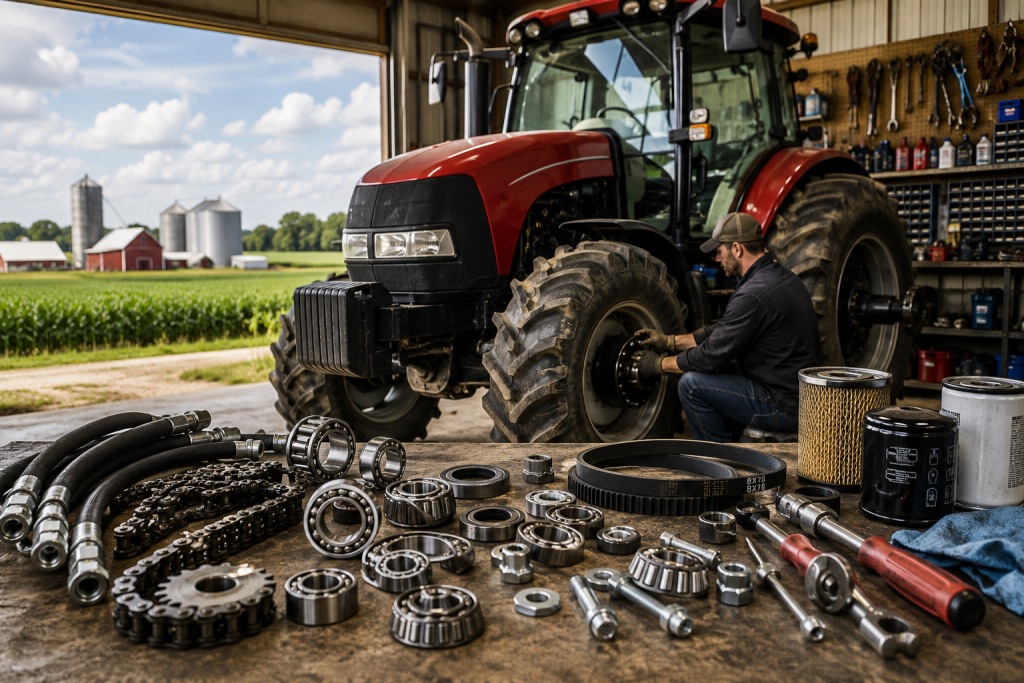
When a tractor, haybine, skid steer, grain auger, manure spreader, or utility trailer goes down during the workday, the right part matters more than a low catalog price. In farming, downtime can mean missed planting windows, delayed hay drying, slowed harvest, lost feed efficiency, and extra labor costs. That is why farms in Coldwater, Branch County, and Southern Michigan need a dependable local source for farm equipment parts, industrial supplies, and repair essentials.
CEM Industrial Supply serves the needs of agricultural, industrial, maintenance, and contractor customers who depend on practical parts availability and knowledgeable support. Whether you are maintaining older farm machinery, repairing hydraulics, replacing bearings, sourcing belts, or restocking shop supplies, the goal is the same: get the machine running safely, correctly, and quickly.
Farm equipment parts are not one-size-fits-all. A small mismatch in bearing size, belt profile, hydraulic fitting thread, or fastener grade can cause premature failure or create a safety hazard. As a senior equipment professional, I always recommend treating parts selection as part of the maintenance process—not just a purchasing decision.
If you’re looking for reliable farm equipment parts near Coldwater, it’s essential to consider the tools you use for maintenance and repairs. A related article that provides valuable insights into choosing the right tools is titled “Screwdrivers: Phillips vs. JIS – Why You Strip Screws.” This article discusses the differences between screwdriver types and how using the wrong one can lead to stripped screws, which is crucial knowledge for anyone working on farm equipment. You can read the article here: Screwdrivers: Phillips vs. JIS – Why You Strip Screws.
Why Local Farm Equipment Parts Availability Matters in Coldwater and Branch County
Southern Michigan farms operate in a demanding environment. Cold winters, wet springs, heavy field residue, road travel, livestock chores, and seasonal time pressure all contribute to equipment wear. Having access to farm equipment parts near Coldwater can reduce downtime and help you avoid the delays that come with ordering parts from distant warehouses.
Faster Repairs During Critical Seasons
During planting, hay season, harvest, and snow removal, every hour counts. Local access to common repair parts can make the difference between finishing a job today or losing a full workday.
Common urgent repair needs include:
- Hydraulic hose replacement
- Bearings and seals
- V-belts and drive belts
- Chain and sprockets
- Grease fittings and lubrication supplies
- Fasteners, pins, clips, and hardware
- Trailer lighting and electrical repair items
- Filters and fluids
- Cutting, grinding, and welding supplies
For farms around Coldwater, Quincy, Bronson, Union City, Tekonsha, Jonesville, Hillsdale, Sturgis, and the wider Branch County area, a nearby industrial supply source can be a major advantage.
Better Fitment Support
A knowledgeable supplier can help identify the right part by measurement, application, cross-reference, or sample comparison. That matters especially for:
- Older tractors and implements
- Mixed-brand farm fleets
- Aftermarket replacement parts
- Custom-built equipment
- Hydraulic adapters and fittings
- Non-standard bearings, belts, or shafts
When you walk in with a worn bearing, broken belt, damaged hose, or odd fitting, experienced counter support can often help you match the part correctly.
Lower Total Cost of Downtime
The cheapest part is not always the lowest-cost solution. A poor-quality bearing, incorrect belt, or under-rated hydraulic hose can fail quickly and damage nearby components.
Local sourcing helps reduce:
- Freight costs
- Emergency shipping fees
- Waiting time
- Incorrect online orders
- Repeat repairs
- Lost productivity
In farm maintenance, value is measured by uptime, safety, and service life—not just purchase price.
Common Farm Equipment Parts Farmers Need Most Often
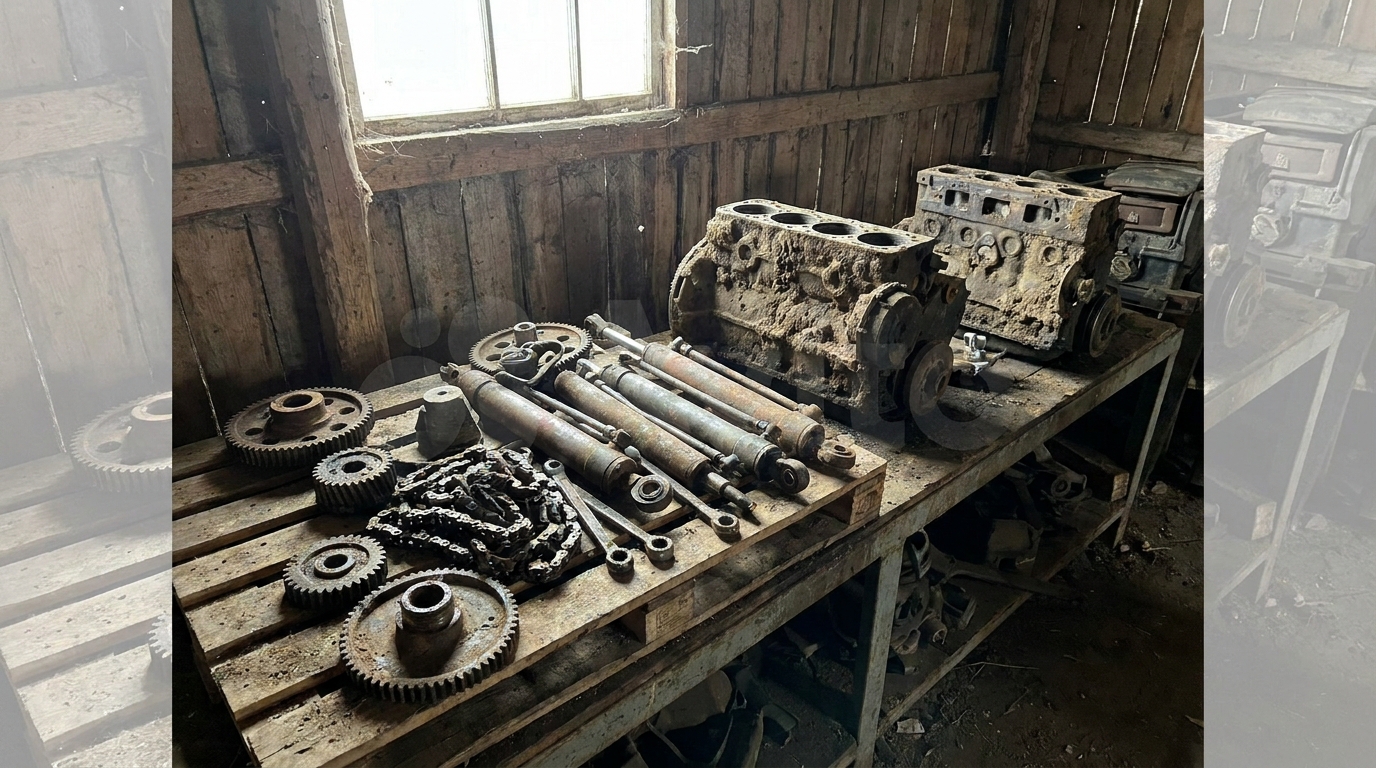
Every farm has different machinery, but the most commonly replaced parts are surprisingly consistent across row crop, hay, livestock, and property maintenance operations. CEM Industrial Supply supports many of these repair needs through practical industrial and agricultural supply categories.
Bearings, Seals, and Bushings
Bearings are among the most common wear items on farm equipment. They operate in dust, dirt, moisture, crop residue, and shock-load conditions. When bearings fail, they can damage shafts, housings, belts, chains, and gearboxes.
Common applications include:
- Disc harrows
- Planters
- Grain augers
- Hay rakes
- Balers
- Mowers
- Conveyors
- Wagons
- Spreaders
- PTO-driven equipment
When replacing a bearing, match more than the inside diameter. You should confirm:
- Bore size
- Outside diameter
- Width
- Locking collar type
- Housing style
- Seal type
- Grease compatibility
- Load rating
- Speed rating
A sealed bearing may work well in one application, while a greasable bearing may be better in another. For dirty agricultural environments, proper sealing and lubrication are especially important.
Belts, Pulleys, and Drive Components
Belts transfer power in combines, augers, fans, mowers, compressors, conveyors, and shop equipment. A worn or incorrectly tensioned belt can slip, overheat, glaze, crack, or shred.
Common belt types include:
| Belt Type | Common Use | Key Selection Factor |
||||
| Classical V-belts | Older farm equipment, fans, pumps | Width, depth, length |
| Cogged V-belts | Higher flexibility and heat control | Correct profile and pulley fit |
| Banded belts | Heavy shock-load drives | Matched belt set and alignment |
| Fractional horsepower belts | Light-duty motors and shop equipment | Load rating and pulley size |
| Specialty agricultural belts | OEM-style equipment drives | Application-specific fit |
Before replacing a belt, inspect the entire drive system. A new belt will not last long if the pulley is worn, misaligned, or contaminated with oil.
Roller Chain and Sprockets
Roller chain is used throughout agricultural equipment because it handles heavy loads and repetitive motion. However, chain systems are exposed to grit, moisture, fertilizer, and crop residue.
Common farm chain applications include:
- Planters
- Corn heads
- Manure spreaders
- Hay elevators
- Grain handling equipment
- Feed conveyors
- Bale processors
Signs that chain or sprockets need replacement include:
- Chain stretch
- Hooked sprocket teeth
- Side wear
- Rusted or frozen links
- Excess noise
- Jumping or skipping under load
- Uneven tension
Replacing a chain without checking sprockets is a common mistake. Worn sprockets can quickly ruin a new chain.
Hydraulic Hoses, Fittings, and Adapters
Hydraulics are essential to modern farm work. Loaders, skid steers, tractors, tillage tools, hay equipment, dump trailers, log splitters, and lift systems all depend on properly rated hydraulic components.
Common hydraulic repair needs include:
- Replacement hose assemblies
- JIC fittings
- NPT fittings
- ORFS fittings
- SAE O-ring fittings
- Quick couplers
- Hose protection sleeves
- Hydraulic oil and accessories
A hydraulic hose should be selected based on pressure rating, temperature range, fluid compatibility, bend radius, hose size, fitting style, and abrasion exposure. Never guess on hydraulic fittings. Many thread types look similar but seal differently.
Fasteners, Pins, Clips, and Hardware
Small hardware causes big problems when it fails. Farms should keep a supply of common fasteners and retaining hardware on hand.
Useful inventory includes:
- Grade 5 and Grade 8 bolts
- Lock nuts
- Flat washers
- Cotter pins
- Hitch pins
- Roll pins
- Clevis pins
- Lynch pins
- Set screws
- Snap rings
- Threaded rod
- U-bolts
Using the wrong fastener grade can create a serious safety issue, especially on hitches, loader mounts, drawbars, and rotating equipment guards.
Lubricants, Grease, and Maintenance Supplies
Lubrication is one of the simplest ways to extend farm equipment life. The challenge is choosing the right lubricant for the job and applying it consistently.
Common supplies include:
- Multi-purpose grease
- High-pressure grease
- Bearing grease
- Chain lubricant
- Penetrating oil
- Gear oil
- Hydraulic fluid
- Anti-seize
- Threadlocker
- Degreasers
- Shop towels and absorbents
For equipment exposed to water, manure, fertilizer, or road salt, moisture resistance and corrosion protection are especially important.
Please visit our latest post at https://cemindustrialsupply.com/news/ for more information.
Buying Guide: How to Choose the Right Farm Equipment Parts
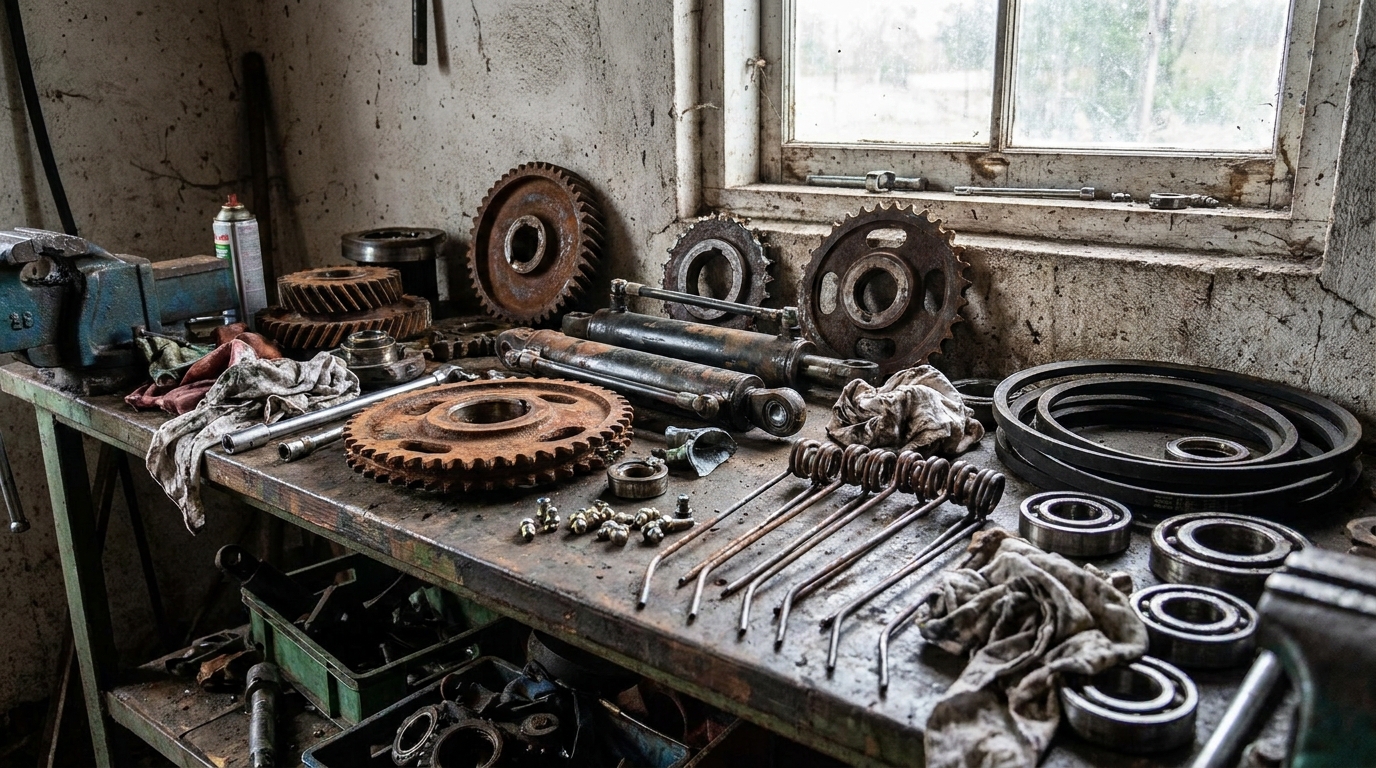
The right part starts with good information. Before calling or visiting a local parts supplier, gather as many details as possible. This saves time and reduces the risk of buying the wrong replacement.
Bring the Old Part When Possible
The easiest way to match a bearing, belt, seal, fitting, or fastener is to bring the old part with you. Even damaged parts often provide useful measurements or identification marks.
Helpful items to bring:
- Worn belt
- Broken bearing
- Hydraulic hose
- Fitting or adapter
- Seal
- Sprocket
- Chain sample
- Bolt or pin
- Equipment manual
- Photos of the installation
If the part is too large to bring in, take clear photos from multiple angles and include a ruler or tape measure in the picture for scale.
Record Equipment Information
For tractors and implements, keep a maintenance file with:
- Manufacturer
- Model number
- Serial number
- Year if known
- Engine model if applicable
- Attachment model
- Previous part numbers
- Service history
- Oil and filter references
- Belt and bearing sizes
This is especially useful for older equipment that may have been modified over the years.
Measure Carefully
Many farm equipment parts differ by small dimensions. A fraction of an inch can matter.
For bearings, measure:
- Inside diameter
- Outside diameter
- Width
- Shaft size
- Housing dimensions
For belts, identify:
- Top width
- Thickness
- Outside length
- Belt profile
- Number of ribs if applicable
For hydraulic hoses, confirm:
- Hose inside diameter
- Overall length
- Working pressure
- Fitting type
- Fitting angle
- Thread size
- Orientation between ends
Consider Duty Cycle and Operating Conditions
A part that works on a lightly used machine may not survive on daily-use livestock equipment or a high-acreage operation. Before choosing a replacement, consider:
- Load
- Speed
- Shock impact
- Dust exposure
- Moisture exposure
- Chemical exposure
- Temperature
- Frequency of use
- Road travel
- Safety risk if failure occurs
For heavy-duty agricultural service, industrial-grade parts are often worth the investment.
If you’re looking for high-quality farm equipment parts near Coldwater, you might find it helpful to explore a related article that discusses essential tools and accessories for agricultural maintenance. Understanding the right tools can significantly enhance your farming efficiency and productivity. For more insights, check out this informative piece on power tools and accessories that can complement your equipment needs.
Comparison Table: OEM vs. Aftermarket vs. Industrial Replacement Parts
Farmers often ask whether they should buy OEM parts, aftermarket parts, or industrial replacement components. The best answer depends on the application.
| Part Type | Best For | Advantages | Considerations |
|||||
| OEM parts | Brand-specific components, electronics, exact-fit assemblies | Designed for specific equipment | May cost more or require longer lead time |
| Aftermarket farm parts | Common wear items, older equipment, implements | Often cost-effective and widely available | Quality varies by supplier |
| Industrial replacement parts | Bearings, belts, chain, hydraulics, fasteners, shop supplies | Durable, practical, often cross-referenceable | Requires accurate sizing and selection |
| Fabricated or shop-built solutions | Custom equipment, repairs, modifications | Flexible and practical | Must be designed safely and correctly |
For many farm repairs around Coldwater and Southern Michigan, industrial replacement parts are an efficient solution for maintenance items such as bearings, belts, chain, hardware, hydraulic components, abrasives, and lubricants.
If you’re looking for farm equipment parts near Coldwater, it’s essential to understand the factors that can affect the availability of these components. A related article discusses the various elements that can slow down the production of gearboxes and offers insights on how to expedite the process. You can read more about this topic in the article on gearbox lead times, which provides valuable information for anyone in the agricultural sector. For more details, check out the article here.
Farm Equipment Parts Categories to Keep in Your Shop
A well-stocked farm shop reduces emergency trips and helps keep daily chores moving. You do not need to stock every possible part, but you should carry common failure items for the equipment you rely on most.
Essential Mechanical Parts
Recommended on-hand inventory:
- Common bearings for augers, conveyors, and implements
- Assorted V-belts used on fans and shop equipment
- Roller chain in common sizes
- Master links and half links
- Sprockets for critical systems
- Grease fittings
- Key stock
- Shaft collars
- Snap rings
- Cotter pins and hitch pins
Hydraulic Repair Essentials
Hydraulic failures often happen under pressure—both mechanically and seasonally. Keep basic supplies available.
Useful items include:
- Common quick couplers
- Hydraulic adapters
- Hose protection wrap
- Hydraulic oil
- Caps and plugs
- O-rings
- Thread sealant approved for hydraulic use
- Absorbent pads
For hose assemblies, it is best to have hoses built or matched properly to the required pressure and fittings.
Electrical and Trailer Supplies
Farm equipment often travels between fields, barns, and roads. Lighting and electrical reliability are important for safety and compliance.
Keep these supplies available:
- Trailer plugs
- Wire connectors
- Heat shrink tubing
- Electrical tape
- Replacement lights
- Fuses
- Battery terminals
- Cable ties
- Loom and wire protection
- Test light or multimeter
Shop Tools and Consumables
CEM Industrial Supply also supports the shop side of farm maintenance with practical industrial categories that may include cutting tools, abrasives, hand tools, safety products, welding supplies, adhesives, sealants, and general maintenance supplies.
Useful shop consumables include:
- Grinding wheels
- Cut-off wheels
- Drill bits
- Wire wheels
- Welding wire or rods
- Clamps
- Penetrating oil
- Anti-seize compound
- Threadlocker
- Shop towels
- Gloves and eye protection
Maintenance Tips to Extend Farm Equipment Part Life
Buying quality parts is only half the job. Installation and maintenance determine whether those parts deliver their full service life.
Keep Bearings Properly Lubricated
Over-greasing and under-greasing can both cause problems. Too little grease allows heat and contamination. Too much grease can damage seals or attract dirt.
Best practices:
- Follow equipment manual intervals when available
- Wipe grease fittings before applying grease
- Use compatible grease types
- Avoid mixing unknown greases
- Check for heat after first operation
- Replace missing or damaged grease fittings
- Inspect seals during service
If a bearing repeatedly fails, look beyond the bearing. Check alignment, shaft wear, housing condition, contamination, and load.
Maintain Belt Alignment and Tension
A properly installed belt should run smoothly without excessive heat or vibration. Belt failure is often caused by system issues.
Check for:
- Misaligned pulleys
- Worn pulley grooves
- Improper belt tension
- Oil contamination
- Loose mounting bolts
- Damaged guards
- Incorrect belt profile
A belt that rides too low in a pulley may indicate worn sheaves. Replacing the belt alone may not solve the problem.
Protect Hydraulic Hoses
Hydraulic hose damage is common on loaders, tillage tools, skid steers, and folding implements. Protect hoses from rubbing, pinching, twisting, and heat.
Hydraulic hose tips:
- Route hoses away from sharp edges
- Use clamps and sleeves where needed
- Avoid tight bends
- Replace cracked or blistered hoses
- Keep quick couplers clean
- Relieve pressure before disconnecting
- Never check leaks with your hand
High-pressure hydraulic injection injuries are medical emergencies. Always use cardboard or wood to detect leaks, not skin.
Clean and Inspect Chain Drives
Roller chain should be inspected regularly, especially in dusty or high-load environments.
Maintenance steps:
- Clean debris from sprockets and guards
- Lubricate chain appropriately
- Check chain tension
- Inspect master links
- Watch for side wear
- Replace worn sprockets with chain
- Keep guards installed
A dry or rusty chain can wear quickly and increase horsepower demand.
Safety Tips for Farm Equipment Repairs
Farm repair work often happens quickly, outdoors, and under pressure. That is when accidents happen. A safe repair is always better than a rushed repair.
Lockout and Secure Equipment
Before working on machinery:
- Shut off the engine
- Remove the key
- Relieve hydraulic pressure
- Lower raised equipment
- Block or support raised loads
- Chock wheels if needed
- Disconnect power sources
- Wait for moving parts to stop
Never rely on hydraulics alone to support raised equipment.
Use the Correct Tools
Improvised tools can damage parts or injure the operator. Use proper pullers, wrenches, torque tools, jacks, stands, and lifting equipment.
Avoid:
- Hammering hardened parts without eye protection
- Using pipe extensions on undersized tools
- Heating sealed components without caution
- Reusing damaged fasteners in critical locations
- Using mismatched hydraulic fittings
Wear Appropriate Personal Protective Equipment
Recommended PPE includes:
- Safety glasses
- Work gloves
- Hearing protection
- Steel-toe boots
- Welding helmet when welding
- Face shield for grinding
- Respirator or dust mask when needed
- High-visibility clothing for roadside repairs
Farm maintenance combines mechanical, hydraulic, electrical, and fabrication hazards. Treat every repair with respect.
Seasonal Checklist for Coldwater-Area Farms
Southern Michigan weather places different demands on farm equipment throughout the year. A seasonal checklist helps prevent breakdowns.
Spring Planting Preparation
Before spring fieldwork:
- Inspect planter bearings, chains, and sprockets
- Check hydraulic hoses and cylinders
- Replace worn belts
- Test tractor lights and flashers
- Inspect tires and wheel hardware
- Grease all pivot points
- Stock common fasteners and pins
- Check seed tender and auger drives
- Review filters and fluids
Summer Hay and Livestock Equipment
During summer:
- Inspect mower belts and blades
- Check rake and tedder bearings
- Monitor baler chains, belts, and pickup teeth
- Keep grease and penetrating oil available
- Inspect fans, pumps, and water systems
- Maintain skid steer attachments
- Keep spare hydraulic couplers on hand
Fall Harvest Readiness
Before harvest:
- Inspect grain auger bearings and belts
- Check wagon running gear and wheel bearings
- Test trailer lights
- Service chains and sprockets
- Stock repair hardware
- Inspect hydraulic hoses on grain handling equipment
- Prepare shop supplies for late-night repairs
- Verify safety guards are in place
Winter Maintenance and Snow Season
In winter:
- Service plow and loader hydraulics
- Check batteries and cables
- Stock cold-weather fluids and lubricants
- Inspect block heaters and cords
- Keep salt and moisture corrosion in mind
- Repair equipment indoors when possible
- Organize parts bins before spring
Winter is also the best time to rebuild worn assemblies before the busy season starts.
How CEM Industrial Supply Supports Agricultural Customers
CEM Industrial Supply is positioned to help farms, maintenance crews, fabricators, contractors, and industrial operations source practical parts and supplies. For customers searching for farm equipment parts near Coldwater, the benefit is not just access to products—it is access to problem-solving support.
Practical Product Categories for Farm Repair
Relevant CEM product categories may include:
- Bearings and power transmission components
- Belts and pulleys
- Chain and sprockets
- Hydraulic hoses, fittings, and adapters
- Fasteners and hardware
- Tools and shop supplies
- Abrasives and cutting products
- Lubricants and maintenance chemicals
- Safety supplies and PPE
- Electrical and trailer repair supplies
- Welding and fabrication supplies
These categories support the real work happening in farm shops across Branch County and Southern Michigan.
Support for Older and Mixed Equipment Fleets
Many farms run a mix of newer machines, older tractors, used implements, and shop-built equipment. That is normal—and it means parts support must be flexible.
Industrial replacement parts can often help with:
- Obsolete OEM components
- Standard bearing replacements
- Belt cross-references
- Hose and fitting matches
- General hardware needs
- Shop repair supplies
- Fabrication projects
The best approach is to combine accurate identification with practical experience.
Local SEO Note for Nearby Customers
If you are searching online for “farm equipment parts near Coldwater,” “agricultural parts Branch County,” “hydraulic hoses Southern Michigan,” “tractor parts near me,” or “industrial supply Coldwater MI,” look for a supplier that understands both farm and industrial maintenance. The right local resource should help you match parts accurately, offer durable options, and support urgent repair needs.
Field Repair Checklist: What to Carry in the Service Truck
A field repair kit can save hours when equipment breaks down away from the shop. Keep it organized and restock it after every use.
Recommended Field Repair Items
Carry:
- Assorted bolts, nuts, and washers
- Hitch pins, cotter pins, and lynch pins
- Hose clamps
- Electrical connectors and tape
- Zip ties
- Duct tape
- Threadlocker
- Penetrating oil
- Grease gun
- Basic hydraulic caps and plugs
- Adjustable wrench set
- Socket set
- Pry bar
- Hammer
- Pliers
- Multimeter or test light
- Flashlight or headlamp
- Safety glasses and gloves
Emergency Hydraulic Kit
For farms using loaders, skid steers, and folding implements, consider carrying:
- Common quick couplers
- Adapter assortment
- O-rings
- Clean rags
- Absorbent pads
- Hose wrap
- Caps and plugs
Do not operate equipment with unsafe hydraulic leaks. Temporary repairs should only be used to move equipment safely for proper service.
Signs You Should Replace a Part Instead of Repairing It
Farmers are skilled at keeping machinery running, but not every part should be reused or patched. Some components are too critical to risk.
Replace Bearings When You Notice
- Grinding or rumbling noise
- Excessive heat
- Loose inner or outer race
- Damaged seals
- Rust contamination
- Shaft wobble
- Repeated grease loss
Replace Belts When You Notice
- Cracks
- Glazing
- Missing chunks
- Frayed edges
- Stretch beyond adjustment
- Burning smell
- Slipping under normal load
Replace Hydraulic Hoses When You Notice
- Cracked outer cover
- Exposed wire reinforcement
- Blisters
- Leaking crimp
- Kinked hose body
- Severe abrasion
- Oil seepage
- Flattened or crushed areas
Replace Fasteners When You Notice
- Stretched threads
- Rounded heads
- Corrosion damage
- Bending
- Cracking
- Unknown grade in a critical location
A failed $5 fastener can damage a $5,000 assembly. When in doubt, replace critical hardware with the correct grade and size.
Cost-Saving Tips Without Sacrificing Reliability
Farm maintenance budgets matter. The goal is to reduce cost without creating repeated failures.
Standardize Common Parts
Where practical, standardize:
- Bearing sizes
- Belt profiles
- Chain sizes
- Hydraulic couplers
- Fastener grades
- Grease types
- Filters and fluids
Standardization reduces inventory confusion and speeds up repairs.
Keep a Parts Log
A simple notebook or spreadsheet can track:
- Equipment name
- Part description
- Size
- Supplier
- Date replaced
- Hours or acres at replacement
- Notes on failure cause
Over time, this helps identify recurring problems and plan preventive maintenance.
Buy Quality for High-Failure Areas
Spend more on parts that are:
- Hard to access
- Safety-critical
- Used daily
- Exposed to heavy loads
- Expensive to replace repeatedly
- Likely to damage other components if they fail
Use budget parts cautiously on low-risk, light-duty applications.
FAQs About Farm Equipment Parts Near Coldwater
Where can I find farm equipment parts near Coldwater, MI?
Farmers and equipment owners in Coldwater, Branch County, and Southern Michigan can source many repair and maintenance parts through local industrial supply providers such as CEM Industrial Supply. Common needs include bearings, belts, hydraulic fittings, chain, fasteners, lubricants, tools, and safety supplies.
What information should I bring when looking for a replacement part?
Bring the old part if possible, along with equipment make, model, serial number, photos, measurements, and any visible part numbers. For hydraulic hoses, bring the full hose assembly so the length, fittings, angles, and pressure rating can be matched accurately.
Can industrial parts be used on farm equipment?
Yes, many farm equipment repairs use industrial replacement parts such as bearings, belts, chain, sprockets, hydraulic components, and fasteners. The key is selecting the correct size, rating, material, and fit for the application.
How do I know if a hydraulic fitting is the right type?
Hydraulic fittings should be identified by thread type, sealing method, size, and angle. Common styles include JIC, NPT, ORFS, and SAE O-ring. Because some fittings look similar but seal differently, it is best to compare carefully or get expert help.
Should I replace sprockets when replacing roller chain?
In many cases, yes. If sprocket teeth are hooked, sharp, worn, or uneven, they can quickly damage a new chain. Inspect both chain and sprockets as a system.
What farm equipment parts should I keep in stock?
Good shop inventory includes common bearings, belts, roller chain, master links, grease fittings, fasteners, hitch pins, hydraulic adapters, quick couplers, lubricants, electrical connectors, and basic trailer repair supplies.
How often should I inspect farm equipment belts and bearings?
Inspect critical belts and bearings before each busy season and during regular maintenance intervals. High-use equipment such as balers, augers, conveyors, fans, and livestock feeding systems should be checked more frequently.
What are the warning signs of hydraulic hose failure?
Replace hydraulic hoses showing cracks, blisters, exposed wire, oil seepage, crushed areas, severe abrasion, or leaking crimps. Never search for hydraulic leaks with your hand because high-pressure fluid can penetrate skin.
Are aftermarket parts reliable for older tractors and implements?
Quality aftermarket and industrial replacement parts can be reliable when selected correctly. Fit, load rating, material quality, and proper installation are more important than whether a part is OEM or aftermarket.
Why choose a local supplier instead of ordering online?
A local supplier can help verify measurements, identify parts, reduce ordering mistakes, and provide faster access during emergencies. For Coldwater-area farms, local support can significantly reduce downtime during planting, hay season, harvest, and winter maintenance.
Final Checklist for Buying Farm Equipment Parts Locally
Before heading to CEM Industrial Supply or contacting a local parts source near Coldwater, use this quick checklist:
- Identify the equipment make and model
- Bring the old part when possible
- Take clear photos of the installation
- Record measurements carefully
- Note the operating conditions
- Check related components for wear
- Ask about rating, fit, and compatibility
- Replace safety-critical hardware correctly
- Stock common wear items before busy seasons
- Keep a maintenance log for future reference
Farm equipment repair is about keeping work moving safely and efficiently. With the right parts, accurate identification, and dependable local support, farms in Coldwater, Branch County, and Southern Michigan can reduce downtime, improve reliability, and get more life from the equipment they already own.
FAQs
What types of farm equipment parts are available near Coldwater?
There are a variety of farm equipment parts available near Coldwater, including tractor parts, combine parts, tillage parts, and planting parts.
Where can I find farm equipment parts near Coldwater?
Farm equipment parts can be found at local agricultural supply stores, equipment dealerships, and online retailers that specialize in agricultural equipment.
What are the benefits of purchasing farm equipment parts near Coldwater?
Purchasing farm equipment parts near Coldwater can provide convenience, quick access to needed parts, and the ability to receive personalized assistance and advice from knowledgeable staff.
How can I ensure I am purchasing the correct farm equipment parts near Coldwater?
To ensure you are purchasing the correct farm equipment parts near Coldwater, it is important to have the make and model of your equipment available, as well as any specific part numbers if possible. Additionally, consulting with a knowledgeable sales representative can help confirm the correct parts.
Are there any warranties or guarantees offered with farm equipment parts near Coldwater?
Many farm equipment parts near Coldwater come with warranties or guarantees, depending on the manufacturer and the specific part. It is important to inquire about warranty information at the time of purchase.