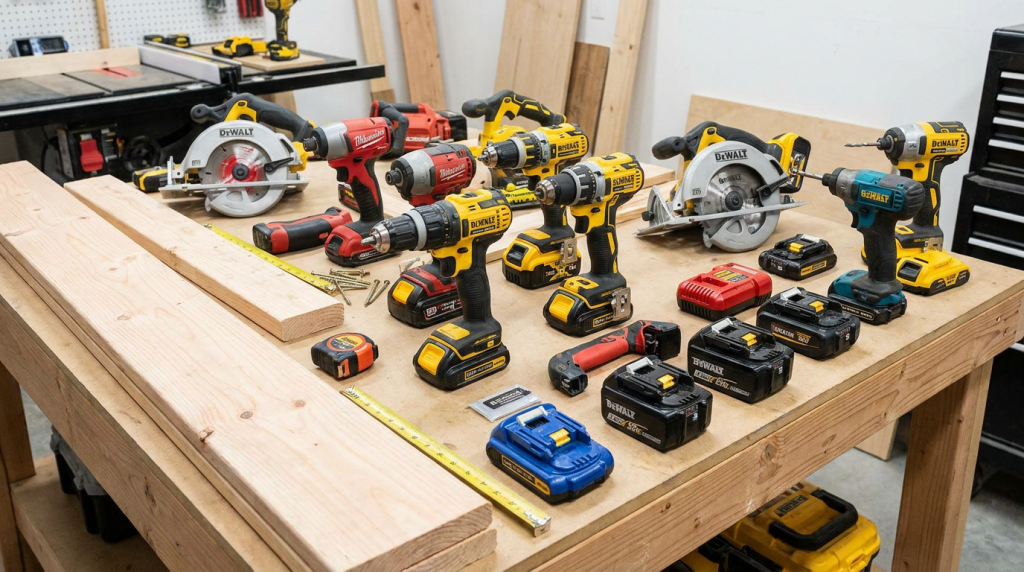
Whether you are setting up your first home toolkit, upgrading for professional work, or preparing for a service project at your temple, church, community center, or family home, choosing the right cordless tools can feel overwhelming.

There are many brands, batteries, voltages, kits, and features. A good cordless tool buying guide can help you make a wise, peaceful decision—without buying more than you need.

In Bhakti Yoga, the path of loving devotion to God, even practical work can become sacred when offered with care. The Sanskrit word seva means “service.” When we repair a home, build a shelf, maintain a garden, or help a neighbor, our hands can become instruments of kindness.

The Bhagavad-gita teaches that work offered in a spirit of devotion can purify the heart. So let this guide be practical, but also mindful. May your tools support safe work, honest service, and a life of devotion.

Cordless tools have become popular because they offer freedom, flexibility, and convenience. Without a cord, you can work in tight spaces, outdoors, on ladders, or in places where electrical outlets are not nearby.

For many people, cordless tools are now powerful enough to replace many corded tools for everyday tasks.

Freedom to Work Anywhere

One of the greatest benefits of cordless power tools is mobility. You can carry a cordless drill, impact driver, circular saw, or reciprocating saw wherever the work is needed.

This is especially helpful for:

  • Home repairs
  • Furniture assembly
  • Fence and deck work
  • Garden projects
  • Volunteer service projects
  • Temple, church, or community maintenance
  • Professional job sites

When serving others, we often need to be ready and flexible. A reliable cordless tool kit allows you to respond quickly.

Less Setup, More Simplicity

Corded tools require extension cords, outlets, and sometimes extra safety precautions around tripping hazards. Cordless tools reduce setup time.

This does not mean they are always better in every situation, but for many everyday jobs, they make work simpler and cleaner.

In devotional life, simplicity is valuable. The Sanskrit word sattva refers to clarity, balance, and goodness. Choosing tools that reduce frustration and help you work steadily can support a more peaceful way of serving.

Modern Batteries Have Changed Everything

Older cordless tools were often weak and slow to charge. Today’s lithium-ion batteries are lighter, longer-lasting, and much more powerful.

Most major cordless tool brands now offer complete battery platforms, meaning one battery type can power many tools. This is one of the most important things to understand before buying.

When considering the best cordless tools for your projects, it’s essential to also understand the types of blades that can enhance their performance. For instance, if you’re looking to pair your cordless reciprocating saw with the right blades, you might find our article on Recip Saw (Sawzall) Blades: Which Blade for Metal, Wood, and Demo? particularly helpful. This guide provides insights into selecting the appropriate blades for various materials, ensuring that your cordless tool operates at its best.

Start With Your Real Needs

Before choosing a cordless tool, pause and ask: “What kind of work will I actually do?”

This question can save you money and reduce clutter. In Bhakti, we try to live with intention. We do not need to own everything. We need what helps us serve well.

For Basic Home Use

If you only need tools for light repairs, furniture assembly, hanging shelves, or small projects, you may not need a large professional kit.

A good beginner cordless tool set might include:

  • Cordless drill/driver
  • Impact driver
  • Two batteries
  • Charger
  • Basic drill and driver bits
  • Carrying bag or case

For most households, a cordless drill and impact driver combo kit is a very good starting point.

For DIY Projects

If you enjoy building, remodeling, or weekend projects, consider adding more tools over time.

Useful cordless tools for DIY work include:

  • Circular saw
  • Oscillating multi-tool
  • Reciprocating saw
  • Random orbit sander
  • Jigsaw
  • Work light

You do not need to buy everything at once. A wise approach is to start with core tools and expand as your projects require.

For Professional Work

If you are a contractor, carpenter, electrician, plumber, or maintenance worker, durability and battery performance matter much more.

Professionals should look for:

  • Brushless motors
  • Higher amp-hour batteries
  • Fast chargers
  • Strong warranty support
  • Durable tool housings
  • Wide platform compatibility
  • Comfortable ergonomics for daily use

A professional cordless tool buying guide must consider not only price, but long-term reliability.

Understand Battery Platforms Before You Buy

The battery platform is the heart of cordless tool ownership. Once you choose a brand and voltage system, you will likely stay with it for years.

This is because batteries are expensive, and most brands are not cross-compatible.

What Is a Battery Platform?

A battery platform means a family of tools that all use the same battery system.

For example, one 18V or 20V battery may power a drill, saw, grinder, blower, flashlight, and many other tools from the same brand.

This is convenient because you can buy “bare tools” later. A bare tool means the tool comes without a battery or charger, usually at a lower price.

12V vs 18V vs 20V Tools

Voltage can be confusing, but here is the simple explanation:

  • 12V tools are smaller, lighter, and good for light-duty work.
  • 18V and 20V tools are more powerful and better for most DIY and professional tasks.
  • 40V, 56V, and higher-voltage tools are common for outdoor power equipment like lawn mowers, chainsaws, and leaf blowers.

In many cases, 18V and 20V tools are in the same general power class. Some brands use different labeling, but the real performance depends on battery quality, motor design, and tool engineering.

Amp-Hours Explained Simply

Amp-hours, often written as Ah, measure battery capacity. A higher Ah rating usually means longer runtime.

Common battery sizes include:

  • 1.5Ah or 2.0Ah: Lightweight, good for drills and small jobs
  • 4.0Ah or 5.0Ah: Balanced runtime and size
  • 6.0Ah and above: Longer runtime, useful for saws, grinders, and outdoor tools

A small battery makes a tool lighter. A larger battery helps it run longer. The best choice depends on the work.

Charging Time Matters

Some chargers are slow. Others are fast. If you work often, charging speed can make a big difference.

Look for kits that include at least two batteries. This allows you to use one battery while the other charges.

For professional or frequent use, consider investing in a rapid charger or dual charger.

Please check out our latest article at https://cemindustrialsupply.com/news/ for more information.

Brushless vs Brushed Motors

When comparing cordless tools, you will often see the word “brushless.” This is an important feature.

What Is a Brushed Motor?

A brushed motor is an older motor design. It can still work well, especially for light use. Brushed tools are often cheaper.

For occasional home projects, a brushed cordless drill may be enough.

What Is a Brushless Motor?

A brushless motor is more efficient and usually more durable. It creates less heat, uses battery power better, and often provides more performance.

Brushless cordless tools are ideal for:

  • Frequent DIY work
  • Professional use
  • Heavy-duty cutting or drilling
  • Longer battery life
  • Better long-term value

Is Brushless Worth the Extra Cost?

For many people, yes. If your budget allows, brushless tools are usually a wise investment.

However, if you only use a drill a few times per year, you may not need the premium model. Humility means choosing honestly, not impressively.

The Bhagavad-gita reminds us to act with wisdom, not ego. A tool should serve your purpose—not your pride.

If you’re considering investing in cordless tools, you might find our comprehensive Cordless Tool Buying Guide helpful in making informed decisions. Additionally, you can explore related insights in our article on the latest trends in power tools, which offers valuable tips and recommendations for both professionals and DIY enthusiasts. For more information, check out the article here.

Essential Cordless Tools to Consider

There are many cordless tools available, but some are more useful than others. Let us look at the most common options.

Cordless Drill/Driver

A cordless drill/driver is usually the first tool to buy. It drills holes and drives screws.

Look for:

  • Adjustable clutch settings
  • Two-speed gearbox
  • Comfortable grip
  • LED light
  • Keyless chuck
  • Good battery life

A drill is excellent for furniture, shelves, cabinet hardware, pilot holes, and general home repair.

Cordless Impact Driver

An impact driver is made for driving screws, bolts, and fasteners with more force than a drill.

It is especially helpful for:

  • Deck screws
  • Long screws
  • Lag bolts
  • Framing projects
  • Repetitive fastening

Many people buy a drill and impact driver combo kit because the two tools work beautifully together.

Cordless Circular Saw

A cordless circular saw is useful for cutting lumber, plywood, and sheet goods.

Important features include:

  • Blade size
  • Cutting depth
  • Brushless motor
  • Electric brake
  • Comfortable handle
  • Dust control
  • Strong battery compatibility

For occasional use, a smaller saw may be fine. For framing or heavy cutting, choose a more powerful model.

Cordless Reciprocating Saw

A reciprocating saw is excellent for demolition, pruning, and rough cutting.

It can cut wood, metal, PVC, and branches depending on the blade.

This tool is not delicate, but it is very useful when something needs to be removed or broken down safely.

Cordless Oscillating Multi-Tool

An oscillating multi-tool is one of the most versatile tools you can own.

It can:

  • Trim door frames
  • Cut drywall
  • Remove grout
  • Sand corners
  • Make plunge cuts
  • Scrape adhesive

For small repairs and detailed work, this tool is a blessing.

Cordless Sander

A cordless random orbit sander is helpful for woodworking, furniture refinishing, and smoothing surfaces.

If you sand for long periods, battery life matters. For very heavy sanding, a corded sander may still be better, but cordless models are wonderful for convenience.

Cordless Work Light

A work light may seem simple, but it can make projects safer and easier.

Good lighting helps prevent mistakes. It also supports focus and calmness while working.

In Bhakti, light is often a symbol of spiritual knowledge. Practically speaking, light also keeps our fingers safer.

Choosing the Right Cordless Tool Brand

Brand choice is important because you are usually buying into a battery ecosystem.

The best cordless tool brand for you depends on your needs, budget, and future plans.

Look at the Full Tool Lineup

Before buying, explore the brand’s complete tool platform.

Ask:

  • Do they offer the tools I may need later?
  • Are batteries easy to find?
  • Do they have outdoor tools too?
  • Are bare tools affordable?
  • Is the platform growing?

If you want one battery system for both workshop and yard tools, make sure the brand offers both.

Consider Warranty and Service

A good warranty gives peace of mind. Professionals especially should consider how easy it is to get service or replacements.

Look for:

  • Clear warranty terms
  • Local service centers
  • Easy online registration
  • Good customer support
  • Availability of replacement parts

A cheaper tool is not always cheaper if it fails quickly.

Budget Brands vs Premium Brands

Budget cordless tools can be very good for homeowners and occasional users. Premium tools are often better for heavy use, daily work, and demanding job sites.

A simple way to think about it:

  • Light home use: budget or mid-range may be enough
  • Serious DIY: mid-range to premium is often best
  • Professional work: premium is usually worth it

Again, the goal is not to buy the most expensive tool. The goal is to buy the right tool.

Key Features to Compare Before Buying

Cordless tools may look similar, but small features can make a big difference.

Ergonomics and Comfort

A tool should feel good in your hand. Weight, balance, grip shape, and trigger control all matter.

If possible, hold the tool before buying. Ask:

  • Is it too heavy?
  • Does it feel balanced?
  • Can I reach the controls easily?
  • Would I be comfortable using it for an hour?

Comfort is not a luxury. It helps prevent fatigue and mistakes.

Power and Torque

Torque is twisting force. It matters especially for drills and impact drivers.

Higher torque can be helpful, but more is not always better. Too much force can strip screws, damage materials, or make a tool harder to control.

Choose power that matches your work.

Speed Settings

Many drills have two speed settings:

  • Low speed for driving screws and high torque
  • High speed for drilling

Variable speed triggers are also helpful because they allow better control.

LED Lights

Built-in LED lights are very useful when working in cabinets, corners, basements, or evening conditions.

This small feature can make a tool much more pleasant to use.

Safety Features

Look for safety features such as:

  • Electric brake
  • Kickback control
  • Blade guards
  • Lock-off switches
  • Overload protection
  • Battery temperature protection

Safety is part of service. We care for the body because the body is a sacred gift and a vehicle for devotion.

Tool Weight

A lighter tool is easier to use overhead or for long periods. A heavier tool may feel stronger but can cause fatigue.

Sometimes a compact tool with a smaller battery is better for simple tasks.

Cordless Tool Kits vs Buying Individual Tools

Many buyers wonder whether to purchase a combo kit or individual tools.

Both options can be good.

Benefits of Combo Kits

Cordless tool combo kits often offer better value. They usually include multiple tools, batteries, a charger, and a bag.

A starter kit may include:

  • Drill/driver
  • Impact driver
  • Circular saw
  • Reciprocating saw
  • Work light
  • Batteries and charger

This can be a cost-effective way to build your toolkit.

When to Buy Bare Tools

Once you already have batteries and a charger, bare tools can save money.

For example, if you already own two batteries from a brand, you can buy a bare oscillating tool or grinder without paying again for batteries.

Avoid Buying Tools You Will Never Use

A large combo kit may look like a bargain, but only if you actually use the tools.

Before buying a kit, ask: “Will these tools support my real service and work?”

In the Srimad Bhagavatam, a beloved Bhakti scripture, we are encouraged to use everything in connection with the Divine. This does not mean collecting more things. It means using what we have with gratitude and purpose.

Matching Tools to Common Projects

Let us make this cordless tool buying guide even more practical by matching tools to common jobs.

Furniture Assembly and Small Repairs

Best tools:

  • 12V cordless drill
  • Compact impact driver
  • Bit set
  • Small work light

For simple home use, compact tools are often easier than large ones.

Hanging Shelves and Pictures

Best tools:

  • Drill/driver
  • Stud finder
  • Level
  • Masonry bits if drilling into brick or concrete
  • Wall anchors

A drill with clutch settings helps avoid overdriving screws.

Building a Deck or Fence

Best tools:

  • 18V/20V impact driver
  • Drill/driver
  • Circular saw
  • Reciprocating saw
  • Extra batteries
  • Fast charger

For outdoor building, runtime matters. Choose at least 4.0Ah or 5.0Ah batteries.

Remodeling and Demolition

Best tools:

  • Reciprocating saw
  • Oscillating multi-tool
  • Circular saw
  • Impact driver
  • Cordless vacuum
  • Work light

Demolition work also requires careful safety gear.

Yard and Outdoor Work

If you want cordless outdoor power equipment, consider:

  • String trimmer
  • Leaf blower
  • Hedge trimmer
  • Chainsaw
  • Lawn mower

Outdoor tools often use higher-voltage batteries or specialized platforms. Check compatibility before buying.

Do Not Forget Accessories

A cordless tool is only as useful as the accessories you use with it.

Good blades and bits can improve performance more than people expect.

Drill Bits and Driver Bits

Choose quality bits for the materials you work with:

  • Wood bits
  • Metal bits
  • Masonry bits
  • Phillips bits
  • Torx bits
  • Hex bits
  • Nut drivers

Cheap bits can strip screws and create frustration.

Saw Blades

Use the right blade for the job.

For circular saws:

  • Framing blade for rough lumber
  • Fine-tooth blade for plywood
  • Specialty blade for laminate or metal

For reciprocating saws:

  • Wood blades
  • Metal blades
  • Pruning blades
  • Demolition blades

The right blade makes cutting safer and cleaner.

Sandpaper and Multi-Tool Blades

For sanders, keep different grits available:

  • Coarse grit for removing material
  • Medium grit for smoothing
  • Fine grit for finishing

For oscillating multi-tools, invest in good blades. Poor blades wear out quickly.

Storage and Organization

Tool storage matters. A clean, organized space protects your investment and helps you work with a peaceful mind.

Options include:

  • Tool bags
  • Hard cases
  • Wall racks
  • Drawer organizers
  • Battery shelves
  • Mobile tool boxes

A tidy workspace can become a place of focus, gratitude, and service.

Safety and Care for Cordless Tools

Tools are powerful. Respecting them is part of using them well.

Wear Proper Safety Gear

Depending on the job, use:

  • Safety glasses
  • Hearing protection
  • Dust mask or respirator
  • Work gloves
  • Knee pads
  • Proper footwear

Do not skip eye protection. Even small jobs can send dust or fragments into the air.

Care for Batteries Properly

Lithium-ion batteries last longer when treated well.

Helpful tips:

  • Avoid extreme heat
  • Avoid extreme cold
  • Do not leave batteries in direct sun
  • Store them partially charged if unused for long periods
  • Use the correct charger
  • Do not use damaged batteries

A battery is often one of the most expensive parts of your cordless tool system, so care for it thoughtfully.

Keep Tools Clean

After use, wipe dust and debris from your tools. Check vents, blades, chucks, and moving parts.

A few minutes of care can extend tool life.

This is also a spiritual practice in a small way. When we care for what we have, we express gratitude.

Know When to Stop

If a tool smells hot, struggles, sparks unusually, or makes strange sounds, stop and inspect it.

Do not force a tool beyond its capacity. The same wisdom applies to life. Strength grows with patience, not recklessness.

Budgeting for Your Cordless Tool Purchase

A good cordless tool buying guide should help you spend wisely.

Set a Realistic Budget

Think beyond the tool itself. Include:

  • Batteries
  • Charger
  • Bits
  • Blades
  • Safety gear
  • Storage
  • Replacement accessories

Sometimes a slightly more expensive kit is a better value because it includes batteries and a charger.

Buy During Sales

Cordless tools often go on sale during:

  • Holiday weekends
  • Father’s Day
  • Black Friday
  • End-of-season promotions
  • New model releases

If your need is not urgent, waiting for a sale can save money.

Invest First in Quality Core Tools

A strong drill, impact driver, and good batteries are usually worth prioritizing.

You can add specialty tools later.

Consider Long-Term Value

The cheapest tool may be fine for rare use. But if you will use a tool often, a durable model may save money over time.

Long-term thinking is part of a thoughtful life. We try to choose what supports steadiness, service, and peace.

A Bhakti Reflection on Tools and Service

At first, cordless tools may seem far away from spiritual life. But Bhakti Yoga invites us to bring devotion into everything.

The Sanskrit word bhakti means loving devotion. It is the natural love of the soul for God. This love can be expressed through chanting, prayer, study, kindness, and practical service.

Work Can Become Worship

In the Bhagavad-gita 9.27, Krishna says that whatever we do, eat, offer, or give can be offered to Him.

This means ordinary work can become sacred when done with love.

If you use a cordless drill to repair a neighbor’s steps, build a table for your family, or help maintain a spiritual community space, that work can be offered as seva.

Tools Are Not the Goal

Tools are helpful, but they are not the heart of life.

The heart of life is love—love for God and love for all living beings.

A beautiful workshop without humility will not satisfy the soul. But a simple toolbox used in service can become spiritually meaningful.

Chanting While Working

One practical Bhakti practice is chanting the holy names of God.

Many people chant the maha-mantra:

Hare Krishna Hare Krishna

Krishna Krishna Hare Hare

Hare Rama Hare Rama

Rama Rama Hare Hare

“Hare” calls upon God’s divine energy. “Krishna” means the all-attractive Lord. “Rama” means the source of joy.

You can chant softly before beginning your work, pray for safety, or offer the fruits of your labor to God.

Even one sincere prayer can change the mood of a task.

Final Cordless Tool Buying Checklist

Before you purchase, review this simple checklist.

Ask Yourself These Questions

  • What projects will I actually do?
  • Do I need light-duty, DIY, or professional tools?
  • Which battery platform fits my future needs?
  • Do I want 12V, 18V, 20V, or outdoor power tools?
  • Are brushless tools worth it for my use?
  • Does the kit include enough batteries?
  • Are accessories available and affordable?
  • Is the tool comfortable in my hand?
  • Is there a good warranty?
  • Am I buying with purpose, not impulse?

Best First Cordless Tools for Most People

For most homeowners and beginners, start with:

  • Cordless drill/driver
  • Impact driver
  • Two batteries
  • Charger
  • Bit set
  • Safety glasses
  • Work light

From there, add tools as your service and projects grow.

Best Upgrade Path

A wise upgrade path might look like this:

  1. Drill and impact driver combo kit
  2. Circular saw
  3. Oscillating multi-tool
  4. Reciprocating saw
  5. Sander
  6. Outdoor tools or specialty tools

This approach keeps your spending balanced and your toolkit practical.

Everyone Can Begin With One Useful Step

Buying cordless tools is not only about power, speed, or convenience. It is about choosing what helps you care for your home, support your family, serve your community, and work with steadiness.

You do not need the biggest kit or the most expensive brand. You need the right tools, a thoughtful heart, and a willingness to serve.

In Bhakti Yoga, every sincere step matters. Whether you are chanting for the first time, offering a prayer before work, helping a friend with a repair, or learning how to use a drill safely, your life can move closer to God through humble intention.

Everyone is welcome—whatever your background, faith, or experience. Take one sincere step today. Offer one task, one prayer, one act of service, or one holy name to God, and let your hands become instruments of love.

[fluentform id=”3″]

FAQs

What are the advantages of cordless tools?

Cordless tools offer greater mobility and flexibility compared to corded tools. They allow users to work in areas without access to power outlets and eliminate the hassle of dealing with tangled cords.

What factors should I consider when buying cordless tools?

When buying cordless tools, consider the battery voltage, battery type, tool compatibility, ergonomics, and the availability of additional batteries and chargers.

What are the different types of cordless tools available?

There are various types of cordless tools available, including drills, impact drivers, saws, sanders, grinders, and multi-tools. Each type of tool is designed for specific applications and tasks.

What are the key features to look for in cordless tools?

Key features to look for in cordless tools include brushless motors for increased efficiency and durability, variable speed settings, LED lights for improved visibility, and ergonomic designs for comfortable use.

How do I maintain and prolong the lifespan of cordless tools?

To maintain and prolong the lifespan of cordless tools, it is important to regularly clean and lubricate the tools, store them in a dry and cool environment, and follow the manufacturer’s guidelines for battery maintenance and charging.