
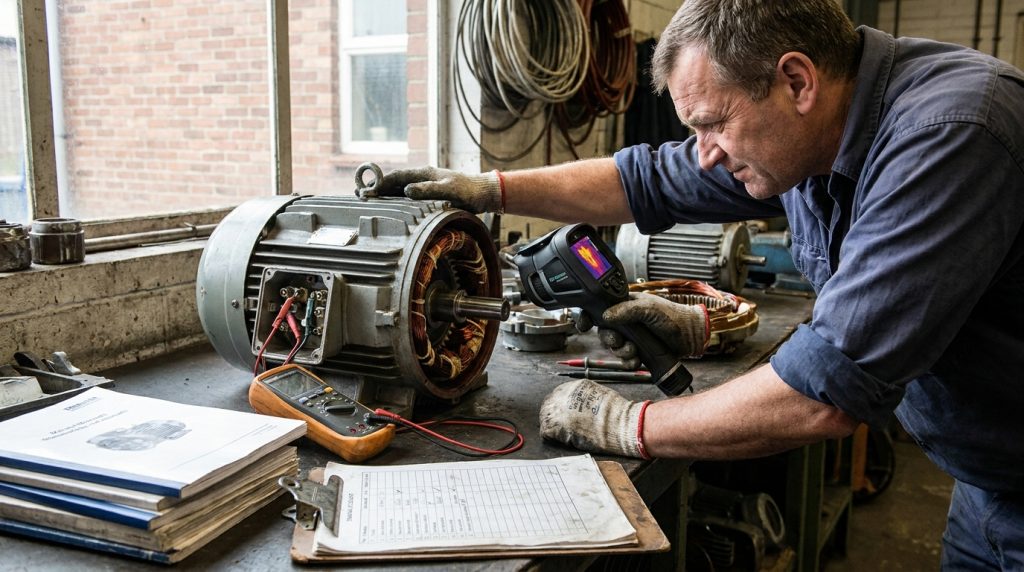
Understanding and Preventing Electric Motor Overheating: A Guide for Industrial Professionals
Electric motors are the workhorses of modern industry, powering everything from conveyor belts and pumps to HVAC systems and manufacturing machinery. Their reliable performance is critical to operational efficiency and profitability. However, when these vital components overheat, it can lead to costly downtime, premature wear, and even catastrophic failure. At CEM Industrial Supply in Coldwater, Michigan, we understand the challenges you face in maintaining your industrial equipment. This comprehensive guide will delve into the eight most common causes of electric motor overheating, offering practical troubleshooting steps, preventative measures, and essential safety precautions for industrial maintenance technicians, plant managers, electricians, contractors, and equipment owners.
The Criticality of Motor Temperature Management
Before we explore the causes of overheating, it’s crucial to understand why temperature is such a vital parameter for electric motors. Every electric motor is designed to operate within a specific temperature range. Exceeding this range, even for short periods, can have detrimental effects. High temperatures degrade insulation, reduce lubrication effectiveness, and can lead to mechanical stress and deformation. This degradation accelerates wear, increases the likelihood of electrical shorts, and ultimately shortens the motor’s lifespan. Proactive identification and mitigation of overheating causes are not just about preventing immediate failures; they are about ensuring the long-term health and reliability of your valuable industrial assets. CEM Industrial Supply, a trusted provider of industrial supplies and expert electric motor repair services, is dedicated to helping you keep your operations running smoothly.
Understanding why electric motors overheat is crucial for maintaining their efficiency and longevity. For those interested in exploring more about the tools that utilize these motors, a related article titled “Impact Driver vs. Drill: Which Tool Should You Be Using and Why It Matters” provides valuable insights into the functionality and applications of different power tools. You can read the article here: Impact Driver vs. Drill: Which Tool Should You Be Using and Why It Matters. This resource complements the discussion on electric motors by highlighting the importance of selecting the right tool for specific tasks, ultimately affecting motor performance and heat generation.
1. Inadequate Cooling and Ventilation
One of the most fundamental reasons an electric motor overheats is a breakdown in its cooling system. Electric motors generate heat as a byproduct of electrical resistance (I²R losses) and mechanical friction. Proper cooling is essential to dissipate this heat and maintain an optimal operating temperature.
Inefficient Airflow and Blocked Ducts
Electric motors rely on airflow to remove heat from their windings and housings. If the ventilation pathways become obstructed, the motor cannot dissipate heat effectively, leading to a rapid increase in temperature.
- Common Culprits: Dust, dirt, debris, lint, oil mist, and even animal nests can accumulate in motor vents, fan shrouds, and cooling fins. In environments with high particulate matter, this buildup can be rapid and pervasive.
- Troubleshooting: Visually inspect the motor for any visible obstructions. Pay close attention to the fan shroud (if present) and the external cooling fins of the motor casing. Listen for unusual noises, such as a struggling fan, which might indicate an obstruction.
- Prevention: Implement a regular cleaning schedule for your motors, especially in dusty or dirty environments. Compressed air can be effective for clearing vents, but ensure it’s applied with caution to avoid damaging delicate components. For persistent issues or in heavily contaminated areas, consider professional cleaning services. Ensure that the surrounding environment around the motor is kept clear of obstructions that could impede airflow.
- CEM’s Role: For specialized cleaning solutions or when faced with difficult-to-access areas, CEM Industrial Supply offers a range of industrial cleaning agents and can advise on best practices. If a motor’s cooling system is beyond simple cleaning, our expert electric motor repair services can address fan replacement or housing modifications.
Fan Malfunction or Damage
The motor’s internal or external fan is crucial for forcing air across the windings and heat sinks. A damaged or malfunctioning fan will significantly reduce cooling efficiency.
- Common Culprits: Fan blades can break or become deformed due to impact or material fatigue. The fan motor (in externally powered fans) can fail, or the drive mechanism (if belt-driven) can wear out. In some cases, the fan might simply be loose on its shaft, reducing its effectiveness.
- Troubleshooting: With the motor de-energized and locked out, attempt to rotate the fan manually. It should spin freely without excessive wobble or binding. Listen for any grinding or scraping sounds when the motor is running, which could indicate a failing fan bearing or the fan hitting the motor housing.
- Prevention: Regular visual inspections of the fan for cracks, chips, or deformation are essential. Listen for any abnormal sounds during operation. For belt-driven fans, inspect the belt tension and condition regularly.
- CEM’s Role: CEM Industrial Supply stocks a wide variety of replacement fans for common motor types and sizes. Our technicians can also diagnose fan-related issues during our electric motor repair process.
Environmental Factors: High Ambient Temperature or Poor Room Ventilation
The surrounding environment plays a significant role in a motor’s ability to dissipate heat. Operating a motor in an already hot environment or a poorly ventilated space puts an extra burden on its cooling system.
- Common Culprits: Motors installed in unconditioned plant rooms, close proximity to other heat-generating equipment (furnaces, boilers, other motors), or in direct sunlight can experience significantly higher operating temperatures.
- Troubleshooting: Use an infrared thermometer or a thermocouple to measure the ambient temperature around the motor. Compare this to the motor’s nameplate specifications for acceptable ambient operating temperatures. Assess the general ventilation of the room or area where the motor is located.
- Prevention: Where possible, relocate heat-generating equipment to improve airflow. Install additional ventilation fans or air conditioning in motor rooms. Consider using motors rated for higher ambient temperatures if environmental conditions cannot be altered.
- CEM’s Role: We can advise on selecting motors with higher ambient temperature ratings and supply ventilation equipment. Our team can also assess your facility’s needs for improved motor cooling solutions.
2. Electrical Overload and Incorrect Voltage/Frequency
Electrical issues are a primary cause of motor overheating, often leading to excessive current draw.
Sustained Overload Operation
Operating an electric motor at a load greater than its rated capacity forces it to draw more current than it’s designed for. This increased current leads to a disproportionate increase in heat generation.
- Common Culprits: Changes in the driven equipment’s load (e.g., a pump moving denser fluid, a conveyor carrying heavier material), mechanical binding in the driven system, or process changes that require more power.
- Troubleshooting: Use a clamp-on ammeter to measure the motor’s current draw under its typical operating load. Compare this reading to the motor’s nameplate full-load amperage (FLA). If the measured current consistently exceeds the FLA, the motor is likely overloaded. Also, listen for signs of strain or lugging from the motor.
- Prevention: Regularly assess the load on your driven equipment. Implement regular maintenance on the driven machinery to prevent increased friction or binding. Utilize variable frequency drives (VFDs) to control motor speed and torque, allowing for better load management and preventing over-amping.
- CEM’s Role: CEM Industrial Supply offers a comprehensive selection of motor control products, including VFDs from leading manufacturers. Our experts can help you select and configure the right VFD for your application. We also provide precision motor testing services to accurately assess motor performance under load.
Incorrect Voltage or Frequency
Supplying power that is too high or too low, or an incorrect frequency, can lead to inefficient operation and increased heat.
- Low Voltage: With lower voltage, the motor attempts to compensate by drawing more current to produce the required torque, leading to overheating.
- High Voltage: While less common for overheating, excessively high voltage can lead to saturation of the magnetic core, increasing iron losses and thus heat. It can also over-speed the motor, potentially causing mechanical issues.
- Incorrect Frequency: Operating a motor on a frequency significantly different from its design can lead to inefficient operation, torque fluctuations, and increased heat. For example, running a 60Hz motor on 50Hz will cause it to run slower and draw more current.
- Troubleshooting: Use a voltmeter to measure the voltage supplied to the motor terminals and compare it to the rated voltage on the nameplate. Check the frequency if a VFD is involved. Ensure the motor is correctly wired for the available power supply.
- Prevention: Regularly calibrate power monitoring equipment. Ensure electrical contractors correctly wire motors for the available power. When using VFDs, ensure they are programmed with the correct motor parameters (voltage, frequency, FLA, etc.).
- CEM’s Role: We supply and install a wide range of voltage and frequency monitoring devices. Our skilled electricians can perform thorough electrical system checks and ensure correct motor wiring. If you need reliable replacement motors, CEM Industrial Supply has a vast inventory.
3. Bearing Problems
Bearings are critical for smooth, low-friction rotation. When bearings fail or are improperly lubricated, they create excessive friction, which generates significant heat that can transfer to the motor windings.
Worn or Damaged Bearings
Over time, bearings can wear out due to normal operating cycles, contamination, or improper installation. This wear increases friction and vibration, leading to heat.
- Common Culprits: Age, inadequate lubrication, contamination (dirt, moisture, metal particles), improper shaft alignment, or shock loading.
- Troubleshooting: Listen for distinctive bearing noises such as grinding, squealing, or rumbling, especially when the motor is first started or under load. Feel for excessive vibration in the motor housing, particularly around the bearing areas. An infrared thermometer can detect localized hot spots around the bearing.
- Prevention: Implement a robust lubrication program based on manufacturer recommendations. Regularly inspect bearings for signs of wear or contamination. Perform shaft alignment checks periodically, especially after any maintenance on the driven equipment.
- CEM’s Role: CEM Industrial Supply offers a comprehensive selection of high-quality industrial bearings. Our expert electric motor repair services include professional bearing replacement and reconditioning.
Improper Lubrication
Both under-lubrication and over-lubrication of bearings can lead to overheating.
- Under-lubrication: Insufficient lubricant leads to increased friction and heat as metal-on-metal contact occurs.
- Over-lubrication: Too much grease can create excessive churning, generating heat. It can also force grease into areas where it’s not intended, potentially contaminating windings or blocking ventilation. Furthermore, over-lubrication can create pressure within the bearing housing, damaging seals and allowing contaminants to enter.
- Troubleshooting: Observe the amount of grease applied during maintenance. If you are not the one performing the lubrication, check maintenance logs for frequency and quantity. Feel the bearing housing for excessive heat.
- Prevention: Adhere strictly to the lubrication schedule and recommended lubricant types and quantities specified by the motor or bearing manufacturer. Use appropriate greasing equipment and train personnel on proper lubrication techniques.
- CEM’s Role: We provide high-quality industrial lubricants and can offer guidance on proper lubrication practices. Our team can also assist in identifying the correct lubricant for your specific application and motor type.
Misalignment of Shafts
If the motor shaft is not perfectly aligned with the shaft of the driven equipment, it creates significant stress on the bearings and couplings. This stress results in increased friction and heat.
- Common Culprits: Improper installation, vibration, thermal expansion, or wear on mounting surfaces.
- Troubleshooting: Misalignment can often be detected through excessive vibration readings, especially when measured across the coupling. Visual inspection of the coupling can sometimes reveal signs of premature wear or damage. Laser alignment tools provide the most accurate diagnosis.
- Prevention: Always perform precise shaft alignment during motor installation and after any maintenance on the motor or driven equipment. Regularly check alignment, particularly if vibration levels increase.
- CEM’s Role: CEM Industrial Supply offers precision alignment services using state-of-the-art laser alignment equipment. We also supply a wide range of couplings designed to accommodate minor misalignment, though proper alignment remains paramount.
Understanding why electric motors overheat is crucial for maintaining their efficiency and longevity. For those interested in further exploring related topics, a valuable resource is an article that discusses how to prevent failures in farm duty motors, particularly focusing on the impact of dust, moisture, and rodents. This information can be particularly beneficial for anyone looking to enhance the reliability of their electric motors. You can read more about it in this informative article.
4. Winding Issues: Insulation Breakdown and Short Circuits
The electrical windings are the heart of the motor. Any degradation or damage to the winding insulation can lead to increased resistance, current leakage, and ultimately, overheating.
Degraded or Damaged Insulation
The insulation coating on the motor windings prevents current from flowing between adjacent wires or from the windings to the motor frame. When this insulation degrades, it increases electrical resistance and can lead to short circuits.
- Common Culprits: Age, exposure to excessive heat, chemical contamination, moisture, vibration, and electrical stress (e.g., voltage spikes).
- Troubleshooting: Performing insulation resistance testing (megger testing) with a megohmmeter is the primary method. A low resistance reading indicates compromised insulation. Visual inspection may reveal signs of burnt insulation or discoloration.
- Prevention: Maintain a clean and dry operating environment. Avoid exposing motors to chemicals or solvents that can degrade insulation. Implement surge protection for electrical systems, especially in areas prone to lightning or power fluctuations.
- CEM’s Role: CEM Industrial Supply provides high-quality insulation testing equipment. Our electric motor repair shop is equipped to perform advanced winding diagnostics and rewinding services to restore insulation integrity.
Internal Short Circuits
When insulation fails between turns of a winding or between phases, it creates a low-resistance path for current, known as a short circuit. This drastically increases current draw and generates localized heat, potentially leading to rapid motor failure.
- Common Culprits: Similar to insulation degradation, but often more acute and localized. Can be caused by sharp edges on motor laminations, loose winding wires, or severe vibration.
- Troubleshooting: Short circuits will typically cause the motor to draw significantly more current than normal and may trip overload protection devices. Insulation resistance testing will reveal very low or zero resistance readings between windings or to ground.
- Prevention: Proper motor manufacturing and winding techniques are crucial. During motor repair, ensure all winding surfaces are smooth and free of burrs. Secure windings properly to prevent movement.
- CEM’s Role: Our experienced technicians can diagnose and repair internal short circuits. For severely damaged windings, we offer professional electric motor rewinding services, utilizing high-quality insulation materials.
Winding Imbalance
If the resistance or inductance of the windings is not uniform across all phases, it can lead to an uneven distribution of current and magnetic flux. This imbalance can cause increased heat in the weaker phases.
- Common Culprits: Manufacturing defects, damage during previous repairs, or partial shorting.
- Troubleshooting: Advanced motor analysis tools and resistance measurements between phases can detect winding imbalances. This is often a diagnostic step performed during comprehensive motor testing.
- Prevention: Ensure that any motor repairs or rewinding are performed by qualified technicians who maintain winding symmetry.
- CEM’s Role: CEM Industrial Supply provides expert motor diagnostics, including winding resistance analysis, to identify and rectify winding imbalances.
Understanding the reasons behind electric motor overheating is crucial for maintaining efficiency and longevity in industrial applications. For those looking to enhance their operations, exploring the benefits of industrial automation can provide valuable insights. You can read more about this topic in the article on the key benefits of industrial automation, which highlights how automation can help mitigate issues such as overheating by improving overall system performance and reliability.
5. Frequent Starting and Stopping
The process of starting an electric motor is inherently more demanding than running it at a steady state. Frequent starts and stops can lead to cumulative heat buildup.
High Inertia Loads
Starting a motor connected to a high-inertia load (like a large fan or heavy flywheel) requires significant torque and thus draws a high starting current for a longer duration. Repeatedly doing this without adequate cooling time between starts can cause overheating.
- Common Culprits: Conveyor systems with heavy loads, large fan systems, mixers, and crushers.
- Troubleshooting: Monitor the motor’s temperature during and immediately after start-up sequences. Note the duration of the high-current start-up phase.
- Prevention: If possible, reduce the inertia of the driven load. Implement soft-start methods using VFDs or dedicated soft-starter controllers that gradually ramp up motor speed and torque, reducing the high inrush current and mechanical stress.
- CEM’s Role: We offer a full line of VFDs and soft starters. Our team can help you select the most appropriate solution for your application to minimize starting stress and improve efficiency.
Inadequate Cool-Down Time
When a motor is stopped, heat generated during operation continues to dissipate. If a motor is restarted before it has adequately cooled down, the cumulative heat can exceed its safe operating limits.
- Common Culprits: Automated processes with very short stop cycles, or manual operation patterns that involve frequent cycling without sufficient rest periods.
- Troubleshooting: Monitor motor temperatures at various points in the operational cycle. Track the time between stops and subsequent starts.
- Prevention: Adjust process timings to allow for adequate cool-down periods. Consider using motors rated for intermittent duty if the application demands frequent starts and stops.
- CEM’s Role: We can help you evaluate your motor’s duty cycle requirements and recommend suitable motors, including those designed for frequent starts. Our electric motor repair services can also assess if existing motors are being pushed beyond their intended operational parameters.
6. Environmental Contamination and Corrosive Elements
The operating environment can introduce contaminants and corrosive substances that degrade motor components and lead to overheating.
Dust, Dirt, and Debris Accumulation
As previously mentioned under cooling, excessive accumulation of dust and dirt can impede airflow. However, these contaminants can also get into bearing housings and motor windings, increasing friction and insulation breakdown.
- Common Culprits: Grinding operations, woodworking, agricultural settings, and general industrial environments.
- Troubleshooting: Visual inspection of the motor’s exterior and internal components (if accessible) for significant dust and debris buildup.
- Prevention: Regular cleaning and maintenance are paramount. Consider using enclosed motors (TEFC – Totally Enclosed Fan Cooled) or explosion-proof motors in environments with high levels of dust or hazardous materials.
- CEM’s Role: We offer a range of industrial cleaning supplies and can advise on the best types of motors for specific environmental challenges.
Chemical Exposure and Corrosive Atmospheres
Certain industrial processes involve exposure to chemicals, solvents, or corrosive fumes that can attack motor insulation, seals, and metal components, leading to premature failure and overheating.
- Common Culprits: Chemical plants, food processing facilities, wastewater treatment plants, and metal plating operations.
- Troubleshooting: Visually inspect the motor for signs of corrosion, chemical staining, or degraded materials (e.g., rubber seals becoming brittle).
- Prevention: Use motors with appropriate protective coatings and materials designed for corrosive environments. Ensure proper sealing of motor housings and junction boxes. Install motors in ventilated areas away from direct exposure to corrosive substances.
- CEM’s Role: CEM Industrial Supply provides specialized industrial motors with enhanced protection for corrosive environments. Our team can also guide you on the selection of appropriate coatings and sealants.
7. Incorrect Motor Selection for the Application
Choosing a motor that is not suited for the specific demands of the application is a common oversight that leads to overheating and premature failure.
Undersized Motor
Using a motor that is too small for the required load will cause it to constantly operate at or beyond its rated capacity, drawing excessive current and overheating.
- Common Culprits: Rushing installation, using a replacement motor without proper load calculation, or underestimating the torque or power requirements.
- Troubleshooting: Compare the motor’s nameplate specifications (HP, FLA) against the actual load requirements. If the motor is consistently running at its limit, it’s likely undersized.
- Prevention: Always perform accurate load calculations before selecting a motor. Consult with an experienced engineer or motor specialist if unsure.
- CEM’s Role: CEM Industrial Supply has a team of experts who can assist with motor selection based on your application’s specific needs. We offer a wide range of motors in various sizes and power ratings.
Wrong Motor Type for the Environment or Duty Cycle
Using a general-purpose motor in an environment it’s not designed for (e.g., a washdown motor in a dry, dusty area, or a standard motor in a washdown application) can lead to rapid degradation and overheating. Similarly, using a motor rated for continuous duty in an application requiring frequent starts and stops can cause overheating.
- Common Culprits: Lack of understanding of motor classifications (e.g., IP ratings, duty cycles), or using the most readily available motor without considering application specifics.
- Troubleshooting: Review the motor’s specifications against the environmental conditions and the operational demands of the application.
- Prevention: Thoroughly understand the application’s requirements, including environmental factors (temperature, humidity, contaminants) and operational duty cycle (continuous, intermittent, frequent starts). Select a motor specifically designed for those conditions.
- CEM’s Role: We stock a diverse inventory of motors designed for specific applications and environments, including washdown, explosion-proof, and high-efficiency models. Our knowledgeable staff can help you navigate these options to ensure the correct selection.
8. Electrical Transients and Voltage Spikes
Sudden, short-duration increases in voltage can stress motor insulation and windings, contributing to long-term degradation and eventual overheating.
Lightning Strikes and Power Surges
External events like lightning strikes or internal power system disturbances can generate significant voltage spikes that can travel through the power grid and damage sensitive motor components.
- Common Culprits: Lightning strikes, utility grid switching, operation of large inductive loads (welding machines, large presses), or faulty power distribution equipment.
- Troubleshooting: While direct measurement of a transient is difficult, signs of damage may include tripped breakers, blown fuses, or observed damage to the motor or connected equipment immediately following a storm or power event.
- Prevention: Install surge protection devices (SPDs) at the main electrical service entrance and at critical points within the facility. Ensure proper grounding of all electrical systems.
- CEM’s Role: CEM Industrial Supply offers a range of surge protection solutions. We can also advise on the best placement and types of SPDs for your facility’s needs.
Switching Operations in the Power Grid
The switching of heavy loads on the utility grid or within your facility can cause temporary voltage fluctuations and spikes that can impact motor health over time.
- Common Culprits: Operation of large machinery, utility company grid management.
- Troubleshooting: Similar to lightning strikes, identifying specific events can be challenging without continuous monitoring.
- Prevention: Implementing more robust power conditioning equipment, such as line reactors or isolation transformers, can help mitigate the effects of switching operations.
- CEM’s Role: We can provide and install power conditioning equipment to protect your motors from electrical disturbances.
Safety Precautions When Working with Electric Motors
Working with electric motors, especially when troubleshooting overheating issues, requires strict adherence to safety protocols to prevent injury.
- Always De-energize and Lockout/Tagout (LOTO): Before performing any inspection or maintenance, ensure the motor is completely de-energized and locked out. Verify with a lockout/tagout procedure and test for voltage absence using a properly rated voltage tester.
- Wear Appropriate Personal Protective Equipment (PPE): This includes safety glasses, gloves (rated for electrical work if applicable), safety shoes, and potentially arc-flash protective clothing depending on the electrical hazards present.
- Be Aware of Rotating Parts: Even after de-energizing, residual energy in capacitors or inertia in the driven load can cause unexpected movement.
- Understand Your Motor’s Environment: Be aware of potential hazards in the operating area, such as slippery floors, chemical spills, or hot surfaces.
- Follow Manufacturer’s Guidelines: Always refer to the motor manufacturer’s operation and maintenance manuals for specific safety recommendations.
- Qualified Personnel Only: Electrical troubleshooting and repair should only be performed by qualified electricians and technicians who are familiar with industrial electrical systems and safety procedures.
Actionable Recommendations for Industrial Facilities
To proactively address electric motor overheating and ensure maximum uptime, consider the following actions:
- Establish a Preventative Maintenance Schedule: Implement a rigorous preventative maintenance program that includes regular visual inspections, lubrication checks, vibration analysis, and electrical testing (e.g., insulation resistance).
- Invest in Motor Monitoring Technology: Utilize technologies like infrared thermography and vibration analysis to detect early signs of overheating and potential failures before they become critical.
- Train Your Maintenance Staff: Ensure your maintenance technicians are well-trained on motor operation, troubleshooting techniques, and safety procedures.
- Optimize Ventilation and Cooling: Regularly inspect and clean motor cooling systems. Ensure adequate airflow around all motors.
- Review Motor Selection: Periodically assess if your current motors are still the best fit for their applications, especially after process changes or equipment upgrades.
- Implement Load Management: Utilize VFDs and soft starters where appropriate to control motor speed, torque, and starting current.
- Secure Reliable Parts and Service: Partner with a trusted industrial supply and repair provider like CEM Industrial Supply for quality replacement parts and expert repair services.
Frequently Asked Questions (FAQs)
Q1: How hot is too hot for an electric motor?
A: The maximum allowable operating temperature for an electric motor is typically indicated by its insulation class on the nameplate (e.g., Class B allows for a winding temperature rise of 40°C above a 40°C ambient, totaling 80°C). However, continuous operation close to these limits reduces motor lifespan. Many facilities aim to keep motors well below these maximums, often targeting temperatures where an infrared thermometer feels warm but not excessively hot to the touch (use caution with this method, as it’s not precise). Always refer to the motor’s nameplate and manufacturer’s specifications.
Q2: Can a motor that overheats be rewound, or is it better to replace it?
A: This is a common question and depends on several factors. For many standard motors, rewinding is a cost-effective solution, especially if the frame and shaft are in good condition. It can save significant costs compared to a new motor. However, if the motor has suffered severe mechanical damage (e.g., a cracked housing), or if it’s a specialized, low-cost motor where replacement is more economical, replacement might be the better option. CEM Industrial Supply can assess your damaged motor and provide a recommendation and quote for repair or replacement.
Q3: What is the difference between a motor overload and a short circuit?
A: An overload occurs when a motor draws more current than its rated capacity for an extended period, usually due to excessive mechanical load or poor ventilation. This leads to gradual overheating. A short circuit is a low-resistance path for current, often caused by insulation failure. It results in a massive, instantaneous surge of current that can trip breakers or blow fuses very quickly and cause rapid, localized overheating.
Q4: How often should I perform insulation resistance testing on my motors?
A: The frequency of insulation resistance testing (megger testing) depends on the motor’s critical nature, operating environment, and duty cycle. For critical motors, annual testing is recommended. In harsh environments or for less critical motors, testing every 1-3 years may suffice. If you notice any symptoms of overheating or unusual performance, testing should be performed immediately.
Q5: What are the benefits of using a Variable Frequency Drive (VFD) for preventing motor overheating?
A: VFDs offer several benefits for preventing overheating. They allow for soft starting, which reduces the high inrush current and mechanical stress during startup, thereby reducing heat generated during the starting phase. VFDs also enable precise speed control, allowing the motor to operate at the optimal speed for the load, preventing it from being over-sped or under-sped unnecessarily, which can lead to inefficient operation and heat buildup. Furthermore, some VFDs offer advanced motor protection features.
Conclusion: Partner with CEM Industrial Supply for Motor Reliability
Electric motor overheating is a pervasive issue in industrial settings, stemming from a variety of causes ranging from environmental factors and electrical faults to mechanical issues and improper usage. Understanding these eight common culprits – inadequate cooling, electrical overload, bearing problems, winding issues, frequent starts/stops, environmental contamination, incorrect motor selection, and electrical transients – is the first step toward ensuring the longevity and reliability of your electric motors.
At CEM Industrial Supply, located right here in Coldwater, Michigan, we are committed to providing the industrial community with comprehensive solutions for their electric motor needs. Whether you are experiencing a motor that’s running too hot, require routine maintenance, or need expert diagnostics and repair, our team of seasoned professionals is ready to assist. We offer a full spectrum of services, from diagnosing the root cause of overheating and performing meticulous electric motor repair and rewinding to supplying high-quality industrial motors, controls, and essential maintenance supplies.
Don’t let overheating lead to costly downtime and production losses. Contact CEM Industrial Supply today at (517) 279-7072 or visit us at cemindustrialsupply.com. Let us help you keep your essential equipment running at optimal temperatures, ensuring the continued success of your operations.