
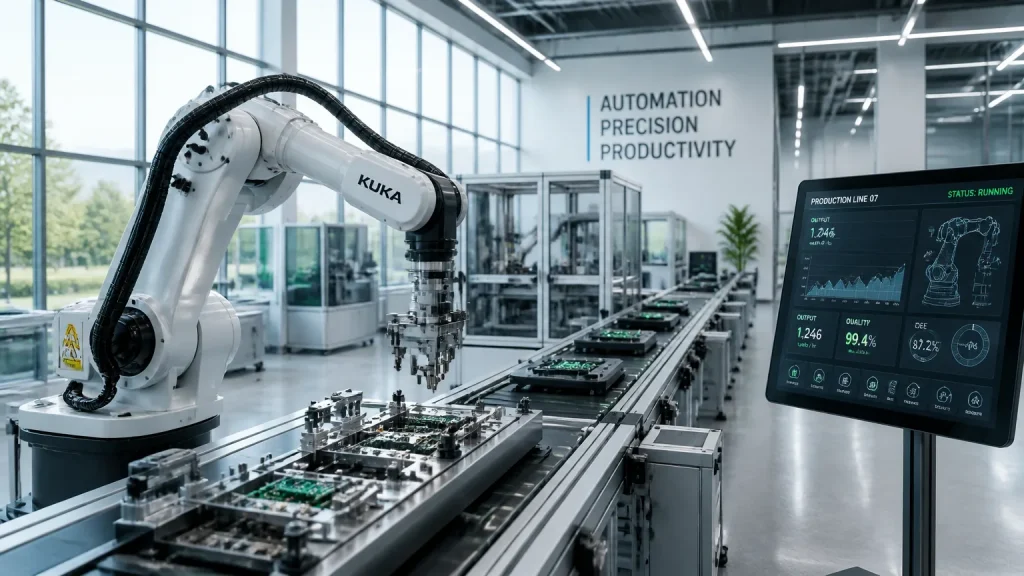
Industrial automation is transforming the manufacturing landscape, offering powerful solutions for contractors and manufacturers alike. In southern Michigan, this shift is particularly relevant as industries seek to enhance efficiency and productivity. Automation streamlines processes, reduces errors, and allows teams to focus on higher-value tasks.
Contractors can leverage industrial automation to optimize workflows, leading to quicker project turnaround times. With the region’s strong industrial base, adopting these technologies is not just beneficial—it’s essential.
As we explore the key benefits of industrial automation, you’ll discover how these advancements can elevate your operations. Embracing automation is not merely a trend; it’s a strategic move that can set your business apart in a competitive market. Get ready to unlock the potential of your projects and maximize your resources.
1. Increased Productivity
Industrial automation significantly boosts productivity for manufacturers and contractors. Machines operate faster and with precision, minimizing downtime. This speed ensures that projects move forward without unnecessary delays.
Moreover, automation takes over repetitive tasks. This shift allows workers to focus on higher-value duties, such as problem-solving and innovation. By reallocating labor to more critical areas, businesses can enhance both efficiency and output.
For example, automated assembly lines can produce components at a much quicker rate than manual labor. This not only meets demand but also drives profitability. Embracing industrial automation is a smart step toward maximizing your operational potential.
2. Cost Savings
Implementing industrial automation leads to significant long-term savings. By reducing reliance on manual labor, businesses can cut down on labor costs substantially. Automated systems work efficiently around the clock, minimizing the need for overtime and additional staffing.
Additionally, automation helps reduce waste. Machines can precisely measure and use materials, leading to less scrap and rework. This not only saves money but also boosts overall productivity.
Energy consumption also drops with optimized machines. Automated systems are designed to operate at peak efficiency, resulting in lower utility bills. By streamlining your processes, you can achieve a healthier bottom line while supporting sustainable practices.
3. Enhanced Quality Control
Automation significantly improves product quality and consistency. Automated systems can detect defects in real-time, ensuring that only top-quality products reach the market. This capability minimizes errors that often occur in manual processes.
Moreover, consistency in production reduces variability. With precise measurements and controlled conditions, each product meets the same high standards. This reliability builds trust with your customers, as they know they can expect uniformity in every order.
Incorporating industrial automation not only elevates quality but also enhances your reputation in a competitive landscape.
4. Improved Safety
Industrial automation significantly enhances workplace safety. Robots can take over dangerous tasks, such as heavy lifting or working in hazardous environments. This reduces the risk of accidents and injuries for your team.
Automated systems also contribute to safer operating environments. They can monitor conditions in real-time, detecting issues before they escalate. For instance, automated sensors can identify temperature fluctuations, alerting staff to potential hazards.
By integrating these technologies, you create a safer workplace. Fewer accidents lead to lower insurance costs and improved morale among employees. Prioritizing safety through automation not only protects your workers but also strengthens your business reputation.
5. Increased Flexibility
Industrial automation empowers contractors and manufacturers to adapt swiftly to market changes. With automated systems, production lines can be reconfigured rapidly to meet new demands. This flexibility allows businesses to pivot quickly, whether increasing output for a seasonal surge or adjusting for shifts in consumer preferences.
Moreover, automation enables contractors to take on more complex projects without overwhelming their workforce. Tasks that once required extensive manual labor can now be streamlined through automated processes. This means you can tackle ambitious projects confidently, ensuring quality without sacrificing efficiency. Embracing industrial automation not only enhances your adaptability but also positions your business for growth in a fast-paced environment.
6. Streamlined Maintenance
Automation simplifies maintenance tasks and scheduling. With predictive maintenance capabilities, your machinery can alert you to potential issues before they escalate. This proactive approach helps reduce unexpected downtimes, keeping your operations running smoothly.
Easier tracking of machinery health allows for better resource management. You can allocate maintenance resources more effectively, ensuring that critical systems remain operational. For insights into optimizing your maintenance schedule, check out our article on Turnaround Time: How Long Does a Rewind Take?.
By integrating these automated solutions, you position your business for long-term efficiency and reliability.
7. Environmental Sustainability
Industrial automation plays a crucial role in promoting environmental sustainability. By optimizing production processes, it significantly reduces waste and energy consumption.
Automated systems can monitor resource usage in real time, allowing for better management throughout the production cycle. This means less raw material is wasted and energy is used more efficiently.
For example, automated machinery adjusts its operations based on real-time data, minimizing excess energy use. This not only lowers operational costs but also reduces your carbon footprint, making your business more environmentally friendly. Embracing automation is a win-win for both your bottom line and the planet.
8. Better Workforce Allocation
Automation transforms employee roles, allowing for better workforce allocation. With routine tasks handled by machines, employees can be retrained for more strategic positions. This not only enhances job satisfaction but also drives innovation within your team.
Moreover, automation helps alleviate workforce shortages in critical areas. By implementing automated systems, you can maintain productivity even when staffing levels are low. This flexibility ensures that your operations run smoothly, regardless of workforce challenges.
Ultimately, better workforce allocation through industrial automation leads to a more engaged and efficient team.
9. Enhanced Data Collection
Automated systems streamline data collection, enabling informed decision-making. With real-time data at your fingertips, you can optimize production processes effectively. This immediate feedback allows you to adjust operations on the fly, improving efficiency and output.
For instance, tracking machine performance helps identify bottlenecks before they escalate. This proactive approach reduces downtime and increases productivity. Additionally, leveraging analytics can inform your choice of materials. For example, knowing how to select the right tools can be crucial—check out our guide on How to Choose the Right Abrasive for Metal, Steel, and Stainless to enhance your decision-making.
Incorporating advanced data analytics into your workflow not only boosts performance but also supports strategic planning for future projects.
10. Competitive Advantage
Embracing industrial automation gives contractors and manufacturers a significant edge over competitors. Automated processes enhance the speed and quality of service, allowing you to meet customer demands more efficiently. This agility not only boosts productivity but also improves customer satisfaction.
Staying ahead of industry trends is crucial for long-term success. Automated systems enable you to adapt quickly to changes in the market, ensuring your business remains relevant. By investing in automation, you position yourself as a leader in your field, ready to tackle new challenges and seize opportunities as they arise.
Embracing Automation for Future Success
The future of industrial operations hinges on automation. As we’ve explored, the benefits are numerous—from enhanced efficiency to improved safety. Adapting to these technologies is essential for staying relevant and competitive in today’s market.
By embracing industrial automation, contractors and manufacturers can streamline processes and reduce costs. This adaptability allows businesses to respond swiftly to shifts in demand and market conditions.
Investing in automation not only positions you as a leader but also equips your team for future challenges. If you’re looking for additional insights on enhancing your operations, check out our guide on Top Tips for Choosing the Best Roof Leak Repair Contractors.
The time to act is now—unlock your potential and lead your industry into a more automated future.