
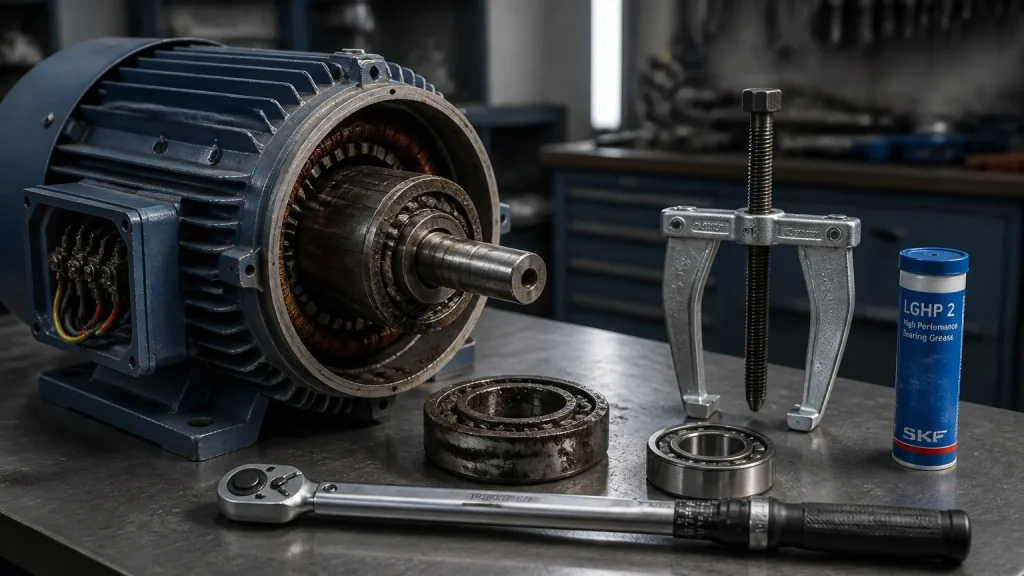
Electric motor bearing replacement often starts with one small warning: an unfamiliar hum, new vibration, rising heat, or grease leakage. Ignoring these signs can damage the shaft, ruin windings, and turn a manageable bearing job into a complete motor repair.
Seasonal temperature swings around Coldwater, Branch County, and Southern Michigan can affect lubrication and bearing performance. Dusty job sites, agricultural equipment, production environments, and home workshops create additional wear. Reliable industrial supplies in Coldwater help, but timely inspection matters more.
Not every motor problem comes from a bearing. Electrical faults can cause humming, overheating, or poor performance, while mechanical issues often produce rough rotation, noise, or shaft play. Diagnose the cause before ordering parts or disassembling the motor. The right checks can prevent unplanned downtime and help you repair the problem safely.
Five Warning Signs the Bearings Are Failing
1. Unusual noise. Growling, rumbling, squealing, or grinding often points to bearing wear, contamination, or poor lubrication. Listen for changes from the motor’s normal sound. Noise that appears only during startup or under load still deserves investigation.
2. Increasing vibration. A worn bearing can create vibration that worsens as speed or load increases. Compare readings with past data when possible. Vibration can also come from imbalance or misalignment, so confirm the source before ordering parts.
3. Excessive housing temperature. A motor housing that runs hotter than normal may indicate friction, overload, or insufficient lubrication. Check temperature at consistent operating conditions. A problem that appears only after the motor reaches operating temperature should not be dismissed.
4. Grease or oil problems. Look for leaking grease, discolored lubricant, excess grease, or dry areas around the bearing housing. Contamination from dirt or moisture can accelerate damage. Review these common bearing lubrication mistakes before adding lubricant.
5. Shaft play or rough rotation. After safely isolating and locking out the motor, check for looseness at the shaft. Rotate it by hand if the design allows. Rough movement, binding, or noticeable shaft play can confirm internal bearing damage.
Document sound, temperature, vibration, load, and operating conditions over time. This record helps contractors and maintenance teams compare multiple motors and spot gradual changes. If several symptoms appear together, plan an inspection promptly. Early action can support a controlled electric motor bearing replacement instead of an emergency shutdown.
Determine Whether the Bearing—or Another Motor Component—is at Fault
Start safely. Apply lockout/tagout, disconnect power, and let the motor cool before inspection. Energized testing belongs to qualified personnel using approved procedures and proper test equipment.
Check the mounting bolts, base, coupling, belts, and fan cover for looseness or damage. Inspect belt tension and alignment. A loose bolt, worn belt, or misaligned coupling can create vibration that resembles bearing failure. Turn the shaft by hand when safe. Rough rotation, grinding, or noticeable shaft movement points more directly toward bearing wear.
Look for vibration patterns, not just overall noise. Radial vibration may indicate imbalance or looseness, while axial vibration can suggest misalignment or coupling problems. Check current draw against the motor nameplate and compare phases when qualified personnel perform live testing. Uneven current may indicate electrical faults or an overloaded motor.
Use a temperature gun to compare bearing housing temperatures with the opposite end and similar motors. A vibration meter provides better evidence than touch or sound alone. A megohmmeter can help identify weakened insulation, but only trained personnel should perform insulation testing.
If symptoms remain unclear, stop before ordering parts. A professional motor shop can inspect the rotor, windings, shaft, and bearings together. Use reliable industrial maintenance resources when planning the next service step. This process helps confirm whether electric motor bearing replacement is necessary.
Know When Replacement Is Better Than Continued Lubrication
Lubrication can extend service life when the bearing remains smooth, properly fitted, and free from damage. It cannot correct pitting, brinelling, corrosion, looseness, cage damage, excessive clearance, or a damaged shaft seat. Adding grease to a damaged bearing may only delay the failure.
Plan electric motor bearing replacement when noise returns soon after lubrication, operating temperature rises, or grease contains metal particles. Measurable shaft play, failed seals, and repeated downtime also point to replacement. These signs indicate the bearing or surrounding components need a closer inspection.
Your decision should match the motor’s horsepower, duty cycle, and application demands. A critical production motor may justify immediate replacement, while a lightly used shop motor may allow scheduled service. Consider bearing availability, labor, motor age, and the cost of production or jobsite interruption.
A motor shop can determine whether to regrease, replace the bearing, repair the motor, or install a new motor. Inspect the shaft seat and windings before choosing parts. Review AC motor rewinding and repair options when winding damage or an older motor changes the repair calculation. When downtime carries serious consequences, order verified parts early and schedule the work before failure.
Plan the Replacement Without Creating a Second Failure
Record the motor nameplate, bearing numbers, shaft dimensions, seal or shield style, clearance class, load direction, speed, and manufacturer specifications. Do not match bearings by appearance alone. These details help confirm the correct part for industrial, agricultural, construction, and workshop equipment.
Use the correct pullers, presses, heating methods, and shaft protection during installation. Keep parts clean, verify the fit, set preload correctly, and align the motor before returning it to service. Never hammer a bearing onto the wrong race. That mistake can cause immediate damage and another failure.
Moisture, fertilizer dust, abrasive material, and winter storage can change the service requirement. Equipment in these conditions may need upgraded sealing, corrosion protection, or a revised maintenance interval. For farm equipment parts near Coldwater, confirm compatibility with the equipment manufacturer before ordering. Proper planning makes electric motor bearing replacement safer and more reliable.
Replace Early, Verify the Cause, and Protect the New Bearing
Unusual noise, vibration, heat, grease problems, or shaft play justify an inspection. They do not prove the bearing is the only failed component. Confirm the source before ordering parts or starting electric motor bearing replacement.
After repair, check alignment, belts or couplings, lubrication amount, operating temperature, and vibration. Store portable tools and small motors clean and dry, then follow routine maintenance to prevent repeat failures.