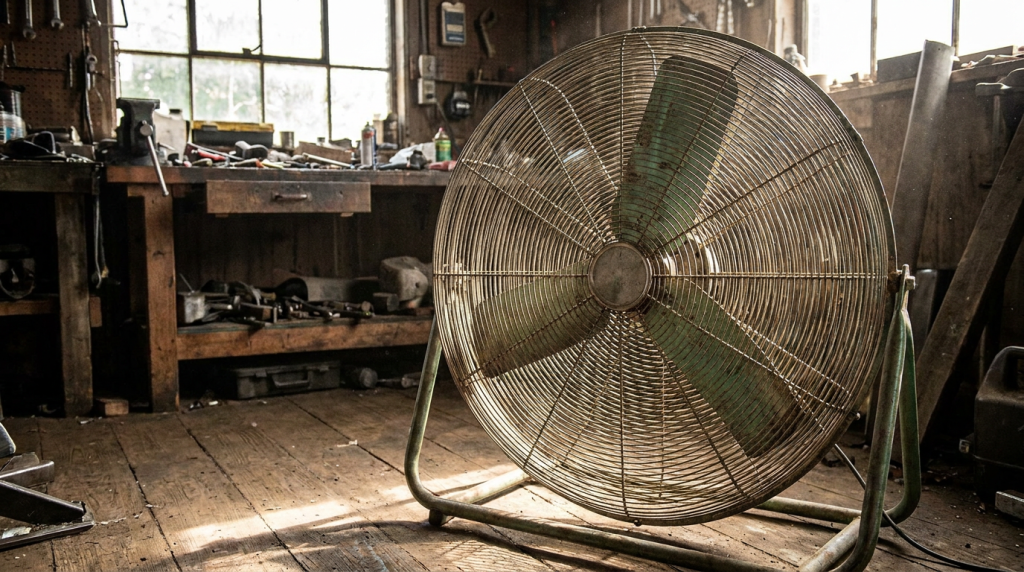
A shop fan may seem like a simple purchase, but anyone who has worked in a garage, workshop, studio, barn, warehouse, or home project space knows how much the right airflow can change the whole atmosphere.

A good shop fan keeps the air moving, helps reduce heat, supports ventilation, and makes long hours of work feel more comfortable and safe. In a devotional mood, we can even see this as part of caring for the space where we serve, create, repair, build, and offer our energy.

In Bhakti Yoga, the path of loving devotion, ordinary actions can become sacred when done with sincerity. The Bhagavad Gita teaches, “Whatever you do, whatever you offer… do that as an offering to Me” (Bhagavad Gita 9.27). This means even choosing a practical tool, like the right shop fan, can be approached with thoughtfulness, gratitude, and service.

Whether your shop is for woodworking, auto repair, art, gardening, metalwork, community service, or maintaining a temple or home, this guide will help you choose the best shop fan for your needs.

A shop fan is not only about comfort. It can support health, productivity, and the long-term condition of your workspace.

When air becomes hot, stale, dusty, or filled with fumes, the body and mind naturally become tired. A well-chosen fan helps create a cleaner, cooler environment where you can focus on your work with more steadiness.

In Sanskrit, the word seva means “service.” In Bhakti Yoga, seva is loving action offered for the benefit of others and for the pleasure of God. If your workshop is a place where you repair someone’s car, build furniture for a family, prepare community supplies, or maintain sacred items, then caring for that space becomes part of your seva.

Comfort Supports Better Work

Heat can make even simple tasks feel heavy. A strong, properly placed shop fan helps your body stay cool and your mind stay alert.

When we are less distracted by discomfort, we can work more patiently and carefully. This is especially important when using tools, sharp blades, machinery, paints, chemicals, or heavy materials.

Airflow Can Improve Safety

Many shops collect dust, fumes, and odors. While a fan is not a replacement for proper dust collection, exhaust systems, masks, or safety equipment, it can help move stagnant air and support better ventilation.

For example, a shop fan can help:

  • Move hot air away from your main work area
  • Push fumes toward an open door or exhaust point
  • Keep air circulating in garages and sheds
  • Reduce the feeling of stuffiness
  • Support drying after cleaning, painting, or washing floors

A Good Fan Protects Your Energy

In Bhakti, we often speak about using our energy in God’s service. If the workspace drains you unnecessarily, your service becomes harder. A reliable fan can help preserve your strength, especially during summer months or long workdays.

This is practical spirituality: caring for the body and environment so the heart can remain steady, grateful, and focused.

When selecting the right shop fan, it’s essential to consider not only the fan’s specifications but also the overall efficiency and longevity of your equipment. For those contemplating whether to rebuild or replace their existing fans, a related article titled “Rebuild vs. Replace: When Rebuilding Makes Sense” provides valuable insights. You can read more about this topic by visiting this link. This article discusses the factors to weigh when deciding between rebuilding your current fan or investing in a new one, helping you make a more informed choice for your shop’s needs.

Understand Your Shop Space Before You Buy

Before choosing a shop fan, take a humble and honest look at your space. The best fan for a small garage may not be right for a large warehouse. The right fan for woodworking may not be ideal for auto repair or a greenhouse.

Measure the Size of Your Workspace

Start by estimating the square footage of your shop. A small home garage may only need one powerful floor fan or wall-mounted fan. A larger workshop may need multiple fans placed strategically.

Consider:

  • Length and width of the room
  • Ceiling height
  • Number of doors and windows
  • Areas where heat collects
  • Workstations that need direct airflow
  • Whether the space is insulated or exposed

A small shop can often be cooled by a 14-inch to 20-inch fan. Medium shops may require a 24-inch to 30-inch fan. Larger commercial spaces may need 36-inch or larger industrial fans, or multiple units.

Notice Where Air Gets Trapped

Walk through your shop during the warmest part of the day. Where does the air feel still? Where does heat rise and collect? Are there corners that feel damp, dusty, or heavy?

Sometimes the issue is not that the fan is too weak, but that it is placed in the wrong location. A shop fan should work with the natural airflow of the space, not against it.

Consider Doors, Windows, and Exhaust Points

If your shop has an open garage door, a fan can be placed to pull cooler air in or push hot air out. If you have windows on opposite walls, you may be able to create cross-ventilation.

Cross-ventilation means air enters from one side and exits from another. This is often more effective than simply blowing air around in a closed room.

In simple terms: airflow needs a path.

Types of Shop Fans and When to Use Them

There are several types of shop fans, and each has its own purpose. Choosing the right style will help you avoid wasting money on a fan that is too small, too loud, or inconvenient for your needs.

Floor Fans

Floor fans are among the most common shop fans. They sit directly on the ground and usually have strong metal frames. Many are adjustable, allowing you to tilt the fan upward or downward.

Floor fans are good for:

  • Garages
  • Woodworking shops
  • Auto repair spaces
  • Small warehouses
  • Temporary cooling
  • Moving air across the floor

They are easy to move and often provide strong airflow. The main downside is that they take up floor space and can become a tripping hazard if cords are not managed carefully.

Wall-Mounted Fans

Wall-mounted fans are excellent when you want airflow without using floor space. They are attached to the wall and can often be tilted or oscillated.

Oscillation means the fan moves side to side, spreading air across a wider area.

Wall-mounted shop fans are good for:

  • Small shops with limited floor space
  • Workbenches
  • Garages
  • Barns
  • Storage areas
  • Long-term cooling setups

They can be placed above head level, which helps keep the workspace clear. Just make sure they are mounted securely into studs or strong structural supports.

Pedestal Fans

Pedestal fans stand on adjustable poles. They are useful when you need airflow at a specific height. Many pedestal fans oscillate and can be moved around the shop.

They are good for:

  • General shop cooling
  • Workstations
  • Temporary setups
  • Events or community service spaces
  • Areas where direct airflow is needed at body height

However, they may be less stable than heavy-duty floor fans, especially in busy shops where people move tools and materials often.

Drum Fans and Barrel Fans

Drum fans, sometimes called barrel fans, are large, powerful fans designed to move a lot of air. They are often used in warehouses, factories, barns, and large workshops.

They are good for:

  • Large open spaces
  • High heat environments
  • Industrial shops
  • Drying floors
  • Moving air quickly over long distances

These fans can be very effective, but they may also be loud and powerful. In a small shop, a large drum fan might be too intense.

Ceiling Fans for Shops

Ceiling fans can be helpful in workshops with high ceilings. They circulate air from above and can reduce heat buildup.

However, ceiling fans are not always enough on their own. They move air gently compared to industrial shop fans. They work best when combined with floor fans, wall fans, or proper ventilation.

Ceiling fans are good for:

  • Large garages
  • Studios
  • Barns
  • Community halls
  • Temple maintenance areas
  • Shops with high ceilings

Make sure the fan blades have enough clearance from lights, shelves, garage doors, and tall equipment.

Exhaust Fans

Exhaust fans are designed to remove air from the space and send it outside. These are especially useful where fumes, smoke, moisture, or odors are a concern.

Exhaust fans are good for:

  • Paint areas
  • Welding zones
  • Auto shops
  • Greenhouses
  • Kitchens or prasadam preparation spaces
  • Humid workshops

Prasadam is a Sanskrit word meaning “mercy” or “grace.” In Bhakti traditions, prasadam refers to food that has been lovingly offered to God and then shared. In areas where food is prepared, proper ventilation is part of cleanliness, care, and service.

Please check out our latest article at https://cemindustrialsupply.com/news/ for more information.

Key Features to Look for in a Shop Fan

Once you know the type of fan you need, look carefully at the features. A fan that looks powerful may not always be the best choice. Durability, safety, and ease of use matter.

Airflow Rating

Airflow is often measured in CFM, which means “cubic feet per minute.” This tells you how much air the fan can move.

A higher CFM means stronger airflow. However, bigger is not always better. Too much airflow in a small shop can blow dust, papers, sawdust, or lightweight materials everywhere.

As a simple guide:

  • Small shop: moderate CFM may be enough
  • Medium shop: higher CFM or multiple fans may be needed
  • Large shop: industrial high-CFM fans are often best

Think about whether you need direct cooling, general circulation, or ventilation support.

Fan Size

Fan size usually refers to blade diameter, such as 18 inches, 24 inches, or 36 inches. Larger blades can move more air, but they also need more space and may use more power.

A compact 12-inch or 14-inch fan may work near a workbench. A 20-inch fan is a popular choice for home garages. Larger 30-inch to 36-inch fans are better for open industrial areas.

Noise Level

Some shop fans are loud. In a working shop, that may be acceptable. But if you need to speak with customers, chant softly, listen for tool sounds, or work for long hours, noise matters.

If possible, check the decibel rating or read reviews about noise. A quieter fan can make the workspace feel more peaceful.

In Bhakti practice, sound is sacred. Chanting the holy names, such as the Hare Krishna maha-mantra, is a central practice. Mantra means a sacred sound that helps free and focus the mind. A very loud fan may not matter during heavy work, but in a devotional or community setting, a quieter fan may better support a peaceful atmosphere.

Durability and Build Quality

A shop fan should be stronger than a regular household fan. Look for:

  • Metal housing
  • Sturdy blades
  • Strong motor
  • Stable base
  • Protective grille
  • Quality switches
  • Good warranty
  • Trusted manufacturer

If your shop has dust, vibration, heat, or regular movement, durability becomes even more important.

Adjustable Speeds

Multiple speed settings give you flexibility. You may need high speed for cooling a hot garage, medium speed for general airflow, and low speed for gentle circulation.

A fan with only one speed may be too strong or too weak depending on the day.

Portability

If you move between workstations, choose a fan with handles, wheels, or a lightweight frame. If the fan will stay in one place, wall-mounted or ceiling-mounted options may be better.

Portability is useful in multi-purpose spaces where one day you are cutting wood, another day cleaning, and another day hosting a community project.

Safety Features

A good shop fan should have a strong grille that keeps fingers, cords, fabric, and debris away from the blades.

Also consider:

  • Grounded plug
  • Stable base
  • Overheat protection
  • Outdoor-rated design if used in damp spaces
  • Proper cord length
  • UL or ETL safety certification

Never use an indoor fan in wet or outdoor conditions unless it is rated for that use.

When selecting the perfect shop fan for your workspace, it’s essential to consider various factors such as size, airflow, and noise level. To further enhance your understanding of tools that can improve your work environment, you might find it helpful to read about different types of sanding discs and their applications in this informative article on sanding materials. This resource can provide insights that complement your decision-making process when choosing equipment for your shop.

Matching the Shop Fan to Your Work

Different kinds of work create different airflow needs. Choosing the right shop fan means thinking about what actually happens in your space.

For Woodworking Shops

Woodworking produces sawdust, and airflow can be both helpful and challenging. A fan can keep you cool, but it can also blow fine dust into the air.

For woodworking, use a shop fan along with proper dust collection and a respirator when needed. Position the fan so it cools your body without blowing dust directly into your face or across freshly finished surfaces.

A wall-mounted fan may be helpful because it keeps the floor clear and can be aimed above the main dust zone.

For Auto Repair Garages

Auto repair spaces often need strong ventilation, especially when dealing with fumes, heat, and chemicals. A powerful floor fan or drum fan can help move air toward an open garage door.

However, remember that fans do not eliminate dangerous fumes. Never run engines in enclosed spaces without proper exhaust ventilation. Carbon monoxide is extremely dangerous and cannot be seen or smelled.

For Metalworking and Welding

Metalworking can create heat, sparks, fumes, and dust. Use fans carefully so they do not blow sparks toward flammable materials.

For welding, ventilation is important, but airflow should not interfere with shielding gas if you are MIG or TIG welding. Exhaust systems and proper protective equipment are essential.

For Art Studios and Craft Shops

Artists working with paint, glue, resin, clay, or finishes may need gentle airflow and ventilation. Too much direct airflow can disturb delicate work or cause uneven drying.

A fan with adjustable speeds is very useful here. Exhaust fans may also be important depending on the materials used.

For Farm, Barn, and Greenhouse Shops

Barns and agricultural workspaces often need larger fans because the spaces are open and heat can build quickly. Moisture control may also matter.

Look for fans that can handle dust and possibly damp conditions. If animals are nearby, safety grilles, secure mounting, and protected cords are essential.

For Temple, Community, or Service Spaces

Some workshops are connected to spiritual communities, temples, retreat spaces, or service projects. In these spaces, the fan may support practical work while also preserving a welcoming atmosphere.

If people gather there for chanting, prayer, cooking, repairs, or volunteer service, choose a fan that balances airflow with comfort and sound level.

Bhakti Yoga teaches that love becomes real through service. When we care for shared spaces, we care for the people who enter them.

When selecting the ideal shop fan for your workspace, it’s essential to consider various factors such as size, airflow capacity, and energy efficiency. For those looking to optimize their tool usage and avoid unnecessary expenses, you might find it helpful to read a related article that discusses power tool accessories that truly make a difference and those that are simply a waste of money. You can check it out here: power tool accessories. This resource can provide valuable insights that complement your decision-making process when it comes to choosing the right fan for your shop.

Placement Tips for Better Airflow

Even the best shop fan will not perform well if placed poorly. Good placement can make a medium fan feel powerful, while poor placement can make a strong fan feel ineffective.

Create a Clear Air Path

Try to place fans so air moves through the shop, not just in circles. If possible, place one fan near an open door or window to bring fresh air in, and another to push hot or stale air out.

This is especially helpful in garages and workshops with limited ventilation.

Aim Above Clutter

If your shop has loose papers, sawdust, fabric, or lightweight materials, aim the fan slightly above the main clutter level. This cools the room without scattering everything.

Avoid Blowing Dust Toward Your Face

This is especially important in woodworking, sanding, grinding, and cleaning. Airflow should support safety, not create new hazards.

Use Multiple Fans When Needed

One large fan is not always better than two smaller fans. Multiple fans can create smoother circulation and reach different areas.

For example:

  • One fan pulls fresh air from the door
  • One fan pushes hot air toward a window
  • One fan cools the main workstation

This can be more effective than one powerful fan blasting in a single direction.

Keep Cords Safe

Cords should not cross walkways where people carry tools or materials. Use proper extension cords rated for the fan’s power draw, and avoid overloading outlets.

Safety is part of compassion. In Bhakti, we try to act in ways that protect ourselves and others.

Energy Use and Long-Term Cost

A shop fan is usually less expensive to run than an air conditioner, but energy use still matters—especially if the fan runs daily.

Look at Wattage

Wattage tells you how much electricity the fan uses. A powerful industrial fan may use significantly more energy than a smaller fan.

If you need the fan only during certain hours, a high-powered model may be fine. If it will run all day, efficiency becomes more important.

Choose the Right Size, Not Just the Biggest

Many people assume the biggest fan is the best fan. But if a fan is too powerful, you may run it on high for a few minutes and then turn it off because it is too loud or disruptive.

A properly sized fan is more likely to be used consistently.

Consider Timers and Smart Controls

Some fans can be used with timers or smart plugs, but only if the fan and plug are compatible and safely rated. This can help reduce energy use.

Wall switches can also make mounted fans easier to control.

Maintenance Saves Money

Clean the fan regularly. Dust buildup can reduce efficiency and strain the motor.

Basic maintenance includes:

  • Unplugging before cleaning
  • Wiping blades and grille
  • Checking screws and mounts
  • Inspecting cords
  • Listening for unusual sounds
  • Lubricating only if the manufacturer recommends it

A cared-for fan lasts longer and performs better.

Shop Fan Safety and Spiritual Mindfulness

It may seem unusual to connect shop fan safety with spiritual life, but Bhakti Yoga invites us to become mindful in every area. Spiritual growth is not only what happens during prayer or chanting; it also appears in how we care for tools, people, and responsibilities.

Respect Electricity

Do not use damaged cords, broken plugs, or fans that spark, smell hot, or make grinding noises. Unplug the fan before moving or cleaning it.

If your shop is damp, choose equipment rated for damp or wet locations. Keep plugs away from puddles or wet floors.

Keep Children and Guests Safe

If children, guests, volunteers, or customers enter your shop, make sure fans are stable and blades are protected. A fan that is safe for an experienced worker may not be safe for a child or visitor.

Do Not Use Fans as a Substitute for Protective Gear

Fans help airflow, but they do not replace:

  • Respirators
  • Dust collectors
  • Exhaust systems
  • Eye protection
  • Hearing protection
  • Fire safety equipment
  • Proper chemical handling

A humble worker does not take unnecessary risks. Humility means accepting reality clearly and acting wisely.

Practice a Moment of Prayer Before Work

Before beginning work, you might pause for a simple prayer:

“Dear God, please let this work be done with care. Please protect everyone in this space. May my hands, words, and thoughts be used in service.”

This is Bhakti in daily life. Bhakti means devotion, or loving service to God. It is not limited by background, culture, or profession. Anyone can practice by bringing sincerity into the present moment.

A Simple Buying Checklist

When you are ready to choose the right shop fan, use this checklist to make a clear decision.

Space and Size

Ask yourself:

  • How large is my shop?
  • How high is the ceiling?
  • Do I need airflow in one area or the whole space?
  • Do I have doors or windows for ventilation?

Fan Type

Choose based on your needs:

  • Floor fan for flexibility
  • Wall-mounted fan for saving space
  • Pedestal fan for adjustable height
  • Drum fan for large spaces
  • Ceiling fan for overhead circulation
  • Exhaust fan for removing stale air

Power and Airflow

Look at:

  • CFM rating
  • Blade size
  • Speed settings
  • Directional control
  • Oscillation

Noise and Comfort

Consider:

  • Will the fan be used for long hours?
  • Do people need to talk nearby?
  • Will chanting, prayer, or music happen in the space?
  • Is the fan too loud for the environment?

Safety and Durability

Check for:

  • Strong grille
  • Stable base or secure mount
  • Quality motor
  • Safe electrical rating
  • Proper use for indoor, outdoor, damp, or dusty settings
  • Warranty and replacement parts

Budget and Value

The cheapest fan may not be the best value if it breaks quickly or does not move enough air. The most expensive fan may not be necessary for a small shop.

Look for the fan that faithfully serves the real need.

Bringing Devotion Into Practical Decisions

Choosing the right shop fan is a practical matter, but it can also become a quiet spiritual practice. In the Bhagavad Gita, Krishna encourages a life of steady, sincere action without selfish attachment to results (Bhagavad Gita 3.19). This does not mean we become careless. It means we do our duty with attention, then offer the results with trust.

Your workshop may be filled with tools, cords, materials, and noise. Still, it can become a place of devotion.

Chanting While You Work

Many people in Bhakti Yoga chant the names of God as a way to remember the Divine throughout the day. The Hare Krishna maha-mantra is one well-known chant:

Hare Krishna, Hare Krishna, Krishna Krishna, Hare Hare

Hare Rama, Hare Rama, Rama Rama, Hare Hare

Maha-mantra means “great mantra.” It is a prayer asking to be engaged in loving service. You do not have to be from any particular background to chant sincerely. You can chant softly, listen to sacred music, or simply pray in your own words while preparing your space.

Service Through Cleanliness and Care

A clean, ventilated, well-arranged shop is easier to work in and kinder to everyone who enters. This is a form of service.

In many Bhakti traditions, cleanliness is considered supportive of spiritual consciousness. When we clean and organize, we are not only improving the room; we are also training the heart in attentiveness.

Gratitude for Tools and Abilities

A fan, a workbench, a drill, a broom, a pair of hands—these are gifts. Gratitude transforms ordinary work into worship.

Before turning on your shop fan, you might take one breath and remember: “May this space be used for good.”

Final Thoughts on Choosing the Right Shop Fan

The right shop fan depends on your space, your work, your safety needs, and your budget. A small garage may need a simple high-velocity floor fan. A busy workshop may benefit from wall-mounted fans and exhaust ventilation. A large warehouse may require industrial drum fans or a planned airflow system.

The best choice is not always the biggest or most expensive fan. It is the one that serves your actual situation with steadiness, safety, and efficiency.

And if we look with devotional eyes, even this decision can become part of a life of Bhakti. By caring for our workspace, we care for the people we serve. By protecting our health, we preserve our ability to give. By making thoughtful choices, we practice humility, responsibility, and love.

Wherever you are coming from, and whatever kind of shop you work in, you are welcome on the path of devotion. Take one sincere step toward God today—through a prayer, a chant, an act of service, or simply a moment of gratitude before beginning your work.

[fluentform id=”3″]

FAQs

What factors should I consider when choosing a shop fan?

When choosing a shop fan, consider the size of the space, the level of airflow needed, the noise level, and the portability of the fan. Additionally, consider the durability and build quality of the fan for long-term use in a workshop environment.

What are the different types of shop fans available?

There are various types of shop fans available, including floor fans, wall-mounted fans, pedestal fans, and drum fans. Each type has its own advantages and is suitable for different workshop setups and airflow requirements.

What are the important features to look for in a shop fan?

Important features to look for in a shop fan include adjustable speed settings, oscillation for wider coverage, tilt and pivot options for directing airflow, durable construction, and safety features such as a stable base and protective grills.

How do I determine the right size of shop fan for my workspace?

To determine the right size of shop fan for your workspace, consider the square footage of the area that needs to be cooled or ventilated. Larger spaces may require multiple fans or a larger, more powerful fan to effectively circulate air.

What are some safety considerations when using a shop fan?

When using a shop fan, it’s important to ensure that the fan is placed on a stable surface to prevent tipping. Keep the fan and its power cord away from any potential hazards such as water, oil, or flammable materials. Regularly inspect the fan for any signs of wear or damage to ensure safe operation.