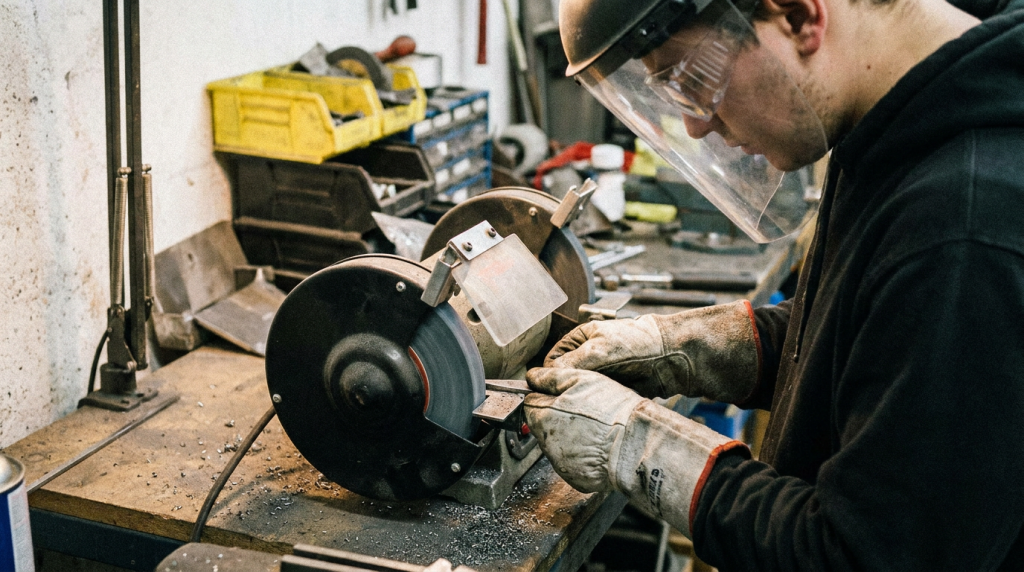
Grinding wheels are powerful tools. In workshops, construction sites, metalworking spaces, garages, and training centers, they help shape, sharpen, cut, and finish materials with speed and precision. Yet because they rotate at very high speeds, they also require deep respect.

In Bhakti Yoga, the path of loving devotion, we learn that every action can become sacred when it is done with awareness, humility, and care. The Sanskrit word seva means “service.” Even something as practical as checking a grinding wheel before use can become seva when we do it to protect ourselves, our coworkers, our families, and the work we have been entrusted with.

Grinding wheel safety is not only about rules. It is about consciousness. It asks us to slow down, stay present, and act responsibly. Whether you are a beginner, an apprentice, a home DIY enthusiast, or an experienced machinist, these grinding wheel safety tips can help you work with greater confidence and protection.

When considering the importance of safety in machining processes, it’s essential to not only focus on grinding wheel safety tips but also to explore related resources that can enhance your understanding of industrial equipment. For instance, you might find valuable insights in this article about discovering quality machinery parts at CEM Industrial Supply in Coldwater, Michigan. You can read more about it here: Discover Quality Machinery Parts at CEM Industrial Supply. This resource can help you ensure that the tools you use are not only effective but also safe for operation.

Understand the Risks Before You Begin

Grinding wheels may look simple, but they store tremendous energy while spinning. If a wheel is damaged, used incorrectly, or mounted improperly, it can break apart and send fragments flying at dangerous speeds.

High-Speed Rotation Requires Respect

A grinding wheel can rotate thousands of times per minute. At that speed, even a small crack or imbalance may become a serious hazard. Wheel breakage, flying sparks, dust, noise, and kickback are all common risks.

Before starting any grinding task, pause for a moment. In the Bhagavad-gita, a sacred Bhakti text, Krishna encourages steady intelligence and thoughtful action. Practically, this means we do not rush into work carelessly. We observe, prepare, and act with clarity.

Common Grinding Wheel Hazards

Some common hazards include:

  • Wheel explosion or breakage
  • Eye injuries from sparks or debris
  • Hand injuries from contact with the wheel
  • Burns from hot metal or sparks
  • Respiratory irritation from dust
  • Hearing damage from prolonged noise
  • Fire risk from sparks near flammable materials
  • Electric shock from damaged equipment

Knowing these dangers is not meant to create fear. It is meant to create healthy respect. Safety awareness allows us to work peacefully and skillfully.

Never Become Overconfident

Many accidents happen when someone thinks, “I have done this a hundred times.” Experience is valuable, but overconfidence can dull our attention.

In Sanskrit, sadhana means “regular spiritual practice.” Just as spiritual growth depends on steady daily practice, safety depends on consistent habits. The basics matter every single time.

Choose the Right Grinding Wheel for the Job

One of the most important grinding wheel safety tips is to use the correct wheel for the material and machine. Not all wheels are the same. Each type is designed for a specific purpose.

Match the Wheel to the Material

Different grinding wheels are made for different materials, such as:

  • Steel
  • Stainless steel
  • Aluminum
  • Cast iron
  • Concrete
  • Stone
  • Carbide
  • Non-ferrous metals

Using the wrong wheel can cause poor performance, overheating, wheel loading, or breakage. For example, a wheel designed for steel may not be safe or effective on aluminum. Aluminum can clog certain wheels, causing heat buildup and dangerous conditions.

Always read the manufacturer’s label and instructions before use.

Check the Wheel Rating

Every grinding wheel has a maximum safe operating speed, usually listed in RPM, or revolutions per minute. The machine’s speed must never exceed the wheel’s rated speed.

This is a non-negotiable rule.

If the grinder rotates faster than the wheel is designed to handle, the wheel can burst. Always compare the grinder RPM with the wheel RPM before mounting.

Use the Correct Wheel Type

Grinding wheels come in many forms, including:

  • Straight wheels
  • Cut-off wheels
  • Depressed center wheels
  • Cup wheels
  • Diamond wheels
  • Wire wheels
  • Bench grinder wheels

A cut-off wheel is usually thin and designed for cutting, not side grinding. Using it on the side can cause it to snap. A grinding wheel may be designed for surface work but not deep cutting.

Use each wheel only for its intended purpose. This simple practice prevents many accidents.

Please check out our latest article at https://cemindustrialsupply.com/news/ for more information.

Inspect the Grinding Wheel Before Use

Before a grinding wheel touches metal, it should be inspected carefully. This step takes only a few moments, but it can protect a life.

Look for Visible Damage

Check the wheel for:

  • Cracks
  • Chips
  • Warping
  • Missing pieces
  • Moisture damage
  • Uneven wear
  • Signs of dropping or impact

If a wheel has been dropped, do not use it. Even if it looks fine, internal cracks may be present. A damaged wheel should be discarded according to workplace procedures.

Perform a Ring Test When Appropriate

For vitrified grinding wheels, a ring test can help detect hidden cracks. This is usually done by gently tapping the wheel with a non-metallic tool and listening for a clear ringing sound. A cracked wheel may produce a dull sound.

However, not every wheel type is suitable for a ring test. Organic bonded wheels, small wheels, and some specialty wheels may not respond the same way. Always follow the manufacturer’s recommendations and workplace safety procedures.

Inspect the Machine Too

Do not inspect only the wheel. Inspect the grinder as well.

Check for:

  • Damaged cords
  • Loose guards
  • Worn bearings
  • Faulty switches
  • Missing handles
  • Vibration
  • Improper flanges
  • Damaged tool rests on bench grinders

A good wheel on a faulty machine is still unsafe. Safety requires the whole system to be sound.

When considering grinding wheel safety tips, it’s also important to understand the different types of abrasive grains used in these tools. For instance, the choice between zirconia, ceramic, and aluminum oxide can significantly impact both performance and safety. To learn more about how these materials affect grinding operations, you can read this informative article on abrasive grain types. Being aware of these factors can help ensure that you use the right equipment for your specific needs while maintaining a safe working environment.

Mount the Wheel Correctly

Proper mounting is essential for grinding wheel safety. A wheel that is mounted incorrectly may wobble, crack, or break during use.

Use the Right Flanges

Flanges are the metal discs that hold the wheel in place. They must be clean, flat, matching, and the correct size for the wheel. Damaged or mismatched flanges can create uneven pressure and stress the wheel.

Never force a wheel onto a spindle. The wheel should fit properly. If it does not fit, do not modify the hole or force it into place.

Do Not Overtighten

Tightening the wheel too much can crack it. The nut should be secure, but not excessively tight. Follow the manufacturer’s guidance.

This is a beautiful place to remember humility. In Bhakti, humility does not mean weakness. It means working in harmony with truth. We do not force things. We cooperate with the proper way.

Use Blotters When Required

Blotters are paper or cardboard washers placed between the wheel and flanges. They help distribute pressure evenly. Many grinding wheels require blotters.

Do not remove or ignore blotters unless the wheel manufacturer specifically says they are not needed. Small details often protect us from big problems.

Stand Clear During Startup

After mounting a wheel, stand to the side when starting the grinder. Let it run at operating speed for at least one minute before use. If the wheel is defective or mounted incorrectly, this is when failure may occur.

Do not stand directly in front of the wheel during this test run, and do not allow others to stand in the danger zone.

When considering the importance of safety in grinding operations, it’s essential to also understand the costs associated with equipment maintenance and repair. For instance, the article on motor rewind costs provides valuable insights into what actually drives the price of motor repairs, which can be crucial for ensuring your grinding equipment remains in optimal condition. You can read more about this topic in the article here. By staying informed about both safety tips and maintenance costs, you can enhance the longevity and efficiency of your grinding tools.

Wear the Right Personal Protective Equipment

Personal protective equipment, or PPE, is a vital part of grinding safety. PPE does not replace safe habits, but it gives important protection when sparks, fragments, and dust are present.

Protect Your Eyes and Face

Always wear approved safety glasses when grinding. In many cases, a full face shield should also be worn over safety glasses.

A face shield alone is not enough, because debris can still enter from the sides or below. Safety glasses protect the eyes directly, while the face shield protects the broader face.

Eye protection is one of the most important grinding wheel safety tips. Sparks may seem harmless, but metal fragments can cause serious injury.

Use Hearing Protection

Grinding can be loud, especially in enclosed areas or during long sessions. Use earplugs or earmuffs when needed. Hearing loss often happens gradually, and once it is gone, it may not return.

Protecting your hearing is a form of gratitude for the gift of sound—the ability to hear music, prayer, chanting, conversation, and the simple beauty of daily life.

Wear Gloves Carefully

Gloves can protect against sparks, heat, and sharp edges. However, gloves must be appropriate for the task and should not be loose. Loose gloves can get caught in rotating equipment.

For bench grinders, many workplaces discourage gloves when working close to the wheel because of entanglement risk. Follow your workplace safety policy and use proper judgment.

Protect Your Lungs

Grinding can create dust from metal, stone, paint, coatings, or other materials. Some dusts are hazardous, especially silica dust from concrete or stone, and toxic particles from coatings or metals.

Use proper ventilation, dust collection, and respiratory protection when needed. A simple dust mask may not be enough for certain hazards. Use the correct respirator based on the material and exposure risk.

Keep Guards and Tool Rests in Place

Machine guards are not optional. They are designed to protect the user from sparks, fragments, and accidental contact with moving parts.

Never Remove the Wheel Guard

Angle grinders and bench grinders should have proper guards installed. Removing the guard may feel convenient, but it greatly increases the risk of injury.

The guard should be adjusted to protect the user while allowing the work to be done properly. If the guard interferes with the task, reassess the setup rather than removing the guard.

Adjust the Tool Rest on Bench Grinders

For bench grinders, keep the tool rest close to the wheel. A common recommendation is about 1/8 inch, or approximately 3 mm, from the wheel. This helps prevent the workpiece from being pulled between the rest and the wheel.

As the wheel wears down, adjust the rest again. A gap that was safe last month may not be safe today.

Set the Tongue Guard Correctly

Bench grinders often have a tongue guard, also called a spark deflector, above the wheel. It should also be kept close to the wheel, commonly around 1/4 inch, or about 6 mm.

This helps contain fragments if a wheel breaks and directs sparks away from the operator.

Use Safe Grinding Techniques

Good technique protects both the worker and the wheel. Rushing, forcing, or grinding at the wrong angle can create heat, stress, and loss of control.

Let the Wheel Do the Work

Do not force the wheel into the material. Excessive pressure can overheat the wheel, damage the workpiece, and increase the chance of wheel failure.

Use steady, gentle pressure. A grinding wheel works best when it is allowed to cut naturally.

In Bhakti Yoga, chanting sacred names is also done with steadiness rather than force. The practice is sincere, patient, and consistent. In the same way, safe grinding is not aggressive. It is controlled and attentive.

Use the Correct Angle

For handheld angle grinders, maintain the proper angle based on the wheel and task. Grinding wheels are often used around 15 to 30 degrees to the surface, while cut-off wheels should generally be used at 90 degrees for cutting.

Do not bend or twist a cut-off wheel in the cut. This can cause binding and breakage.

Keep Both Hands on the Tool

When using a handheld grinder, use both hands whenever possible. One hand should hold the main body, and the other should hold the side handle.

The side handle is a safety feature. Do not remove it unless there is a specific approved reason and an alternative safe method.

Avoid Grinding Near Edges Carelessly

Edges can catch the wheel and cause kickback. Approach edges carefully, especially with angle grinders. Keep a stable stance and be prepared for movement.

Never position your body in line with the wheel’s path. If kickback occurs, you want your body out of the direct line of travel.

Maintain a Safe Work Area

The environment around the grinder matters. Even if your technique is good, a cluttered or hazardous workspace can create accidents.

Remove Flammable Materials

Grinding creates sparks. Keep flammable items away, including:

  • Paper
  • Cloth
  • Sawdust
  • Fuel
  • Solvents
  • Paint cans
  • Gas cylinders
  • Oily rags

If grinding near combustible materials cannot be avoided, use fire-resistant barriers and follow hot work procedures. Keep a fire extinguisher nearby and know how to use it.

Secure the Workpiece

A loose workpiece can shift, bind, or fly out. Use clamps, vises, or fixtures when needed. Do not rely only on your hand to hold small pieces near a wheel.

A stable workpiece allows smoother grinding and reduces the risk of sudden movement.

Keep the Floor Clear

Slips and trips are common workshop hazards. Keep cords, tools, scrap metal, and debris out of walkways. Grinding requires balance and control, so your feet should be stable.

Wear proper footwear with good grip and toe protection when needed.

Improve Lighting and Visibility

A well-lit workspace helps you see cracks, sparks, wheel contact, and workpiece movement. Poor lighting invites mistakes.

If you cannot clearly see what you are doing, stop and improve the lighting before continuing.

Store and Handle Grinding Wheels Properly

Grinding wheel safety begins before the wheel is ever mounted. Poor storage and handling can damage wheels silently.

Store Wheels in a Dry, Safe Place

Moisture, extreme temperatures, and rough handling can weaken some wheels. Store grinding wheels in a clean, dry area away from chemicals, vibration, and impact.

Keep wheels organized by type and size. This helps workers choose the right wheel and prevents accidental misuse.

Do Not Drop or Roll Wheels

Grinding wheels can be fragile. Dropping a wheel may create invisible cracks. Rolling wheels across a floor can chip edges or cause impact damage.

Carry wheels carefully with both hands when needed. Treat them as precision tools, not rough supplies.

Follow Shelf Life Guidance

Some bonded abrasive wheels may have expiration dates or recommended shelf lives, especially resin-bonded wheels. Check markings and manufacturer instructions.

Using expired or degraded wheels can be dangerous. When in doubt, ask a qualified supervisor or safety professional.

Special Safety Tips for Bench Grinders

Bench grinders are common in many workshops, but their familiarity can make people careless. Respect the machine every time.

Dress the Wheel When Needed

A grinding wheel can become glazed, loaded, or uneven. Dressing the wheel restores the cutting surface and improves balance.

Use the proper dressing tool and follow safe procedures. A well-dressed wheel grinds more effectively and reduces vibration.

Do Not Grind on the Side Unless Approved

Most standard bench grinding wheels are designed for grinding on the face, not the side. Side pressure can weaken the wheel and cause breakage.

Only grind on the side if the wheel is specifically designed for that use.

Keep Small Parts Controlled

Small parts can be pulled from your hand or jammed between the wheel and tool rest. Use pliers, jigs, or holding fixtures when appropriate.

If a part is too small to hold safely, do not grind it by hand.

Special Safety Tips for Angle Grinders

Angle grinders are versatile and portable, but they are also involved in many serious injuries. Their power and mobility require extra awareness.

Use the Correct Disc for the Grinder

Angle grinder discs must match the grinder size and speed rating. Never use an oversized wheel on a smaller grinder. Never remove the guard to fit a larger disc.

The disc must be designed for the tool and task.

Watch for Kickback

Kickback happens when the wheel catches, binds, or is suddenly stopped. The grinder can violently move toward the operator or away from the workpiece.

To reduce kickback:

  • Keep a firm grip
  • Use the side handle
  • Avoid twisting the disc
  • Let the wheel reach full speed before contact
  • Do not force the cut
  • Support the workpiece properly
  • Keep your body out of the line of fire

Allow the Wheel to Stop Completely

After turning off an angle grinder, wait until the wheel stops spinning before setting it down. A spinning wheel can catch the surface, move unexpectedly, or damage nearby objects.

This small pause is a practice of patience. In spiritual life and in workshop life, patience protects us.

Training, Awareness, and Workplace Culture

Safety is not only personal. It is communal. A safe workshop is built by everyone.

Receive Proper Training

No one should use a grinding wheel without proper instruction. Training should include:

  • Wheel selection
  • Inspection
  • Mounting
  • PPE
  • Machine operation
  • Emergency procedures
  • Dust and fire hazards
  • Maintenance requirements

If you are unsure, ask. Asking for help is not a weakness. It is wisdom.

Follow Manufacturer Instructions

Each grinder and wheel may have specific requirements. Read the manual, labels, and safety data when available. Manufacturer guidance exists because the tool has been tested under certain conditions.

Do not depend only on habit or hearsay.

Speak Up Kindly

If you see an unsafe condition, speak up with respect. In Bhakti, we try to see every person as spiritually valuable. Correcting a safety issue is not criticism; it is care.

A warm workplace culture allows people to say, “Let’s stop and fix this,” without shame.

Report Defects and Near Misses

If a wheel breaks, vibrates, slips, or behaves strangely, report it. If a near miss happens, share it so others can learn.

Near misses are gifts when we use them properly. They warn us before something worse occurs.

Bring Mindfulness Into Every Grinding Task

Grinding wheel safety is practical, but it is also deeply connected to mindfulness. A distracted person is more likely to make mistakes.

Pause Before You Begin

Before starting, take a short pause. Breathe. Look at the wheel. Look at the work area. Check your PPE. Confirm your plan.

This can take less than a minute, but it changes the quality of your attention.

In Bhakti Yoga, one may chant the holy names of God, such as the Hare Krishna maha-mantra, as a way of remembering the Divine. Mantra means a sacred sound that helps free and focus the mind. Even if you do not chant, you can still practice a moment of prayerful awareness before work: “May I do this safely. May all be protected.”

Avoid Grinding When Tired or Distracted

Fatigue, anger, stress, and hurry can all reduce judgment. If you are exhausted or emotionally overwhelmed, take a break before using dangerous tools.

Spiritual growth often begins with honesty. We humbly recognize our condition and act accordingly.

Keep Your Attention on the Wheel

Do not talk, text, look away, or multitask while grinding. Keep your eyes on the work and your mind on the task.

If someone needs your attention, stop grinding first.

What to Do If Something Goes Wrong

Even with good precautions, unexpected situations can happen. Knowing what to do helps reduce harm.

If the Wheel Vibrates

Stop immediately. Do not continue using a vibrating wheel. Unplug or lock out the machine if needed, then inspect the wheel, flanges, spindle, and mounting.

Vibration may indicate imbalance, damage, improper mounting, or machine problems.

If the Wheel Cracks or Breaks

Stop the machine and keep people away. Do not touch fragments until everything has stopped and the area is safe. Report the incident and investigate the cause before using the grinder again.

Replace damaged parts and review procedures.

If Sparks Start a Fire

Stop work if safe to do so. Use the correct fire extinguisher if trained. Alert others and follow emergency procedures.

Hot work should always be taken seriously. Sparks can travel farther than expected and smolder before flames appear.

If Someone Is Injured

Stop the machine, call for help, and follow first aid procedures. Eye injuries, deep cuts, burns, and suspected embedded fragments need medical attention.

Do not delay treatment. Compassion means acting quickly and responsibly.

A Simple Grinding Wheel Safety Checklist

Before grinding, it can help to follow a simple checklist. This keeps safety clear and practical.

Before Mounting

Ask yourself:

  • Is this the correct wheel for the material?
  • Is the wheel rated for the grinder speed?
  • Is the wheel free from cracks or damage?
  • Are the flanges clean and correct?
  • Are blotters in place if required?
  • Is the machine in good condition?

Before Starting

Check:

  • Guard is installed and adjusted
  • Tool rest is properly set
  • PPE is worn correctly
  • Workpiece is secure
  • Flammables are removed
  • Area is clean and well-lit
  • Others are clear of the danger zone

During Grinding

Remember:

  • Use steady pressure
  • Keep both hands controlled
  • Do not force the wheel
  • Avoid side pressure unless approved
  • Watch for vibration or unusual sounds
  • Stay focused
  • Stop if something feels wrong

After Grinding

Finish well:

  • Let the wheel stop completely
  • Set the tool down safely
  • Clean sparks and debris
  • Check for hot materials
  • Store tools properly
  • Report any problems

The Heart Behind Safety

Grinding wheel safety tips may seem technical, but behind every rule is a human being. There are hands to protect, eyes to preserve, lungs to care for, families waiting at home, and coworkers who depend on one another.

Bhakti Yoga teaches that love becomes real through action. We may pray beautifully, chant sincerely, and study sacred texts, but our devotion should also appear in how carefully we live. When we protect life, we honor the Divine presence within life.

The Bhagavad-gita explains that yoga is skill in action. This does not only mean spiritual action in a temple or meditation room. It can also mean skillful, careful, honest action in a workshop. When we work with attention, gratitude, and responsibility, even ordinary tasks can become part of our spiritual growth.

You do not need to come from any particular background to begin. You may be a craftsperson, engineer, student, mechanic, artist, builder, or someone learning to use tools for the first time. Wherever you are, safety can become a practice of respect.

So before you grind, pause. Inspect the wheel. Wear your protection. Secure the work. Keep the guard in place. Work steadily. And if you feel moved, offer a simple prayer: “May this work be done safely. May it serve a good purpose. May everyone be protected.”

Everyone is welcome to take one sincere step toward God—through chanting, prayer, service, mindful work, or a humble act of care today.

[fluentform id=”3″]

FAQs

What are the main safety tips for using a grinding wheel?

Always wear proper eye protection, ensure the wheel is properly mounted and aligned, use the appropriate wheel for the material being ground, and follow all manufacturer’s guidelines for speed and usage.

What are the potential hazards of using a grinding wheel?

Potential hazards include flying debris, sparks, and the risk of the wheel shattering or breaking during use.

How should grinding wheel guards be used for safety?

Grinding wheel guards should always be in place and used to protect the operator from debris and sparks. They should never be removed during operation.

What should be done before using a grinding wheel?

Before using a grinding wheel, it is important to inspect the wheel for any damage or defects, ensure it is properly mounted and aligned, and verify that all safety guards are in place.

What are some general safety precautions for using a grinding wheel?

Some general safety precautions include wearing proper personal protective equipment, keeping the work area clean and free of clutter, and never exceeding the maximum operating speed of the wheel.