
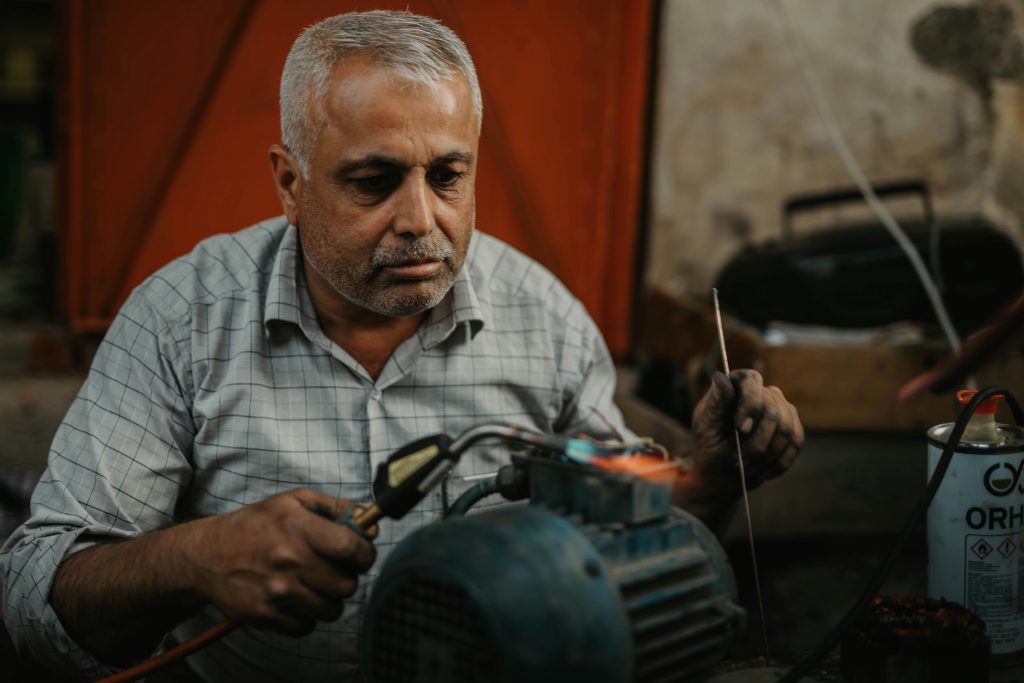
Let’s talk about motor rewinding. Plain and simple, rewinding an electric motor is often a smart and cost-effective way to get it back in action when it fails, rather than simply replacing it. It’s a proven method for extending the life of your equipment, saving you money, and sometimes even improving efficiency. This article will dive into why this old-school technique still holds so much value in today’s industrial landscape.
When a motor fails, your first thought might be to just buy a new one. But hold on a second. Rewinding offers several compelling advantages that make it a serious contender, especially for larger or specialized motors. It’s not just about the motor itself; it’s about your budget, your timeline, and your environmental footprint.
Cost Savings: The Obvious Advantage
Let’s start with the most tangible benefit: your wallet.
Lower Upfront Investment
Generally, rewinding a motor costs significantly less than purchasing a brand new one, especially for larger or less common designs. Imagine needing a bespoke motor for an older piece of machinery – finding a new one might be a headache and a huge financial hit. Rewinding can often come in at 40-60% of the cost of a new replacement, making it a no-brainer for budget-conscious operations. This is particularly true for high-horsepower motors, where the raw materials and manufacturing processes for new units drive prices sky-high.
Reduced Downtime Costs
While a rewind takes time, it can sometimes be quicker than sourcing and shipping a new, specialized motor. Every hour your production line is down costs money in lost output, wasted labor, and missed deadlines. If a rewind can get your critical equipment back up and running faster than waiting for a new part, the overall cost savings can be substantial, even if the rewind itself isn’t instantaneous. Plus, dealing with a local rewinding shop can often shave off lead times associated with new motor manufacturers and global supply chains.
Avoiding Associated Replacement Costs
Beyond the motor’s purchase price, there are other hidden costs with replacement. Think about installation – a new motor might require modifications to the mounting, new alignment procedures, or different wiring configurations. A rewound motor, on the other hand, often drops right back into its original spot with minimal fuss, saving on labor and parts for adaptation. This can be a huge factor for older or custom-built machinery where exact replacements are hard to come by.
Environmental Benefits: A Greener Choice
In a world increasingly focused on sustainability, rewinding shines as an eco-friendly option.
Reducing Waste and Landfill Contributions
Every time you replace a motor, the old one often ends up as industrial waste. While some components might be recycled, a significant portion can go to landfills. Rewinding fundamentally keeps that large chunk of metal, copper, and other materials out of the waste stream, giving the motor a second (or third, or fourth) life. This aligns perfectly with circular economy principles, maximizing resource utilization.
Lower Embodied Energy
Manufacturing a new electric motor requires a substantial amount of energy, from mining raw materials like copper and iron to the casting, machining, and assembly processes. Rewinding uses a fraction of that energy, primarily for cleaning, insulation removal, and new coil fabrication. By choosing to rewind, you’re directly contributing to a reduction in the overall embodied energy associated with your industrial equipment. It’s an effective way to lower your operational carbon footprint.
Conservation of Resources
Beyond energy, rewinding conserves valuable natural resources. It reduces the demand for new raw materials like copper (which is an energy-intensive resource to mine and refine), steel, and various petrochemicals used in insulation. By extending the life of existing equipment, we lessen our reliance on extracting and processing new materials, a critical step towards more sustainable industrial practices.
Motor rewinding is a crucial process in maintaining the efficiency and longevity of electric motors, and understanding its intricacies can greatly benefit those in the industrial sector. For further insights into related topics, you may find the article on custom industrial gearbox builds from trusted brands particularly informative. It discusses the importance of selecting the right components for optimal performance, which can complement the knowledge gained from motor rewinding practices. You can read more about it here: Custom Industrial Gearbox Builds.
Understanding the Rewinding Process: More Than Just New Wires
It’s not just about stripping out old wires and putting in new ones. A quality motor rewind is a meticulous process that requires skilled technicians and specialized equipment. Understanding these steps helps appreciate the value delivered.
Initial Assessment and Diagnostics
This is where the detective work begins. Before a single wire is touched, comprehensive testing is performed.
Visual Inspection and Mechanical Checks
Technicians meticulously inspect the motor for any obvious damage like cracks in the casing, worn bearings, or shaft damage. They’ll check the fan, conduit box, and mounting feet. This initial visual assessment can reveal crucial information about the motor’s operating environment and potential failure modes. They also review the motor’s nameplate data to understand its original specifications.
Electrical Testing
A battery of electrical tests is performed to pinpoint the exact nature of the failure. This includes insulation resistance tests (Megger test) to check the integrity of the winding insulation, surge comparison tests to detect inter-turn shorts, and often resistance measurements of the windings. These tests help determine if the windings are indeed the problem or if internal connections or other electrical components are at fault. Data from these tests provides essential benchmarks for the rewind and allows for comparison against the completed work.
Disassembly and Component Evaluation
Once testing concludes, the motor is carefully disassembled. Each component, from the rotor and stator to the end bells, bearings, and fan, is inspected for wear, damage, or degradation. Critical components like the shaft and bearing surfaces are gauged for tolerance deviations. This thorough evaluation ensures that not only the windings but all relevant mechanical parts are addressed.
The Core Rewind Steps
This is where the magic happens, transforming a defunct motor into a functioning one.
Winding Removal and Core Preparation
The old windings are carefully removed, often by controlled burnout processes that don’t damage the magnetic steel laminations of the stator core. This is crucial; overheating the core can lead to increased eddy current losses and reduced efficiency. After removal, the stator core is cleaned and inspected for any damage to the laminations, ensuring it’s ready for new insulation and windings. Damaged core laminations might need to be repaired or replaced if feasible.
Insulation Application
New slot insulation is meticulously inserted into the stator slots. Modern insulation materials are often superior to those originally used, being more heat-resistant and dielectric-strong. This critical step ensures proper electrical isolation between the windings and the motor frame, and between individual turns and coils. The quality of insulation directly impacts the motor’s reliability and lifespan.
Winding Installation
New coils are then precisely wound and inserted into the stator slots according to the original electrical specifications (or optimized ones, discussed later). This requires specialized winding machines and highly skilled technicians to ensure consistency, correct turns count, and precise placement. Proper coil shaping and lacing are essential for preventing vibration and ensuring secure placement within the stator.
Varnish Impregnation and Curing
Once wound, the stator assembly is typically impregnated with an insulating varnish. This is often done under vacuum pressure (Vacuum Pressure Impregnation or VPI) to ensure the varnish penetrates every crevice, eliminating air voids which are weak points in the insulation system. The varnish then cures, creating a solid, moisture-resistant, and mechanically stable winding package. This process significantly enhances the dielectric strength and longevity of the insulation system against moisture, chemicals, and vibration.
Final Assembly and Testing
The motor isn’t finished until it’s proven to work correctly and safely.
Reassembly with New Components
New high-quality bearings are always installed as part of a rewind, along with any other components that showed wear or damage during the initial inspection (e.g., seals, O-rings, fan blades). The motor is then carefully reassembled, ensuring proper alignment, bearing seating, and clearances. Precise assembly is vital for reducing noise, vibration, and extending the life of the new bearings.
Final Electrical and Mechanical Testing
After reassembly, the motor undergoes a comprehensive series of final tests. These include re-checking insulation resistance, surge testing, and winding resistance. A no-load test is typically performed, where the motor runs without any attached load, to measure current draw, vibration, and bearing temperatures, and ensure smooth operation. Sometimes, a full-load test might be performed if the facility has the capability, confirming performance under operational conditions. These rigorous tests ensure the motor meets or exceeds its original specifications and is ready for service.
Enhancing Efficiency During Rewind: Beyond “As Good As New”
A common misconception is that a rewound motor is merely “as good as new.” In many cases, it can be better. Modern materials and techniques allow for significant efficiency improvements, turning a motor failure into an opportunity for an upgrade.
Modern Insulation Materials
Technology advances, and insulation materials are no exception.
Improved Dielectric Strength and Thermal Capabilities
Today’s insulation systems offer superior dielectric strength and thermal endurance compared to older materials. This means they can withstand higher voltages and temperatures without breaking down, leading to a more robust and reliable motor. Upgrading to a Class F or Class H insulation system, when compatible with the motor’s design, significantly enhances the motor’s lifespan and resistance to thermal degradation.
Enhanced Moisture and Chemical Resistance
Industrial environments can be harsh, exposing motors to moisture, dust, and corrosive chemicals. Modern insulation and varnish systems are formulated to offer superior resistance to these elements, protecting the windings from premature degradation. This contributes to a longer, more trouble-free operational life, especially in challenging applications.
Optimizing Winding Design
This is where true efficiency gains can be made.
Adjusting Wire Gauge
Sometimes the original motor design used a wire gauge that wasn’t perfectly optimized for its rated output or typical operating conditions. A skilled rewinder can, in some cases, slightly increase the copper content by using a slightly larger wire gauge within the same slot dimensions. This reduces winding resistance, leading to lower I²R losses (heat generated in the windings) and a measurable increase in efficiency, sometimes by a few percentage points. This is particularly effective for older motors designed when energy efficiency was less of a priority.
Improving Slot Fill
The “slot fill” refers to how much of the stator slot is occupied by copper wire. A tighter, more precise winding process can improve the slot fill ratio. More copper in the slot reduces the current density in the winding, which in turn lowers resistance and I²R losses, improving efficiency. Modern winding techniques and tooling allow for higher slot fills than were often achievable with older manufacturing methods.
Implementing Better Connection Methods
The way individual coils are connected and terminated within the motor can also impact efficiency. By optimizing these connections to minimize resistance and ensure secure, low-loss joints, the overall electrical integrity of the winding is improved. Attention to detail in this area prevents localized hot spots and potential future failures, contributing to both efficiency and reliability.
Core Loss Reduction Techniques
The stator core itself can be a source of energy loss.
Lamination Inspection and Repair
As mentioned earlier, controlled burnout is critical. If the core laminations are damaged or excessively heated during the old winding removal, it increases eddy current and hysteresis losses in the core. A reputable rewinder will carefully inspect the core and, if necessary, perform restacking or apply specialized core plate varnish to re-insulate laminations, reducing these magnetic losses and helping maintain or even improve efficiency.
Using Higher-Grade Core Materials (If Feasible)
While less common and more complex, in certain specialized high-performance motors, it might be possible to replace damaged core sections with higher-grade electrical steel laminations if the original core integrity is severely compromised and efficiency is a paramount concern. This is a more involved process but can offer a significant efficiency bump for large, critical motors.
When Rewind Might Not Be the Best Option
While rewinding is often a great choice, it’s not a universal solution. There are situations where a new motor makes more sense.
Severely Damaged Stator Core
If the stator core laminations are significantly damaged (e.g., from severe overheating or mechanical impact), leading to excessive short circuits between laminations, the core losses can become unacceptably high.
Excessive Core Damage
When the iron laminations themselves are severely compromised, either by chemical attack, physical deformation, or repeated extreme overheating that degrades the inter-lamination insulation, the motor will suffer from excessive core losses. No amount of new copper will fix a bad core. In these cases, even a perfectly rewound motor will run inefficiently and potentially overheat, making replacement the better choice. The cost and technical challenge of rebuilding a severely damaged core often outweigh the benefits.
Unrepairable Mechanical Damage
If the motor frame, end bells, or shaft are cracked, bent, or otherwise mechanically compromised to the point where they cannot be reliably repaired or machined back to tolerance, then replacing the motor is typically the only viable option. Structural integrity is paramount for safe and long-term operation.
Obsolete Technology and Poor Original Efficiency
Sometimes, the motor’s original design was simply inefficient by modern standards.
Older, Less Efficient Designs
If you have a very old motor (think pre-1980s), its original design undoubtedly predates modern energy efficiency standards. Even a perfectly executed rewind, while improving insulation, might not be able to elevate its efficiency to current IE3 or IE4 levels. In these cases, the energy savings from a new, high-efficiency motor can quickly outweigh the rewind cost, making replacement a wise investment for long-term operational savings. The payback period for a new, higher efficiency motor can be surprisingly short.
Lack of Available Parts
For truly antique or highly specialized motors, even if the core is good, finding replacement parts like end bells, specialized bearings, or fan assemblies can be impossible. In such scenarios, if these non-rewindable parts are damaged, a new motor might be the only practical path forward.
Underpowering or Overpowering the Application
Sometimes the motor itself isn’t completely wrong, but it’s a poor match for the job.
Motor Was Undersized for the Application
If the motor consistently fails due to being undersized for the load it’s driving, simply rewinding it won’t fix the fundamental problem. It will continue to overload and fail prematurely. In this situation, the smart move is to replace it with a properly sized motor that meets the application’s demands, even if the old one could theoretically be rewound.
Motor Was Oversized for the Application
Conversely, an oversized motor, while seemingly robust, operates inefficiently at partial loads. While it might last a long time, it wastes energy. If such a motor fails, replacing it with a motor that is correctly sized for the typical operating load can lead to significant energy savings, making a new purchase more justifiable than a rewind.
Motor rewinding is a crucial process for maintaining the efficiency and longevity of electric motors, and understanding the various components involved can greatly enhance this practice. For those interested in improving their motor maintenance techniques, a related article on insulation materials can provide valuable insights. You can explore more about this topic in the article on heat tape and insulation, which discusses how proper insulation can prevent overheating and extend the life of electrical components.
Best Practices for Motor Rewind Success
To truly maximize the benefits of motor rewinding, it’s crucial to partner with the right professionals and follow established guidelines.
Choosing the Right Rewind Shop
Not all rewind shops are created equal. This choice makes all the difference.
Look for EASA Accreditation or Similar Certifications
The Electrical Apparatus Service Association (EASA) has developed a highly respected accreditation program for motor repair shops. An EASA-accredited shop adheres to strict quality standards and proven best practices that ensure rewound motors maintain or improve efficiency. Choosing an accredited shop provides assurance of quality, consistent processes, and adherence to industry benchmarks. Look for similar national or international certifications where EASA isn’t prevalent.
Ask About Processes and Testing Capabilities
A reputable shop will be transparent about their rewind process. Inquire about their burnout oven controls (to prevent core damage), their insulation materials (e.g., Class F or H), winding techniques, and varnish impregnation methods (e.g., VPI). Critically, ask about their testing capabilities – do they perform full electrical tests before and after the rewind, including surge comparison and no-load tests? Comprehensive testing is a hallmark of quality.
Check for References and Warranty Guarantees
Don’t hesitate to ask for references from other industrial customers. A shop confident in its work will also offer a warranty on their rewound motors, standing behind their craftsmanship and materials. A good warranty provides peace of mind and demonstrates the shop’s commitment to quality.
Adhering to Industry Standards
Quality is built on established guidelines, not guesswork.
EASA AR100 Standard
The EASA AR100 Recommended Practice for the Repair of Rotating Electrical Apparatus is the gold standard in North America for motor repair. It outlines detailed guidelines for every step of the rewind process, from core integrity checks to winding techniques and final testing, specifically designed to ensure that motors maintain or improve their pre-repair efficiency. Insist that your chosen shop follows this standard.
Use of High-Quality Materials
A rewind is only as good as the materials used. Insist on high-quality insulation materials (e.g., NEMA-rated), magnet wire, and bearings from reputable manufacturers. Cutting corners on material quality is a false economy that will lead to premature failure and negate any cost savings. Good shops understand that the longevity of a rewind relies heavily on the quality of its components.
Proper Documentation and Historical Data
Knowledge is power when it comes to maintaining your equipment.
Before and After Performance Data
A good rewind shop will provide detailed test results both before the rewind (failure analysis) and after completion (performance validation). This data is invaluable for verifying the quality of the repair, confirming efficiency levels, and tracking the motor’s performance over its lifespan. It also helps in future troubleshooting.
Motor History Tracking
Keep a record of all repairs, including rewinds, for each critical motor. This historical data includes failure modes, repair dates, and repair shops used. This allows you to identify recurring issues, evaluate the quality of different repair services, and make informed decisions about whether to rewind or replace in the future. A comprehensive motor history is a cornerstone of effective predictive maintenance.
In conclusion, motor rewinding is far from an outdated practice. When performed correctly by skilled professionals using modern methods and materials, it is a highly effective, economical, and environmentally responsible choice for keeping your industrial operations running smoothly. It extends equipment life, reduces costs, and can even improve efficiency, making it a valuable tool in your maintenance arsenal.
FAQs
What is motor rewinding?
Motor rewinding is the process of replacing the wire on the stator or armature of an electric motor. This is typically done when the original wire has become damaged or worn out, causing the motor to malfunction.
Why is motor rewinding necessary?
Motor rewinding is necessary when the insulation on the wire of the stator or armature becomes damaged, leading to short circuits or other electrical faults. It can also be necessary when the wire itself becomes worn out or breaks, causing the motor to stop working properly.
Who performs motor rewinding?
Motor rewinding is typically performed by skilled technicians or electricians who have experience and training in working with electric motors. It is a specialized process that requires knowledge of electrical systems and the ability to work with precision.
What are the benefits of motor rewinding?
The main benefit of motor rewinding is that it can extend the life of an electric motor, saving the cost of replacing the entire motor. It can also improve the efficiency and performance of the motor, as well as reduce the risk of electrical faults and malfunctions.
When should motor rewinding be considered?
Motor rewinding should be considered when an electric motor is experiencing issues such as overheating, low power output, or unusual noises. It should also be considered when the motor is older and has not been serviced in a long time.