
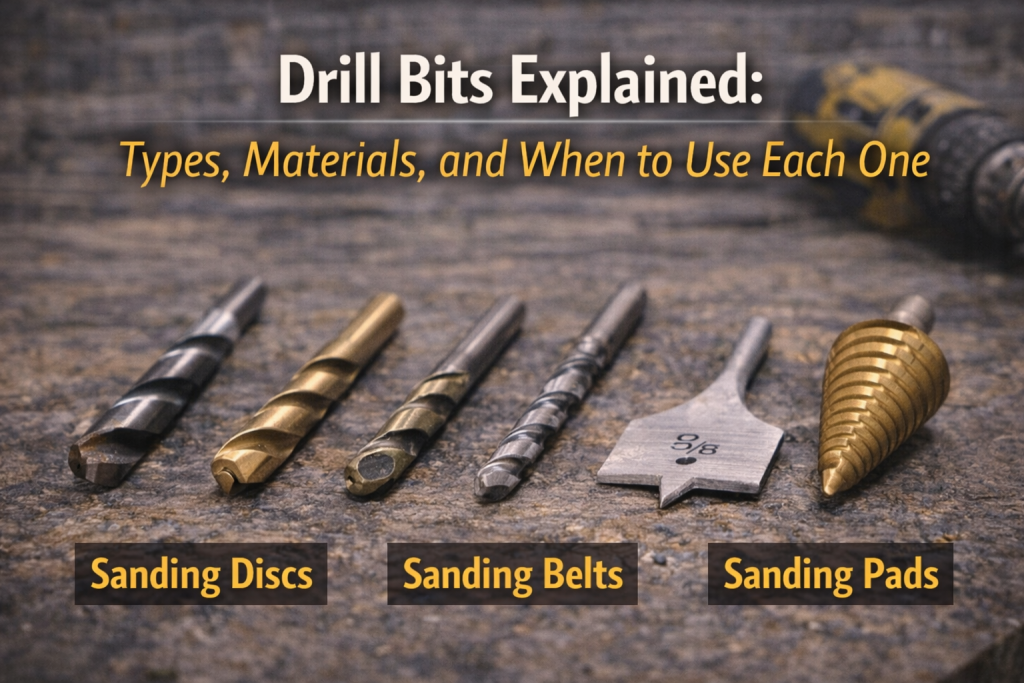
Most drilling problems don’t come from the drill. They come from the wrong bit.
Using the wrong drill bit leads to slow cuts, overheated metal, chipped wood, broken bits, and ugly holes. Once you understand how drill bits actually work, you’ll drill faster, cleaner, and with far less frustration.
At CEM Industrial Supply, drill bit confusion is one of the most common issues we see on job sites. Here’s a clear breakdown.
Twist Drill Bits: The Everyday Workhorse
Twist bits are the most common drill bits and are used for general-purpose drilling.
They work best for:
- Wood
- Plastic
- Thin metals
- General construction tasks
High-speed steel (HSS) twist bits are affordable and versatile, but they wear faster on hard materials.
Titanium-Coated Bits: Longer Life, Faster Cuts
Titanium-coated bits are HSS bits with a titanium nitride (TiN) coating.
They work best for:
- Repeated drilling
- Harder metals
- High-volume use
The coating reduces friction and heat, but once the coating wears off, performance drops.
Cobalt Drill Bits: For Hard Metals
Cobalt bits are made with cobalt alloy steel and are designed for extreme heat resistance.
They work best for:
- Stainless steel
- Hardened steel
- Cast iron
- Thick metal
Cobalt bits are more expensive but last much longer in demanding applications.
Masonry Bits: Concrete and Brick
Masonry bits have carbide tips designed to withstand impact and abrasion.
They work best for:
- Concrete
- Brick
- Stone
- Masonry blocks
They should be used with hammer drills for best performance.
Spade Bits and Auger Bits: Wood Specialists
Spade bits and auger bits are designed specifically for wood.
They work best for:
- Large-diameter holes in wood
- Framing and carpentry
- Rough drilling
Auger bits produce cleaner holes but drill slower than spade bits.
Step Bits: Clean Holes in Thin Metal
Step bits are ideal for drilling multiple hole sizes in thin materials.
They work best for:
- Sheet metal
- Electrical panels
- HVAC work
They reduce burrs and eliminate the need for multiple bit changes.
Why Bit Material Matters
Bit material determines:
- Heat resistance
- Cutting speed
- Durability
- Precision
Using cheap bits on hard materials leads to dull edges and broken tips.
The Bottom Line
There’s no such thing as a “universal” drill bit. Each type is engineered for a specific purpose, and choosing the right one saves time, improves results, and extends tool life.
If you’re unsure which drill bit is right for your application, CEM Industrial Supply can help you select the best option for your tools and materials.