
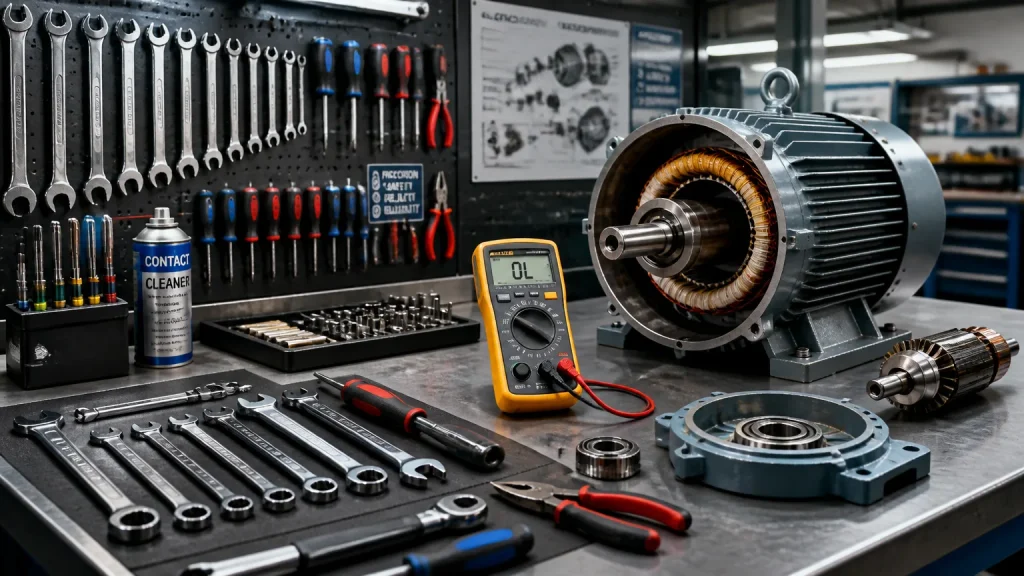
Industrial motor repair helps prevent downtime, extend equipment life, and keep critical manufacturing operations running efficiently.
In this article, you’ll learn 10 necessary tips for industrial motor repair.
Need Help With Industrial Motor Repair?
If your motor is overheating, producing unusual noises, tripping breakers, vibrating excessively, or experiencing performance issues, our motor repair specialists can help. We provide troubleshooting assistance, motor inspections, rewinding services, bearing replacement, testing, and complete motor repair solutions for industrial facilities throughout Southern Michigan and beyond.
Use the form below to tell us about your motor application. Upload a motor nameplate photo, describe the problem you’re experiencing, and our team will help determine the most effective repair or replacement solution for your operation.
Whether you need emergency support, a repair evaluation, or expert guidance on extending motor life, we’re here to help minimize downtime and keep your equipment running.
Need immediate assistance? Contact our team at CEM Industrial Supply to discuss your motor repair needs.
Use the form below to upload pictures of your Electric Motor or Industrial Gearbox or to share what needs you have:
1. Understand Common Industrial Motor Problems
Successful industrial motor repair begins with accurately identifying the root cause of the failure. Many motors exhibit warning signs long before a complete breakdown occurs, allowing maintenance teams to address developing issues before they result in costly downtime.
Overheating
Motor overheating is one of the most common causes of premature motor failure. Potential causes include overloaded equipment, inadequate ventilation, voltage imbalance, dirty cooling passages, and failing bearings. Excessive heat can damage insulation, shorten winding life, and significantly reduce motor reliability.
Excessive Vibration
Abnormal vibration may indicate bearing wear, shaft misalignment, imbalance, loose mounting hardware, coupling problems, or mechanical issues within the driven equipment. Left uncorrected, vibration can accelerate wear throughout the entire drive system.
Unusual Noise
Grinding, squealing, humming, clicking, or rattling sounds often indicate mechanical or electrical problems. Common causes include worn bearings, damaged rotor components, loose connections, misalignment, or internal motor damage.
Electrical Issues
Voltage imbalance, phase loss, insulation breakdown, and winding failures can all affect motor performance. Symptoms may include nuisance tripping, reduced torque, inconsistent operation, or complete motor failure.
Reduced Performance
When motors struggle to maintain speed, require excessive current, or fail to deliver expected output, the problem may be related to electrical faults, mechanical wear, overloading, or issues with the connected equipment.
Understanding these common failure modes allows maintenance personnel to diagnose problems more effectively and determine the appropriate repair strategy before significant damage occurs.
2. Use the Right Tools and Diagnostic Equipment
Accurate diagnosis is one of the most important steps in industrial motor repair. Using the proper tools helps technicians identify the true source of a problem, reduce repair time, and avoid replacing components unnecessarily.
Essential Electrical Testing Tools
A quality multimeter is one of the most valuable tools for troubleshooting industrial motors. Technicians use multimeters to measure voltage, current, resistance, and continuity when diagnosing electrical faults.
For more advanced testing, insulation resistance testers (megohmmeters) help identify deteriorating insulation before winding failures occur. Motor circuit analyzers and power quality analyzers can provide additional insight into electrical system health.
Mechanical Inspection Tools
Mechanical inspections often require vibration analyzers, laser alignment systems, dial indicators, bearing inspection tools, and infrared thermography equipment. These tools help identify misalignment, imbalance, bearing deterioration, and overheating conditions that may not be visible during routine inspections.
Safety Equipment
Proper lockout/tagout procedures, insulated tools, safety glasses, gloves, and arc-flash protection should always be used when working on industrial electrical equipment. Safe repair practices protect both personnel and equipment.
Why Proper Diagnostics Matter
Replacing parts without identifying the root cause often results in recurring failures and unnecessary expenses. A structured diagnostic process helps maintenance teams make informed repair decisions, improve reliability, and maximize motor service life.
Investing in proper diagnostic equipment and testing procedures frequently saves far more money than it costs by reducing downtime, preventing repeat failures, and improving overall equipment performance.
3. Regular Maintenance Checks
Routine maintenance checks are crucial in industrial motor repair and industrial gearbox repair. They allow you to catch issues before they escalate into costly breakdowns. Regular lubrication is essential; it reduces friction and prevents wear on moving parts.
Inspections should include checking for unusual noises, vibrations, or overheating. These signs often indicate underlying problems that need attention. By addressing these early, you can extend your motor’s lifespan significantly.
Additionally, understanding how VFDs can affect motor health is vital. For a deeper dive, check out our article on VFD Damage: How Drives Kill Motors (And How to Protect Them).
Implementing these maintenance practices keeps your motors running efficiently and minimizes unexpected repair costs.
4. Documenting Repairs and Performance
Keeping detailed records of motor repairs and performance metrics is essential. Documentation aids in troubleshooting by providing a history of issues and solutions. When problems arise, you can quickly refer back to past repairs, streamlining the diagnostic process.
Tracking replacement parts and service frequency is equally important. Knowing when parts were last replaced helps prevent unexpected failures. This information allows you to schedule maintenance proactively, reducing downtime and keeping operations efficient.
Additionally, analyzing performance metrics over time can reveal patterns. You may notice that certain parts fail more frequently, guiding your purchasing decisions and improving overall reliability.
5. Stay Informed on Industry Standards
Keeping up with industry standards is crucial for effective industrial motor repair. Organizations like the National Electrical Manufacturers Association (NEMA) and the Institute of Electrical and Electronics Engineers (IEEE) provide essential guidelines. Staying informed about these standards helps ensure compliance and enhances repair practices.
Adhering to safety standards not only protects your team but also extends the lifespan of your equipment. For example, following the National Fire Protection Association (NFPA) guidelines can help prevent electrical hazards during repairs. Regular training on these standards fosters a culture of safety, reducing accidents and downtime.
By integrating these practices, you contribute to a safer work environment while improving the reliability of your motor repairs.
6. When to Seek Professional Help
Knowing when to call in the pros is crucial in industrial motor repair. If you notice persistent issues like overheating, unusual vibrations, or electrical failures, it may be time to consult an expert. These signs often indicate deeper problems that require specialized knowledge and tools.
Hiring a professional can save you time and prevent costly mistakes. They can quickly diagnose complex issues and ensure repairs meet industry standards. For instance, if your motor needs rewinding, consider a reliable service. Our Motor Rewind Service in Coldwater, MI offers expertise that can restore your motor’s efficiency.
In the long run, expert intervention not only ensures quality but also prolongs the lifespan of your equipment. Don’t hesitate to seek help when needed—it’s a smart investment in your operations.
7. Cost-Benefit Analysis of Repairs vs Replacements
When deciding between repairing or replacing an industrial motor, a structured approach is essential. Start by assessing the current condition of the motor. Consider its age, performance history, and the cost of needed repairs.
Next, calculate the total cost of repairs. Include parts, labor, and potential downtime. Compare this to the cost of a new motor, factoring in installation and any associated upgrades.
Long-term savings often favor repairs, especially for older motors that still perform well. However, if repairs are frequent or costly, replacement might be more economical in the long run.
Be mindful of potential pitfalls. Hidden issues can surface during repairs, leading to unexpected expenses. A thorough evaluation can help you avoid these traps and make an informed decision that aligns with your operational goals.
Conclusion: Mastering Motor Repair Practices
In summary, efficient industrial motor repair hinges on proactive maintenance and informed decision-making. By adopting the ten essential tips outlined in this article, you can significantly enhance your repair practices.
Regular inspections, using the right tools, and understanding motor diagnostics will save you time and money. Remember, maintaining your motors not only improves performance but also minimizes unexpected repair costs.
Take action today. Implement these strategies in your routine and watch your operations run smoother and more reliably. Investing in effective motor repair practices is a step toward greater productivity and success.