
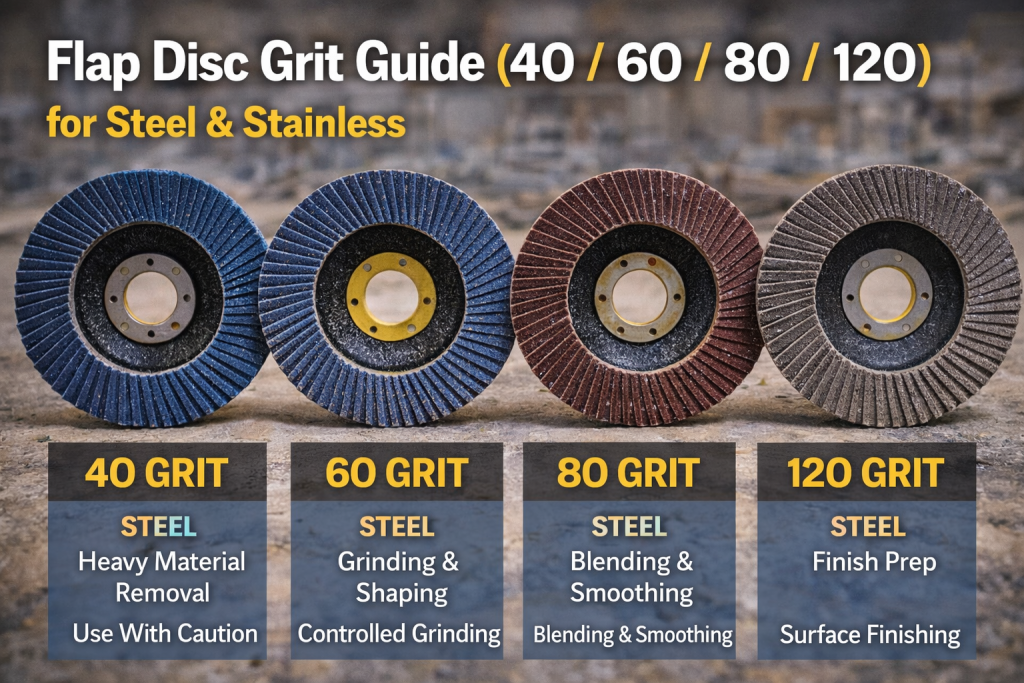
When you’re choosing sanding discs, flap discs, or grinding wheels, the abrasive grain matters more than the brand name. Zirconia, ceramic, and aluminum oxide are the three most common abrasive grains you’ll see on the shelf — and each one behaves very differently depending on the job, the material, and how hard you’re pushing the tool.
This guide breaks down how each abrasive grain works, what it’s best for, and how to choose the right one so you don’t burn through discs or waste money on the wrong product.
Why Abrasive Grain Choice Matters
Abrasive grains determine:
- How fast material is removed
- How long the disc lasts
- How much heat is generated
- Whether the disc dulls or stays sharp under pressure
Choosing the wrong grain usually means slow cutting, glazing, overheating stainless, or swapping discs every few minutes. Choosing the right grain means faster work, cleaner results, and fewer trips back to the tool rack.
Aluminum Oxide: The Everyday Workhorse
Aluminum oxide is the most common abrasive grain and the most affordable. It’s a tough, durable grain that fractures slowly, making it a good all-purpose option for general metal and wood work.
Best uses:
- Mild steel
- Carbon steel
- Wood
- Paint removal
- General fabrication and maintenance
Strengths:
- Lower cost
- Widely available
- Good for light to moderate pressure
- Predictable wear
Limitations:
- Dulls faster under heavy pressure
- Slower cutting on hard metals
- Can glaze on stainless steel
If you’re doing occasional grinding, light fabrication, or general shop work, aluminum oxide is usually enough. It’s also a good choice when cost matters more than maximum performance.
Zirconia: Longer Life for Heavy Grinding
Zirconia alumina is a tougher grain designed to fracture and expose new sharp edges as you grind. It performs best when you apply firm pressure and keep the disc working.
Best uses:
- Heavy steel grinding
- Structural steel
- Weld blending
- High-pressure applications
Strengths:
- Cuts faster than aluminum oxide
- Longer disc life
- Handles pressure well
- Better heat resistance
Limitations:
- Not ideal for light pressure
- Less effective on stainless than ceramic
- Higher cost than aluminum oxide
Zirconia shines in production grinding and fabrication environments where pressure is consistent and material removal matters. If you’re leaning into the grinder, zirconia will outlast aluminum oxide every time.
Ceramic: Maximum Performance and Cool Cutting
Ceramic abrasive grains are engineered to fracture at a microscopic level, constantly exposing sharp cutting points. This makes ceramic the fastest-cutting and longest-lasting option — especially on hard metals.
Best uses:
- Stainless steel
- Hardened steel
- Alloy metals
- High-speed production grinding
Strengths:
- Fastest cut rate
- Longest lifespan
- Runs cooler
- Resists glazing
- Excellent for stainless steel
Limitations:
- Higher upfront cost
- Overkill for light work
- Best performance requires proper RPM and pressure
Ceramic abrasives are ideal when downtime is expensive, finish quality matters, or heat buildup is a concern. In many cases, one ceramic disc can replace several aluminum oxide discs.
Side-by-Side Comparison
Aluminum Oxide
Best for: General purpose, light work
Cut speed: Moderate
Disc life: Shorter
Cost: Low
Zirconia
Best for: Heavy grinding, steel fabrication
Cut speed: Fast
Disc life: Longer
Cost: Medium
Ceramic
Best for: Stainless, hard metals, production
Cut speed: Fastest
Disc life: Longest
Cost: Higher
Which Abrasive Grain Should You Choose?
Choose aluminum oxide if:
- You’re doing light grinding or sanding
- Cost matters
- You want a versatile, everyday abrasive
Choose zirconia if:
- You’re grinding steel aggressively
- You apply steady pressure
- You want longer disc life without ceramic pricing
Choose ceramic if:
- You work with stainless steel
- Heat control matters
- You want maximum cut speed and lifespan
- You’re in a production or professional environment
Common Mistake: Buying the Wrong Grain for the Job
One of the most common mistakes we see is using aluminum oxide on stainless steel or high-pressure grinding jobs. The disc dulls quickly, overheats the surface, and wears out fast — leading people to think the tool is the problem, not the abrasive.
Matching the grain to the material and pressure level makes a bigger difference than jumping to a higher-powered grinder.
Final Takeaway
Abrasive grain selection directly affects speed, finish quality, heat buildup, and cost per job. Aluminum oxide is reliable and affordable, zirconia handles heavy grinding better, and ceramic delivers top-tier performance when precision and durability matter.
If you’re not sure which abrasive grain makes sense for your application, stop in or call — we’re happy to help match the right disc to the job so you’re not burning time or money on the wrong abrasive.