
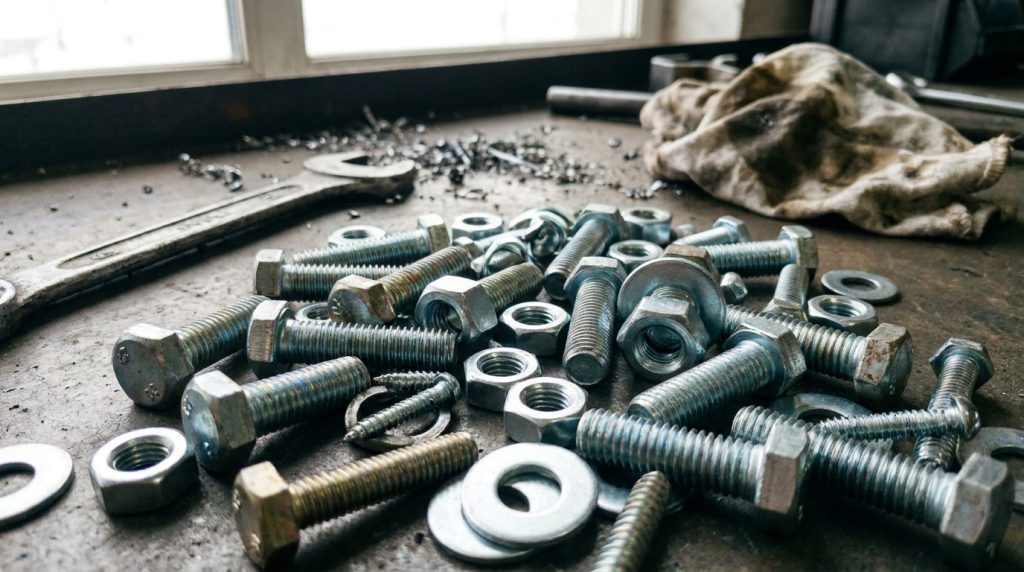
Zinc-plated fasteners are among the most common hardware choices in construction, maintenance, manufacturing, automotive repair, equipment assembly, and general industrial purchasing. They offer a practical balance of corrosion resistance, cost control, availability, and appearance, making them a go-to option for screws, bolts, nuts, washers, anchors, threaded rod, brackets, and other metal components.
For contractors and industrial buyers, the key question is not whether zinc plating is “good” or “bad.” The right question is: Is zinc plating suitable for the environment, load requirements, exposure conditions, and service life of the job?
This guide explains how zinc-plated fasteners work, where they perform well, where they fall short, and how they compare with alternatives such as hot-dip galvanized, stainless steel, black oxide, phosphate-coated, and plain steel fasteners.
Zinc-plated fasteners are steel fasteners coated with a thin layer of zinc to improve corrosion resistance and appearance. The zinc coating acts as a protective barrier between the steel base metal and the surrounding environment.
Common zinc-plated fasteners include:
- Hex bolts
- Machine screws
- Wood screws
- Sheet metal screws
- Nuts
- Flat washers and lock washers
- Threaded rod
- Lag screws
- Self-tapping screws
- Anchors
- Clips, brackets, and stamped parts
Zinc plating is especially common on carbon steel fasteners because it adds protection at a relatively low cost while maintaining broad availability across standard sizes and grades.
How Zinc Plating Protects Steel
Zinc protects steel in two ways:
- Barrier protection
The zinc layer separates the steel from oxygen, moisture, and contaminants.
- Sacrificial protection
Zinc corrodes before steel. If the coating is scratched or slightly damaged, the surrounding zinc can help protect exposed steel through sacrificial action.
This sacrificial property is one of the biggest advantages of zinc over coatings that only provide a surface barrier.
Zinc Plating vs. Galvanizing
Although people sometimes use the terms interchangeably, zinc plating and galvanizing are not the same process.
| Feature | Zinc-Plated Fasteners | Hot-Dip Galvanized Fasteners |
|---|---|---|
| Coating thickness | Thin | Much thicker |
| Corrosion resistance | Light to moderate | Moderate to heavy-duty |
| Typical appearance | Smooth, bright, silver or yellow finish | Duller, rougher, matte gray finish |
| Thread fit | Excellent for precision-threaded applications | May require oversized nuts or tapped holes due to the thicker coating |
| Cost | Typically lower | Typically higher |
| Best use | Indoor, dry environments, and light outdoor exposure | Outdoor construction, structural steel, utility projects, fencing, and marine-adjacent environments |
For indoor machinery, cabinetry, electrical enclosures, and general maintenance, zinc-plated hardware is often appropriate. For exposed outdoor structural work, hot-dip galvanized or stainless steel fasteners are usually a better choice.
When considering the use of zinc-plated fasteners, it’s essential to understand their advantages and disadvantages, as well as their various applications in different industries. For those interested in further exploring tools that complement the use of fasteners, a related article discusses the intricacies of tape measures, including standout, blade width, and accuracy classes. You can read more about it in this informative piece: Tape Measures: Standout, Blade Width, and Accuracy Classes Explained.
Types of Zinc Plating Used on Fasteners
Not all zinc-plated fasteners are identical. The plating method, coating thickness, post-treatment, and color can affect corrosion performance, appearance, and compatibility.
Electro-Zinc Plating
Electro-zinc plating, also called zinc electroplating, is the most common type used on commercial fasteners. The fasteners are placed in an electrolyte bath, and an electrical current deposits zinc onto the steel surface.
Benefits of electro-zinc plating include:
- Smooth finish
- Uniform appearance
- Good thread compatibility
- Low cost
- Wide availability
- Suitable for small parts and precision fasteners
Because the coating is relatively thin, electro-zinc plated fasteners are best suited for indoor use, controlled environments, and limited outdoor exposure.
Mechanical Zinc Plating
Mechanical zinc plating applies zinc powder to fasteners through mechanical impact rather than electricity. This process can reduce the risk of hydrogen embrittlement compared with electroplating, which is important for some hardened fasteners.
Mechanical plating is often used for:
- Hardened washers
- High-strength fasteners
- Springs or clips
- Components where hydrogen embrittlement is a concern
If your application involves high-strength bolts or critical load-bearing fasteners, verify the plating process and applicable specifications before purchasing.
Clear Zinc Plating
Clear zinc plating typically has a bright silver or bluish-silver appearance. It is commonly used on commercial hardware where appearance and mild corrosion resistance are desired.
Common applications include:
- Light equipment assembly
- Indoor brackets
- HVAC components
- Electrical panels
- General maintenance fasteners
- Furniture and fixtures
Clear zinc is popular because it looks clean, installs easily, and is readily available in many fastener types.
Yellow Zinc Plating
Yellow zinc plating includes a chromate conversion coating that gives the fastener a yellow, gold, or iridescent finish. Historically, yellow chromate finishes often provided improved corrosion resistance over clear zinc finishes, though modern trivalent finishes vary by manufacturer and specification.
Common uses include:
- Automotive hardware
- Agricultural equipment
- Industrial assemblies
- Service parts
- Machinery components
Yellow zinc is often selected when fasteners need a recognizable finish, improved appearance, or specific corrosion performance based on a drawing or procurement standard.
Black Zinc Plating
Black zinc plating provides a dark finish while retaining zinc’s corrosion-resistant properties. It is commonly used when appearance matters or when fasteners need to blend with black-painted components.
Typical applications include:
- Electronics
- Decorative hardware
- Automotive interiors
- Black equipment panels
- Retail displays
- Appliance assemblies
Black zinc can be less corrosion-resistant than some other zinc finishes depending on the post-treatment, so check the product specification rather than relying on color alone.
Pros of Zinc-Plated Fasteners
Zinc-plated fasteners are widely used because they solve many common fastening problems at a reasonable cost. For many indoor and light-duty applications, they provide the right combination of performance and availability.
Cost-Effective Corrosion Protection
One of the biggest advantages of zinc-plated fasteners is affordability. Compared with stainless steel, brass, silicon bronze, or specialty coated fasteners, zinc-plated carbon steel hardware is usually much less expensive.
This makes zinc plating attractive for:
- High-volume manufacturing
- Maintenance repair operations
- General construction tasks
- Fixture assembly
- Non-critical service hardware
- Inventory standardization
For industrial buyers, zinc-plated fasteners can reduce total hardware spend while still offering more protection than plain steel.
Good Availability Across Standard Sizes
Zinc-plated fasteners are available in a wide range of inch and metric sizes, head styles, thread types, and material grades.
Commonly available options include:
- Grade 2 zinc-plated bolts
- Grade 5 zinc-plated bolts
- Zinc-plated machine screws
- Zinc-plated nuts and washers
- Zinc-plated self-drilling screws
- Zinc-plated threaded rod
- Metric Class 8.8 zinc-plated fasteners
For contractors and maintenance teams, this availability matters. It reduces downtime, simplifies sourcing, and helps keep service trucks and stockrooms organized.
Clean, Professional Appearance
Zinc-plated fasteners have a smooth, bright finish that looks better than plain steel and many rough industrial coatings. This makes them useful in visible installations where function and appearance both matter.
Examples include:
- Electrical boxes
- Commercial interior fixtures
- Equipment guards
- Wall-mounted brackets
- Retail shelving
- Indoor handrail components
- Access panels
A bright zinc finish can also make fasteners easier to inspect for damage, contamination, or corrosion during maintenance checks.
Sacrificial Corrosion Resistance
Unlike paint or black oxide, zinc plating provides sacrificial protection. If the coating is slightly scratched during handling or installation, the zinc may still help protect the exposed steel near the damaged area.
This is valuable in real-world environments where fasteners are:
- Handled in bins
- Installed with impact tools
- Scratched by washers
- Exposed to minor abrasion
- Used in serviceable equipment assemblies
The sacrificial behavior does not make zinc-plated fasteners suitable for every harsh environment, but it does offer practical protection beyond a simple cosmetic finish.
Good Thread Fit and Ease of Installation
Because zinc plating is thin and uniform, it usually maintains accurate thread dimensions. This is important for machine screws, bolts, nuts, threaded inserts, and assemblies where fit is critical.
Zinc-plated fasteners generally install smoothly in:
- Tapped holes
- Threaded inserts
- Weld nuts
- Captive nuts
- Sheet metal assemblies
- Equipment frames
By comparison, hot-dip galvanized coatings are much thicker and may require special thread allowances, oversized nuts, or careful specification.
Better Protection Than Plain Steel or Black Oxide
Plain steel rusts quickly when exposed to humidity or moisture. Black oxide offers minimal corrosion protection unless it is supplemented with oil, wax, or sealant.
For routine service, zinc-plated fasteners generally provide better corrosion resistance than:
- Plain carbon steel
- Bare alloy steel
- Black oxide screws
- Phosphate-coated fasteners without oil
- Uncoated stamped hardware
This makes zinc plating a practical default finish for many indoor industrial environments.
For more articles on industrial supply, visit https://cemindustrialsupply.com/news/ for the latest updates.
Cons and Limitations of Zinc-Plated Fasteners
Zinc-plated fasteners are useful, but they are not a universal solution. Misusing them in harsh environments can lead to corrosion, staining, seizure, premature failure, or costly rework.
Limited Outdoor Corrosion Resistance
Zinc-plated fasteners can be used in some light outdoor applications, but they are not ideal for long-term exposure to rain, snow, road salt, marine air, or industrial pollutants.
Outdoor conditions that can shorten service life include:
- Frequent wet/dry cycles
- Salt spray
- Deicing chemicals
- Coastal humidity
- Acidic or alkaline exposure
- Constant condensation
- Soil contact
For exterior construction, fencing, utility work, docks, outdoor structural steel, and rooftop equipment, consider hot-dip galvanized, stainless steel, or engineered coating systems.
Thin Coating Compared With Galvanizing
Electro-zinc plating is typically much thinner than hot-dip galvanizing. While that helps preserve thread fit and appearance, it also means there is less zinc available to sacrifice over time.
In simple terms:
- Thin zinc coating = good for light-duty corrosion protection
- Thick zinc coating = better for longer exposure and harsher environments
If a fastener must remain in service outdoors for years with minimal maintenance, zinc plating may not be the best choice.
Not Ideal for Marine or Coastal Use
Marine and coastal environments are aggressive because salt accelerates corrosion. Zinc-plated fasteners can deteriorate quickly when exposed to saltwater spray, sea air, or brackish conditions.
For marine applications, better options may include:
- 316 stainless steel fasteners
- Silicon bronze fasteners
- Hot-dip galvanized fasteners for some structural applications
- Specialty marine-grade coated fasteners
For related purchasing support, consider linking internally to resources such as “Stainless Steel Fasteners: 304 vs. 316” or “Best Fasteners for Marine and Coastal Environments.”
Risk of Hydrogen Embrittlement in High-Strength Fasteners
Hydrogen embrittlement is a concern for certain high-strength steels. During acid cleaning or electroplating, hydrogen can enter the metal and potentially cause delayed cracking under stress.
This risk is most relevant for:
- High-strength bolts
- Hardened washers
- Springs
- Critical structural fasteners
- Fasteners above certain hardness levels
- Safety-critical equipment assemblies
To reduce risk, manufacturers may use baking processes after plating or select mechanical plating instead of electroplating. Buyers should review applicable standards, material grade, hardness, and supplier documentation before specifying zinc plating on high-strength fasteners.
Possible White Rust Formation
White rust, also known as white corrosion, can form on zinc surfaces when moisture is trapped against the coating, especially during storage or shipment. It often appears as a chalky white deposit.
Common causes include:
- Poor ventilation in packaging
- Condensation inside bags or boxes
- Wet fasteners stored in bulk
- Humid warehouse conditions
- Contact with wet cardboard or wood
White rust is not the same as red rust on steel, but it can reduce the protective zinc layer and affect appearance. Proper storage helps prevent it.
Chemical Compatibility Limitations
Zinc can react poorly with certain chemicals, acids, alkalis, treated lumber chemicals, and industrial cleaning agents. If fasteners will be exposed to chemical washdown, process fluids, or treated wood, verify compatibility before installation.
Potential problem environments include:
- Food processing washdown areas
- Chemical plants
- Wastewater facilities
- Pressure-treated lumber assemblies
- Battery rooms
- Fertilizer handling areas
- Pulp and paper mills
In these cases, stainless steel or specialty coated fasteners may provide better long-term performance.
When considering the use of zinc-plated fasteners, it is also important to understand the potential risks associated with electrical components, such as variable frequency drives (VFDs). For a deeper insight into how these drives can affect motor performance and the necessary precautions to take, you can explore this informative article on VFD damage and protection. This knowledge can be particularly beneficial when selecting fasteners for applications where electrical equipment is involved.
Best Applications for Zinc-Plated Fasteners
Zinc-plated fasteners perform best in dry, indoor, lightly corrosive, or controlled environments. They are especially useful where cost, appearance, and broad availability are important.
Indoor Construction and Finish Work
Contractors frequently use zinc-plated screws, bolts, washers, and anchors for interior work. The coating provides enough protection for many dry building environments while keeping costs reasonable.
Examples include:
- Interior framing hardware
- Light-duty brackets
- Cabinet installation
- Door hardware
- Shelving systems
- Suspended ceiling accessories
- Commercial interior fixtures
- Drywall accessories and trim supports
For high-moisture interiors such as bathrooms, kitchens, pools, and mechanical rooms, evaluate the exposure level before relying on zinc plating.
HVAC, Electrical, and Mechanical Systems
Zinc-plated fasteners are common in HVAC and electrical installations because they are clean, easy to install, and available in many sizes.
Typical uses include:
- Ductwork screws
- Electrical panel screws
- Conduit straps
- Equipment mounting hardware
- Pipe hangers in dry areas
- Control cabinet hardware
- Blower and fan assemblies
- Access covers
In rooftop HVAC installations or wet mechanical rooms, hot-dip galvanized or stainless steel hardware may be more appropriate.
Manufacturing and Equipment Assembly
Manufacturers often choose zinc-plated fasteners for production assemblies because they combine corrosion resistance with predictable fit and finish.
Common manufacturing uses include:
- Appliance assembly
- Industrial equipment frames
- Light machinery
- Material handling equipment
- Electronic enclosures
- Metal cabinets
- Consumer goods
- Commercial furniture
Zinc-plated hardware also supports efficient inventory management because many standard screws, nuts, and bolts are available off the shelf.
Automotive and Fleet Maintenance
Zinc-plated fasteners are widely used in automotive and fleet service, especially for interior, engine bay, and non-exposed components.
Typical examples include:
- Brackets
- Covers
- Clips
- Light-duty body hardware
- Interior fasteners
- Under-hood accessories
- Equipment mounting points
- Replacement service hardware
However, zinc-plated fasteners may not be suitable for exhaust systems, wheel-end components, suspension parts, or underbody areas exposed to road salt unless specified by the equipment manufacturer.
Industrial Maintenance and MRO
Maintenance, repair, and operations teams often stock zinc-plated fasteners as general-purpose hardware for plant repairs.
They are useful for:
- Machine guards
- Conveyor covers
- Motor mounts in dry locations
- Sensor brackets
- Light-duty equipment repairs
- Electrical enclosures
- Parts bins and storage racks
- Temporary fixturing
For MRO buyers, zinc-plated fasteners can serve as a practical standard inventory item, while stainless, galvanized, and specialty fasteners should be stocked for harsher or critical applications.
When considering the use of zinc-plated fasteners, it’s essential to understand their various applications and potential drawbacks. For a deeper insight into the maintenance and repair of machinery that often utilizes these fasteners, you can explore a related article on electric motor repair. This resource provides valuable information on how to ensure the longevity and efficiency of your equipment, which often relies on reliable fastening solutions. To learn more about this topic, visit electric motor repair.
Where Zinc-Plated Fasteners Should Be Avoided
Knowing where not to use zinc-plated fasteners is just as important as knowing where they work well. Choosing the wrong finish can lead to corrosion, customer complaints, safety concerns, and premature maintenance.
Marine, Coastal, and Salt Spray Environments
Salt is one of the most damaging exposures for zinc-plated steel. Avoid standard zinc-plated fasteners in:
- Boat docks
- Marinas
- Coastal railings
- Saltwater equipment
- Beachfront construction
- Trailer components exposed to saltwater
- Offshore or near-shore structures
For these environments, review stainless steel, silicon bronze, hot-dip galvanized, or specialty coated options.
Pressure-Treated Wood Applications
Some pressure-treated lumber chemicals can accelerate corrosion in certain metal fasteners. For decks, fences, outdoor stairs, and treated wood framing, use fasteners specifically approved for the lumber type and exposure category.
Common alternatives include:
- Hot-dip galvanized fasteners meeting applicable standards
- Stainless steel fasteners
- Polymer-coated deck screws
- Structural screws rated for treated lumber
Contractors should check local building codes, lumber manufacturer guidance, and fastener manufacturer recommendations.
Structural and Safety-Critical Connections Without Verification
Do not substitute zinc-plated fasteners in structural or safety-critical applications unless they meet the required material grade, coating specification, and design requirements.
Examples include:
- Structural steel connections
- Lifting equipment
- Fall protection anchors
- Load-rated machinery mounts
- Bridge or highway hardware
- Critical pressure equipment
- OEM safety components
In these applications, the fastener’s grade, coating, traceability, and standard compliance matter as much as its size.
High-Temperature Applications
Zinc-plated fasteners are not ideal for high-temperature environments. Elevated temperatures can affect coating performance and may create fumes if zinc is heated to extreme levels.
Avoid using zinc-plated fasteners near:
- Exhaust systems
- Furnaces
- Ovens
- Boilers
- High-temperature process equipment
- Welding zones
- Heat treating operations
For high-temperature service, consider plain alloy steel, stainless steel, nickel alloy, or specialized high-temperature fasteners depending on the application.
Zinc-Plated Fasteners vs. Other Fastener Finishes
Choosing the right fastener finish requires comparing cost, corrosion resistance, appearance, strength requirements, and environment. Zinc plating is often the economical middle ground, but other finishes may be better for specific jobs.
Comparison Table: Common Fastener Finishes
| Finish or Material | Corrosion Resistance | Appearance | Typical Cost | Best For | Limitations |
|---|---|---|---|---|---|
| Plain steel | Very low | Dark gray or raw steel | Lowest | Dry, temporary applications, welding, and fabrication | Rusts quickly without protective coatings |
| Black oxide | Low | Black | Low to moderate | Tools, indoor machinery, and decorative applications | Requires oil or sealant for meaningful corrosion protection |
| Zinc-plated | Light to moderate | Bright silver, yellow, or black | Low | Indoor, dry environments, and general-purpose fasteners | Limited durability in outdoor or corrosive environments |
| Zinc flake coating | Moderate to high | Gray, silver, or black | Moderate | Automotive, OEM, and high-corrosion-resistance applications | Verify specifications and compatibility before use |
| Hot-dip galvanized | Moderate to high | Dull gray with a rougher finish | Moderate | Outdoor construction, utilities, structural steel, and fencing | Thick coating can affect thread fit and mating hardware |
| 304 stainless steel | High in many environments | Silver | Higher | Food service, wet indoor areas, and general corrosion resistance | Can corrode in chloride-rich or marine environments |
| 316 stainless steel | Very high in chloride environments | Silver | Higher | Marine, coastal, chemical processing, and food manufacturing | Higher cost than 304 stainless steel |
| Phosphate and oil | Low to moderate | Dark gray or black | Low to moderate | Automotive components and lubricated assemblies | Not intended for prolonged exposure to moisture or corrosive environments |
| Cadmium plating | High in specialized applications | Silver or yellow | Restricted / Specialized | Aerospace and legacy military specifications | Subject to environmental regulations and limited availability |
Zinc-Plated vs. Stainless Steel
Stainless steel offers better corrosion resistance than zinc-plated carbon steel in many wet or corrosive environments. However, stainless steel costs more and may have different strength properties depending on the alloy and grade.
Choose zinc-plated fasteners when:
- The environment is dry or mildly corrosive
- Cost control is important
- Standard carbon steel strength is acceptable
- Appearance matters but long outdoor life is not required
Choose stainless steel when:
- Fasteners will be exposed to moisture
- Cleanability is important
- Food, pharmaceutical, or chemical service is involved
- Coastal or chloride exposure is present
- Long service life justifies higher upfront cost
Zinc-Plated vs. Hot-Dip Galvanized
Hot-dip galvanized fasteners have a thicker zinc coating and are better suited to outdoor exposure. Zinc-plated fasteners offer smoother finish and better thread precision.
Choose zinc-plated fasteners for:
- Indoor assemblies
- Fine-thread fasteners
- Electrical and mechanical equipment
- Applications where a clean appearance is needed
Choose hot-dip galvanized fasteners for:
- Outdoor structural connections
- Fencing and guardrails
- Utility hardware
- Exterior wood construction
- Agricultural and infrastructure applications
Zinc-Plated vs. Black Oxide
Black oxide is often used for appearance, light wear resistance, or reduced glare, but it provides limited corrosion resistance unless oiled.
Choose zinc-plated fasteners when corrosion resistance matters more than black appearance. Choose black oxide when appearance, dimensional precision, or compatibility with certain tooling and machinery applications is the main priority.
How to Specify Zinc-Plated Fasteners Correctly
A fastener purchase order should include more than diameter and length. Proper specification reduces installation problems, corrosion issues, and supply chain confusion.
Key Details to Include on Purchase Orders
When ordering zinc-plated fasteners, specify:
- Fastener type, such as hex bolt, machine screw, or washer
- Diameter and thread pitch
- Length
- Material or strength grade
- Finish, such as clear zinc, yellow zinc, or black zinc
- Applicable standard, if required
- Quantity
- Packaging requirements
- Certification or traceability requirements
- Hydrogen embrittlement relief requirements, if applicable
For example:
> 3/8″-16 x 1-1/2″ hex cap screw, SAE Grade 5, zinc-plated clear, ASME dimensional standard, bulk packed, certificate of compliance required.
This level of detail helps distributors and manufacturers supply the correct part.
Standards and Compliance Considerations
Fastener standards vary by product type, industry, and application. Depending on the job, relevant standards may include ASTM, SAE, ASME, ISO, DIN, IFI, or OEM-specific requirements.
Buyers should verify:
- Mechanical properties
- Coating type and thickness
- Dimensional tolerances
- Thread class
- Hydrogen embrittlement relief
- RoHS or REACH compliance if required
- Salt spray requirements if specified
- Country-of-origin documentation if needed
For regulated industries or critical applications, work with a qualified fastener supplier that can provide documentation and lot traceability.
Salt Spray Testing: What It Does and Does Not Mean
Salt spray testing is commonly used to compare coating performance under controlled laboratory conditions. However, salt spray hours do not directly predict real-world service life.
Salt spray results can be useful for:
- Comparing coating systems
- Verifying supplier consistency
- Meeting drawing requirements
- Establishing a minimum performance benchmark
Salt spray results do not fully account for:
- UV exposure
- Temperature cycling
- Abrasion
- Chemical contact
- Installation damage
- Real atmospheric conditions
- Galvanic corrosion
Use salt spray data as one decision factor, not the only factor.
Installation and Maintenance Best Practices
Even the right fastener can fail early if it is installed incorrectly or stored poorly. Simple handling and maintenance practices can extend the service life of zinc-plated hardware.
Store Fasteners in Dry Conditions
Keep zinc-plated fasteners dry before installation. Moisture trapped in boxes, bags, or bins can cause white rust.
Best practices include:
- Store indoors in a dry area
- Avoid placing boxes directly on damp floors
- Keep packaging closed until use
- Do not store wet fasteners in sealed containers
- Rotate inventory using first-in, first-out practices
- Separate chemicals from fastener storage areas
For maintenance teams, labeled bins and controlled storage reduce waste and prevent mix-ups.
Avoid Damaging the Coating During Installation
Scratches and tool marks can reduce corrosion protection. While zinc provides sacrificial protection, excessive damage exposes more steel and shortens service life.
To reduce coating damage:
- Use properly sized sockets, bits, and wrenches
- Avoid overdriving screws
- Use washers where appropriate
- Follow torque recommendations
- Replace fasteners with damaged heads or threads
- Avoid reusing corroded fasteners in critical assemblies
Impact tools are useful, but they can damage coatings if torque is uncontrolled.
Consider Galvanic Corrosion
Galvanic corrosion can occur when dissimilar metals are connected in the presence of an electrolyte such as water. Zinc-plated steel fasteners may corrode faster when paired with certain metals in wet conditions.
Potential concerns include:
- Zinc-plated fasteners with stainless steel panels
- Zinc-plated fasteners in aluminum assemblies
- Fasteners exposed to conductive fluids
- Outdoor mixed-metal installations
Use isolation washers, compatible coatings, sealants, or alternative fastener materials when galvanic corrosion is a risk.
Inspect Fasteners During Maintenance
For maintenance professionals, periodic inspection helps identify corrosion before it becomes a failure point.
Look for:
- Red rust
- Heavy white corrosion
- Loose hardware
- Damaged heads
- Thread deterioration
- Staining around joints
- Cracked or missing washers
- Water traps around fastener locations
If zinc-plated fasteners are corroding faster than expected, review the environment and consider upgrading to galvanized, stainless steel, or a specialty coating.
Purchasing Tips for Contractors and Industrial Buyers
The lowest unit price is not always the best value. The right fastener reduces installation time, rework, corrosion failures, and inventory complexity.
Match the Finish to the Environment
Use this quick selection guide:
| Environment | Zinc-Plated Fasteners Suitable? | Better Alternative if Needed |
|---|---|---|
| Dry indoor office or warehouse | Yes | Not typically necessary |
| Indoor machinery | Yes, if not exposed to moisture or chemicals | Stainless steel or phosphate-and-oil-coated fasteners, depending on the application |
| HVAC ductwork (indoors) | Yes | Stainless steel for damp or high-humidity environments |
| Rooftop equipment | Sometimes, where exposure is limited | Hot-dip galvanized or stainless steel fasteners |
| Coastal construction | No | 316 stainless steel or approved marine-grade fasteners |
| Pressure-treated lumber (outdoors) | Generally no, unless specifically approved | Hot-dip galvanized or stainless steel fasteners |
| Chemical washdown environments | Generally no | Stainless steel or specialty corrosion-resistant alloys and coatings |
| Automotive interior | Yes | OEM-specified finish when required |
| Road salt exposure | Often no | Zinc flake coating, hot-dip galvanized, stainless steel, or the OEM-specified coating |
Buy From Suppliers That Understand Fastener Applications
A qualified supplier can help verify:
- Correct grade and strength
- Finish suitability
- Thread compatibility
- Coating standard
- Packaging and labeling
- Certificates of compliance
- Lot traceability
- Bulk purchasing options
- Substitute recommendations
This is especially important for contractors bidding jobs, maintenance teams reducing downtime, and manufacturers controlling production quality.
Standardize Inventory Where Practical
For MRO and manufacturing, too many similar fasteners can increase costs and confusion. Standardizing common zinc-plated fasteners can simplify purchasing and reduce stockouts.
Consider standardizing:
- Common hex bolt diameters and lengths
- Flat washer and lock washer sizes
- Machine screw head styles
- Nut grades and finishes
- Threaded rod sizes
- Self-drilling screw types
- Storage bin labels and part numbers
Internal linking opportunity: connect this section to a related resource such as “Fastener Inventory Management for Maintenance Teams” or “How to Choose the Right Bolt Grade for Industrial Applications.”
Frequently Asked Questions About Zinc-Plated Fasteners
Are Zinc-Plated Fasteners Rust-Proof?
No. Zinc-plated fasteners are corrosion-resistant, not rust-proof. The zinc coating slows corrosion, but it can eventually wear away or be consumed, especially in wet, salty, or chemically aggressive environments.
Can Zinc-Plated Fasteners Be Used Outdoors?
They can be used outdoors in limited, low-exposure applications, but they are not the best choice for long-term outdoor service. For exterior structural work or frequent moisture exposure, hot-dip galvanized or stainless steel fasteners are usually better choices.
Are Zinc-Plated Fasteners Strong?
The strength comes primarily from the base steel and fastener grade, not the zinc plating. A zinc-plated Grade 5 bolt, for example, has different mechanical properties than a zinc-plated Grade 2 bolt. Always specify the required grade.
What Is the Difference Between Clear Zinc and Yellow Zinc?
Clear zinc usually has a bright silver appearance, while yellow zinc has a gold or iridescent appearance from its conversion coating. Corrosion performance depends on the full coating system and specification, not color alone.
Can Zinc-Plated Fasteners Be Welded?
Welding zinc-plated fasteners is generally not recommended without proper preparation and safety controls. Heating zinc coatings can produce hazardous fumes. If welding is required, consult applicable safety procedures, remove coatings as required, and use appropriate ventilation and personal protective equipment.
Are Zinc-Plated Fasteners Magnetic?
Most zinc-plated fasteners are made from carbon steel, so they are typically magnetic. The zinc coating itself does not make the fastener non-magnetic.
Can Zinc-Plated Fasteners Be Used With Aluminum?
They can be used with aluminum in dry indoor environments, but galvanic corrosion may occur in wet or conductive conditions. For outdoor aluminum assemblies, evaluate compatibility and consider stainless steel, coated fasteners, or isolation methods.
Conclusion: When Zinc-Plated Fasteners Are the Right Choice
Zinc-plated fasteners are a practical, economical solution for many indoor, dry, and mildly corrosive applications. They offer better corrosion resistance than plain steel or black oxide, a clean appearance, excellent availability, and reliable thread fit. For contractors, manufacturers, mechanics, maintenance teams, and industrial buyers, they are often the right general-purpose fastener finish.
However, zinc plating has limits. It is not the best choice for marine environments, heavy outdoor exposure, pressure-treated lumber unless specifically approved, chemical washdown, high-temperature service, or unverified structural applications. In those cases, hot-dip galvanized, stainless steel, zinc flake, or specialty coated fasteners may provide better long-term performance.
Before ordering, match the fastener finish to the environment, verify the strength grade, review any applicable standards, and work with a knowledgeable supplier. If you are standardizing maintenance inventory, sourcing production hardware, or selecting fasteners for a construction project, use zinc-plated fasteners where they make sense—and upgrade when the application demands it.
For help selecting the right fasteners for your job, review related resources such as bolt grade selection guides, stainless steel fastener comparisons, galvanized fastener specifications, and corrosion-resistant hardware buying guides, or contact a trusted fastener supplier for application-specific recommendations.