
One of the first questions asked when a motor fails isn’t about cost — it’s how long will it take. Motor rewind turnaround time varies widely, and estimates can range from a few days to several weeks depending on the motor, the shop, and the situation.
This article explains what actually determines motor rewind turnaround time, why some rewinds take longer than expected, and when expediting makes sense.
The Short Answer: Typical Rewind Timelines
For most standard industrial motors:
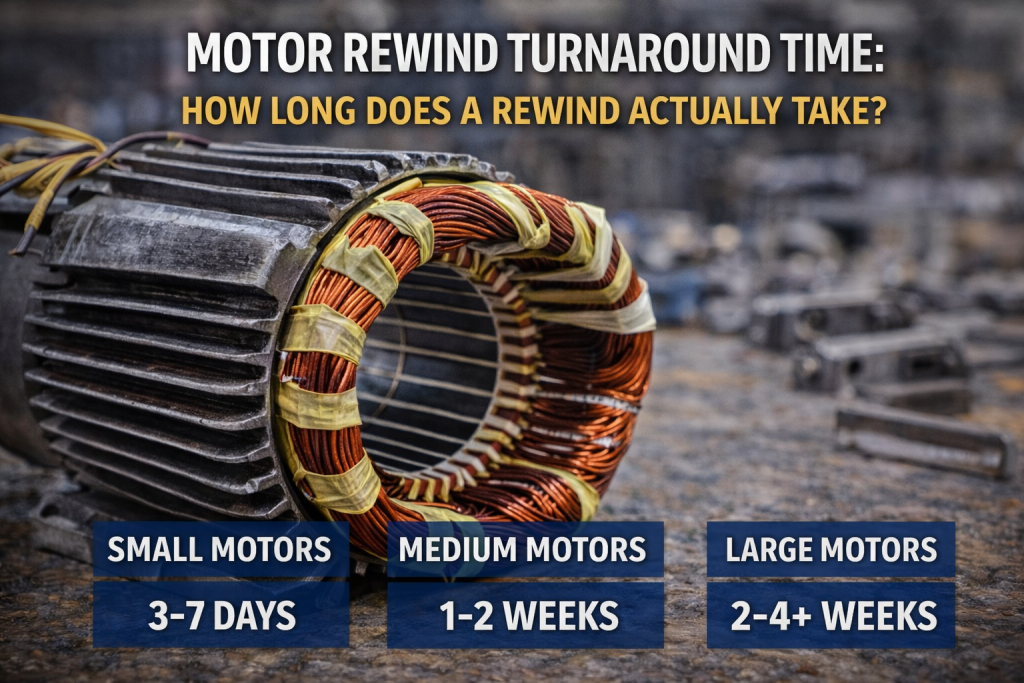
- Small motors (fractional to ~10 HP): 3–7 business days
- Medium motors (15–100 HP): 1–2 weeks
- Large motors (150 HP+): 2–4+ weeks
These are averages, not guarantees. Two motors of the same horsepower can have very different timelines.
What Actually Affects Rewind Turnaround Time
Turnaround time is driven by process complexity, not just motor size.
Key factors include:
- Motor size and frame
- Winding complexity
- Copper availability
- Core condition
- Shop workload
- Testing requirements
- Parts availability
- Expediting requests
Motor Size and Design
Larger motors take longer because:
- More copper must be removed and installed
- Windings are heavier and more complex
- Handling, baking, and curing take more time
High-efficiency, inverter-duty, multi-speed, or specialty motors also extend turnaround due to tighter tolerances and additional steps.
Core Condition and Inspection
After strip-out, the stator core must be inspected.
If issues are found, turnaround time increases:
- Core lamination damage
- Hot spots
- Ground faults
- Slot deformation
Minor issues can add days. Major core damage can pause the rewind entirely while options are reviewed.
Copper and Material Availability
Copper availability affects scheduling.
Delays occur when:
- Large quantities of magnet wire are required
- Specialty wire sizes are needed
- Market shortages impact supply
- Insulation systems are non-standard
Most shops cannot start rewinding until all materials are on hand.
Labor Scheduling and Shop Capacity
Motor shops operate on production schedules.
Turnaround time increases when:
- The shop is handling multiple large rewinds
- Emergency jobs are already in progress
- Skilled winding technicians are limited
A shop with a full queue may quote longer timelines even for simple rewinds.
Testing, Curing, and Documentation
Rewinding doesn’t end when the last coil is installed.
Time is required for:
- Varnish dip or VPI
- Baking and curing cycles
- Electrical testing (megger, surge, hi-pot)
- No-load run testing
- Documentation and reporting
Skipping these steps shortens time but increases risk — reputable shops don’t rush testing.
Expedited Rewinds: What Changes
Expediting can significantly reduce turnaround time, but it comes with trade-offs.
Expedited service may include:
- Overtime labor
- Schedule reshuffling
- Priority access to equipment
- Faster material sourcing
Typical expedited timelines:
- Small motors: 1–3 days
- Medium motors: 3–5 days
- Large motors: case-by-case
Expediting always increases cost, but it may still be cheaper than extended downtime.
When Turnaround Time Is Longer Than Expected
Common reasons include:
- Hidden core damage discovered mid-process
- Additional repairs requested after teardown
- Parts delays
- Testing failures requiring rework
- Scope changes (voltage, insulation upgrades)
Clear communication from the shop should explain delays as they occur — not after the fact.
How to Reduce Downtime Before Failure Happens
Best practices include:
- Keeping spare motors on hand
- Using predictive maintenance
- Tracking rewind history
- Identifying critical motors ahead of time
- Establishing relationships with repair shops before emergencies
Planning ahead often matters more than speed once a motor fails.
Common Misconceptions About Rewind Time
“Rewinds are quick if the shop wants the work”
Not true — curing and testing time cannot be skipped safely.
“All motors take about the same time”
Design and condition matter far more than horsepower alone.
“Expedited means same-day every time”
Only some motors qualify for true rush service.
Final Takeaway
Motor rewind turnaround time depends on motor design, condition, materials, labor, and testing — not just shop speed. Standard rewinds take days to weeks, while expedited service can shorten timelines at higher cost.
If downtime matters, the best approach is early communication, realistic expectations, and planning before failure occurs.