
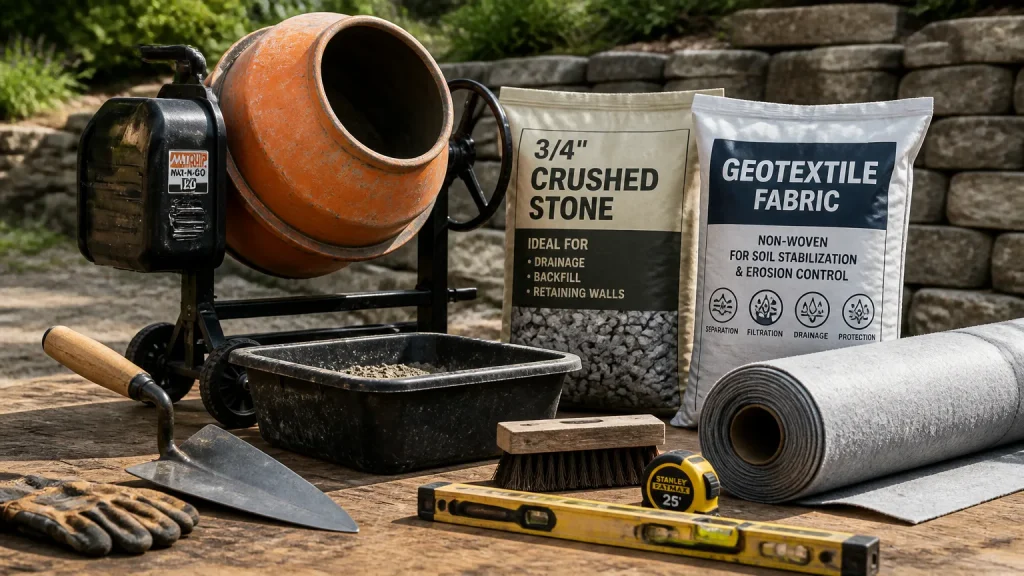
Retaining walls play an important role in protecting properties throughout Coldwater, Branch County, and the surrounding Southern Michigan region. Whether you’re dealing with erosion, drainage problems, a leaning wall, or a complete wall failure, addressing the issue early can help prevent costly damage to your landscape and structures.
Michigan’s freeze-thaw cycles, heavy seasonal rainfall, and shifting soil conditions can place significant pressure on retaining walls over time. Common warning signs include cracks, bulging sections, tilting, separation between blocks, standing water, and soil erosion behind the wall.
If you’re looking for professional help, the following contractors serve Coldwater and nearby communities and offer services related to retaining wall construction, repair, drainage correction, excavation, grading, and hardscape installation.
1. Plum Tree Landscaping
Based in Coldwater, Plum Tree Landscaping has been serving homeowners and businesses throughout the area for many years. The company offers landscape design and installation services that include retaining walls, edging, outdoor living spaces, and other hardscape features.
For homeowners looking to improve both the appearance and functionality of their property, Plum Tree Landscaping provides solutions that combine structural stability with attractive landscape design.
Services Include:
- Retaining wall installation
- Landscape design
- Decorative stonework
- Drainage improvements
- Outdoor living enhancements
2. Perennial Landscape Company
Perennial Landscape Company serves the Coldwater area with professional landscape and hardscape services. Their projects often include retaining walls, patios, walkways, grading, and site improvements.
Retaining walls are frequently part of larger landscape projects designed to improve drainage, create usable outdoor space, and prevent soil movement on sloped properties.
Services Include:
- Retaining walls
- Hardscape construction
- Site grading
- Drainage solutions
- Landscape renovation
3. Cottage Care Co.
Cottage Care Co. serves homeowners throughout Southern Michigan and offers landscape construction and property improvement services. Their experience with outdoor projects makes them a valuable resource for retaining wall repairs and replacement projects.
Whether the goal is correcting erosion issues or improving curb appeal, retaining walls can provide both structural support and visual appeal when properly designed and installed.
Services Include:
- Retaining wall construction
- Property improvements
- Landscape maintenance
- Erosion control
- Outdoor renovations
4. S & D Landscape & Irrigation
S & D Landscape & Irrigation provides landscape construction services throughout the Coldwater region. In addition to irrigation systems and landscape installation, the company works on retaining walls and drainage-related projects.
Because water management is one of the leading causes of retaining wall failure, working with a contractor familiar with both drainage and landscape construction can be beneficial.
Services Include:
- Retaining wall installation
- Drainage improvements
- Irrigation systems
- Landscape construction
- Site grading
5. Dynamic Hardscapes & Construction LLC
Dynamic Hardscapes & Construction specializes in outdoor construction projects including retaining walls, patios, paver systems, and other hardscape features.
Their focus on structural hardscape construction makes them a good option for homeowners seeking a retaining wall that is both functional and visually appealing.
Services Include:
- Retaining wall construction
- Paver patios
- Walkways
- Outdoor living spaces
- Hardscape renovations
Signs Your Retaining Wall May Need Repair
Many retaining wall problems begin gradually and become more expensive when ignored. Contact a qualified contractor if you notice:
- Leaning or tilting walls
- Cracks in concrete or masonry
- Bulging sections
- Soil washing out behind the wall
- Standing water near the wall
- Separation between wall sections
- Rotting timbers
- Sinkholes or erosion around the structure
A professional inspection can determine whether the wall requires drainage improvements, reinforcement, partial reconstruction, or complete replacement.
Questions to Ask Before Hiring a Contractor
Before selecting a retaining wall contractor, consider asking:
- Do you handle both repairs and new construction?
- What drainage solutions do you recommend?
- Are permits required for this project?
- Can you provide examples of similar work?
- Is demolition and disposal included in the estimate?
- What warranty do you provide on workmanship?
Obtaining multiple estimates can help ensure you receive the best combination of quality, service, and value.
Retaining Wall Repair vs. Replacement
One of the most common questions homeowners ask is whether a retaining wall can be repaired or if it needs to be completely replaced. The answer depends on the age of the wall, the extent of the damage, drainage conditions, and the materials used during the original construction.
When Retaining Wall Repair Makes Sense
In many cases, minor retaining wall problems can be repaired without replacing the entire structure. Small cracks, isolated areas of movement, drainage issues, and minor erosion can often be corrected if the wall is otherwise structurally sound.
Repair may be a good option when:
- The wall is only leaning slightly.
- Cracks are small and limited to a few areas.
- Drainage problems can be corrected without rebuilding the wall.
- Individual blocks, stones, or timbers can be replaced.
- The foundation and base remain stable.
Addressing problems early can often prevent more extensive and costly repairs later. A professional contractor can evaluate whether reinforcement, drainage improvements, or partial reconstruction will restore the wall’s integrity.
When Retaining Wall Replacement Is Necessary
Replacement is often the best long-term solution when a wall has suffered significant structural failure. Severely leaning walls, large cracks, widespread movement, failing foundations, or extensive deterioration may indicate that repairs would only provide a temporary fix.
Replacement is typically recommended when:
- The wall is visibly bulging or collapsing.
- Large sections have shifted out of alignment.
- Timber walls have extensive rot.
- Drainage failure has caused major soil movement.
- The original wall was improperly designed or installed.
- Repair costs approach the cost of a new wall.
Although replacement requires a larger initial investment, it often provides greater long-term value by addressing underlying issues that repairs cannot fully correct.
Factors That Affect Retaining Wall Costs
The cost of repairing or replacing a retaining wall can vary significantly based on several factors, including:
- Wall height and length
- Material type
- Accessibility of the site
- Drainage requirements
- Soil conditions
- Excavation needs
- Permit requirements
- Demolition and disposal costs
Walls supporting driveways, structures, or steep slopes may require additional engineering or reinforcement, which can increase overall project costs.
Why Drainage Matters
Poor drainage is one of the leading causes of retaining wall failure. When water becomes trapped behind a wall, hydrostatic pressure builds and can eventually cause cracking, bulging, or complete collapse.
Proper retaining wall construction typically includes:
- Crushed stone backfill
- Drainage pipe systems
- Filter fabric
- Adequate grading
- Drainage outlets or weep holes
Whether repairing or replacing a wall, correcting drainage issues is often just as important as repairing the wall itself.
Common Retaining Wall Materials
Retaining walls can be constructed using several different materials, each offering its own advantages.
Concrete Block Retaining Walls
- Durable and long-lasting
- Available in many styles and colors
- Suitable for both residential and commercial applications
Timber Retaining Walls
- Lower initial cost
- Natural appearance
- Shorter lifespan compared to masonry systems
Natural Stone Retaining Walls
- Attractive and timeless appearance
- Excellent durability when properly installed
- Often higher installation costs due to labor requirements
The best material depends on your budget, design preferences, site conditions, and the structural requirements of the project.
Ultimately, the decision between repair and replacement should be based on a professional evaluation of the wall’s condition. An experienced retaining wall contractor can identify underlying problems and recommend the most cost-effective solution for protecting your property over the long term.
Final Thoughts
Retaining walls are more than decorative landscape features—they are important structural elements that help control erosion, manage drainage, and protect your property. Whether you need a minor repair or a complete rebuild, choosing an experienced contractor can help ensure long-term performance.
If you’re located in Coldwater, Quincy, Bronson, Union City, Tekonsha, Hillsdale, or elsewhere in Southern Michigan, the contractors listed above are good places to begin your search. Be sure to request an on-site evaluation so the contractor can assess drainage, soil conditions, and the overall condition of the wall before recommending repairs or replacement.
FAQ: How much does retaining wall repair cost in Michigan?
The cost of retaining wall repair depends on the size of the wall, the materials used, the extent of the damage, and whether drainage issues must be corrected. Minor repairs may cost a few hundred dollars, while major structural repairs or reconstruction projects can cost several thousand dollars. The best way to determine pricing is to request an on-site evaluation from a qualified contractor.
FAQ: How do I know if my retaining wall needs repair?
Common warning signs include leaning, bulging, cracking, separating blocks, soil erosion, standing water, and sections of the wall moving out of alignment. If you notice any of these issues, it’s a good idea to have the wall inspected before the damage becomes worse.
FAQ: Can a leaning retaining wall be repaired?
In some cases, yes. Minor leaning may be corrected through reinforcement, drainage improvements, or partial reconstruction. However, severely leaning walls often require replacement to ensure long-term stability and safety.
FAQ: What causes retaining walls to fail?
The most common causes of retaining wall failure include poor drainage, improper installation, inadequate foundations, soil movement, erosion, freeze-thaw cycles, and excessive pressure from water buildup behind the wall.
FAQ: What is the best material for a retaining wall?
Concrete block retaining walls are among the most popular choices because they are durable, attractive, and long-lasting. Timber walls are generally less expensive initially but have a shorter lifespan. Natural stone walls provide a premium appearance and excellent durability when properly installed.
FAQ: Do retaining walls require permits in Michigan?
Permit requirements vary by municipality and project size. Larger retaining walls, walls supporting structures, or walls located near property lines may require permits or engineering approval. Your contractor or local building department can provide guidance for your specific project.
FAQ: How long should a retaining wall last?
The lifespan of a retaining wall depends on the materials used, installation quality, drainage, and maintenance. Properly installed concrete block and natural stone walls can last for decades, while timber walls generally have a shorter service life.
FAQ: Should I repair or replace my retaining wall?
If the damage is minor and the wall remains structurally sound, repairs may be sufficient. However, walls with major structural failure, significant leaning, widespread cracking, or drainage problems often benefit from complete replacement. A professional inspection can help determine the most cost-effective solution.