
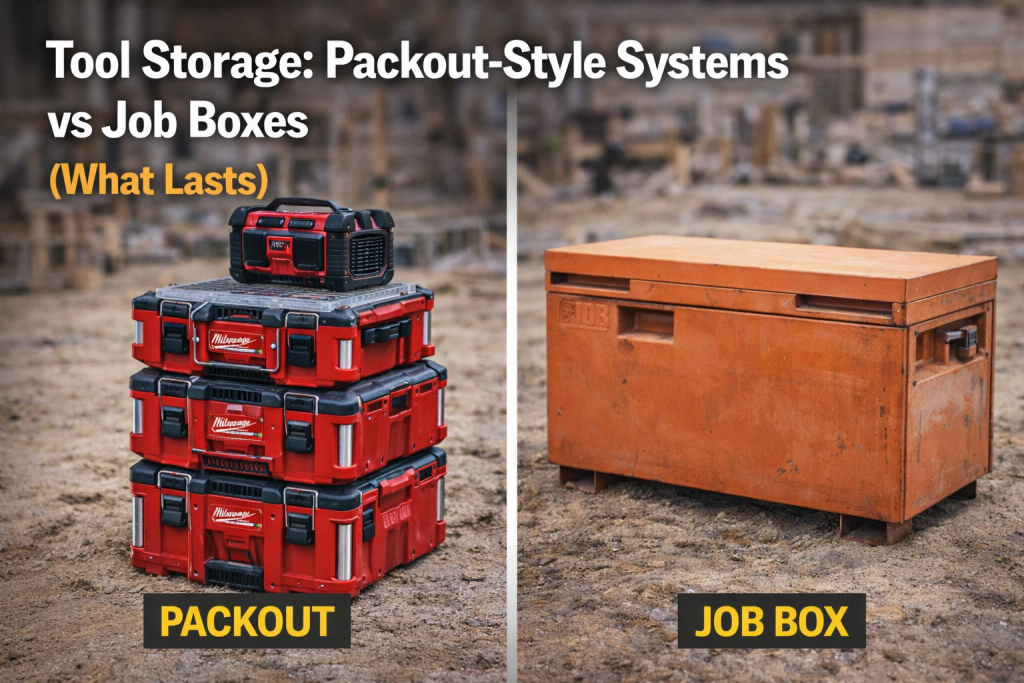
Tool storage isn’t just about organization—it’s about durability, efficiency, and protecting the tools that make you money. The wrong storage system slows work, damages tools, and creates daily frustration. The right system saves time, reduces wear, and actually lasts on the job site.
At CEM Industrial Supply in Coldwater, Michigan, one of the most common questions we hear is whether packout-style modular systems are better than traditional job boxes. The answer depends on how you work, where your tools live, and how often they move.
Here’s a real-world breakdown of packout-style systems vs job boxes—and which one actually lasts.
What Packout-Style Storage Systems Are Designed For
Packout-style systems are modular, stackable storage solutions designed to move with you. They’re built around mobility, flexibility, and organization.
Best used for:
- Service calls
- Mobile contractors
- Trades that move job to job
- Organized tool separation
- Vehicles, vans, and trailers
These systems allow tools to be grouped by task instead of dumped into one large container. Many feature weather sealing, reinforced corners, and locking stack mechanisms.
Strengths of Packout-Style Systems
Packout-style systems excel when:
- Tools need to move frequently
- Access speed matters
- Organization improves productivity
- Tools are carried into buildings
- Multiple trades share space
Because tools are separated into smaller cases, there’s less digging, less tool damage, and faster setup and teardown.
Limitations of Packout-Style Systems
Despite their advantages, packout-style systems have limits.
Common drawbacks include:
- Higher upfront cost
- Smaller storage capacity per box
- Can become bulky when fully stacked
- Wheels and latches wear over time
They’re built for mobility—not for absorbing years of abuse from forklifts or heavy equipment.
What Traditional Job Boxes Are Designed For
Job boxes are built for strength and protection. They’re designed to stay put and survive harsh job site conditions.
Best used for:
- Construction sites
- Framing and structural work
- Shared tool storage
- Long-term job locations
- High-volume tool storage
Job boxes prioritize durability and capacity over portability.
Strengths of Job Boxes
Job boxes excel when:
- Tools stay on-site
- Heavy tools need protection
- Theft deterrence matters
- Weather exposure is constant
- Space is available
Steel job boxes, in particular, withstand impacts, stacking, and abuse far better than modular plastic systems.
Limitations of Job Boxes
Job boxes also have downsides:
- Poor portability
- Slower access to specific tools
- Organization depends on add-ons
- Not ideal for daily transport
Digging through a packed job box wastes time if tools aren’t well organized.
Durability Comparison: What Actually Lasts
Packout-style systems last longest when:
- Used for mobile work
- Lifted and rolled, not dropped
- Loaded within weight limits
- Maintained properly
Job boxes last longest when:
- Left in place
- Used for bulk storage
- Exposed to weather and abuse
- Subject to heavy loads
Plastic modular systems wear at joints and latches. Steel job boxes dent but keep functioning.
Theft and Security Considerations
Job boxes provide superior theft resistance due to steel construction and heavy locking mechanisms. Packout-style systems rely on integrated locks and vehicle security.
If theft risk is high, job boxes offer better protection.
Which One Should You Choose?
Choose packout-style storage if:
- You’re mobile
- You value organization
- Tools move daily
- Access speed matters
- You work out of a vehicle
Choose job boxes if:
- Tools stay on-site
- You store heavy tools
- Durability matters more than mobility
- Security is a priority
Many professionals use both: packout systems for daily tools and job boxes for bulk storage.
Storage That Matches the Way You Work
At CEM Industrial Supply in Coldwater, Michigan, we help contractors, maintenance teams, and tradespeople choose tool storage that fits how they actually work—not just what looks good online. If your storage system is slowing you down or wearing out too fast, the system—not the tools—is often the problem.
Stop in or call and talk to someone who understands job site realities.
Frequently Asked Questions
Are packout-style systems durable?
Yes, when used for mobility and organization—not heavy abuse.
Do job boxes last longer?
Yes. Steel job boxes withstand harsher conditions and heavier loads.
Can I use both systems?
Many professionals do, using each where it performs best.
Are packout systems worth the cost?
If mobility and organization save time, yes.