
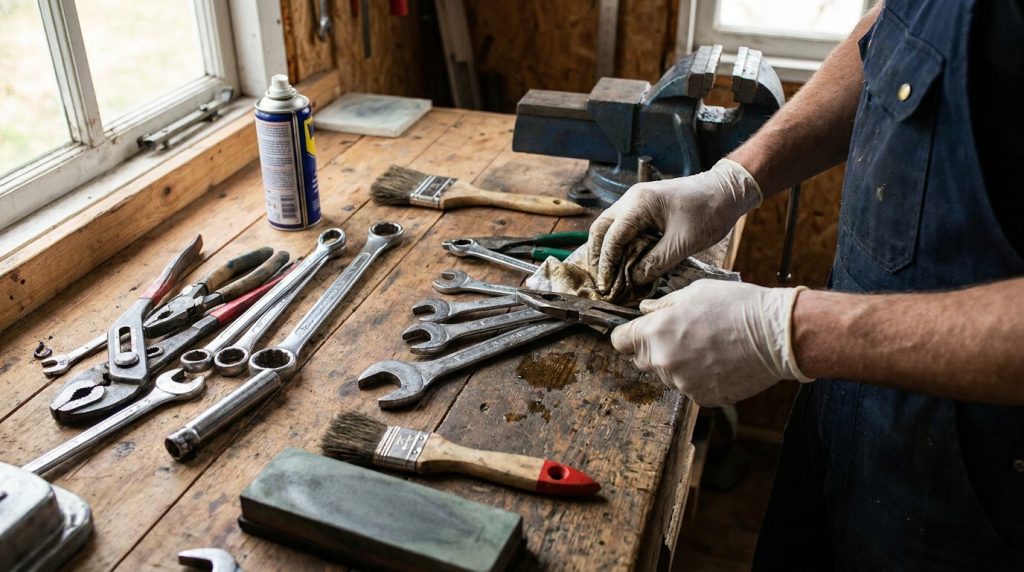
A well-maintained shop is a more profitable shop. Whether you run a fabrication bay, maintenance department, machine shop, farm repair operation, school lab, or small manufacturing facility in Coldwater, Branch County, or Southern Michigan, your tools are the backbone of daily production.
At CEM Industrial Supply, we work with industrial crews, maintenance teams, mechanics, and facilities that depend on reliable equipment every day. One lesson is consistent: tool maintenance is not just about keeping things clean. It directly affects:
- Operator safety
- Cut quality and accuracy
- Tool life and replacement costs
- Downtime and repair expenses
- OSHA-conscious housekeeping practices
- Production consistency
- Employee morale and professionalism
A dull drill bit, clogged grinder vent, damaged extension cord, contaminated lubricant, or uncalibrated torque wrench can create delays, scrap, injuries, and unnecessary spending. The goal of this shop tool maintenance guide is to give you a practical system you can use immediately.
This guide covers hand tools, power tools, pneumatic tools, cutting tools, abrasives, measuring tools, lubrication, storage, safety, and inspection routines. It also includes checklists and buying tips to help you decide when to maintain, repair, or replace shop tools.
For those looking to enhance their understanding of shop tool maintenance, a related article that provides valuable insights is available at this link: Shop Tool Maintenance Guide. This resource offers practical tips and best practices for keeping your tools in optimal condition, ensuring longevity and efficiency in your workshop.
Build a Preventive Maintenance System for Shop Tools
Tool maintenance should not depend on “when someone remembers.” The best shops use a preventive maintenance system that is simple, visible, and repeatable.
Create a Tool Inventory
Start by listing every tool category used in your shop. This does not have to be complicated. A spreadsheet, clipboard log, barcode system, or maintenance software can all work.
Include:
- Tool name and type
- Brand and model
- Serial number if available
- Purchase date
- Assigned department or person
- Maintenance interval
- Last inspection date
- Repair history
- Replacement parts used
- Safety concerns
For larger shops in Southern Michigan, especially those with shared tool rooms, a tool checkout system can reduce loss, improve accountability, and make maintenance easier to schedule.
Group Tools by Maintenance Frequency
Not every tool needs the same level of attention. A torque wrench, cordless drill, angle grinder, and machinist square all require different care.
Use these basic maintenance intervals:
| Tool Type | Daily | Weekly | Monthly | Annual |
||:|:|:|:|
| Hand tools | Wipe down, inspect damage | Organize storage | Rust prevention | Replace worn tools |
| Power tools | Clean dust, inspect cords | Check brushes/vents | Deep clean, test operation | Service or replace |
| Pneumatic tools | Oil, drain air lines | Inspect fittings | Check hoses/regulators | Rebuild if needed |
| Cutting tools | Clean chips, inspect edges | Sharpen/sort | Replace worn tooling | Review tooling program |
| Measuring tools | Wipe clean, store properly | Check zero | Verify accuracy | Calibrate |
| Safety equipment | Inspect before use | Restock PPE | Replace damaged gear | Review compliance |
Assign Responsibility
A maintenance plan only works if someone owns it. In smaller shops, this may be the owner, lead mechanic, or shop foreman. In larger facilities, assign responsibility by department.
Good accountability questions include:
- Who inspects shared tools?
- Who approves tool replacement?
- Who tracks calibration?
- Who restocks consumables?
- Who removes unsafe tools from service?
A damaged tool should never be placed back into circulation with the hope that “someone else will deal with it.”
Daily Shop Tool Maintenance Checklist
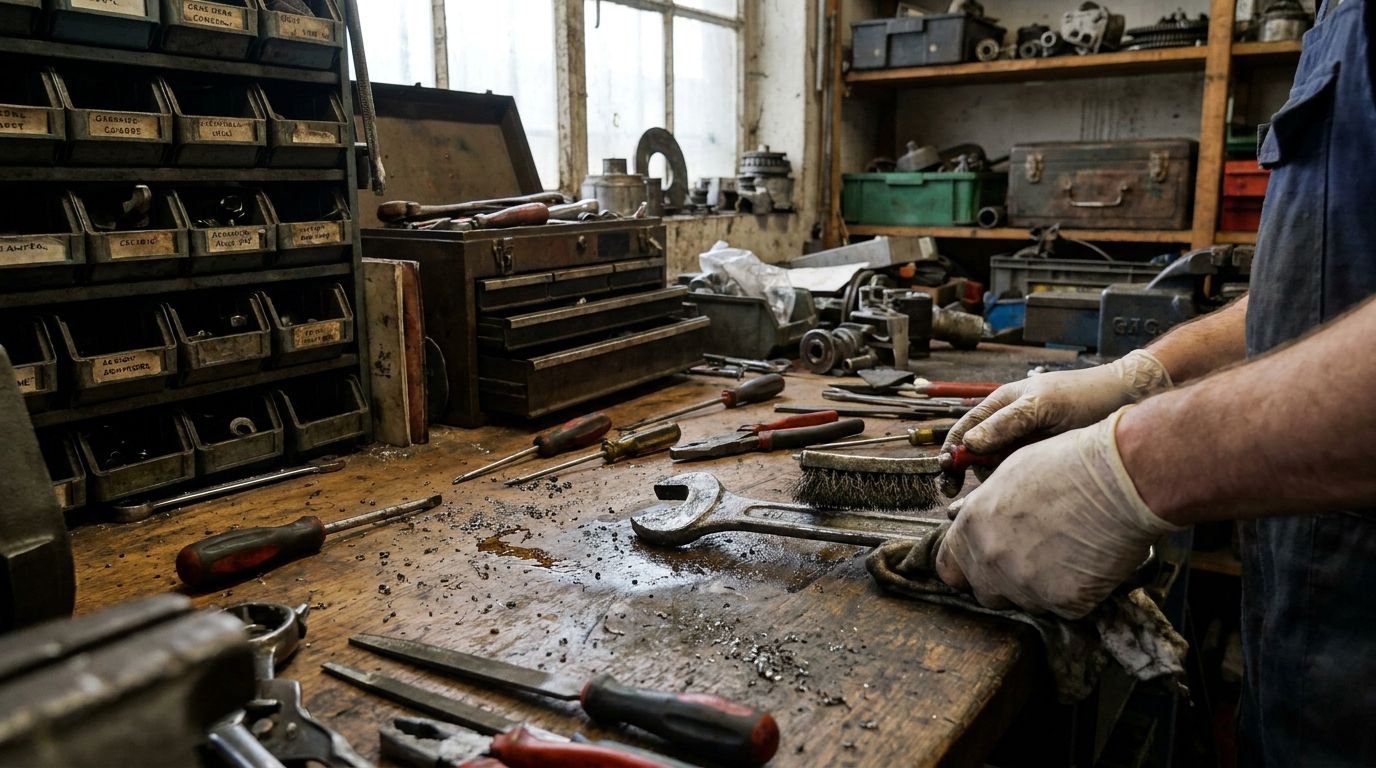
Daily maintenance is the foundation of tool reliability. Most problems are easier and cheaper to correct when caught early.
End-of-Shift Cleaning Routine
Before tools are returned to storage, operators should remove:
- Dust
- Metal chips
- Wood particles
- Grease buildup
- Coolant residue
- Grinding debris
- Adhesive or sealant
- Moisture
Use the right cleaning supplies for the tool and application. For many industrial environments, useful supplies include shop towels, brushes, compressed air, degreasers, rust inhibitors, lubricants, and storage bins. CEM Industrial Supply supports maintenance teams with common MRO supplies, cleaning products, lubricants, abrasives, cutting tools, and safety gear used in everyday shop operations.
Daily Inspection Points
Before and after use, check tools for obvious defects.
Look for:
- Cracked handles
- Loose heads on hammers
- Mushroomed punches or chisels
- Worn jaws on pliers or wrenches
- Frayed electrical cords
- Missing guards
- Damaged switches
- Bent drill bits
- Chipped cutting edges
- Loose air fittings
- Leaking hoses
- Missing labels or identification marks
If a tool is unsafe, tag it and remove it from service immediately.
Daily Tool Maintenance Checklist
Use this quick checklist at the end of each shift:
- [ ] Wipe down tools after use
- [ ] Remove chips, dust, and debris
- [ ] Inspect handles, guards, cords, and fittings
- [ ] Return tools to assigned storage
- [ ] Report missing or damaged tools
- [ ] Drain moisture from air lines or compressor tanks
- [ ] Lubricate pneumatic tools as required
- [ ] Clean measuring tools and return to protective cases
- [ ] Restock blades, discs, bits, gloves, and PPE
- [ ] Sweep work areas and remove trip hazards
Please visit our latest post at https://cemindustrialsupply.com/news/ for more information.
Hand Tool Maintenance Guide
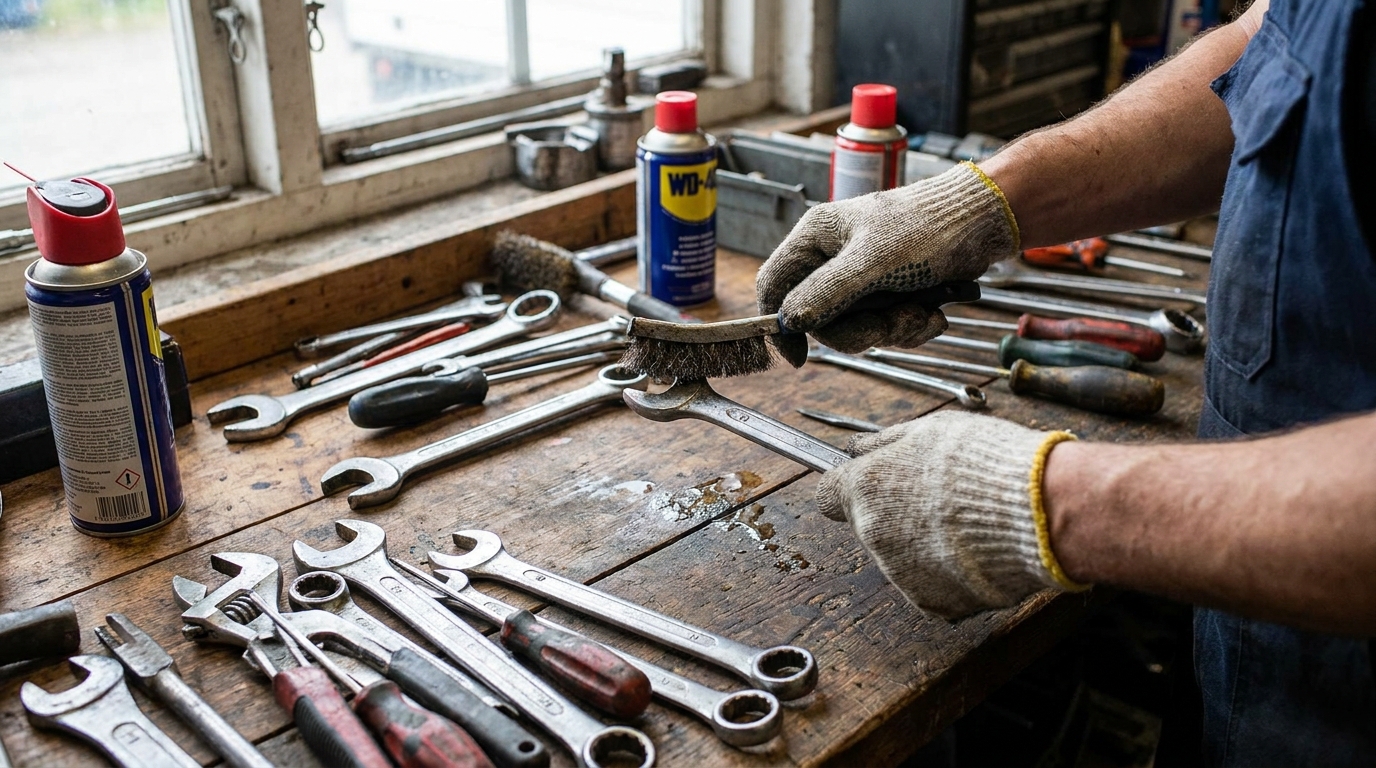
Hand tools are easy to overlook because they seem simple. But a damaged hand tool can be just as dangerous as a faulty power tool.
Wrenches, Sockets, and Ratchets
Wrenches and sockets should fit fasteners properly. Worn tools round off bolts, damage equipment, and increase injury risk.
Maintenance tips:
- Wipe oil and dirt from handles
- Inspect open-end wrench jaws for spreading
- Check socket drive ends for cracks
- Keep ratchet mechanisms clean and lightly lubricated
- Do not use cheater bars unless the tool is rated for it
- Replace sockets with rounded or cracked corners
- Store socket sets in trays to prevent loss and mismatching
For industrial maintenance teams in Coldwater and Branch County, high-use socket sets, impact sockets, and mechanic’s tools should be inspected frequently because they often see harsh service.
Pliers, Cutters, and Clamps
Pliers and cutters should open smoothly and grip securely.
Maintenance tips:
- Clean pivot points
- Apply a light lubricant to joints
- Check cutting edges for chips
- Avoid using pliers as hammers
- Replace cutters that no longer cut cleanly
- Remove rust with a wire brush or fine abrasive pad
- Store locking pliers with tension released
Clamps should also be inspected. Damaged clamp pads, bent screws, or cracked frames can reduce holding power and create safety risks during fabrication or assembly.
Hammers, Punches, and Chisels
Impact tools require special attention because failure can be sudden and severe.
Inspect for:
- Loose hammer heads
- Cracked wooden or fiberglass handles
- Mushroomed chisel heads
- Bent punches
- Chipped striking faces
- Splintering grips
Dress mushroomed punches and chisels with a grinder when appropriate, but do not overheat the tool. If the tool is severely deformed, replace it.
Always use safety glasses or face protection when working with striking tools. CEM Industrial Supply can help local shops source appropriate PPE, including eye protection, gloves, face shields, and hearing protection.
Screwdrivers and Hex Keys
A worn screwdriver tip is a common cause of stripped fasteners and hand injuries.
Maintenance tips:
- Keep tips clean and square
- Replace rounded Phillips or slotted tips
- Do not use screwdrivers as pry bars
- Store precision screwdrivers separately
- Keep hex keys organized by size
- Replace ball-end hex keys when rounded
For production environments, consider using properly sized bits and torque-controlled drivers where repeatability matters.
For those looking to enhance their understanding of tool care, the Shop Tool Maintenance Guide is an essential resource. It provides valuable insights into keeping your tools in top condition, ensuring they perform optimally for years to come. Additionally, you might find it helpful to explore related topics, such as the various types of pliers and their uses, which can be found in this informative article on pliers. This connection between maintenance and proper tool selection can significantly improve your overall efficiency in any project.
Power Tool Maintenance Guide
Power tools need consistent inspection because they combine speed, torque, electricity, heat, and vibration.
Corded Power Tools
Corded tools such as drills, grinders, saws, sanders, and rotary tools should be inspected before every use.
Check:
- Cord insulation
- Plug condition
- Trigger operation
- Guard placement
- Vents and cooling slots
- Brushes if applicable
- Unusual noise or vibration
- Burning smell
- Loose housings or missing screws
Never pull a tool by the cord. Never tape over damaged insulation and return the tool to service. A damaged cord should be repaired correctly or the tool should be replaced.
Cordless Power Tools and Batteries
Cordless tools are common in shops because they are convenient and mobile. Battery care is a major part of cordless tool maintenance.
Best practices:
- Keep battery terminals clean and dry
- Avoid storing batteries in extreme heat or cold
- Use the correct charger
- Do not use cracked battery packs
- Remove batteries before changing blades or bits
- Allow hot batteries to cool before charging
- Store batteries partially charged if not used for long periods
- Rotate batteries so the same pack is not always used first
In Michigan winters, avoid leaving lithium-ion batteries overnight in freezing service trucks or unheated areas when possible. Cold temperatures reduce performance and may affect charging.
Angle Grinders and Abrasive Tools
Angle grinders are among the most useful—and most hazardous—tools in a shop. Maintenance and setup are critical.
Inspect:
- Wheel guard condition
- Flange and nut condition
- Spindle threads
- Switch or paddle operation
- Side handle
- Power cord or battery
- Vent openings
- Wheel rating and expiration if applicable
Grinding wheels, flap discs, cut-off wheels, wire wheels, and sanding discs should be matched to the grinder’s RPM rating and application. CEM Industrial Supply offers industrial supply categories such as abrasives, grinding products, cutting wheels, and related PPE that support safe fabrication and repair work.
Never use a cut-off wheel for side grinding. Never remove a guard to fit a larger wheel. Never use an abrasive wheel that has been dropped, cracked, or exposed to moisture damage.
Drills, Drivers, and Saws
For drills and drivers:
- Clean chuck jaws
- Remove packed debris
- Check clutch settings
- Inspect bits for runout
- Replace worn driver bits
- Lubricate chuck lightly if recommended
For saws:
- Clean blade guards
- Inspect blade teeth
- Check arbor nuts
- Remove resin and pitch buildup
- Verify shoe or base alignment
- Replace dull blades promptly
Dull blades and bits force operators to push harder, which increases motor strain and injury risk.
Pneumatic Tool and Air System Maintenance
Pneumatic tools are reliable when supplied with clean, dry, regulated air. Most air tool failures come from moisture, contamination, or poor lubrication.
Air Compressor and Line Care
Compressed air systems require regular maintenance.
Checklist:
- Drain compressor tank daily
- Check oil level if oil-lubricated
- Inspect belts and guards
- Clean intake filters
- Check automatic drains
- Inspect hoses for cracks
- Replace damaged quick-connect fittings
- Set regulators to recommended PSI
- Use filters, regulators, and lubricators where appropriate
Moisture is a major concern in Southern Michigan shops due to seasonal humidity and temperature swings. Water in air lines can damage tools, reduce performance, and contaminate finishes.
Pneumatic Impact Tools, Ratchets, and Grinders
Air tools should be lubricated according to manufacturer recommendations. Many tools require a few drops of air tool oil before use.
Maintenance tips:
- Use correct air tool oil
- Do not over-oil if the process is sensitive to contamination
- Check air pressure at the tool, not just at the compressor
- Inspect retaining rings and anvils
- Keep exhaust ports clear
- Replace worn vanes or seals when performance drops
- Use whip hoses to reduce strain on fittings
Air Hose Safety
Air hoses can create trip hazards and whipping hazards.
Best practices:
- Route hoses away from walkways
- Use hose reels where practical
- Inspect couplers regularly
- Replace hoses with bulges, cuts, or exposed reinforcement
- Use safety clips and whip checks where required
- Never use compressed air to clean clothing or skin
Cutting Tool and Abrasive Maintenance
Cutting tools and abrasives are consumables, but maintenance and proper handling still matter. Correct storage and inspection improve performance and reduce waste.
Drill Bits, Taps, Dies, and End Mills
Cutting tools should be sorted, cleaned, and protected from damage.
Maintenance tips:
- Remove chips after use
- Store bits by size
- Keep taps and dies lightly oiled
- Use proper cutting fluid
- Sharpen drill bits when appropriate
- Replace chipped or broken tools
- Avoid mixing damaged tools with good inventory
- Use correct speed and feed for the material
Using the wrong cutting speed can destroy tools quickly. Stainless steel, aluminum, mild steel, cast iron, plastics, and hardened materials each require different strategies.
CEM Industrial Supply supports customers with categories such as cutting tools, drill bits, abrasives, lubricants, coolants, and MRO supplies that help keep machining, maintenance, and fabrication work moving.
Grinding Wheels, Cut-Off Wheels, and Flap Discs
Abrasives must be stored properly.
Storage tips:
- Keep wheels dry
- Store flat when required
- Avoid extreme temperature changes
- Keep discs away from oil and solvents
- Do not stack heavy items on abrasive wheels
- Inspect before mounting
- Match wheel to material and RPM
- Follow manufacturer expiration guidance for certain bonded abrasives
Comparison Table: Maintain, Sharpen, or Replace?
| Tool or Consumable | Maintain | Sharpen/Repair | Replace |
|||||
| Drill bit | Clean and oil | If dull but not chipped | If bent, cracked, or undersized |
| Tap | Clean chips, oil | Rarely practical | If chipped, dull, or binding |
| Saw blade | Clean pitch buildup | Carbide blades may be sharpened | If cracked, warped, or missing teeth |
| Grinding wheel | Store dry, inspect | Do not repair | If cracked, dropped, or glazed beyond dressing |
| Flap disc | Store dry | Not applicable | If worn, contaminated, or damaged |
| Chisel | Clean and oil | Dress mushroomed head | If cracked or badly deformed |
Measuring Tool Maintenance and Calibration
Precision tools deserve special care. A dirty caliper or dropped micrometer can produce bad measurements that lead to scrap, rework, or failed assemblies.
Calipers, Micrometers, and Dial Indicators
Maintenance tips:
- Wipe measuring faces before and after use
- Store in protective cases
- Keep away from grinding dust
- Do not use as clamps or scribes
- Avoid dropping or stacking tools
- Check zero before use
- Remove batteries from digital tools during long storage
- Keep lightly protected from corrosion
Squares, Levels, and Gauges
Inspection tools should be protected from dents and warping.
Best practices:
- Hang or case precision squares
- Keep levels clean and dry
- Inspect gauge blocks for nicks
- Do not engrave measuring surfaces
- Keep thread gauges organized
- Separate inspection tools from general-use tools
Calibration Schedule
Not every shop needs a full metrology lab, but any shop that depends on accurate measurements needs a calibration process.
Suggested schedule:
| Measuring Tool | Typical Check | Suggested Interval |
||||
| Tape measures | Hook and readability | Monthly |
| Calipers | Zero and known standard | Monthly to quarterly |
| Micrometers | Standard check | Quarterly to annually |
| Torque wrenches | Calibration | 6–12 months or after impact |
| Dial indicators | Repeatability | Quarterly |
| Levels/squares | Reference check | Semiannual |
If your shop serves regulated industries or critical applications, follow your quality system and customer requirements.
Lubrication, Rust Prevention, and Cleaning Supplies
Proper lubrication reduces friction, heat, corrosion, and wear. But using the wrong product can attract dirt, damage seals, or contaminate work.
Choose the Right Lubricant
Common shop lubricants include:
- Light machine oil
- Air tool oil
- Penetrating oil
- Cutting oil
- Grease
- Dry-film lubricant
- Rust preventative
- Anti-seize compound
- Chain and cable lubricant
- Silicone spray
Use the correct lubricant for the tool and environment. For example, air tool oil is not the same as motor oil, and cutting fluid is not the same as general-purpose lubricant.
Prevent Rust in Michigan Shops
Coldwater and Branch County shops see seasonal humidity, condensation, and winter temperature swings. Rust prevention is especially important for tool rooms, unheated garages, field service trucks, and storage areas.
Rust prevention tips:
- Keep tools dry
- Use desiccant packs in drawers
- Apply light oil to bare steel
- Avoid storing tools directly on concrete
- Use drawer liners
- Improve ventilation
- Wipe down tools after exposure to rain or snow
- Keep cutting tools in indexed holders or sealed containers
Cleaning Products to Keep on Hand
A practical shop maintenance shelf may include:
- Shop towels and rags
- Degreaser
- Contact cleaner
- Wire brushes
- Nylon brushes
- Scotch-style abrasive pads
- Rust remover
- Light oil
- Grease
- Anti-seize
- Threadlocker
- Compressed air accessories
- PPE for cleaning chemicals
Always review safety data sheets and use proper gloves, ventilation, and eye protection when working with chemicals.
Tool Storage and Organization
A clean storage system makes maintenance easier and prevents damage. Tools that are thrown into drawers or left on benches wear out faster.
Toolboxes, Cabinets, and Shadow Boards
Good storage options include:
- Mechanic’s tool chests
- Jobsite boxes
- Wall-mounted pegboards
- Shadow boards
- Drawer organizers
- Socket rails
- Drill indexes
- Parts bins
- Mobile carts
- Lockable cabinets
For shared shops, shadow boards are especially useful because missing tools are immediately visible.
Separate Clean Tools from Dirty Work
Precision measuring tools should not be stored with hammers, chisels, or greasy repair tools. Abrasives should not be stored near lubricants. Welding tools should have a designated area away from flammable materials.
Organize by function:
- Cutting and drilling
- Grinding and sanding
- Welding and fabrication
- Mechanical repair
- Electrical work
- Measuring and layout
- Fasteners and hardware
- Safety and PPE
- Lubricants and chemicals
Storage Checklist
- [ ] Store tools dry and clean
- [ ] Label drawers and bins
- [ ] Keep precision tools in cases
- [ ] Separate damaged tools for repair
- [ ] Lock up high-value tools
- [ ] Store abrasives away from moisture
- [ ] Keep batteries away from extreme temperatures
- [ ] Use blade guards and bit holders
- [ ] Keep heavy tools at waist level or below
- [ ] Review inventory monthly
Safety Tips for Shop Tool Maintenance
Maintenance is a safety activity, but it can create hazards if done carelessly.
Lockout and De-Energize Tools
Before maintaining a tool:
- Unplug corded tools
- Remove batteries
- Disconnect air lines
- Release stored pressure
- Let hot tools cool
- Secure blades or moving parts
- Follow manufacturer instructions
Never change a grinder wheel, saw blade, drill bit, or cutter while the tool is connected to power.
Use Proper PPE
Common PPE for tool maintenance includes:
- Safety glasses
- Face shield
- Cut-resistant gloves
- Chemical-resistant gloves
- Hearing protection
- Respirator or dust mask when needed
- Steel-toe footwear
- Protective clothing
CEM Industrial Supply supports industrial customers with safety and PPE categories that pair naturally with tool use, including eye protection, hand protection, hearing protection, respiratory protection, and shop safety supplies.
Know When to Remove a Tool from Service
Remove a tool from service if you find:
- Exposed wiring
- Cracked housing
- Missing guard
- Damaged trigger
- Excessive vibration
- Burning smell
- Leaking air motor
- Bent shaft or spindle
- Cracked wheel or blade
- Broken handle
- Failed calibration
- Any condition that makes operation questionable
Use a clear tag such as “DO NOT USE” and move the tool to a repair area.
Buying Guide: When to Repair or Replace Shop Tools
A good maintenance program saves money, but not every tool is worth repairing. Sometimes replacement is the safest and most cost-effective decision.
Repair Makes Sense When:
- The tool is high value
- Parts are available
- The repair cost is reasonable
- The tool meets current safety requirements
- Downtime can be managed
- Calibration can be restored
- The tool is part of a standardized platform
Examples include industrial torque wrenches, quality pneumatic impacts, premium grinders, drill presses, vises, and specialty tools.
Replacement Makes Sense When:
- Repair cost approaches replacement cost
- The tool has repeated failures
- Safety features are missing or outdated
- Accuracy cannot be restored
- Parts are unavailable
- Batteries or chargers are obsolete
- The tool no longer fits the work
For many common tools, replacing a damaged unit is cheaper than risking downtime or injury.
Tool Purchasing Considerations
When buying new shop tools, consider:
- Duty cycle
- Material being worked
- Operator skill level
- Ergonomics
- Power source
- Parts availability
- Warranty support
- Compatibility with existing batteries or accessories
- Safety features
- Total cost of ownership
For shops in Coldwater, Branch County, and Southern Michigan, working with a local industrial supplier can simplify sourcing. CEM Industrial Supply can help connect maintenance teams with practical categories such as hand tools, power tool accessories, abrasives, cutting tools, fasteners, lubricants, janitorial supplies, material handling products, and safety equipment.
Comparison Table: Light-Duty vs. Industrial-Grade Tools
| Feature | Light-Duty Tool | Industrial-Grade Tool |
||||
| Best For | Occasional use | Daily shop use |
| Durability | Moderate | High |
| Cost | Lower upfront | Higher upfront |
| Repairability | Often limited | Better parts support |
| Accuracy | Basic | More consistent |
| Ergonomics | Varies | Designed for extended use |
| Downtime Risk | Higher under heavy use | Lower when maintained |
| Best Value | Home or light shop | Production, maintenance, fabrication |
Seasonal Tool Maintenance for Coldwater and Southern Michigan Shops
Michigan’s seasons affect tools more than many people realize. Temperature swings, humidity, road salt, condensation, and outdoor service work can all shorten tool life.
Winter Maintenance Tips
During winter:
- Keep cordless batteries warm and dry
- Wipe tools exposed to snow or road salt
- Use rust preventative on bare metal
- Check extension cords for stiffness and cracking
- Drain compressor tanks frequently
- Watch for condensation in air lines
- Store chemicals according to temperature limits
Field service trucks should be inspected often. Tools that ride in vehicles see vibration, moisture, and temperature changes.
Spring and Summer Maintenance Tips
During warmer months:
- Watch humidity in storage areas
- Inspect fans and cooling vents
- Clean grinding dust more frequently
- Check air dryers and moisture separators
- Restock PPE for hot-weather work
- Review tool inventory before busy season
- Inspect outdoor extension cords and jobsite boxes
Fall Maintenance Tips
Fall is a good time to prepare for winter.
Checklist:
- [ ] Clean and oil hand tools
- [ ] Inspect air compressors
- [ ] Replace damaged cords
- [ ] Service heaters and ventilation equipment
- [ ] Stock rust inhibitors and lubricants
- [ ] Check batteries and chargers
- [ ] Organize snow-season service tools
- [ ] Review safety supplies and first aid kits
Common Shop Tool Maintenance Mistakes to Avoid
Even experienced crews can develop bad habits. Correcting these mistakes can quickly improve safety and efficiency.
Mistake 1: Cleaning with Too Much Compressed Air
Compressed air can drive chips into bearings, seals, switches, and eyes. Use brushes, vacuums, and controlled air pressure when appropriate. Never blow debris toward another worker.
Mistake 2: Ignoring Small Cord Damage
A nicked cord can become a shock hazard or fire risk. Remove damaged electrical tools from service until repaired properly.
Mistake 3: Using the Wrong Lubricant
Too much grease or the wrong oil can attract abrasive dust and cause premature wear. Follow manufacturer recommendations.
Mistake 4: Running Dull Tools
Dull cutting tools increase heat, vibration, and operator force. This damages the tool, the workpiece, and sometimes the machine.
Mistake 5: Poor Storage
Tools left on benches, floors, or damp shelves get damaged. Organized storage is one of the simplest forms of maintenance.
Mistake 6: Skipping Calibration
Measuring tools that “look fine” can still be inaccurate. If measurements matter, calibration matters.
Quick Reference: Shop Tool Maintenance Schedule
Use this maintenance schedule as a starting point and adjust it for your operation.
| Frequency | Maintenance Tasks |
|||
| Before Each Use | Inspect cords, guards, handles, bits, blades, wheels, hoses, and PPE |
| Daily | Clean tools, drain compressor, oil air tools, return tools to storage |
| Weekly | Organize toolboxes, inspect consumables, clean vents, check batteries |
| Monthly | Review damaged tools, verify measuring tools, inspect extension cords |
| Quarterly | Deep clean storage areas, check calibration needs, review inventory |
| Semiannual | Inspect seasonal tools, review safety procedures, replace worn PPE |
| Annual | Audit tool program, replace obsolete tools, calibrate critical instruments |
Final Shop Tool Maintenance Checklist
Use this checklist for a complete shop review.
- [ ] Every tool has an assigned storage location
- [ ] Damaged tools are tagged and removed from service
- [ ] Power cords and plugs are inspected
- [ ] Guards and safety devices are installed
- [ ] Cutting tools are sharp and organized
- [ ] Abrasives are stored dry and matched to RPM ratings
- [ ] Pneumatic tools are lubricated correctly
- [ ] Compressor tanks and air lines are drained
- [ ] Measuring tools are protected and calibrated
- [ ] Batteries and chargers are clean and undamaged
- [ ] Rust prevention products are available
- [ ] PPE is stocked and used
- [ ] Cleaning supplies are available
- [ ] Tool inventory is updated
- [ ] Employees know how to report unsafe tools
A maintenance checklist does not have to be complicated. The key is consistency.
FAQs About Shop Tool Maintenance
How often should shop tools be maintained?
High-use tools should be inspected daily and cleaned after every use. Pneumatic tools may need oil daily, while measuring tools may need monthly accuracy checks. Critical tools such as torque wrenches should follow a formal calibration schedule, often every 6 to 12 months depending on use.
What is the best way to prevent rust on shop tools in Michigan?
Keep tools clean, dry, and lightly oiled. Avoid storing tools on concrete or in damp areas. Use drawer liners, desiccant packs, rust inhibitors, and sealed storage when possible. In Coldwater and Branch County shops, seasonal humidity and winter condensation make rust prevention especially important.
When should I replace a hand tool?
Replace a hand tool when it is cracked, bent, badly worn, mushroomed, loose, or no longer fits properly. Examples include spread wrench jaws, chipped screwdriver tips, cracked hammer handles, and damaged sockets. If the tool creates a safety risk, remove it from service immediately.
Should pneumatic tools be oiled every day?
Many pneumatic tools require daily oiling, especially impacts, ratchets, drills, and grinders. However, always follow the manufacturer’s instructions. Use proper air tool oil and make sure the air supply is clean, dry, and regulated.
How do I know if an abrasive wheel is unsafe?
Do not use an abrasive wheel if it is cracked, chipped, dropped, water-damaged, expired, or rated below the grinder’s RPM. Also avoid wheels that show unusual wear or vibration. Always inspect wheels before mounting and keep guards in place.
Why do my drill bits get dull so quickly?
Common causes include excessive speed, wrong feed pressure, lack of cutting fluid, poor bit quality, work-hardening materials, and using the wrong bit type for the material. Proper speed, lubrication, and tool selection can greatly extend drill bit life.
How should cordless tool batteries be stored?
Store batteries in a clean, dry location away from extreme heat or cold. Avoid leaving batteries in freezing trucks or hot vehicles for long periods. Use the correct charger, inspect packs for cracks, and keep terminals clean.
What tools need calibration?
Torque wrenches, calipers, micrometers, dial indicators, gauges, and other precision measuring tools may require calibration. The frequency depends on use, accuracy requirements, and industry standards. If your measurements affect safety or quality, create a calibration log.
What supplies should every shop keep for tool maintenance?
A basic tool maintenance kit should include shop towels, brushes, degreaser, light oil, air tool oil, grease, rust preventative, anti-seize, contact cleaner, threadlocker, abrasive pads, storage organizers, tags for damaged tools, and proper PPE.
Where can shops in Coldwater or Branch County source tool maintenance supplies?
Shops in Coldwater, Branch County, and Southern Michigan can work with CEM Industrial Supply for industrial supply categories such as hand tools, cutting tools, abrasives, lubricants, fasteners, MRO supplies, material handling products, janitorial supplies, and safety/PPE items used in everyday maintenance operations.
FAQs
What is shop tool maintenance?
Shop tool maintenance refers to the regular care and upkeep of tools used in a workshop or industrial setting. This includes cleaning, lubricating, and inspecting tools to ensure they are in good working condition.
Why is shop tool maintenance important?
Proper maintenance of shop tools is important to ensure their longevity and optimal performance. Regular maintenance can prevent tool malfunctions, reduce the risk of accidents, and save money on costly repairs or replacements.
What are some common shop tool maintenance tasks?
Common shop tool maintenance tasks include cleaning tools after use, inspecting for damage or wear, lubricating moving parts, sharpening blades or edges, and storing tools properly to prevent rust or corrosion.
How often should shop tools be maintained?
The frequency of shop tool maintenance depends on the type of tool and how often it is used. Generally, tools should be inspected and cleaned after each use, and more thorough maintenance tasks should be performed on a regular schedule, such as monthly or quarterly.
What are the benefits of following a shop tool maintenance guide?
Following a shop tool maintenance guide can help ensure that tools are kept in good working condition, extend their lifespan, improve safety in the workshop, and save money by avoiding unnecessary repairs or replacements.