
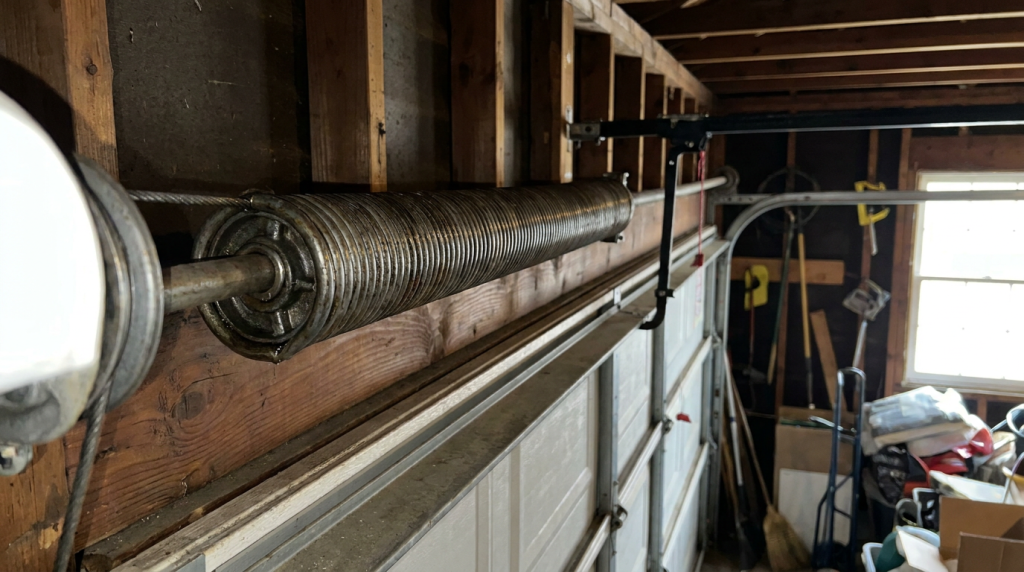
A broken garage door spring can stop your garage door from opening, leave your vehicle trapped inside, or create a serious safety hazard. While replacing a garage door spring may seem like a straightforward repair, it involves components under extreme tension that can cause severe injury if handled incorrectly.
This guide explains how garage door springs work, the warning signs of a failing spring, what homeowners can safely inspect, and why professional replacement is often the safest option.
What Does a Garage Door Spring Do?
Garage doors can weigh anywhere from 150 to over 400 pounds.
The spring system counterbalances that weight, allowing the door to:
- Open smoothly
- Close safely
- Stay balanced
- Reduce strain on the garage door opener
- Extend the life of the entire system
Without properly functioning springs, the opener is forced to lift the full weight of the door, often leading to expensive repairs.
Types of Garage Door Springs
Most residential garage doors use one of two spring systems.
Torsion Springs
Mounted above the garage door opening on a steel shaft.
Benefits include:
- Smoother operation
- Longer lifespan
- Better balance
- Greater durability
Because torsion springs are wound under extreme tension, they should only be replaced by trained professionals.
Extension Springs
Located along each side of the horizontal tracks.
These springs stretch as the door closes and contract as it opens.
Although generally less expensive, extension springs can also be dangerous if they fail or lack safety cables.
Signs Your Garage Door Spring Is Failing
Common warning signs include:
- Door won’t open completely
- Garage door feels unusually heavy
- Loud bang from the garage
- Visible gap in the spring
- Crooked garage door
- Jerky movement
- Opener struggling to lift the door
- Door closes too quickly
If any of these symptoms appear, discontinue normal operation until the system has been inspected.
Why Garage Door Springs Are Dangerous
Garage door springs store tremendous amounts of mechanical energy.
Improper handling can result in:
- Broken bones
- Deep cuts
- Eye injuries
- Lacerations
- Flying metal components
- Property damage
Garage door spring replacement consistently ranks among the most hazardous home repair projects.
What Homeowners Can Safely Do
Most homeowners can safely:
- Visually inspect springs
- Listen for unusual noises
- Check door balance (carefully)
- Lubricate springs
- Tighten accessible hardware
- Schedule professional service
Routine inspections help identify problems before complete spring failure occurs.
What You Should NOT Attempt
Avoid attempting to:
- Remove torsion springs
- Wind or unwind torsion springs
- Adjust spring tension
- Remove lift cables
- Remove bottom brackets
- Operate a damaged spring system
These repairs require specialized tools, training, and experience.
Tools Used by Professionals
Professional technicians commonly use:
- Winding bars
- Locking pliers
- Adjustable wrenches
- Torque tools
- Safety equipment
- Replacement springs matched to the door
- Precision measuring tools
Improvised tools should never be used for spring replacement.
What Happens During Professional Spring Replacement?
A qualified technician will typically:
- Inspect the complete garage door system
- Measure the existing springs
- Select properly matched replacements
- Replace worn springs
- Inspect cables and drums
- Lubricate moving components
- Balance the door
- Test opener operation
- Verify safety features
Replacing only the broken component without inspecting the rest of the system may leave hidden problems unresolved.
Should Both Springs Be Replaced?
If your garage door uses two torsion springs and one breaks, replacing both is generally recommended.
Reasons include:
- Equal spring tension
- Improved door balance
- Longer service life
- Fewer future service calls
The remaining spring has typically experienced similar wear.
How Long Do Garage Door Springs Last?
Spring life is measured in operating cycles.
Typical lifespan:
- Standard springs: approximately 10,000 cycles
- High-cycle springs: 20,000 to 50,000 cycles or more
One cycle equals:
One complete opening and one complete closing of the garage door.
Heavy daily use shortens spring life.
Garage Door Spring Maintenance
Routine maintenance can help extend spring life.
Recommended practices include:
- Lubricate springs twice per year.
- Listen for unusual noises.
- Schedule annual inspections.
- Keep tracks clean.
- Inspect cables regularly.
- Test door balance periodically.
- Replace worn rollers promptly.
Preventive maintenance often prevents larger repairs.
Common Mistakes to Avoid
Avoid these common errors:
Trying to replace torsion springs yourself
Using improper winding tools
Operating the opener with a broken spring
Ignoring unusual noises
Replacing only one worn spring
Attempting repairs without disconnecting power
Using incorrect replacement springs
Ignoring worn cables
Small mistakes during spring replacement can have serious consequences.
When to Call a Professional
Professional service is strongly recommended if:
- A torsion spring has broken.
- The door is crooked.
- Cables are loose or damaged.
- The opener struggles to lift the door.
- The spring has visible damage.
- The door falls rapidly when closing.
- You are unsure about any part of the repair.
Garage door springs are one repair where professional expertise provides significant safety benefits.
How Much Does Garage Door Spring Replacement Cost?
Costs vary depending on:
- Spring type
- Door size
- Number of springs
- Labor rates
- Emergency service
- Geographic location
While professional replacement represents an upfront investment, it is often less expensive than repairing damage caused by improper installation or spring failure.
Related Articles
Continue maintaining your home with these helpful guides:
- Fix a Squeaky Garage Door
- Repair Rusted Metal Gates
- Install a New Door Closer
- How to Choose a General Contractor in Michigan
- What to Expect from Basement and Foundation Contractors
Frequently Asked Questions
Can I replace a garage door spring myself?
For torsion spring systems, professional replacement is strongly recommended due to the extreme tension involved. Even experienced DIYers should fully understand the risks before attempting this repair.
How do I know if my garage door spring is broken?
Common signs include a loud bang, a visible gap in the spring, an unusually heavy door, or a garage door opener that struggles to lift the door.
Should both garage door springs be replaced at the same time?
If your door uses two springs and one fails, replacing both is generally recommended because both springs have experienced similar wear.
Can I open my garage door with a broken spring?
Attempting to operate a garage door with a broken spring can damage the opener and create a serious safety hazard. The door may be much heavier than normal and difficult to control.
How can I extend the life of my garage door springs?
Regular lubrication, annual inspections, proper door balance, and prompt repair of worn rollers or cables can help maximize spring life.
Protect Your Home with Safe Garage Door Repairs
Garage door springs are among the most heavily stressed components in your home. Understanding how they work, recognizing early warning signs, and knowing when to call a qualified professional can help prevent injuries, extend the life of your garage door system, and avoid costly emergency repairs.
Whether you’re maintaining a residential garage door, commercial overhead door, or workshop entrance, CEM Industrial Supply offers professional-grade lubricants, hand tools, safety equipment, fasteners, maintenance supplies, and hardware to help keep your garage door system operating safely and reliably.