
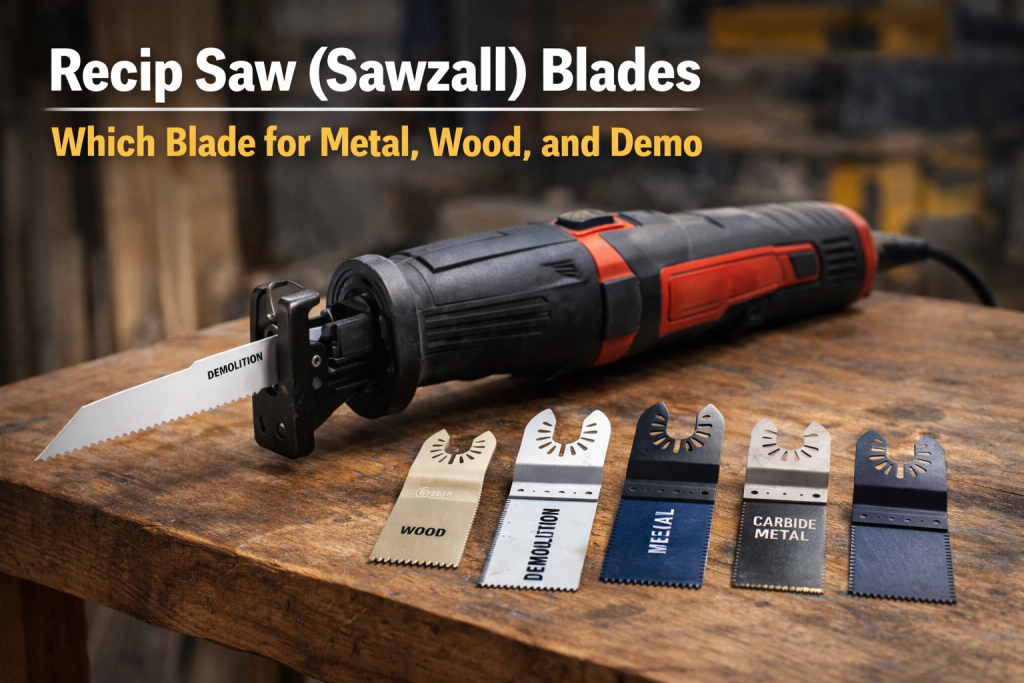
A reciprocating saw is only as good as the blade installed in it. When cuts are slow, teeth snap, or blades burn out in minutes, the problem is almost never the saw. It’s the blade choice.
At CEM Industrial Supply in Coldwater, Michigan, broken Sawzall blades are one of the most common counter questions we see. Once you understand how blade material, tooth count, and length affect performance, a reciprocating saw becomes one of the most effective demolition and cutting tools on the job site.
What a Reciprocating Saw Is Best Used For
Recip saws are designed for aggressive cutting where precision is secondary to access and power. The long stroke and straight cutting action make them ideal for demolition, rough cuts, and situations where other saws won’t fit.
A reciprocating saw is best for:
- Demolition and tear-out work
- Cutting wood with embedded nails
- Cutting metal pipe, conduit, and strut
- Pruning tree limbs
- Rough framing and remodeling
- Tight spaces where circular saws won’t fit
This is not a finish-cut tool. It’s built to cut through problems quickly.
Blade Selection Matters More Than the Tool
Blade choice determines cutting speed, blade life, and safety. Using the wrong blade causes:
- Slow cutting
- Excessive vibration
- Bent or snapped blades
- Premature motor wear
- Burned materials
Below is a clear breakdown of the main reciprocating saw blade types and when to use each.
Wood Cutting Blades
Wood blades are designed with aggressive teeth and wide spacing to remove material quickly.
Best for:
- Framing lumber
- Plywood
- OSB
- Pruning branches
These blades cut fast but dull instantly if they hit nails or screws. They are best used only when you’re confident the wood is clean.
Wood With Nails (Demolition) Blades
This is the most commonly used Sawzall blade on job sites.
Best for:
- Demolition work
- Remodeling
- Framing lumber with nails or screws
- Tear-out jobs
These blades are typically bi-metal and designed to survive impact with fasteners. They cut slower than pure wood blades but last far longer in real-world conditions.
If you only stock one type of reciprocating saw blade, this should be it.
Metal Cutting Blades
Metal blades use finer teeth and harder materials to handle steel without snapping.
Best for:
- Steel pipe
- EMT and rigid conduit
- Unistrut
- Sheet metal
- Rebar and threaded rod
Metal blades cut slower by design. Let the blade do the work and avoid forcing the saw, which overheats teeth and shortens blade life.
Thick Metal and Heavy-Duty Blades
For heavier steel, standard metal blades burn out quickly.
Best for:
- Thick wall pipe
- Structural steel
- Cast iron
- Heavy equipment repairs
These blades usually feature thicker bodies and specialized tooth geometry to withstand heat and vibration.
Carbide-Tipped Reciprocating Saw Blades
Carbide blades are built for extreme durability.
Best for:
- Stainless steel
- Cast iron
- Hardened fasteners
- Mixed demolition materials
Carbide blades cost more upfront but can outlast standard bi-metal blades many times over in tough applications. For repeated metal cutting, they save money long-term.
Blade Length: Why It Matters
Blade length affects both reach and control.
Short blades (6 inches):
- Better control
- Less vibration
- Ideal for tight spaces
Medium blades (9 inches):
- Most versatile
- Best for general demolition
Long blades (12 inches and up):
- Deep cuts
- Thick walls and assemblies
- More flex and vibration
Using a blade longer than necessary reduces control and increases breakage.
Tooth Count Explained (TPI)
Tooth count directly impacts cutting performance.
Low TPI (4–6):
- Fast cutting
- Rough cuts
- Best for wood and demo
Medium TPI (8–10):
- Balanced performance
- Wood with nails
High TPI (14–24):
- Slower cuts
- Cleaner results
- Best for metal
Matching TPI to material thickness is critical. Too many teeth clog; too few teeth chatter and snap.
Common Recip Saw Blade Mistakes
At CEM Industrial Supply, these mistakes cause most blade failures:
- Using wood blades on nails
- Forcing the saw instead of letting the blade cut
- Using long blades when short blades would work
- Cutting metal at full speed without control
- Running dull blades too long
If blades are snapping or overheating, the blade is wrong for the job.
Corded vs Cordless Recip Saws
Cordless recip saws offer mobility and convenience for demolition and punch-list work. Corded models provide sustained power for long cuts and heavy steel.
Blade choice matters more than the power source in most situations.
Choosing the Right Blade Saves Time and Money
At CEM Industrial Supply in Coldwater, Michigan, we help contractors, maintenance teams, and DIYers choose the right reciprocating saw blades for wood, metal, and demolition work. If your Sawzall isn’t cutting the way it should, the blade—not the saw—is usually the fix.
Stop in or call and talk to someone who uses these tools every day.
Frequently Asked Questions
What is the best Sawzall blade for demolition?
A bi-metal wood-with-nails blade offers the best balance of durability and cutting speed.
Can a reciprocating saw cut metal?
Yes, with fine-tooth metal or carbide-tipped blades designed for steel.
Why do Sawzall blades keep breaking?
Using the wrong blade, forcing the saw, or excessive blade flex causes most failures.
Do carbide blades really last longer?
Yes. For heavy metal and demolition work, carbide blades often outlast bi-metal blades several times over.