
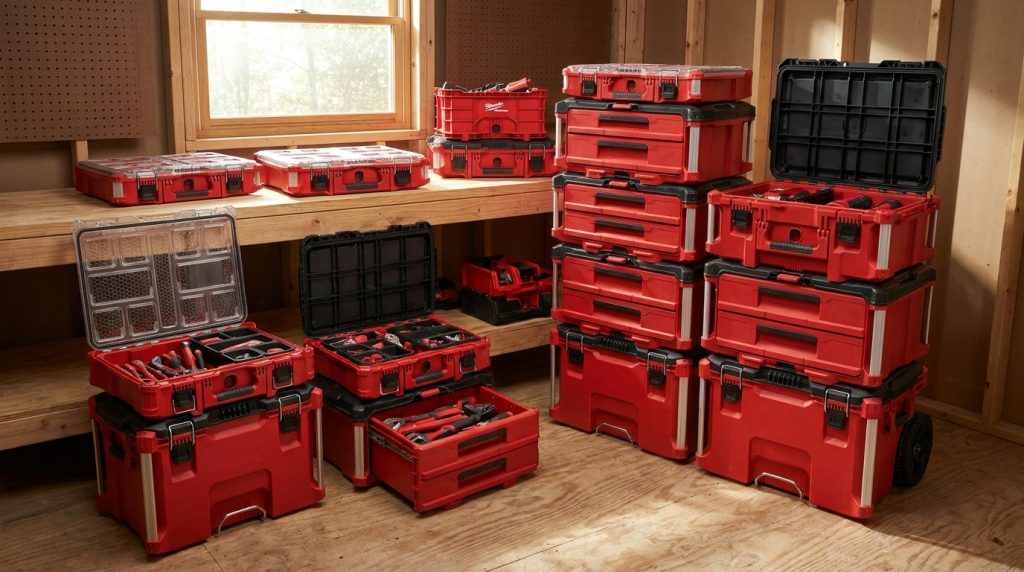
A good storage system does more than hold tools. It protects your investment, reduces downtime, improves jobsite safety, and helps technicians work faster. For contractors, maintenance teams, fabricators, mechanics, electricians, plumbers, and facility crews in Coldwater, Branch County, and across Southern Michigan, Milwaukee PACKOUT has become a go-to modular storage platform because it is rugged, customizable, and easy to move.
At CEM Industrial Supply, we work with professionals who need equipment that can handle daily abuse: service vans, plant floors, construction sites, farm shops, maintenance rooms, and field repair work. The right PACKOUT setup depends on what you carry, how often you move it, where you store it, and whether you need mobility, drawers, bins, wall storage, or specialty organizers.
This PACKOUT buying guide walks you through the main system options, how to build a setup for your trade, what to consider before buying, and how to maintain your storage system so it lasts.
If you’re considering a packout system for your tools and equipment, it’s essential to understand the signs that indicate when your industrial motor may need repair. For insights on this topic, you can check out the article on the signs that it’s time for industrial motor repair. This information can be invaluable as you assess the overall efficiency of your operations and ensure that your tools are in optimal condition. For more details, visit Signs It’s Time for Industrial Motor Repair.
What Is Milwaukee PACKOUT?
Milwaukee PACKOUT is a modular tool storage system built around interlocking boxes, organizers, totes, carts, drawers, rolling tool chests, wall plates, and accessories. Each component locks into the next, allowing users to build a custom storage stack for transporting tools and materials.
Key Features of PACKOUT Systems
Most PACKOUT components are designed with jobsite durability in mind. Depending on the specific item, features may include:
- Impact-resistant polymer construction
- Metal-reinforced corners
- IP-rated weather sealing on many tool boxes
- Heavy-duty latches
- Reinforced hinges
- Modular stacking and locking
- Rolling bases and two-wheel carts
- Drawer units for fast access
- Wall-mounted shop and van storage
- Removable bins and dividers
- Compatibility across the PACKOUT platform
For industrial users, the biggest advantage is flexibility. A maintenance mechanic may need drawers for hand tools, a deep box for power tools, and organizers for fasteners. An electrician may need compact organizers, a rolling base, and a tote for daily service calls. A plant maintenance department may use wall plates in the shop and rolling carts for field repairs.
Who Should Consider PACKOUT?
PACKOUT is a strong fit for:
- Industrial maintenance technicians
- Electrical contractors
- Plumbing and HVAC crews
- Mechanical contractors
- Fabricators and welders
- Mobile service technicians
- Facility maintenance departments
- Construction crews
- Agriculture and equipment repair shops
- Fleet mechanics
- DIY users who want professional-grade storage
If you frequently move tools between a truck, shop, jobsite, or facility, a modular storage system can save significant time.
PACKOUT System Basics: How the Platform Works
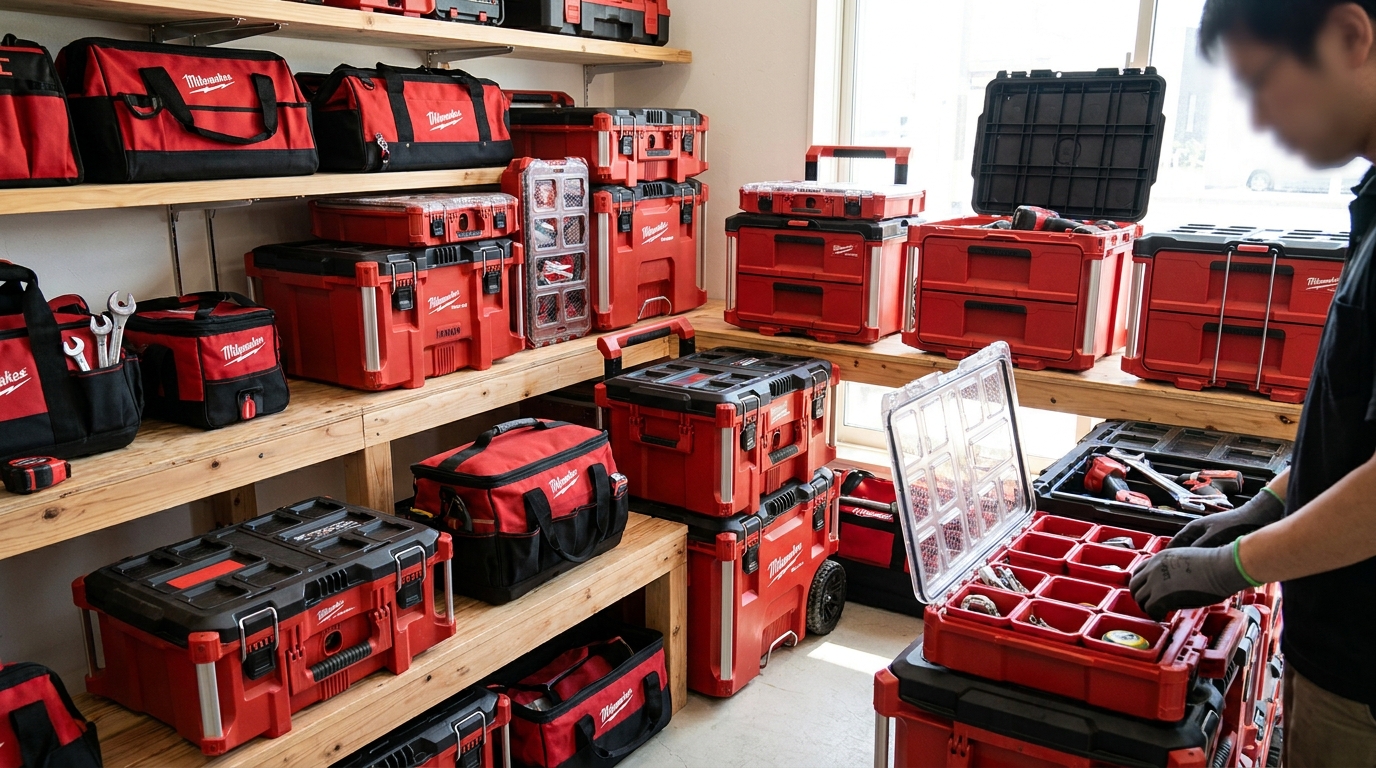
Before buying individual boxes, it helps to understand the foundation of the system. PACKOUT works best when you think in layers: base, storage, organization, mobility, and mounting.
The Base Layer
The base is what sits on the ground or supports the rest of your stack. Common base options include:
| Base Type | Best For | Advantages | Considerations |
|---|---|---|---|
| Rolling Tool Box | General contractors, electricians, plumbers | Easy to transport with ample storage capacity | Top boxes may need to be removed for full access to lower compartments |
| Rolling Tool Chest | Larger tools and heavier equipment | Greater storage capacity and durability for demanding jobs | Occupies more floor and vehicle space |
| Two-Wheel Cart | Tall PACKOUT stacks and frequent transport | Makes it easy to move multiple tool boxes at once | Offers less enclosed storage than a rolling tool box |
| Dolly | Shop floors, warehouses, and smooth surfaces | Excellent mobility for heavy loads and large PACKOUT stacks | Not well suited for rough or uneven terrain |
| Wall Mount Plate | Workshops, service vans, maintenance rooms | Saves floor space and keeps tools organized and accessible | Requires a secure mounting surface and permanent installation |
For field service, the rolling tool box is one of the most popular starting points. For shop or facility use, wall plates and drawer units are often more efficient.
The Storage Layer
This layer includes tool boxes, crates, drawers, and cabinets. The goal is to separate tools by use and access frequency.
Examples include:
- Deep tool boxes for power tools
- Medium boxes for specialty tools
- Drawer units for hand tools
- Cabinets for bulkier supplies
- Open crates for quick-access items
- Compact tool boxes for smaller kits
The Organization Layer
Organizers are designed for parts, fasteners, connectors, fittings, blades, anchors, terminals, and small components.
PACKOUT organizers are especially valuable for:
- Electrical connectors
- Plumbing fittings
- Nuts, bolts, washers, and screws
- Drill bits and driver bits
- Abrasives
- Small hand tools
- Hydraulic fittings
- Grease fittings
- O-rings and seals
The Mobility Layer
Mobility matters if you work across a large facility, jobsite, campus, or service territory. Coldwater and Branch County crews often move between industrial plants, farm operations, municipal buildings, and construction sites. The easier your tools move, the less fatigue your team experiences.
Mobility options include:
- Rolling boxes
- Tool chests
- Dollies
- Hand trucks
- Carts
- Compact stacks for service vans
The Mounting Layer
Wall mounting is one of the most overlooked PACKOUT advantages. Wall plates let you organize boxes, cabinets, batteries, chargers, and accessories vertically.
This works well in:
- Service vans
- Maintenance shops
- Tool rooms
- Garages
- Work trailers
- Fabrication areas
- Fleet service bays
Please visit our latest post at https://cemindustrialsupply.com/news/ for more information.
Best PACKOUT Options by Use Case
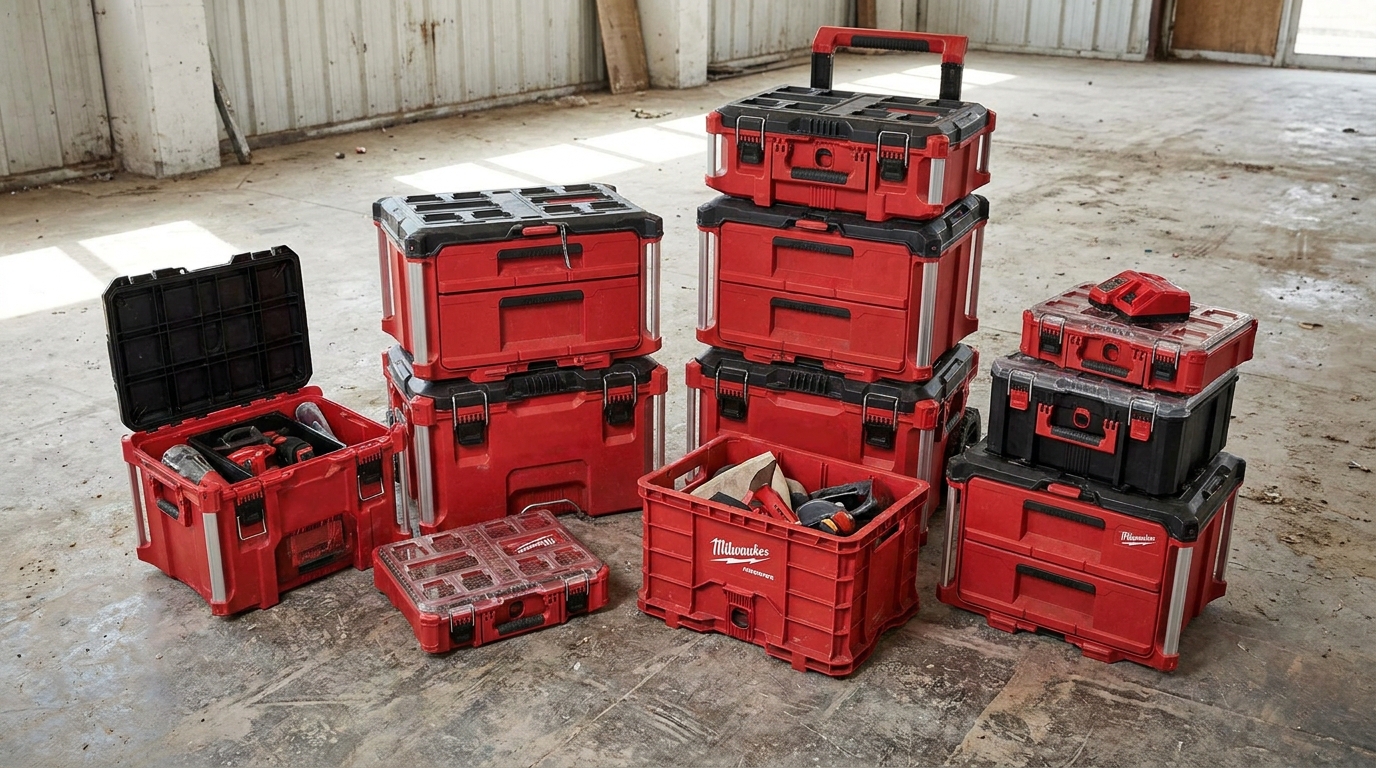
The best PACKOUT setup is not always the biggest one. It should match how you work. Below are practical recommendations based on common industrial and trade applications.
For Industrial Maintenance Technicians
Industrial maintenance teams often carry a broad range of tools: wrenches, sockets, meters, diagnostic equipment, spare parts, lubricants, cutting tools, and safety supplies.
Recommended setup:
- Rolling tool box or rolling tool chest
- 3-drawer or 4-drawer tool box
- Medium tool box for power tools
- Compact organizer for electrical terminals and fasteners
- Tool tote for daily rounds
- Wall plates for shop storage
Best features to prioritize:
- Drawer access without unstacking
- Strong separation of hand tools and parts
- Space for PPE and lockout/tagout supplies
- Easy mobility across plant floors
CEM product categories that pair well:
- Hand tools
- Power tools
- Cutting tools
- Abrasives
- PPE and safety supplies
- Lubricants and chemicals
- Electrical supplies
- Janitorial and facility maintenance products
For Electricians
Electricians need fast access to connectors, wire nuts, terminals, testers, hand tools, and power tools. A combination of drawers and organizers is usually ideal.
Recommended setup:
- Compact rolling base
- Low-profile organizers
- 3-drawer unit for hand tools
- Tool tote for active work
- Wall-mounted storage in van or shop
Common items to organize:
- Wire connectors
- Terminals
- Anchors
- Screws
- Labels
- Drill bits
- Hole saws
- Test meters
- Screwdrivers and pliers
Buying tip: Choose clear-lid organizers for small parts. Being able to see what is inside saves time and prevents duplicate purchases.
For Plumbers and HVAC Technicians
Plumbing and HVAC work requires fittings, valves, gauges, hand tools, power tools, bits, sealants, and specialty accessories. Moisture resistance and portability are important.
Recommended setup:
- Rolling tool box
- Deep organizer for fittings
- Medium tool box for drills and press tools
- Open crate for quick-access items
- Compact organizer for screws, anchors, and bits
Best features to prioritize:
- Weather-resistant boxes
- Removable bins
- Easy-to-clean surfaces
- Space for sealants and consumables
- Heavy-duty wheels for uneven jobsites
For Mechanics and Fleet Service
Mechanics often benefit from drawer storage because sockets, ratchets, wrenches, and specialty tools need organized access.
Recommended setup:
- Rolling chest or dolly base
- 4-drawer tool box
- Compact organizer for clips, fuses, and fittings
- Deep box for impact tools
- Wall plates for shop-mounted accessories
A drawer-heavy PACKOUT stack can function like a mobile tool cabinet, especially in fleet shops, repair bays, and field service trucks.
For Construction Crews
Construction crews need durability, weather protection, and easy transportation. The setup should handle rough conditions and frequent loading/unloading.
Recommended setup:
- Rolling tool box or rolling chest
- Large tool box for power tools
- Organizer for fasteners
- Crate for bulky supplies
- Cooler or jobsite accessory storage if needed
Best features to prioritize:
- Impact resistance
- Metal-reinforced corners
- Strong latches
- Large wheels
- Stack security during transport
For Shop and Warehouse Teams
For stationary or semi-mobile use, wall plates, dollies, and drawer boxes create a clean storage system.
Recommended setup:
- Wall-mounted PACKOUT plates
- Drawer units for hand tools
- Cabinets for shop supplies
- Organizers for small parts
- Dolly for moving kits around the building
This is a good option for industrial facilities in Southern Michigan that want cleaner maintenance rooms and better inventory control.
If you’re looking to enhance your understanding of effective purchasing strategies, you might find the article on innovative supply chain solutions particularly insightful. It discusses how modern approaches can significantly impact manufacturing efficiency and overall success. For more details, check out the article here. This resource complements the Packout Buying Guide by providing a broader context on how strategic sourcing can optimize your operations.
PACKOUT Buying Guide: How to Choose the Right Components
A smart buying decision starts with your work habits. Do not just buy the biggest stack. Buy the system that reduces wasted motion.
Step 1: List What You Need to Carry
Start with a simple inventory. Sort your tools and supplies into categories:
- Power tools
- Hand tools
- Measuring tools
- Electrical parts
- Fasteners
- Consumables
- PPE
- Batteries and chargers
- Specialty trade tools
- Chemicals, lubricants, or sealants
- Documentation, manuals, or tags
Once you know what needs storage, you can choose boxes by function.
Step 2: Decide Between Boxes and Drawers
One of the biggest PACKOUT decisions is whether to use standard boxes or drawers.
| Storage Type | Best For | Pros | Cons |
|---|---|---|---|
| Standard Tool Boxes | Power tools, batteries, bulky equipment, jobsite transport | Durable, weather-resistant, and stackable | Top boxes must often be removed to access lower boxes |
| Drawer Units | Hand tools, sockets, meters, and frequently used equipment | Quick access without unstacking the system | Typically less weather-resistant than sealed tool boxes |
| Organizers | Fasteners, electrical connectors, hardware, and small parts | Excellent organization, visibility, and compartmentalization | Not suitable for storing larger tools |
| Totes | Daily carry, service calls, and frequently used hand tools | Lightweight with quick, convenient access | Provides less protection from weather and impacts |
| Crates | Bulky supplies, extension cords, odd-shaped materials | Open design makes loading and unloading easy | Contents are exposed to weather and debris |
For many professional users, the best solution is a hybrid setup: rolling base, drawer unit, organizer, and tote.
Step 3: Consider Access Frequency
Put the most-used items where they are easiest to reach.
High-frequency items:
- Pliers
- Screwdrivers
- Tape measures
- Utility knives
- Markers
- Meters
- Common sockets
- Driver bits
- PPE
- Fasteners
These belong in totes, drawers, or top organizers.
Low-frequency items:
- Specialty pullers
- Large power tools
- Backup batteries
- Specialty fittings
- Rarely used accessories
These can go in lower boxes or deeper storage.
Step 4: Think About Vehicle and Shop Space
Before buying, measure:
- Truck bed height
- Van shelving clearance
- Trailer storage dimensions
- Shop wall space
- Doorway width
- Bench height
- Floor space
- Service cart clearance
This is especially important for mobile technicians around Coldwater and Branch County who may need to move tools in and out of vans or service trucks daily.
Step 5: Match Capacity to Weight
A common mistake is overloading one box. PACKOUT components are tough, but your back, shoulders, and workflow still matter.
Better approach:
- Split heavy tools across multiple boxes
- Use drawers for dense hand tools
- Keep the rolling base for heavier items
- Use compact organizers for small parts
- Avoid building stacks too tall to safely move
If one box becomes difficult to lift safely, reorganize it.
If you’re looking to enhance your understanding of essential tools for construction projects, the Packout Buying Guide is a great resource. It provides insights into selecting the right equipment for your needs. Additionally, you might find it helpful to explore a related article on contractor levels, squares, and lines, which can further assist you in making informed decisions about your tool selection. For more information, check out this informative article.
PACKOUT Comparison Table: Common Components and Best Uses
| PACKOUT Component | Best Application | Ideal User | Buying Notes |
|---|---|---|---|
| Rolling Tool Box | Mobile jobsite storage | Contractors, electricians, maintenance technicians | An excellent starting point for most PACKOUT systems |
| Rolling Tool Chest | High-capacity mobile storage | Construction crews, mechanics, industrial maintenance | Best for larger tools and heavier equipment |
| 2-Wheel Cart | Transporting stacked PACKOUT boxes | Service technicians, facility maintenance teams | Ideal for users with multiple modular tool boxes |
| Dolly | Shop and warehouse mobility | Maintenance departments, fabrication shops | Performs best on smooth indoor surfaces |
| 3-Drawer Tool Box | Hand tools, meters, and frequently used equipment | Electricians, mechanics, maintenance technicians | Provides quick access without unstacking |
| 4-Drawer Tool Box | Small tools, sockets, and precision instruments | Mechanics, technicians, industrial maintenance | Excellent for organizing detailed tool collections |
| Compact Organizer | Fasteners, drill bits, anchors, electrical terminals | Electricians, HVAC technicians, maintenance professionals | Clear lid allows quick identification of contents |
| Deep Organizer | Pipe fittings, connectors, and larger hardware | Plumbers, industrial maintenance, repair technicians | Accommodates bulkier small parts |
| Tool Tote | Daily carry tools and service essentials | Service technicians, maintenance professionals | Complements rolling storage for grab-and-go work |
| Wall Mount Plate | Vertical storage in shops, vans, and trailers | Fleet operators, workshops, maintenance departments | Maximizes storage while saving valuable floor space |
| Crate | Bulky supplies, extension cords, and odd-shaped materials | Construction crews, warehouse personnel, shop technicians | Open design offers maximum versatility and fast access |
Building a PACKOUT System by Budget
Not every user needs to buy a full system at once. One advantage of PACKOUT is that you can build over time.
Starter PACKOUT Setup
Best for apprentices, DIY users, small service kits, and occasional jobsite use.
Recommended components:
- Rolling tool box or compact tool box
- Compact organizer
- Tool tote
Good for:
- Basic hand tools
- Drill/driver kit
- Fasteners
- PPE
- Bits and accessories
Why it works: It gives you mobility, organization, and room to grow.
Professional Service Setup
Best for electricians, HVAC techs, plumbers, and maintenance professionals.
Recommended components:
- Rolling tool box
- 3-drawer tool box
- Low-profile organizer
- Deep organizer
- Tool tote
Good for:
- Daily service work
- Small parts
- Meters and hand tools
- Power tools
- Repair supplies
Why it works: It balances access, mobility, and storage capacity.
Industrial Maintenance Setup
Best for plant maintenance, fleet service, municipal crews, and facility departments.
Recommended components:
- Rolling tool chest or dolly
- 3-drawer and/or 4-drawer units
- Medium tool box
- Multiple organizers
- Wall plates in the maintenance shop
- Crates or cabinets for bulk supplies
Good for:
- Multi-trade tool kits
- Spare parts
- Lockout/tagout materials
- Electrical and mechanical tools
- Preventive maintenance supplies
Why it works: It supports both mobile repair work and organized shop storage.
Vehicle-Based Setup
Best for service vans, utility trucks, and contractors working across Southern Michigan.
Recommended components:
- Wall plates
- Compact organizers
- Drawer units
- Secure rolling base
- Totes for grab-and-go service
Buying tip: Always plan around vehicle safety. Storage should be secured to prevent shifting during sudden stops.
PACKOUT for Local Professionals in Coldwater, Branch County, and Southern Michigan
Industrial work in Southern Michigan often involves changing conditions: winter weather, gravel lots, agricultural environments, manufacturing facilities, municipal sites, and active construction projects. Tool storage needs to handle cold, moisture, dirt, and frequent transport.
Why Local Conditions Matter
Professionals in Coldwater and surrounding Branch County communities often need storage that can handle:
- Snow, rain, and mud
- Unheated shops and trailers
- Long service routes
- Manufacturing maintenance calls
- Farm and equipment repair environments
- Construction jobsite abuse
- Frequent loading and unloading
PACKOUT boxes with weather-resistant seals, reinforced corners, and strong latches are well suited for these conditions.
How CEM Industrial Supply Supports Local Buyers
CEM Industrial Supply serves professionals who need dependable tools, supplies, and equipment without guesswork. When selecting a PACKOUT system, it helps to work with an industrial supplier that understands how storage fits into the larger work environment.
Relevant CEM product categories that pair naturally with PACKOUT include:
- Power tools and accessories
- Hand tools
- Safety and PPE
- Abrasives and cutting products
- Fasteners and anchors
- Electrical supplies
- Welding and fabrication supplies
- Material handling products
- Janitorial and facility maintenance supplies
- Lubricants, chemicals, and shop supplies
A well-planned storage system makes these products easier to manage, transport, and protect.
What to Store in PACKOUT Organizers
PACKOUT organizers can make a major difference in productivity. Small parts are often the easiest items to lose and the most frustrating to replace mid-job.
Fasteners and Anchors
Use organizers for:
- Screws
- Bolts
- Nuts
- Washers
- Concrete anchors
- Drywall anchors
- Self-tapping screws
- Lag bolts
- Structural fasteners
Tip: Label each bin clearly and keep similar sizes grouped together.
Electrical Supplies
For electrical work, organizers are ideal for:
- Wire nuts
- Crimp connectors
- Ring terminals
- Spade terminals
- Cable ties
- Heat shrink tubing
- Ground screws
- Fuses
- Wire labels
- Small fittings
A clear-lid organizer helps prevent opening multiple boxes to find one connector.
Cutting and Drilling Accessories
Store these items separately to prevent damage:
- Drill bits
- Driver bits
- Hole saws
- Step bits
- Reciprocating saw blades
- Utility blades
- Carbide burrs
- Taps and dies
- Abrasive discs
For cutting tools and abrasives, separation is important. It protects edges, prevents chipping, and helps you track inventory.
Maintenance and Repair Parts
Industrial maintenance crews can organize:
- Grease fittings
- Hydraulic adapters
- O-rings
- Seals
- Retaining clips
- Cotter pins
- Hose clamps
- Bearings
- Small pneumatic fittings
This is especially useful for preventive maintenance teams that need to respond quickly to equipment issues.
PACKOUT Safety Tips for Jobsites and Shops
Tool storage affects safety more than many teams realize. Poorly organized tools lead to trips, strains, falling objects, damaged equipment, and wasted time.
Safe Loading and Lifting
Follow these safety practices:
- Keep heavy items in lower boxes
- Avoid overloading top components
- Use rolling bases for heavy loads
- Lift with your legs, not your back
- Use two people for oversized or overloaded boxes
- Do not stack higher than you can safely control
- Secure stacks before transport
Safe Vehicle Transport
When transporting PACKOUT in vans, trailers, or trucks:
- Secure boxes with straps or mounted plates
- Do not leave loose heavy boxes in cargo areas
- Keep drawers latched during travel
- Avoid blocking exits or visibility
- Store sharp tools in closed boxes
- Keep chemicals upright and separated
- Check that loads cannot shift during sudden braking
Jobsite Safety
On active jobsites:
- Keep storage out of walkways
- Close lids and drawers after use
- Do not use boxes as ladders unless the product is specifically designed for that purpose
- Keep sharp tools protected
- Separate electrical parts from liquids
- Store PPE where it is easy to access
- Avoid creating unstable stacks on uneven ground
Shop Safety
For shop and facility use:
- Anchor wall plates correctly
- Follow weight ratings
- Keep heavy components mounted low
- Inspect mounting hardware periodically
- Keep aisles clear
- Return tools to assigned locations
- Label shared storage systems
PACKOUT Maintenance Tips
A storage system lasts longer when it is maintained like any other piece of industrial equipment.
Routine Cleaning
Clean PACKOUT boxes regularly, especially after muddy, dusty, or oily work.
Basic cleaning steps:
- Remove tools and parts.
- Vacuum out dust, chips, and debris.
- Wipe surfaces with a damp cloth.
- Use mild soap for heavier grime.
- Dry completely before storing tools.
- Check seals for dirt or damage.
- Reorganize before reloading.
Avoid harsh solvents unless approved for the material. Strong chemicals may damage plastic or seals.
Inspect Latches, Hinges, and Wheels
At regular intervals, inspect:
- Latches
- Hinges
- Handles
- Wheels
- Axles
- Drawer slides
- Mounting cleats
- Seals
- Dividers
- Wall plate hardware
If a latch or wheel is damaged, address it before it causes a failure during transport.
Prevent Moisture Problems
Even weather-resistant storage should be treated carefully.
Best practices:
- Dry wet tools before storage
- Use rust prevention products where appropriate
- Avoid storing wet gloves or rags in sealed boxes
- Keep desiccant packs in sensitive tool boxes
- Inspect metal tools for rust
- Store meters and electronics in protected compartments
Keep the System Organized
Once a PACKOUT setup becomes cluttered, it loses efficiency.
Monthly organization checklist:
- Remove duplicate tools
- Restock commonly used parts
- Discard damaged consumables
- Replace worn blades and bits
- Re-label bins
- Move rarely used items to lower-priority storage
- Check PPE expiration dates where applicable
- Update inventory lists
PACKOUT Buying Checklist
Use this checklist before purchasing your first PACKOUT system or expanding an existing one.
Tool and Supply Checklist
Ask:
- What tools do I carry every day?
- What items do I only use occasionally?
- Do I need storage for power tools?
- Do I need drawers for hand tools?
- Do I carry small parts or fasteners?
- Do I need weather resistance?
- Will I store batteries and chargers?
- Do I need space for PPE?
- Will multiple people use this system?
Mobility Checklist
Consider:
- Will I move the system daily?
- Am I working on rough ground or smooth floors?
- Do I need to load into a truck or van?
- Is a rolling box enough, or do I need a cart?
- Will the stack be too tall or heavy?
- Do I need one large system or several smaller kits?
Vehicle and Shop Checklist
Measure:
- Van shelf height
- Truck bed depth
- Trailer door clearance
- Shop wall space
- Floor storage area
- Workbench clearance
- Aisle width
- Mounting surface strength
Organization Checklist
Plan:
- Labels for bins and drawers
- Separate boxes by trade or task
- Dedicated organizers for fasteners
- Dedicated storage for cutting tools
- PPE storage location
- Battery and charger storage
- Consumable restocking process
- Shared user rules
Common PACKOUT Buying Mistakes to Avoid
Even experienced professionals can overbuy or build the wrong setup. Avoid these common mistakes.
Mistake 1: Buying Only Large Boxes
Large boxes are useful, but they can become cluttered. If every tool is thrown into one big box, you lose the benefit of modular storage.
Better solution: Combine large boxes with drawers and organizers.
Mistake 2: Ignoring Drawer Access
If you need hand tools constantly, drawers are often worth the investment. They let you access tools without removing upper boxes.
Better solution: Use drawer units for frequently used hand tools, meters, and precision items.
Mistake 3: Overloading the Stack
A tall, heavy stack can be hard to control, especially on ramps, gravel, snow, or uneven jobsites.
Better solution: Keep heavy items low and consider multiple smaller stacks.
Mistake 4: Forgetting About Labels
Unlabeled organizers quickly become confusing, especially in shared work environments.
Better solution: Label bins, drawers, and boxes by trade, tool type, or task.
Mistake 5: Not Planning for Growth
Many buyers start with one or two boxes, then add more as needs change.
Better solution: Choose components that fit into a long-term system, including wall storage, drawers, and organizers.
Mistake 6: Using the Wrong Box for Chemicals
Some chemicals, solvents, adhesives, and lubricants may require special storage consideration.
Better solution: Keep chemicals upright, sealed, and separated from tools or electrical parts. Follow SDS recommendations and workplace safety rules.
Recommended PACKOUT Setups by Trade
Electrician PACKOUT Setup
Recommended:
- Rolling tool box
- 3-drawer unit
- Low-profile organizer
- Compact organizer
- Tool tote
Store:
- Pliers
- Screwdrivers
- Meters
- Wire strippers
- Connectors
- Anchors
- Drill bits
- Labels
- PPE
Mechanic PACKOUT Setup
Recommended:
- Rolling chest or dolly
- 4-drawer unit
- Deep tool box
- Compact organizer
- Wall plate for shop
Store:
- Sockets
- Ratchets
- Wrenches
- Impact tools
- Grease fittings
- Clips
- Fuses
- Specialty tools
Maintenance Technician PACKOUT Setup
Recommended:
- Rolling tool box
- Drawer unit
- Medium tool box
- Deep organizer
- Tote
- Wall storage
Store:
- Hand tools
- Power tools
- Meters
- Lockout/tagout supplies
- Fasteners
- Bearings
- Fittings
- PPE
Contractor PACKOUT Setup
Recommended:
- Rolling tool box
- Large tool box
- Organizer
- Crate
- Tote
Store:
- Cordless tools
- Batteries
- Chargers
- Blades
- Bits
- Fasteners
- Layout tools
- Safety gear
How PACKOUT Supports Productivity and Inventory Control
A modular storage system helps teams manage tools and supplies more efficiently. This is particularly important in industrial facilities where downtime is expensive.
Faster Job Preparation
With organized PACKOUT kits, crews can grab the right stack for the task. For example:
- Electrical repair kit
- HVAC maintenance kit
- Welding support kit
- Fastener kit
- Preventive maintenance kit
- Emergency breakdown kit
This reduces time spent searching the shop before a job begins.
Reduced Tool Loss
Assigned storage locations make it easier to see what is missing. Drawer layouts, labeled bins, and clear organizers all help reduce tool loss.
Better Restocking
When fasteners, fittings, blades, and consumables are organized, it is easier to know when to reorder. This helps avoid delays caused by missing parts.
Improved Professional Appearance
A clean, organized tool system communicates professionalism to customers, supervisors, and jobsite partners. For service teams, presentation matters.
PACKOUT and Related Industrial Supplies to Keep on Hand
A storage system is most effective when paired with the right job-ready supplies. Depending on your work, consider stocking your PACKOUT with items from these CEM Industrial Supply categories.
Hand Tools
Common items:
- Pliers
- Screwdrivers
- Wrenches
- Socket sets
- Hex keys
- Hammers
- Pry bars
- Utility knives
- Tape measures
Power Tool Accessories
Recommended:
- Drill bits
- Driver bits
- Saw blades
- Hole saws
- Grinding wheels
- Cut-off wheels
- Sanding discs
- Batteries
- Chargers
Safety and PPE
Keep essential safety items accessible:
- Safety glasses
- Gloves
- Hearing protection
- Respirators or masks
- High-visibility gear
- First aid supplies
- Lockout/tagout devices
- Knee pads
Fasteners and Anchors
Useful stock:
- Machine screws
- Wood screws
- Sheet metal screws
- Bolts
- Nuts
- Washers
- Concrete anchors
- Self-drilling screws
Maintenance and Shop Supplies
Helpful items:
- Lubricants
- Penetrants
- Anti-seize
- Threadlocker
- Cleaning wipes
- Marking tools
- Rags
- Flashlights
- Batteries
- Measuring tools
Final PACKOUT Buying Advice
The best PACKOUT system is the one that fits your workflow. Start with your daily tasks, then choose components that improve access, mobility, and organization. For most professionals, a strong first setup includes a rolling base, a drawer unit, a compact organizer, and a tote. From there, expand with wall plates, additional organizers, and specialty storage as your needs grow.
For industrial users in Coldwater, Branch County, and Southern Michigan, durability and mobility matter. Weather, rough surfaces, vehicle transport, and demanding work environments can quickly expose weak storage. Milwaukee PACKOUT is popular because it offers a scalable system that works in trucks, shops, facilities, and jobsites.
A well-built PACKOUT setup helps protect your tools, reduce downtime, improve safety, and keep your crew working efficiently.
FAQs
1. What is the best PACKOUT item to start with?
For most users, a rolling tool box is the best starting point because it provides storage, mobility, and a base for stacking other PACKOUT components. If you work mainly in a shop, a drawer unit and wall plate may be a better first purchase.
2. Are PACKOUT drawers worth it?
Yes, especially if you need frequent access to hand tools, meters, sockets, or small equipment. Drawers allow you to access tools without unstacking your system, which saves time during service work and maintenance tasks.
3. What PACKOUT setup is best for electricians?
Electricians usually benefit from a rolling base, 3-drawer unit, compact organizers, low-profile organizers, and a tool tote. This combination handles hand tools, meters, connectors, fasteners, bits, and daily service tools.
4. Can PACKOUT be used in service vans?
Yes. PACKOUT wall plates, drawer units, compact organizers, and boxes are commonly used in service vans. Make sure everything is properly secured so storage components do not shift during travel.
5. Is PACKOUT weather-resistant?
Many PACKOUT tool boxes and organizers have weather-resistant designs, and some include rated seals. However, users should still dry wet tools before storage and avoid leaving sensitive electronics exposed to moisture.
6. What is better: PACKOUT boxes or drawers?
Boxes are better for bulky tools, power tools, and weather-resistant storage. Drawers are better for frequent-access hand tools and organized shop or vehicle storage. Many professionals use both.
7. How do I keep my PACKOUT organized?
Use labels, dividers, removable bins, and a consistent layout. Keep frequently used tools at the top or in drawers. Review your setup monthly to remove clutter and restock supplies.
8. Can PACKOUT help reduce tool loss?
Yes. When every tool has a dedicated location, it is easier to notice missing items. Drawer units, organizers, and labeled bins are especially helpful for shared maintenance teams.
9. What PACKOUT setup is best for industrial maintenance?
A strong industrial maintenance setup includes a rolling tool chest or rolling box, drawer units, organizers for parts, a medium box for power tools, and wall plates in the shop. This supports both mobile repairs and organized storage.
10. Where can professionals in Coldwater or Branch County buy PACKOUT and related supplies?
CEM Industrial Supply serves industrial, contractor, maintenance, and facility customers in Coldwater, Branch County, and Southern Michigan with tool storage solutions and related supplies such as hand tools, power tool accessories, PPE, fasteners, abrasives, and maintenance products.