
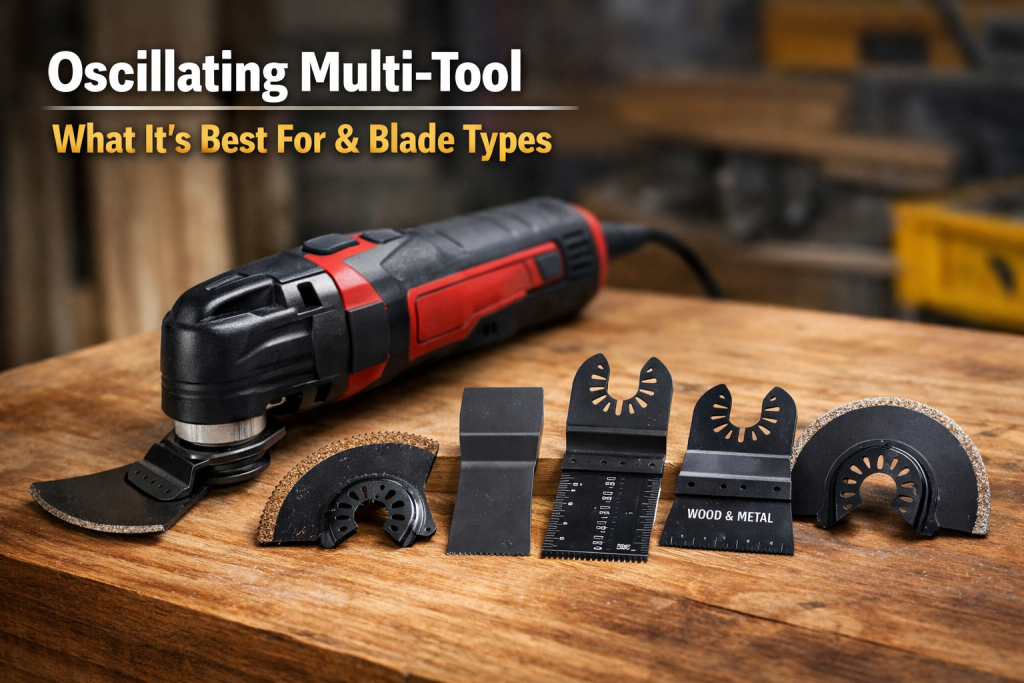
The oscillating multi-tool is one of the most versatile tools on a job site or in a workshop—but it’s also one of the most misunderstood. When people say an oscillating tool “doesn’t cut very well,” the problem is almost never the tool itself. The issue is blade selection and improper use.
At CEM Industrial Supply in Coldwater, Michigan, this is one of the most common tool questions we hear. Once you understand what an oscillating multi-tool is actually designed to do—and which blade matches which task—it quickly becomes one of the most useful tools you own.
What an Oscillating Multi-Tool Is Best Used For
Oscillating tools don’t spin like grinders or saws. Instead, the blade moves side-to-side in a very tight arc. That motion gives you control, precision, and access that other tools simply can’t match.
An oscillating multi-tool is best for:
- Flush cutting trim, door jambs, and flooring transitions
- Plunge cuts where no starter hole is possible
- Cutting in tight corners and confined spaces
- Controlled material removal without overcutting
- Detail work where accuracy matters more than speed
This is not a production cutting tool. It’s a precision problem-solver designed for finish work, repair, and situations where other tools are too aggressive or too bulky.
What an Oscillating Tool Is Not Designed For
Understanding the limits of the tool is just as important as knowing its strengths.
Oscillating tools are not ideal for:
- Long straight cuts
- Heavy demolition
- Thick structural steel
- High-speed material removal
- Replacing a circular saw, grinder, or reciprocating saw
If speed is the goal, another tool is usually the better choice.
Blade Choice Is Everything
Blade selection determines how well an oscillating tool performs. Using the wrong blade is the fastest way to burn through accessories, overheat the tool, and get poor results.
Below is a practical breakdown of the most common blade types and exactly when to use them.
Wood and Drywall Blades
These blades are designed for fast, clean cuts in soft materials.
Best for:
- Wood
- Drywall
- PVC
- Soft plastics
Common uses include trimming door jambs, cutting drywall openings, notching wood, and flush-cutting baseboards or trim. These blades cut quickly but dull rapidly if they hit nails or screws.
If there’s any chance of hidden metal, switch to a different blade type.
Bi-Metal Blades (Wood With Nails)
Bi-metal blades are one of the most useful and forgiving options.
Best for:
- Wood with embedded nails
- Framing lumber
- Remodeling and repair work
These blades combine hardened teeth with a flexible steel body. They don’t shatter when they hit fasteners and last much longer on mixed-material cuts. For many contractors, this is the best all-around oscillating tool blade.
Carbide Blades for Hard and Abrasive Materials
Carbide blades don’t cut the same way toothed blades do. Instead, they grind material away, which makes them slower but far more durable.
Best for:
- Cement board
- Plaster
- Fiberglass
- Thin metal
- Hardwood with abrasive coatings
Carbide blades cost more upfront but last significantly longer when used on hard or abrasive materials. If standard blades keep wearing out too fast, carbide is usually the solution.
Grout Removal Blades
Grout removal blades are specifically designed for tile work and bathroom repairs.
Best for:
- Removing grout
- Cleaning joints for tile repair
- Precision grout removal without cracking tile
The key to grout removal is letting the blade do the work. Excess pressure generates heat and shortens blade life.
Scraper Blades for Adhesives and Caulk
Scraper blades turn an oscillating tool into an efficient surface-cleaning tool.
Best for:
- Removing caulk
- Adhesive cleanup
- Flooring glue
- Paint and residue removal
- Gasket removal
Plastic scrapers work best on delicate surfaces, while steel scrapers handle stubborn materials.
Sanding Pads for Detail Work
Oscillating sanding pads are ideal for areas where round sanders can’t reach.
Best for:
- Corners and edges
- Trim touch-ups
- Spot repairs
- Tight profiles
They won’t replace a random orbit sander, but they’re extremely useful for finishing work.
Common Mistakes That Ruin Blades and Tools
At CEM Industrial Supply, these mistakes show up constantly:
- Using wood blades on nails or screws
- Applying too much pressure instead of letting the tool oscillate
- Running dull blades too long
- Using cheap blades on abrasive materials
- Expecting speed instead of control
If the tool is overheating or vibrating excessively, the blade is usually wrong for the job or already worn out.
Corded vs Cordless Oscillating Multi-Tools
Cordless oscillating tools are ideal for punch-list work, remodeling, and mobility-focused jobs. Corded models provide consistent power for longer sessions without battery changes.
Many professionals eventually use both, depending on the job.
What to Look for in a Quality Oscillating Tool
Key features that actually matter:
- Variable speed control
- Tool-free blade changes
- Vibration reduction
- Broad blade compatibility
Blade availability and fitment matter just as much as the tool itself.
Get the Right Blade the First Time
At CEM Industrial Supply in Coldwater, Michigan, we help contractors, maintenance teams, and serious DIYers choose the right oscillating multi-tool blades for the job. If you’re burning through blades too fast or struggling with clean cuts, stop in or call and talk to someone who actually uses these tools.
Frequently Asked Questions
What is an oscillating multi-tool best used for?
Precision cutting, flush cuts, plunge cuts, grout removal, scraping, and detail sanding in tight spaces.
Can an oscillating tool cut metal?
Yes, with bi-metal or carbide blades, but it’s designed for controlled cuts, not heavy steel.
Why do oscillating tool blades wear out so quickly?
Using the wrong blade, pushing too hard, or cutting abrasive materials with wood blades.
Are oscillating multi-tool blades universal?
Many are, but not all mounts are identical. Always check compatibility before buying.