Organizing a workshop can be much more than arranging chairs, preparing notes, and sending invitations. In the spirit of Bhakti Yoga, it can become an offering of love.

Bhakti Yoga is the path of devotion—learning to connect with God through love, chanting, prayer, service, and sincere spiritual practice. The Sanskrit word bhakti means loving devotion. It is not limited to one culture, background, or life situation. Anyone can practice bhakti by offering their heart, time, talents, and intentions to the Divine.

When we organize a workshop with this consciousness, even simple tasks become sacred. Preparing a room becomes service. Welcoming guests becomes worship. Sharing wisdom becomes compassion. Cleaning up afterward becomes gratitude.

Whether your workshop is about meditation, kirtan, yoga philosophy, community care, creativity, wellness, or spiritual growth, the way you organize it matters. A well-organized workshop helps people feel safe, included, and inspired. It creates a space where learning can happen naturally and hearts can open gently.

In the Bhagavad-gita, one of the central scriptures of Bhakti Yoga, Sri Krishna says, “Whatever you do, whatever you eat, whatever you offer or give away… do that as an offering to Me” (Bhagavad-gita 9.27). This teaches us that ordinary work can become spiritual when offered with love.

So let us explore how to organize your workshop practically, thoughtfully, and devotionally.

If you’re looking to enhance your workshop organization skills, you might find it beneficial to explore related topics such as maintenance and troubleshooting. A great resource on this subject is the article discussing gearbox oil leaks, which outlines common causes and whether they require urgent attention. You can read more about it here: Gearbox Oil Leaks: Causes and Urgency. This information can help you maintain a well-organized and efficient workspace by addressing potential issues before they escalate.

Begin with a Clear Intention

Before choosing the date, booking the space, or creating a flyer, pause and ask: “Why am I offering this workshop?”

A clear intention is the heart of your workshop. It helps you make decisions with purpose. It keeps your planning grounded when details become overwhelming. It also helps participants feel the deeper meaning behind the event.

Ask What You Hope to Serve

A workshop is not only about what you want to teach. It is also about whom you hope to serve.

Ask yourself:

  • Who is this workshop for?
  • What need does it meet?
  • What transformation or support do I hope participants receive?
  • How can this offering help people grow spiritually, emotionally, or practically?

In Bhakti Yoga, service is called seva. Seva means selfless service offered with love. When you organize your workshop as seva, you move from “How can I impress people?” to “How can I genuinely help?”

This shift brings humility and clarity.

Create a Simple Workshop Purpose Statement

Your purpose statement does not need to be complicated. It can be one or two sentences.

For example:

“This workshop is designed to help beginners experience mantra meditation in a welcoming way and learn how chanting can support daily peace and spiritual connection.”

Or:

“This workshop offers practical tools from Bhakti Yoga to help participants build a simple home prayer practice with sincerity and joy.”

A clear purpose makes it easier to plan the content, choose the right audience, and communicate the value of your workshop.

Offer the Intention in Prayer

Before moving into logistics, take a quiet moment to pray.

Prayer does not have to be formal. You might simply say:

“Dear Lord, please guide this workshop. May it be helpful. May everyone who comes feel welcomed, uplifted, and connected to You. Please let me be an instrument of service.”

This humble prayer can change the whole mood of your planning. It reminds you that you are not carrying everything alone.

Know Your Audience and Welcome Everyone

A successful workshop begins with understanding the people you hope to serve. In devotional community, we try to be people-first. That means we do not organize only around our own knowledge or preferences. We consider the real lives, needs, questions, and backgrounds of participants.

Some people may be new to spiritual life. Some may come from different faith traditions. Some may be curious but unsure. Some may have practiced yoga for years but never explored Bhakti Yoga. Some may be seeking healing, friendship, meaning, or simply a peaceful evening.

A welcoming workshop honors all of them.

Make the Language Accessible

If you use Sanskrit words, explain them simply.

For example:

  • Bhakti means loving devotion to God.
  • Kirtan means devotional chanting, often sung together with music.
  • Mantra means a sacred sound or prayer that helps focus the mind and awaken the heart.
  • Seva means service offered with love.
  • Satsang means spiritual association, or gathering with others for truth and upliftment.

These explanations help people feel included instead of confused. They also show respect for the depth of the tradition.

Consider Different Experience Levels

If your workshop includes chanting, meditation, scripture discussion, or group sharing, remember that people may have different comfort levels.

You can say things like:

“If you are new to chanting, you are welcome to simply listen.”

“There is no pressure to share. You may participate in the way that feels sincere and comfortable.”

“You do not need prior experience with Bhakti Yoga to be here.”

These simple statements create emotional safety.

Make Your Workshop Inclusive

Welcoming readers and participants of all backgrounds means being thoughtful about accessibility, culture, and spiritual language.

Consider:

  • Is the location easy to find?
  • Is the event affordable or donation-based?
  • Are people with different physical abilities able to participate?
  • Are dietary needs considered if food is served?
  • Does the invitation make it clear that beginners are welcome?
  • Are you avoiding language that sounds exclusive or judgmental?

Bhakti Yoga teaches that every soul is beloved by God. In the Bhagavad-gita, Krishna explains that all beings are His parts and parcels, eternally connected to Him. When we remember this, we naturally want to create spaces where people feel respected and cared for.

Please check out our latest article at https://cemindustrialsupply.com/news/ for more information.

Plan the Workshop Structure with Care

A thoughtful structure allows your workshop to flow smoothly. It helps participants relax because they feel guided. It also helps you stay focused.

The best workshop structure is clear but not rigid. Leave room for the heart to move, for questions to arise, and for genuine connection to happen.

Choose the Right Length

Think carefully about the length of your workshop.

A short introductory workshop may be 60 to 90 minutes. A deeper immersion may be three hours, half a day, or a full weekend.

For beginners, shorter is often better. People can receive something meaningful without feeling overwhelmed. If the topic is rich, you can always offer a follow-up workshop later.

A simple 90-minute Bhakti workshop might include:

  • 10 minutes of welcome and settling in
  • 15 minutes of gentle introduction to the topic
  • 20 minutes of chanting or meditation
  • 20 minutes of teaching and reflection
  • 15 minutes of group discussion or journaling
  • 10 minutes of closing prayer and next steps

Create a Natural Flow

A workshop should feel like a journey.

Begin by welcoming people. Help them feel present. Then introduce the theme. Offer teaching in digestible pieces. Include an experiential practice. Allow time for reflection. End with encouragement and a clear next step.

For a devotional workshop, the flow might move from the outer to the inner:

  1. Arrival and grounding
  2. Warm introduction
  3. Shared chanting or prayer
  4. Wisdom from scripture
  5. Practical application
  6. Reflection and questions
  7. Closing blessing

This kind of flow supports both the mind and the heart.

Balance Teaching and Experience

People usually remember what they experience more than what they hear.

If your workshop is about chanting, let people chant. If it is about prayer, guide them in prayer. If it is about service, invite them to consider one act of seva they can offer. If it is about spiritual growth, give them time to reflect honestly.

Bhakti Yoga is practical. It is not only philosophy. It is lived through the voice, hands, heart, and daily choices.

The Srimad-Bhagavatam, a beloved Bhakti scripture, describes hearing and chanting about the Divine as a powerful process for cleansing the heart. Practically, this means that when we gather to hear sacred wisdom and chant holy names, our inner life can become clearer, softer, and more connected.

If you’re looking to enhance your workshop organization, you might find it helpful to explore strategies for selecting the right tools and equipment. A related article that delves into this topic is available at Choosing the Right Battery Platform, which discusses the differences between various battery systems and how they can impact your workshop efficiency. By understanding these options, you can make informed decisions that contribute to a more organized and productive workspace.

Prepare the Content with Devotional Depth

Good content is not only informative. It is nourishing.

When organizing your workshop, think about what participants truly need to receive. Avoid trying to say everything. A workshop becomes powerful when it has a clear theme and a few meaningful teachings that people can remember and apply.

Select One Main Theme

Choose one central focus.

Examples include:

  • How to begin a daily chanting practice
  • The meaning of mantra meditation
  • Prayer as a personal relationship with God
  • Service as a path to spiritual growth
  • Understanding the basics of Bhakti Yoga
  • Creating a sacred space at home
  • Using the Bhagavad-gita for daily guidance
  • Building community through kirtan and satsang

One theme keeps the workshop grounded. If too many ideas are included, participants may feel inspired but unclear. Simplicity often serves best.

Include Scripture in a Practical Way

Authentic Bhakti scriptures carry deep spiritual power, but they should be shared with care. Choose verses or teachings that support the workshop theme, and explain them in everyday language.

For example, if your workshop is about offering daily life to God, you might reference Bhagavad-gita 9.26, where Krishna says that if one offers Him a leaf, a flower, fruit, or water with love and devotion, He accepts it.

The practical explanation is beautiful: God is not looking for wealth or external perfection. He receives the love behind the offering. This means everyone can begin spiritual life wherever they are. A simple glass of water, a flower, a song, or a sincere prayer can become sacred when offered with love.

If your workshop is about chanting, you might explain that mantra meditation helps bring the wandering mind back to divine remembrance. A mantra is not ordinary sound. It is sacred sound that carries spiritual meaning and presence.

Share Personal Reflection Humbly

Personal stories can help people connect, but they should be offered humbly. Avoid making yourself the center. Instead, share how the practice has helped you grow, struggle honestly, or depend more on grace.

You might say:

“When I first began chanting, my mind wandered constantly. But I was encouraged to keep showing up with sincerity. Over time, I noticed that chanting gave my heart a place to rest.”

This kind of sharing makes the path feel accessible. It reminds participants that spiritual growth is a journey, not a performance.

Organize the Practical Details

Devotional intention is essential, but practical organization is also a form of care. When details are handled well, participants can focus on the experience rather than confusion.

In Bhakti Yoga, love is expressed through attention. A clean room, clear directions, enough seating, and a thoughtful schedule all communicate, “You are welcome here.”

Choose the Right Space

The space should support the mood of the workshop.

Ask:

  • Is it clean and peaceful?
  • Is there enough room for the expected number of people?
  • Is it accessible?
  • Is there space for sitting, movement, chanting, or discussion?
  • Is the sound quality suitable?
  • Are restrooms available?
  • Is parking or public transportation clear?

If the workshop includes kirtan, consider acoustics and instruments. If it includes meditation, consider lighting and noise levels. If it includes food, make sure there is a clean serving area.

Prepare Materials in Advance

Depending on your workshop, you may need:

  • Handouts
  • Journals or paper
  • Pens
  • Name tags
  • Meditation beads
  • Scripture excerpts
  • A printed schedule
  • A sign-in sheet
  • Musical instruments
  • A speaker or microphone
  • Water or herbal tea
  • Cushions or chairs
  • Altar items such as flowers, candles, or sacred images

Prepare these early. Last-minute rushing can disturb your own heart and make it harder to be present with guests.

Create a Simple Timeline

A planning timeline helps you stay peaceful.

Four to six weeks before:

  • Clarify the workshop theme and audience
  • Choose date, time, and location
  • Create registration form
  • Begin promotion

Two to three weeks before:

  • Finalize content and structure
  • Prepare promotional reminders
  • Gather materials
  • Confirm volunteers or helpers

One week before:

  • Print handouts
  • Confirm registrations
  • Send reminder email
  • Prepare room setup plan

Day of the workshop:

  • Arrive early
  • Set up calmly
  • Pray before participants arrive
  • Welcome each person warmly

Good organization gives space for grace to move.

Promote Your Workshop with Honesty and Heart

Promotion does not have to feel pushy. When done with sincerity, it is simply an invitation.

If your workshop can genuinely serve people, then sharing it is part of the service. The goal is not to manipulate anyone. The goal is to let the right people know that something meaningful is available.

Write a Clear Workshop Description

Your workshop description should answer:

  • What is the workshop about?
  • Who is it for?
  • What will participants experience?
  • Do they need prior experience?
  • When and where is it?
  • How do they register?

Use warm, natural language.

For example:

“Join us for a welcoming introduction to Bhakti Yoga and mantra meditation. Together, we will explore how chanting sacred mantras can calm the mind, open the heart, and support a simple daily spiritual practice. No prior experience is needed. Everyone is welcome.”

This description includes natural SEO phrases like “Bhakti Yoga,” “mantra meditation,” “spiritual practice,” and “chanting sacred mantras,” while still sounding human and inviting.

Use Natural SEO for Online Visibility

If you are posting online, use phrases that people may search for, such as:

  • organize your workshop
  • spiritual workshop
  • Bhakti Yoga workshop
  • mantra meditation workshop
  • kirtan workshop
  • devotional yoga
  • spiritual growth workshop
  • prayer and meditation workshop
  • yoga philosophy workshop

Place these naturally in your page title, headings, description, and body text. Avoid forcing keywords. Search engines are helpful, but people are more important. Write for the heart first.

Invite Through Community

Share your workshop through:

  • Email newsletters
  • Social media
  • Community boards
  • Yoga studios
  • Spiritual centers
  • Friends and local groups
  • Bhakti communities
  • Personal invitations

A personal invitation can be especially powerful. Someone may come because they feel seen and welcomed, not because the design of the flyer was perfect.

Welcome Participants with Care

The beginning of the workshop sets the tone. People often arrive carrying the busyness of their day, nervousness about a new space, or uncertainty about what to expect.

A warm welcome helps them soften.

Greet People Personally

If possible, have someone at the door to smile, greet participants, and guide them.

Simple words matter:

“We’re so glad you’re here.”

“Please make yourself comfortable.”

“You’re welcome to sit wherever you like.”

“There is tea and water available.”

This hospitality is not separate from spirituality. It is spirituality expressed through kindness.

Open with Grounding and Prayer

Begin with a few moments of quiet. Invite everyone to arrive fully.

You might say:

“Let us take a moment to become present. You are welcome to close your eyes or soften your gaze. Let us offer this time for learning, healing, and deeper connection with God.”

Then offer a simple prayer that people of different backgrounds can receive:

“May this gathering be blessed. May our hearts be open. May we learn with humility, listen with kindness, and leave with something we can carry into our daily lives.”

This creates a sacred atmosphere without pressuring anyone.

Explain What to Expect

Give participants a brief overview of the workshop flow. This helps reduce anxiety.

For example:

“We’ll begin with a short introduction, then practice chanting together, reflect on a teaching from the Bhagavad-gita, and end with questions and a closing meditation. If anything is new to you, please know you are welcome to participate at your own pace.”

Clarity is compassion.

Facilitate with Humility and Presence

A facilitator is not merely a presenter. A facilitator holds space. In a Bhakti workshop, this means guiding with humility, listening deeply, and remembering that the real teacher is divine wisdom itself.

Speak Simply and Sincerely

It is better to speak from realization than to impress with complexity. If you use philosophy, make it practical. If you quote scripture, explain how it touches daily life.

For example, the Bhagavad-gita teaches that the mind can be a friend or an enemy, depending on how it is trained. In a workshop, you might explain that chanting gives the mind a sacred focus. Instead of fighting every thought, we gently return to the mantra.

This makes ancient wisdom usable.

Encourage Participation Without Pressure

Some people learn by speaking. Others learn by listening. Some love group discussion. Others may feel shy. Make room for different ways of participating.

You can invite reflection with questions like:

  • What is one word that describes how you feel after chanting?
  • What helps you remember God in daily life?
  • What is one small practice you would like to try this week?
  • Where do you feel called to offer service?

Always make sharing optional.

Hold Questions with Respect

People may ask sincere questions, skeptical questions, or deeply personal questions. Receive them with kindness.

If you do not know the answer, it is okay to say:

“That is a thoughtful question. I do not want to answer carelessly, so I would like to reflect on it and follow up.”

Humility builds trust. In devotional life, we are all students.

Include Chanting, Prayer, and Service

A Bhakti Yoga workshop becomes especially meaningful when it includes practice. Bhakti is learned by doing. The heart understands through experience.

Chanting as a Shared Practice

Chanting is one of the most accessible and powerful practices in Bhakti Yoga. In Sanskrit, sacred chanting is often called kirtan when done together musically, or japa when repeated softly or quietly as personal meditation.

You may introduce chanting by saying:

“We chant not as a performance, but as a prayer. The sound helps bring the mind back to the heart and the heart back to God.”

If you chant the maha-mantra, you can explain that “Hare Krishna, Hare Krishna, Krishna Krishna, Hare Hare / Hare Rama, Hare Rama, Rama Rama, Hare Hare” is a prayer asking to be engaged in loving service to the Divine.

Keep the mood welcoming. Let people listen first if they prefer.

Prayer as Honest Relationship

Prayer is the language of the heart. It can be gratitude, longing, confession, surrender, or simple conversation with God.

Encourage participants to pray in their own words. They do not need perfect language. Sincerity is the offering.

A simple guided prayer might be:

“Dear Lord, please help me remember You. Please guide my steps. Please let my life become more loving, more honest, and more useful in service.”

This kind of prayer is approachable for beginners and meaningful for experienced practitioners.

Service as Spiritual Growth

Invite participants to consider one act of seva they can offer after the workshop. It may be helping at a community meal, calling someone who is lonely, cleaning a sacred space, sharing food, supporting a project, or simply being more patient with family.

Service grounds spiritual inspiration in daily life.

The path of Bhakti Yoga is not escape from the world. It is learning to live in the world with a heart connected to God.

Follow Up After the Workshop

The workshop does not end when people leave the room. Follow-up helps participants integrate what they received. It also shows care.

Send a Thank-You Message

Within a day or two, send a warm message.

Include:

  • Gratitude for attending
  • A brief recap
  • Any resources promised
  • The next step or upcoming event
  • Encouragement to continue practicing

For example:

“Thank you for joining our Bhakti Yoga workshop. It was a joy to chant, reflect, and share sacred wisdom together. We hope you left feeling encouraged. As a simple next step, you might try chanting for five minutes each morning this week.”

Share Resources

Depending on the workshop, you might share:

  • A mantra recording
  • A recommended Bhagavad-gita translation
  • A simple daily practice guide
  • A playlist of kirtan
  • Notes from the workshop
  • Upcoming satsang or community gatherings
  • Volunteer opportunities

Keep resources simple. Too many links can overwhelm people.

Invite Continued Community

Spiritual growth is supported by association. In Bhakti, spiritual community is precious because it helps us remember what matters.

Invite participants to join future gatherings, chanting evenings, study groups, service opportunities, or prayer circles.

A single workshop can become the doorway to a lifelong spiritual journey.

Evaluate and Improve with Gratitude

After the workshop, take time to reflect. This is not about criticizing yourself harshly. It is about learning how to serve better.

Ask for Feedback

You can ask participants:

  • What was most helpful?
  • Was anything unclear?
  • Did you feel welcomed?
  • What would you like to learn next?
  • How can we improve future workshops?

Feedback is a gift. Receive it with humility.

Reflect on the Energy of the Workshop

Ask yourself:

  • Did the workshop fulfill its intention?
  • Was the timing realistic?
  • Did participants seem engaged?
  • Was the space supportive?
  • Did I speak too much or too little?
  • Was there enough practice and reflection?
  • Did the mood feel devotional and welcoming?

Write down your notes while the experience is fresh.

Offer the Results to God

In the Bhagavad-gita, Krishna teaches the practice of offering the fruits of our work. This means we do our best, but we do not become attached to controlling the outcome.

Some workshops may be full. Some may be small. Some may feel smooth. Some may bring unexpected challenges. In all cases, we can offer the results to God.

You might pray:

“Whatever was good, may it be used in service. Whatever was lacking, please help me learn. May this offering bring even one person closer to You.”

This prayer protects the heart from pride and discouragement.

Make Your Workshop a Living Practice

To organize your workshop well, remember that the outer structure and inner mood both matter.

The outer structure includes planning, promotion, timing, materials, and communication. The inner mood includes humility, service, prayer, compassion, and remembrance of God.

When these come together, a workshop becomes more than an event. It becomes a sacred meeting place. It becomes a chance for people to feel seen, nourished, and invited into deeper spiritual life.

Start Small and Sincere

You do not need to begin with a large event. A beautiful workshop can happen with five people in a living room, a few cushions, a printed verse, simple chanting, and heartfelt discussion.

In Bhakti Yoga, sincerity is more important than size. God sees the heart.

Let Love Guide the Details

When you are unsure what to do, ask: “What would be most loving and helpful for the participants?”

This question can guide everything:

  • How to explain the topic
  • How long to chant
  • How to arrange the room
  • How to welcome newcomers
  • How to follow up
  • How to price the workshop
  • How to respond to challenges

Love is practical. Love pays attention.

Remember That You Are Also Growing

Organizing a workshop may reveal your own impatience, fears, pride, or desire for approval. That is not failure. It is part of spiritual growth.

Bhakti Yoga invites us to bring everything to God—not only our polished offerings, but also our doubts and imperfections.

As you serve, you are being shaped. As you teach, you are learning. As you welcome others, your own heart is being welcomed deeper into devotion.

Take One Sincere Step

Organizing your workshop can be a sacred act when it is rooted in love, prayer, and service. Begin with a clear intention. Welcome people of all backgrounds. Prepare thoughtfully. Share authentic wisdom simply. Include chanting, prayer, and practical spiritual tools. Follow up with care. Offer the results to God.

You do not have to be perfect to begin. You only need sincerity.

At The Bhakti House, we believe everyone is welcome on the path of devotion. Whether you are new to Bhakti Yoga, returning after time away, or already walking a spiritual path, there is always one loving step you can take today.

May your workshop become a place of kindness, learning, chanting, service, and remembrance. May it help hearts open gently toward God. And may you feel encouraged to take one sincere step forward, trusting that divine grace meets us wherever we begin.

[fluentform id=”3″]

FAQs

What are some tips for organizing a workshop?

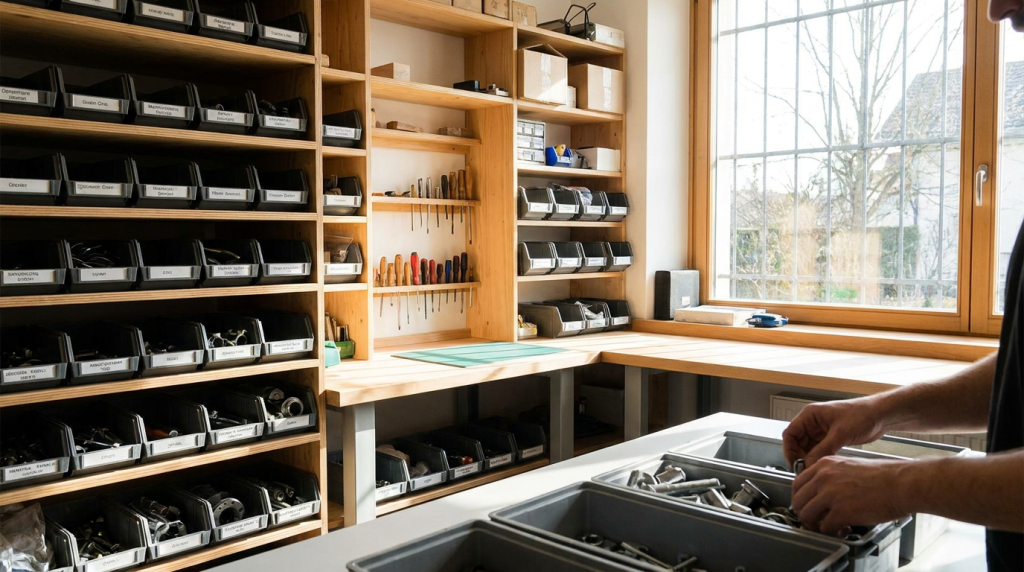
Some tips for organizing a workshop include decluttering the space, creating designated areas for different tools and materials, labeling storage containers, and implementing a regular cleaning schedule.

Why is it important to keep a workshop organized?

Keeping a workshop organized is important for safety, efficiency, and productivity. A well-organized workshop reduces the risk of accidents, saves time by making tools and materials easily accessible, and allows for smoother workflow.

What are some essential tools for workshop organization?

Essential tools for workshop organization include storage bins, shelves, pegboards, tool cabinets, drawer organizers, and labeling materials. These tools help keep the workshop tidy and make it easier to find and store tools and materials.

How can I maximize space in a small workshop?

To maximize space in a small workshop, consider using vertical storage solutions such as wall-mounted shelves and pegboards, utilizing multi-functional furniture and workbenches with built-in storage, and regularly purging unnecessary items to free up space.

What are some common mistakes to avoid when organizing a workshop?

Common mistakes to avoid when organizing a workshop include neglecting to declutter regularly, failing to label storage containers, not having a designated place for each tool and material, and overlooking the importance of safety measures such as proper tool storage and fire prevention.