
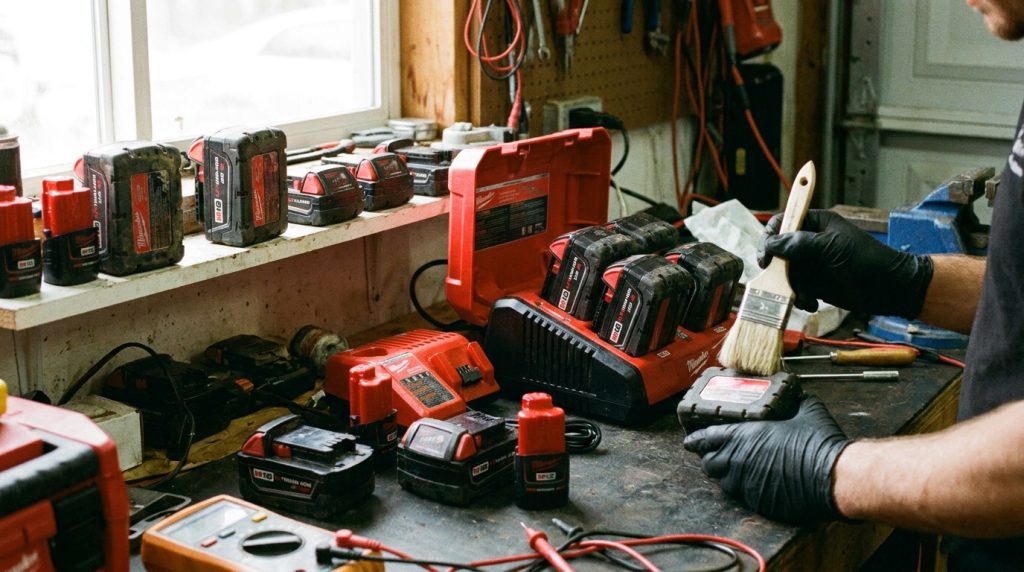
Milwaukee battery care is not just about getting a few more minutes of runtime. For contractors, maintenance departments, fabrication shops, farms, municipalities, and industrial crews across Coldwater, Branch County, and Southern Michigan, battery performance affects productivity, safety, tool life, and replacement cost.
Milwaukee’s M12™, M18™, and MX FUEL™ battery platforms are built for demanding work, but even premium lithium-ion packs need proper handling. Heat, moisture, deep discharge, poor storage habits, and using the wrong charger can shorten battery life fast.
At CEM Industrial Supply, we regularly help customers choose Milwaukee power tools, batteries, chargers, jobsite lighting, accessories, PPE, cutting tools, abrasives, storage, and maintenance supplies. One of the most common questions we hear is simple:
“How do I make my Milwaukee batteries last longer?”
The answer comes down to smart charging, proper storage, temperature control, regular inspection, and matching the right battery to the job.
This guide covers practical Milwaukee battery care tips for industrial, construction, agricultural, and facility maintenance users who depend on cordless tools every day.
For those looking to enhance their knowledge on battery maintenance and care, it’s beneficial to explore related topics that can improve overall tool performance. A great resource is the article on top tool distribution companies, which provides insights into selecting the right tools and accessories for your projects. You can read more about it here: Top Tool Distribution Companies: A Contractor’s Guide to Choosing Wisely. This guide complements the Milwaukee Battery Care Tips by helping you understand the importance of quality tools in conjunction with proper battery maintenance.
Understanding Milwaukee Battery Platforms
Before getting into maintenance, it helps to understand the main Milwaukee battery systems and how they are typically used.
Milwaukee M12 Batteries
Milwaukee M12 batteries are compact 12-volt lithium-ion packs designed for lighter-duty, precision, and service work.
Common M12 applications include:
- Inspection tools
- Screwdrivers and impact drivers
- Heated gear
- Compact drills
- Ratchets
- Specialty plumbing and electrical tools
- Small jobsite lighting
M12 batteries are popular with electricians, HVAC technicians, mechanics, and maintenance teams because they are lightweight and easy to carry.
Milwaukee M18 Batteries
Milwaukee M18 batteries are the workhorse platform for many industrial and construction users.
Common M18 applications include:
- Drills and hammer drills
- Impact wrenches
- Grinders
- Sawzalls and circular saws
- Jobsite lights
- Blowers
- Rotary hammers
- Vacuums
- Outdoor power equipment
For most shops and job crews in Southern Michigan, the M18 line is the most widely used Milwaukee battery system because it balances power, runtime, and tool selection.
Milwaukee MX FUEL Batteries
Milwaukee MX FUEL batteries are built for heavier equipment where gas or corded power was traditionally required.
Common MX FUEL applications include:
- Core drills
- Cut-off saws
- Light towers
- Breakers
- Sewer and drain equipment
- Heavy-duty concrete tools
MX FUEL batteries require even more attention to charging, storage, and transport because of their size, cost, and role in high-demand work.
Quick Comparison of Milwaukee Battery Platforms
| Platform | Best For | Typical Users | Care Priority |
|---|---|---|---|
| M12 | Compact tools, service work, precision tasks | HVAC technicians, electricians, maintenance technicians, mechanics | Avoid overloading small battery packs on demanding tools |
| M18 | General construction, industrial, fabrication, maintenance | Contractors, machine shops, farms, municipal crews | Manage heat and match the Ah rating to the workload |
| MX FUEL | Heavy equipment, concrete work, cutting, lighting | Industrial crews, concrete contractors, utility companies | Store properly, charge safely, and inspect batteries regularly |
Milwaukee Battery Care Tips for Charging
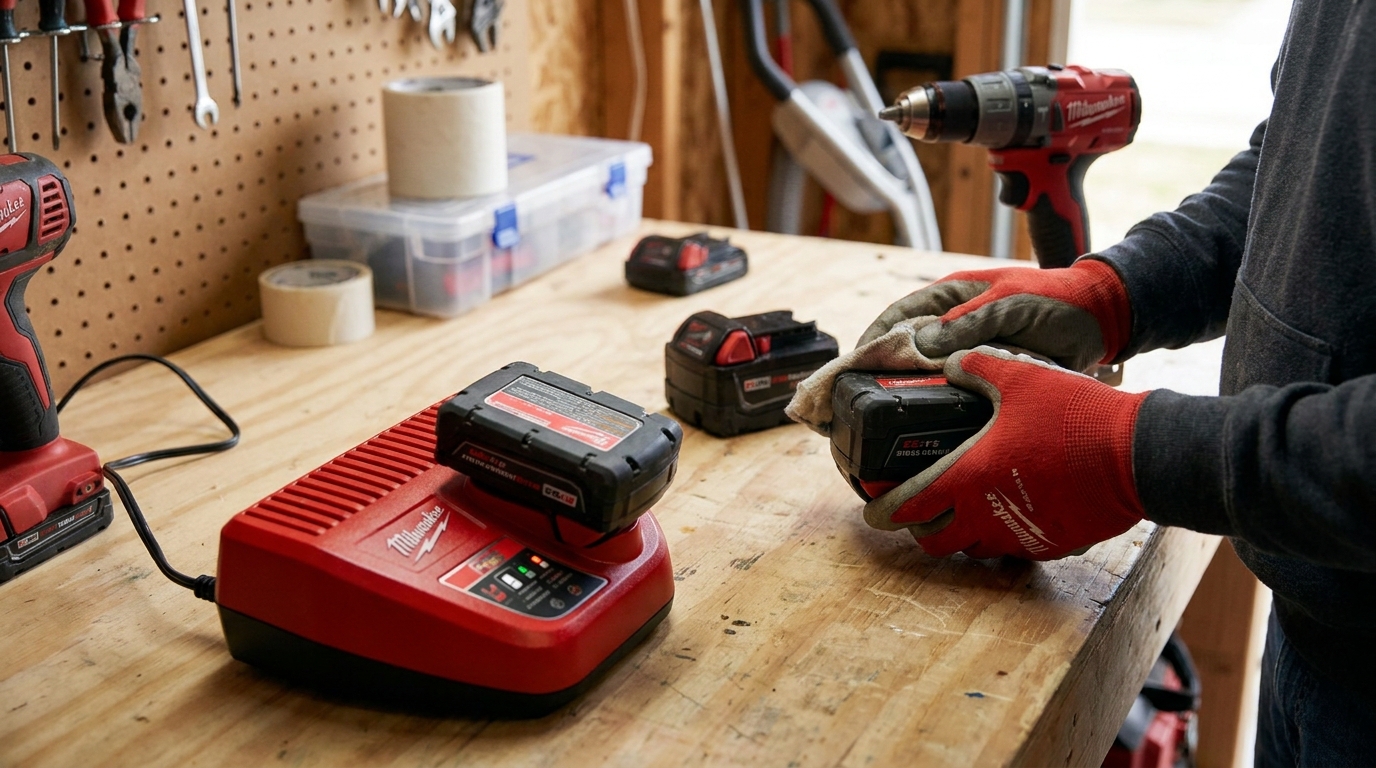
Charging habits have one of the biggest impacts on battery life. Milwaukee lithium-ion batteries are designed to work with Milwaukee chargers, and using the correct charger is one of the simplest ways to protect your investment.
Use the Correct Milwaukee Charger
Always use a charger designed for your Milwaukee battery platform. Milwaukee chargers communicate with the battery to manage charge rate, temperature, and safety conditions.
Avoid:
- Off-brand chargers
- Damaged chargers
- Wet or contaminated chargers
- Chargers with cracked housings
- Charging stations connected to unstable power sources
A quality charger is not just an accessory. It is part of the battery management system.
For shops and field crews, CEM Industrial Supply can help match Milwaukee batteries and chargers with your tool setup, including single-bay chargers, multi-bay chargers, rapid chargers, and jobsite charging solutions.
Let Hot Batteries Cool Before Charging
One of the most important Milwaukee battery care tips is to avoid charging a hot battery immediately after heavy use.
High-demand tools such as grinders, rotary hammers, impact wrenches, circular saws, and cut-off tools can generate heat in the battery pack. If a battery feels hot to the touch, let it cool before placing it on the charger.
Best practice:
- Remove the battery from the tool.
- Set it in a shaded, dry, well-ventilated area.
- Allow it to cool naturally.
- Charge only when it returns to a normal temperature.
Do not place batteries in a freezer, snowbank, cooler, or in front of forced compressed air to speed up cooling. Rapid temperature changes can create condensation and stress internal components.
Avoid Charging in Extreme Temperatures
Lithium-ion batteries do not like extreme heat or extreme cold. Charging in poor temperature conditions can reduce performance and shorten battery life.
General guidance:
| Condition | Recommendation |
|---|---|
| Very cold battery | Allow it to warm to room temperature before charging. |
| Very hot battery | Allow it to cool before charging. |
| Wet battery | Do not charge it; dry and inspect it first. |
| Battery left in a truck overnight during winter | Bring it indoors and allow it to stabilize before charging. |
| Battery left in direct summer sun | Move it to a shaded area and allow it to cool before charging. |
This is especially important in Southern Michigan, where crews may deal with freezing winter mornings and hot, humid summer afternoons on the same job schedule.
Do Not Leave Batteries on Chargers Indefinitely in Harsh Environments
Milwaukee chargers are designed with battery protection features, but that does not mean batteries should be left on chargers for weeks in a dirty, wet, hot, or freezing environment.
For daily shop use, leaving batteries on a clean, dry charging station during the workday is common. For long-term storage, remove batteries from the charger and store them properly.
Good charging station habits include:
- Mount chargers away from grinding dust and metal shavings
- Keep chargers off wet floors
- Avoid charging near flammable materials
- Provide airflow around chargers
- Label charging stations by platform
- Inspect cords and plugs regularly
Please visit our latest post at https://cemindustrialsupply.com/news/ for more information.
Proper Storage for Milwaukee Batteries
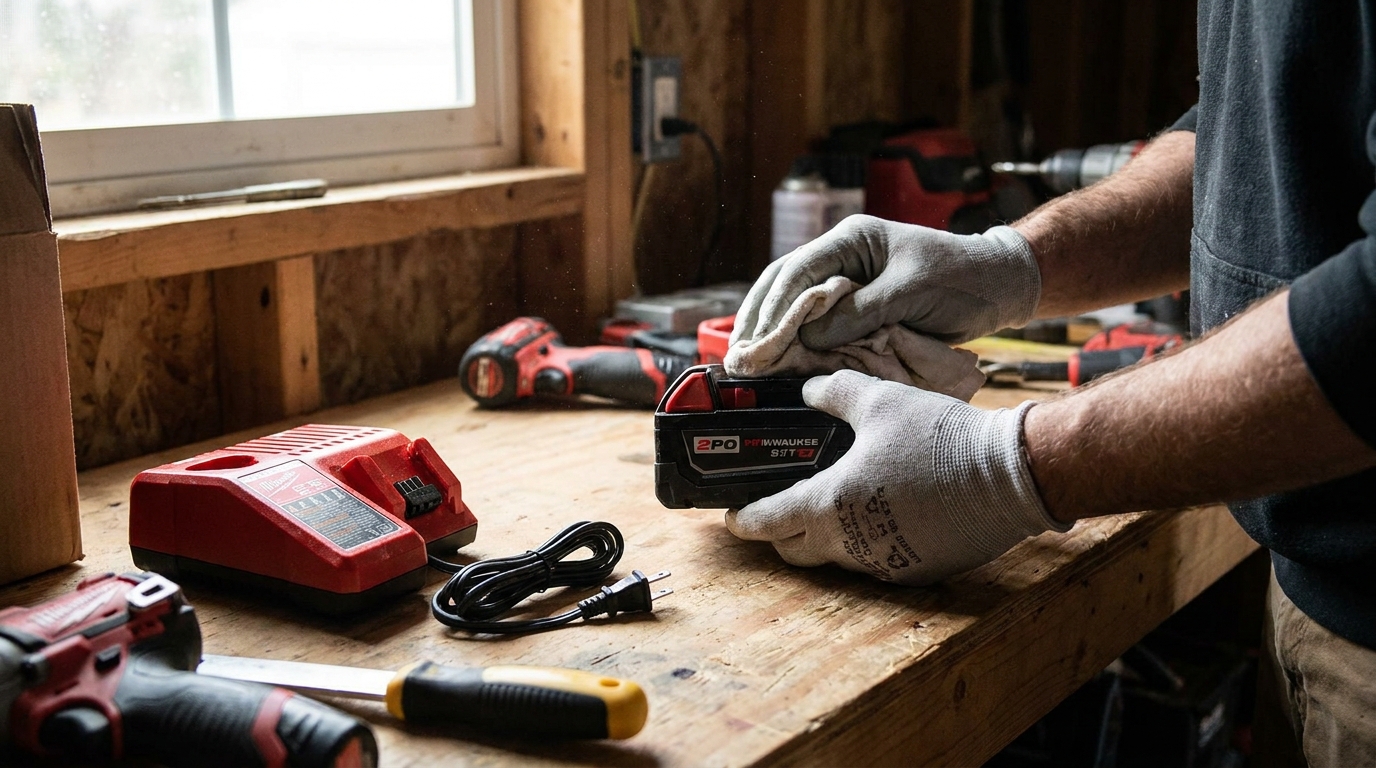
Battery storage is one of the most overlooked areas of cordless tool care. A battery may sit unused over a weekend, through winter, or between project cycles. How it is stored matters.
Store Batteries in a Cool, Dry Location
The best storage environment for Milwaukee batteries is clean, dry, and temperature-controlled.
Ideal storage locations include:
- Tool rooms
- Maintenance shops
- Service vans with climate consideration
- Jobsite storage boxes when weather-protected
- Organized shelving away from moisture
Avoid storing batteries:
- In direct sunlight
- On damp concrete floors
- In unheated vehicles for long periods during winter
- Near heaters or boilers
- In areas with metal dust or conductive debris
- In open rain, snow, or mud exposure
For Branch County contractors and maintenance teams, battery storage becomes especially important during seasonal transitions. Batteries left in a truck overnight in January may deliver poor runtime the next morning. Batteries left in a closed vehicle in July can be exposed to excessive heat.
Store Batteries Partially Charged for Long-Term Storage
For short-term daily use, fully charged batteries are practical. For long-term storage, lithium-ion batteries generally prefer a partial charge rather than being stored completely drained.
If you are storing Milwaukee batteries for several weeks or months, avoid putting them away completely dead.
Good long-term storage practice:
- Charge the battery to a moderate level.
- Remove it from the charger.
- Store it in a cool, dry area.
- Check it periodically.
- Recharge before returning to heavy use.
This is especially useful for seasonal tools such as outdoor power equipment, drain cleaning tools, certain lighting systems, and specialty construction tools.
Remove Batteries from Tools Before Storage
Do not leave batteries installed in tools during long-term storage. Remove the battery and store the tool and pack separately.
This helps prevent:
- Accidental activation
- Slow parasitic drain
- Damage during transport
- Contact contamination
- Tool trigger issues
- Safety hazards in storage boxes
This is also a good practice for Milwaukee jobsite lights, radios, vacuums, and outdoor power equipment that may sit unused between jobs.
Use Organized Battery Storage
A professional battery system should be easy to manage. Loose batteries tossed in a gang box can be damaged by impact, moisture, fasteners, or metal chips.
Recommended storage methods:
- Milwaukee PACKOUT™ organizers
- Dedicated battery shelves
- Labeled bins by platform and amp-hour rating
- Foam-lined tool drawers
- Charging cabinets
- Lockable jobsite storage
CEM Industrial Supply can support shops and crews with Milwaukee storage solutions, jobsite organization products, and industrial storage supplies that help protect batteries and tools.
For those looking to enhance their understanding of battery maintenance, you might find the article on job site delivery quite insightful. It discusses how efficient delivery services can save you both time and money, which is essential when managing tools and equipment that rely on battery power. You can read more about it in this related article. Proper battery care is crucial for ensuring your tools remain operational and effective on the job.
Temperature Management: Heat and Cold Protection
Temperature is one of the biggest enemies of lithium-ion batteries. In real-world industrial environments, batteries are often exposed to cold trucks, hot rooftops, direct sunlight, welding areas, and high-load applications.
Protect Batteries from Excessive Heat
Heat accelerates battery wear. Heavy tool use creates heat internally, and environmental heat makes the problem worse.
High-heat risk situations include:
- Grinding for long periods
- Repeated heavy drilling
- Continuous cutting
- Running high-draw saws
- Using batteries in direct sunlight
- Storing packs in hot vehicles
- Charging near heaters or machinery
Signs a battery may be overheated:
- It feels unusually hot
- Tool shuts down during use
- Charger delays charging
- Runtime suddenly drops
- Battery casing smells unusual or appears deformed
If a battery becomes excessively hot, stop using it and allow it to cool in a safe, dry area.
Protect Batteries from Freezing Conditions
Cold weather reduces battery performance. A cold Milwaukee battery may not deliver normal runtime or power until it warms up.
In Southern Michigan winters, this can be a common issue for construction crews, farmers, road service technicians, and maintenance teams.
Cold weather tips:
- Store batteries indoors overnight when possible
- Transport batteries in an insulated, dry container
- Keep spare packs in a warmer area until needed
- Avoid charging frozen batteries
- Let batteries warm gradually before use
- Rotate batteries so one pack is not overworked
Avoid Rapid Temperature Swings
Moving batteries from a freezing truck directly into a warm humid shop can cause condensation. Moisture on electrical contacts can create corrosion or charging issues.
Best practice:
- Allow cold batteries to warm gradually.
- Keep them in a dry area.
- Wipe off visible moisture.
- Inspect contacts before charging.
- Do not charge batteries that appear wet.
For those looking to extend the lifespan of their batteries, exploring additional resources can be incredibly beneficial. A great article that complements the Milwaukee Battery Care Tips can be found at CEM Industrial Supply, where you can discover more insights on battery maintenance and performance optimization. By incorporating these practices, you can ensure that your tools remain reliable and efficient for years to come.
Matching the Right Milwaukee Battery to the Job
Using the wrong battery for the application can shorten runtime, reduce performance, and create unnecessary heat. Battery care is not just about storage and charging—it is also about choosing the right pack.
Understand Amp-Hour Ratings
Amp-hour rating, often shown as Ah, gives a general idea of battery capacity. Higher Ah batteries usually provide longer runtime and better performance under demanding loads.
For example:
| Battery Type | Best Use |
|---|---|
| Compact M12 or M18 packs | Light-duty drilling, fastening, and service work |
| Mid-capacity packs | General jobsite use, maintenance, and mixed tasks |
| High-output packs | Grinders, saws, rotary hammers, and other high-demand tools |
| MX FUEL packs | Heavy equipment and extended high-load work |
A compact battery may physically fit a high-demand tool, but that does not mean it is the best choice. Running a small pack on a grinder or saw can heat the battery quickly and reduce efficiency.
Use High-Output Batteries for High-Draw Tools
High-draw tools need batteries designed to deliver power without excessive stress.
Examples include:
- M18 FUEL grinders
- M18 circular saws
- M18 Sawzalls
- M18 rotary hammers
- M18 high-torque impact wrenches
- M18 outdoor power equipment
- MX FUEL concrete and cutting equipment
For these applications, consider Milwaukee HIGH OUTPUT™ batteries or the appropriate MX FUEL battery size.
Rotate Batteries During Heavy Work
If your crew runs the same battery repeatedly from tool to charger to tool, that pack wears faster than the rest.
Better rotation helps:
- Reduce heat buildup
- Balance battery cycles
- Improve jobsite productivity
- Extend fleet life
- Prevent one battery from becoming the weak link
For industrial teams, label batteries by number or department and rotate them intentionally.
Example system:
| Battery Label | Assigned Use | Rotation Note |
|---|---|---|
| M18-1 | Drilling and fastening | Standard use |
| M18-2 | Cutting and grinding | Monitor for heat buildup |
| M18-3 | Backup pack | Keep fully charged |
| M18-4 | Lighting and low-draw tools | Provides extended runtime |
Cleaning and Inspection Tips for Milwaukee Batteries
Industrial environments are tough on batteries. Dust, grease, metal shavings, moisture, concrete slurry, and vibration can all affect battery life.
Keep Battery Contacts Clean
Battery contacts should be clean, dry, and free of debris.
Contaminants to watch for:
- Grinding dust
- Metal chips
- Oil
- Grease
- Concrete dust
- Wood dust
- Moisture
- Corrosion
Cleaning tips:
- Remove the battery from the tool.
- Use a clean, dry cloth.
- Use a soft brush for dry dust.
- Do not use water.
- Do not use harsh solvents.
- Do not scrape contacts with metal tools.
- Allow the battery to fully dry if exposed to moisture.
If contacts appear damaged, burned, deeply corroded, or loose, remove the battery from service and have it evaluated.
Inspect Battery Housings Regularly
A damaged housing can expose internal components to moisture, impact, or electrical hazards.
Look for:
- Cracks
- Swelling
- Burn marks
- Melted plastic
- Loose rails
- Broken latches
- Missing screws
- Rattling sounds
- Unusual odor
Do not use a battery that is cracked, swollen, leaking, smoking, or physically deformed.
Check Tool Battery Rails and Latches
Sometimes what looks like a battery problem is actually a tool connection issue. Worn rails, packed debris, or damaged latches can cause intermittent power.
Inspect:
- Battery slide rails
- Tool terminals
- Locking tabs
- Charger terminals
- Battery release buttons
- Tool housing around the battery port
CEM Industrial Supply can help customers in Coldwater and surrounding areas with Milwaukee tool accessories, replacement options, and recommendations when a tool or battery setup is no longer performing correctly.
Milwaukee Battery Safety Tips for Shops and Jobsites
Battery safety is a serious matter. Lithium-ion packs are safe when used properly, but damaged or abused batteries can create hazards.
Do Not Use Damaged Batteries
Immediately remove a battery from service if it shows:
- Swelling
- Smoke
- Burning smell
- Severe impact damage
- Cracked housing
- Exposed internal parts
- Liquid leakage
- Excessive heat during normal use
- Failure to lock into tools or chargers
Place suspect batteries in a safe, non-combustible area away from flammable materials and follow proper disposal or recycling procedures.
Keep Batteries Away from Conductive Materials
Loose batteries should not be stored with:
- Screws
- Nails
- Drill bits
- Saw blades
- Metal washers
- Wire
- Welding rod
- Keys
- Loose fasteners
Conductive materials can bridge terminals and create a short circuit.
Use organizers, battery caps when available, or dedicated compartments to reduce risk.
Protect Batteries from Water and Chemicals
Milwaukee batteries are designed for jobsite use, but they should not be submerged or soaked.
Avoid exposure to:
- Rain
- Standing water
- Snow melt
- Degreasers
- Solvents
- Fuels
- Acids
- Concrete slurry
- Cutting fluids
If a battery gets wet, remove it from use, dry the exterior, inspect it carefully, and do not charge it until you are confident it is dry and safe.
Follow Transportation Best Practices
If your crew transports Milwaukee batteries between jobs in Branch County, Coldwater, Angola, Sturgis, Hillsdale, Battle Creek, or other Southern Michigan communities, battery transport matters.
Transport tips:
- Secure batteries so they do not slide or fall
- Keep them out of direct sunlight
- Avoid tossing batteries into open truck beds
- Do not pile heavy tools on top of batteries
- Separate damaged batteries from good packs
- Use toolboxes, PACKOUT storage, or dedicated cases
For commercial transport, always follow applicable DOT, carrier, and manufacturer guidelines.
Jobsite Battery Management for Crews
A single user can manage a few batteries easily. A crew with 20 to 100 batteries needs a system.
Set Up a Battery Charging Station
A good charging station improves productivity and reduces battery loss.
Include:
- Multi-bay Milwaukee chargers
- Surge-protected power supply where appropriate
- Clean, dry mounting area
- Labels by battery platform
- Fire-conscious spacing
- Battery rotation shelf
- Damaged battery quarantine area
- Visual charging instructions
Avoid setting up chargers:
- Near water
- Under leaking roofs
- Beside welding and grinding areas
- On unstable temporary surfaces
- In direct rain or snow
- In high-traffic impact zones
Label Batteries and Track Age
Industrial battery fleets should be labeled. This helps identify weak packs, prevent loss, and maintain accountability.
Useful label information:
- Purchase date
- Department
- Battery number
- Platform
- Amp-hour rating
- Crew assignment
Example:
| Label | Meaning |
|---|---|
| M18-5.0-MAINT-04 | M18 5.0Ah battery assigned to the maintenance department, battery #4 |
| M12-HVAC-02 | M12 battery assigned to the HVAC service kit, battery #2 |
| MX-CONC-01 | MX FUEL battery assigned to the concrete crew, battery #1 |
Create a Battery Retirement Plan
All batteries eventually wear out. Weak batteries slow down jobs and frustrate operators.
Signs it may be time to replace a battery:
- Noticeably shorter runtime
- Frequent charger errors
- Tool shuts down under normal load
- Battery overheats quickly
- Pack will not hold charge
- Physical damage
- Fails inspection checklist
Keeping worn-out batteries in circulation costs more in lost productivity than many shops realize.
Buying Guide: Choosing Milwaukee Batteries and Chargers
Buying Milwaukee batteries should be based on your tools, workload, runtime needs, and crew size—not just the lowest price.
Questions to Ask Before Buying
Use this checklist when selecting Milwaukee batteries:
- Which platform do we use most: M12, M18, or MX FUEL?
- Are we running compact tools or high-demand tools?
- Do we need lighter weight or longer runtime?
- How many users are sharing batteries?
- Are tools used indoors, outdoors, or in extreme temperatures?
- Do we need rapid charging?
- Do we need multi-bay chargers?
- Are batteries being transported daily?
- Do we need jobsite storage and organization?
- Are we replacing worn batteries or expanding capacity?
Battery Selection by Application
| Application | Recommended Battery Approach |
|---|---|
| Service calls | Compact batteries plus one spare |
| Maintenance shop | Mix of compact and mid-capacity battery packs |
| Fabrication and grinding | High-output M18 batteries |
| Construction framing | Higher-capacity M18 battery packs |
| Concrete work | M18 High Output or MX FUEL batteries, depending on the tool |
| Jobsite lighting | Higher-Ah batteries for extended runtime |
| Outdoor power equipment | High-output, higher-capacity battery packs |
| Fleet use | Standardize battery platforms and label all batteries for easy tracking |
Charger Selection Tips
| Charger Type | Best For |
|---|---|
| Standard charger | Small shops and occasional use |
| Rapid charger | High-demand users who need fast battery turnaround |
| Multi-bay charger | Crews managing multiple batteries |
| Sequential charger | Organized charging where speed is less critical |
| Simultaneous charger | Busy jobsites that need multiple battery packs ready quickly |
| MX FUEL charger | MX FUEL batteries used with heavy equipment |
At CEM Industrial Supply in Coldwater, we can help match Milwaukee batteries and chargers with your real workload, whether you are maintaining a manufacturing facility, outfitting a service truck, or supplying a construction crew.
Maintenance Checklist for Milwaukee Battery Care
Use this quick checklist in your shop, service vehicle, or jobsite trailer.
Daily Battery Care Checklist
- Inspect battery housing for cracks or swelling
- Check battery contacts for dirt or moisture
- Remove batteries from tools after use
- Let hot batteries cool before charging
- Keep batteries out of direct sun and rain
- Place batteries on the correct Milwaukee charger
- Store charged batteries in an organized area
- Keep loose batteries away from metal objects
Weekly Battery Care Checklist
- Clean battery and charger contacts with a dry cloth
- Inspect chargers and cords
- Rotate battery usage
- Check for weak or failing packs
- Confirm batteries are labeled
- Remove damaged batteries from service
- Clean storage bins or PACKOUT organizers
- Review charging station safety
Seasonal Battery Care Checklist
- Before winter, avoid leaving batteries in trucks overnight
- Before summer, protect batteries from vehicle heat
- Check long-term storage batteries
- Replace unreliable packs before busy season
- Review battery inventory
- Standardize battery platforms where possible
- Train new employees on battery safety
Common Mistakes That Shorten Milwaukee Battery Life
Even experienced users make battery mistakes. Avoiding these habits can significantly improve performance and service life.
Mistake 1: Running Batteries Until Tools Quit Every Time
Occasional full discharge happens, but repeatedly draining batteries completely can stress lithium-ion packs.
Better practice: swap batteries when performance drops noticeably instead of forcing the tool to continue under load.
Mistake 2: Using Compact Batteries on Heavy Tools
A compact battery on a grinder or saw may work briefly, but it can heat quickly and reduce performance.
Better practice: use high-output batteries for high-draw tools.
Mistake 3: Charging Hot Batteries Immediately
Heat is hard on lithium-ion batteries.
Better practice: let the pack cool before charging.
Mistake 4: Storing Batteries in Work Trucks Year-Round
Southern Michigan weather can be rough. Freezing winter temperatures and hot summer interiors are not ideal for batteries.
Better practice: bring batteries indoors when possible, especially overnight or during long storage.
Mistake 5: Tossing Batteries Loose in Toolboxes
Loose storage creates impact damage and short-circuit risk.
Better practice: use organized storage with separated compartments.
Mistake 6: Ignoring Weak Batteries
A weak pack can slow down the whole crew.
Better practice: label, test, and retire failing batteries.
Milwaukee Battery Care for Industrial and Maintenance Teams
Industrial users often operate differently than residential or occasional users. Batteries may run all day across shifts, departments, and job functions.
Best Practices for Facilities and Plants
For manufacturing plants, maintenance departments, and industrial facilities near Coldwater and Branch County, consider these practices:
- Standardize on M18 where possible for shared tools
- Keep specialty M12 batteries with assigned tool kits
- Use high-output batteries for maintenance grinders and saws
- Install a dedicated charging station in the tool room
- Keep batteries away from weld cells and metal dust
- Train employees not to use damaged packs
- Track battery purchases and failures
- Store batteries away from chemicals and washdown areas
Best Practices for Contractors
Contractors need portability and reliability.
Recommended practices:
- Use PACKOUT storage for battery transport
- Keep one charger setup in the trailer and one in the shop
- Use rapid chargers for high-demand crews
- Carry spare batteries during winter jobs
- Avoid leaving batteries in open truck beds
- Assign battery responsibility by crew
- Rotate batteries during heavy cutting or grinding
Best Practices for Agriculture and Outdoor Work
Farms and outdoor crews often deal with dust, mud, vibration, and seasonal storage.
Recommended practices:
- Clean batteries after dusty work
- Store batteries indoors when tools are seasonal
- Avoid charging in damp barns or sheds
- Use higher-capacity batteries for outdoor power equipment
- Protect batteries from fertilizer, fuel, and chemicals
- Keep batteries in sealed storage when transporting in UTVs or trucks
When to Replace a Milwaukee Battery
A well-cared-for Milwaukee battery can deliver strong service, but no battery lasts forever. Knowing when to replace a pack helps avoid downtime and safety problems.
Performance Signs
Replace or evaluate a battery if:
- Runtime is much shorter than similar packs
- Tool loses power under moderate load
- Battery charges too quickly but drains fast
- Charger repeatedly shows an error
- Battery cuts out in multiple tools
- Battery is inconsistent from day to day
Safety Signs
Stop using the battery immediately if:
- It is swollen
- It is cracked
- It smells burnt
- It is leaking
- It smokes
- It becomes extremely hot during light use
- Terminals are damaged or melted
- It was submerged in water
Cost vs. Productivity
A worn battery may seem like it still has value, but if it slows down a technician or crew, replacement is often the smarter decision.
For commercial users, consider the true cost:
- Lost labor time
- Interrupted workflow
- Extra trips to the charger
- Reduced tool performance
- Safety risk
- Frustrated operators
If you are unsure whether to replace or expand your battery inventory, CEM Industrial Supply can help review your Milwaukee tool platform and recommend practical battery and charger options.
Milwaukee Battery Care Tips: Quick Reference Guide
Use this table as a fast reference for your team.
| Do This | Avoid This |
|---|---|
| Use genuine Milwaukee chargers | Using unknown or damaged chargers |
| Let hot batteries cool before charging | Charging immediately after heavy use |
| Store batteries in a cool, dry place | Leaving batteries in hot vehicles |
| Keep battery contacts clean | Charging dirty or wet batteries |
| Use High Output batteries for demanding tools | Overworking compact batteries |
| Label and rotate batteries | Using the same battery pack all day, every day |
| Remove damaged batteries from service | Ignoring cracks, swelling, or unusual odors |
| Store batteries away from metal objects | Tossing loose batteries in a toolbox with screws or fasteners |
| Remove batteries from tools during long-term storage | Leaving batteries installed in tools for months |
| Train employees on proper battery safety | Assuming everyone already knows correct handling |
How CEM Industrial Supply Supports Milwaukee Tool Users in Southern Michigan
CEM Industrial Supply serves industrial, construction, maintenance, agricultural, and commercial customers in Coldwater, Branch County, and throughout Southern Michigan. We understand that cordless tools are not just convenient—they are part of your production and service workflow.
We can help with:
- Milwaukee M12, M18, and MX FUEL tools
- Milwaukee batteries and chargers
- Jobsite lighting
- Tool storage and organization
- Drilling and cutting accessories
- Abrasives and grinding supplies
- Safety and PPE
- Industrial maintenance supplies
- Hand tools and shop essentials
- Contractor and facility supply support
Whether you are replacing a single battery, building out a cordless platform, or improving battery management for a full crew, our team can help you choose practical, job-ready options.
FAQs
How do I make Milwaukee batteries last longer?
The best way to extend Milwaukee battery life is to use the correct charger, avoid extreme heat and cold, keep batteries dry, let hot packs cool before charging, store them properly, and match the battery size to the tool. Rotating batteries instead of overusing one pack also helps.
Is it bad to leave Milwaukee batteries on the charger?
For normal daily use, Milwaukee chargers are designed to manage charging safely. However, for long-term storage, it is better to remove batteries from the charger and store them in a cool, dry place. Avoid leaving chargers and batteries in hot, wet, dusty, or freezing environments.
Should Milwaukee batteries be fully charged before storage?
For short-term use, fully charged batteries are convenient. For longer storage, avoid storing batteries completely drained. A moderate charge level is generally better for lithium-ion batteries during extended storage.
Can Milwaukee batteries be used in cold weather?
Yes, but cold temperatures reduce performance and runtime. Store batteries indoors when possible, avoid charging frozen batteries, and allow cold packs to warm gradually before charging or heavy use.
Why does my Milwaukee battery get hot?
Batteries can get hot during high-demand applications such as grinding, cutting, drilling, or impact work. Heat can also come from direct sunlight or hot storage areas. If a battery becomes unusually hot, stop using it and let it cool in a safe, dry location.
Can I clean Milwaukee battery contacts?
Yes. Use a clean, dry cloth or soft brush to remove dust and debris. Do not use water, harsh solvents, or metal tools on battery contacts. If contacts are burned, corroded, or damaged, remove the battery from service.
What Milwaukee battery should I use for grinders and saws?
For high-draw tools like grinders, saws, rotary hammers, and high-torque impact wrenches, use Milwaukee high-output or higher-capacity batteries designed for demanding loads. Compact batteries may fit but are usually not the best choice for heavy work.
When should I replace a Milwaukee battery?
Replace a battery when runtime drops significantly, it fails to hold a charge, overheats under normal use, triggers charger errors repeatedly, or shows physical damage. Stop using it immediately if it is swollen, cracked, leaking, smoking, or smells burnt.
Can I store Milwaukee batteries in my truck?
You can transport them in a truck, but long-term storage in vehicles is not ideal. In Southern Michigan, winter cold and summer heat can reduce performance and battery life. Store batteries indoors when practical, especially overnight or during seasonal downtime.
Where can I buy Milwaukee batteries and chargers near Coldwater, Michigan?
CEM Industrial Supply in Coldwater serves Branch County and Southern Michigan with Milwaukee tools, batteries, chargers, accessories, storage, safety supplies, and industrial equipment support. Our team can help match the right battery and charger setup to your work.