
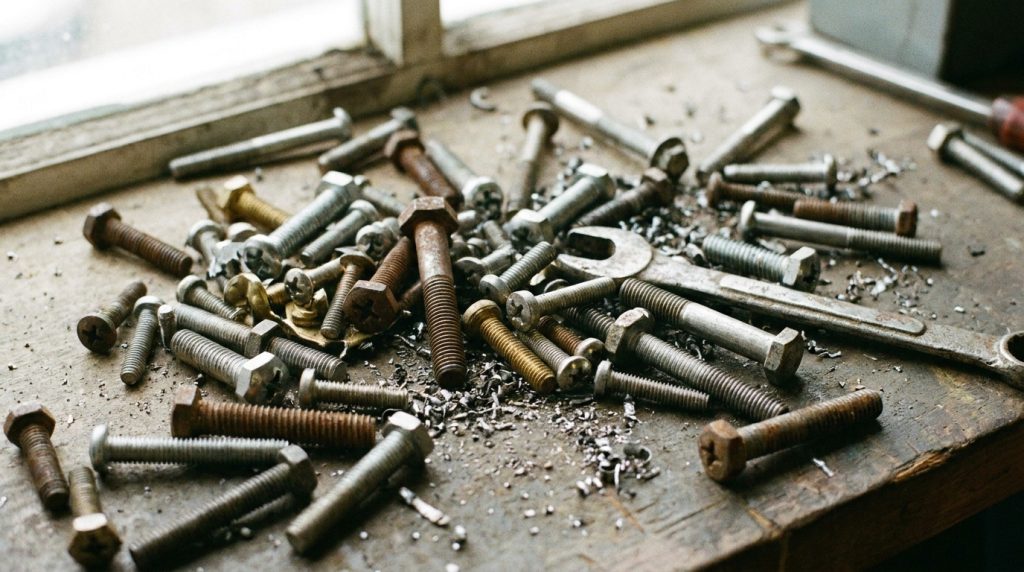
Machine screws are precision-threaded fasteners designed to join metal parts, plastic components, electrical assemblies, machinery, equipment panels, and many other engineered materials. Unlike wood screws or sheet metal screws, machine screws are typically used with a pre-tapped hole or a matching nut. They are made to fit standardized threads and provide controlled, repeatable fastening in applications where accuracy, alignment, and serviceability matter.
For contractors, maintenance technicians, manufacturers, mechanics, and industrial buyers, understanding machine screws is essential. The wrong screw can cause stripped threads, loose assemblies, corrosion problems, downtime, or safety issues. The right machine screw improves assembly speed, reduces repair costs, and supports long-term performance.
Machine screws are commonly used in:
- Electrical enclosures and control panels
- HVAC equipment and duct accessories
- Pumps, motors, and compressors
- Automotive and equipment repair
- Industrial machinery
- Electronics and appliances
- Furniture hardware and metal brackets
- Instrumentation and precision assemblies
- Building systems and access panels
Because machine screws come in many head styles, drive types, thread sizes, materials, and finishes, choosing the correct one requires more than simply matching the diameter. This guide explains the main types of machine screws, standard sizes, materials, thread options, and practical selection tips for professional use.
For those interested in expanding their knowledge of industrial hardware, a related article that delves into the various applications and benefits of industrial fans can be found at this link. Understanding the role of industrial fans can complement your knowledge of machine screws, as both are essential components in various manufacturing and engineering processes.
Machine Screws vs. Other Fasteners
Machine screws are often confused with bolts, cap screws, self-tapping screws, and sheet metal screws. While these fasteners can look similar, they are designed for different purposes.
Machine Screws vs. Bolts
A machine screw is generally smaller in diameter than a bolt and is often driven with a screwdriver, hex key, or bit. A bolt is usually installed with a wrench and is commonly paired with a nut.
However, the distinction is not always absolute. Some hex head machine screws resemble small bolts, and some cap screws are used without nuts in tapped holes. In industrial purchasing, the part standard, thread type, and application often matter more than the name.
| Feature | Machine Screw | Bolt |
|---|---|---|
| Common installation | Installed with a screwdriver, driver bit, hex key, or socket | Installed with a wrench or socket |
| Typical use | Fastening into tapped holes or with matching nuts | Joining components with nuts, tapped holes, or structural connections |
| Size range | Typically smaller diameters | Typically larger diameters |
| Threading | Often fully threaded | May be partially or fully threaded, depending on the application |
| Common applications | Panels, machinery, equipment, enclosures, and electronics | Structural assemblies, heavy equipment, flanges, frames, and industrial machinery |
Machine Screws vs. Self-Tapping Screws
Machine screws require a pre-threaded hole or a nut. Self-tapping screws create or form their own mating thread as they are driven into metal, plastic, or other materials.
Use machine screws when:
- The joint will be assembled and disassembled repeatedly
- Precise thread engagement is needed
- A tapped hole or nut is available
- Clamping force and alignment are important
Use self-tapping screws when:
- Speed of installation is more important than repeat serviceability
- The material is suitable for thread forming or cutting
- No tapped hole is available
- The assembly is lighter duty
Machine Screws vs. Sheet Metal Screws
Sheet metal screws typically have sharp threads designed to bite into thin metal. Machine screws have uniform threads designed to mate with internal machine threads.
For example, a #10-32 machine screw fits a #10-32 tapped hole or nut. A #10 sheet metal screw does not use the same thread system and should not be substituted in a tapped machine-screw hole.
Common Types of Machine Screws by Head Style
The head style determines how the screw sits on the surface, how much bearing area it provides, and what tools can be used for installation. Choosing the right machine screw head is important for clearance, appearance, load distribution, and maintenance access.
Pan Head Machine Screws
Pan head machine screws are among the most common types. They have a slightly rounded top with a flat bearing surface underneath. The wide head provides good clamping force and works well for general-purpose fastening.
Common uses include:
- Electrical panels
- Machinery guards
- Brackets
- Enclosures
- Appliance assemblies
- Light-duty mechanical parts
Pan head screws are a reliable choice when the screw head can remain visible and surface clearance is not limited.
Flat Head Machine Screws
Flat head machine screws are designed to sit flush with the surface when installed in a countersunk hole. They have a conical underside that matches the countersink angle.
Common uses include:
- Hinges
- Access covers
- Flush panels
- Sliding components
- Machine guards where protruding heads are not acceptable
In the United States, many flat head machine screws use an 82-degree countersink angle. Always match the screw head angle to the countersink to avoid poor seating, uneven load, or head damage.
Round Head Machine Screws
Round head machine screws have a domed head with a larger profile than pan head screws. They are less common in newer industrial applications but still appear in repair work, older machinery, decorative hardware, and electrical equipment.
They provide a finished appearance and moderate bearing surface but require more overhead clearance than flat or oval head screws.
Oval Head Machine Screws
Oval head machine screws combine a countersunk underside with a slightly rounded top. They sit partially flush while leaving a raised decorative finish.
Typical applications include:
- Finished hardware
- Switch plates
- Trim components
- Decorative metal assemblies
- Equipment covers where appearance matters
Like flat head screws, oval head screws require a properly countersunk hole.
Truss Head Machine Screws
Truss head machine screws have a low-profile, wide head. The large bearing surface helps distribute load over thin material and reduces the chance of pull-through.
They are commonly used for:
- Sheet metal assemblies with tapped inserts or nuts
- HVAC equipment panels
- Plastic components
- Access covers
- Thin-gauge brackets
Truss head screws are useful when a low profile and broad clamping area are both needed.
Binding Head Machine Screws
Binding head machine screws have a relatively thick head with a deep drive recess. They are often used in electrical applications because the head can help hold terminals, wire connectors, or flat components.
Common uses include:
- Electrical connections
- Terminal blocks
- Control cabinets
- Wiring hardware
- Low-voltage equipment
For electrical work, always verify that the screw material and finish are suitable for conductivity, corrosion resistance, and code requirements.
Socket Head Machine Screws
Socket head machine screws use an internal hex drive, commonly installed with an Allen wrench or hex bit. They offer high drive engagement and are useful where higher torque is needed or where external wrench clearance is limited.
Common socket styles include:
- Socket head cap screws
- Button socket head screws
- Flat socket head screws
- Low head socket cap screws
Socket head screws are widely used in machinery, automation equipment, tooling, robotics, and mechanical assemblies.
For more articles on industrial supply, visit https://cemindustrialsupply.com/news/ for the latest updates.
Machine Screw Drive Types
The drive type affects installation speed, torque capacity, tamper resistance, and tool availability. For maintenance and production environments, drive selection can also influence labor time and fastener damage rates.
Slotted Drive
Slotted machine screws have a single straight slot. They are simple and traditional but provide limited torque transfer. The driver can slip out easily, damaging the screw head or surrounding surface.
Best for:
- Light-duty applications
- Older equipment repairs
- Decorative hardware
- Low-torque installations
Slotted drives are not ideal for high-volume production or high-torque fastening.
Phillips Drive
Phillips machine screws are widely available and easy to install with common tools. The cross-shaped recess helps center the driver, but it can cam out under torque.
Best for:
- General maintenance
- Electrical enclosures
- Light machinery
- Commercial hardware
- Moderate-duty assemblies
Phillips screws remain common, but many manufacturers choose other drives for improved torque control.
Pozidriv Drive
Pozidriv screws look similar to Phillips but have additional ribs for better engagement. They are more common in European equipment and some imported machinery.
Important: Phillips and Pozidriv tools are not fully interchangeable. Using the wrong driver can damage the recess and reduce torque transfer.
Hex Socket Drive
Hex socket drives provide strong engagement and are commonly used for mechanical assemblies. They are especially useful in tight spaces where a screwdriver cannot maintain alignment.
Best for:
- Machinery
- Tooling
- Equipment repair
- Automotive components
- Industrial fixtures
Hex socket screws are often chosen for strength, repeatability, and clean appearance.
Torx Drive
Torx, also called star drive, offers excellent torque transfer with reduced cam-out. It is commonly used in automotive, electronics, manufacturing, and equipment assembly.
Advantages include:
- Better tool engagement
- Reduced head stripping
- Faster powered installation
- Improved torque consistency
Torx machine screws are a strong option for production environments and maintenance-intensive equipment.
Security and Tamper-Resistant Drives
Security machine screws use special drive patterns to discourage unauthorized removal. Examples include pin-in-Torx, one-way, spanner, and tamper-resistant hex.
Common uses include:
- Public equipment
- Access panels
- Electronics
- Transportation systems
- Correctional facilities
- Retail fixtures
When specifying tamper-resistant screws, make sure authorized maintenance teams have the correct tools available.
For those looking to deepen their understanding of machine screws, a related article on repairing and customizing gearbox motor shafts can provide valuable insights into the practical applications of these fasteners. By exploring the intricacies of gearbox maintenance, you can see how the right types and sizes of machine screws play a crucial role in ensuring optimal performance. To learn more about this topic, check out the article on repairing and customizing gearbox motor shafts.
Machine Screw Sizes and Thread Standards
Machine screw sizing can be confusing because inch and metric systems use different naming conventions. Correct sizing is essential for thread engagement, clamping force, and compatibility with tapped holes or nuts.
Inch Machine Screw Sizes
In the U.S., smaller machine screws are often identified by a number size and thread count. For example, a #8-32 machine screw has a #8 diameter and 32 threads per inch.
Common inch machine screw sizes include:
| Screw Size | Major Diameter (Approx.) | Common Thread Pitches |
|---|---|---|
| #2 | 0.086 in. | 56 TPI |
| #4 | 0.112 in. | 40 TPI |
| #6 | 0.138 in. | 32 TPI |
| #8 | 0.164 in. | 32 TPI |
| #10 | 0.190 in. | 24 or 32 TPI |
| 1/4 in. | 0.250 in. | 20 or 28 TPI |
| 5/16 in. | 0.3125 in. | 18 or 24 TPI |
| 3/8 in. | 0.375 in. | 16 or 24 TPI |
TPI means threads per inch. A higher TPI number indicates a finer thread.
Examples:
- #6-32: #6 diameter with 32 threads per inch
- #8-32: #8 diameter with 32 threads per inch
- #10-24: #10 diameter with 24 threads per inch
- 1/4-20: 1/4-inch diameter with 20 threads per inch
Metric Machine Screw Sizes
Metric machine screws are identified by diameter and pitch in millimeters. For example, an M6-1.0 screw has a 6 mm nominal diameter and a 1.0 mm thread pitch.
Common metric machine screw sizes include:
| Metric Size | Major Diameter | Common Pitch |
|---|---|---|
| M2 | 2 mm | 0.4 mm |
| M3 | 3 mm | 0.5 mm |
| M4 | 4 mm | 0.7 mm |
| M5 | 5 mm | 0.8 mm |
| M6 | 6 mm | 1.0 mm |
| M8 | 8 mm | 1.25 mm |
| M10 | 10 mm | 1.5 mm |
| M12 | 12 mm | 1.75 mm |
In metric sizing, pitch is the distance from one thread crest to the next. A smaller pitch number means a finer thread.
Coarse Thread vs. Fine Thread
Machine screws are available in coarse and fine thread options. The best choice depends on material, vibration, adjustment needs, and strength requirements.
| Thread Type | Advantages | Common Uses |
|---|---|---|
| Coarse thread | Faster installation, better grip in softer materials, and less likely to cross-thread | General machinery, aluminum components, plastic inserts, and field repairs |
| Fine thread | More precise adjustment, greater tensile stress area, and improved resistance to loosening in some applications | Precision assemblies, automotive, aerospace, and high-vibration equipment |
For most general-purpose maintenance and equipment work, coarse threads are easier to use and more forgiving. Fine threads are preferred when precise adjustment or higher clamping capability is required, provided the mating material is suitable.
How Machine Screw Length Is Measured
Machine screw length is measured differently depending on head style.
- Flat head screws: measured from the top of the head to the tip because the entire screw sits flush in the countersink.
- Pan, round, truss, binding, and socket head screws: measured from under the head to the tip.
- Oval head screws: often measured from the widest point of the head to the tip, depending on standard and supplier.
When replacing a screw, measure both the diameter and length carefully. A screw that is too short may not provide enough thread engagement. A screw that is too long may bottom out, damage internal components, or interfere with moving parts.
Machine Screw Materials and Finishes
Material selection affects strength, corrosion resistance, conductivity, magnetic properties, and cost. Industrial buyers should consider both the base metal and the surface finish.
Steel Machine Screws
Carbon steel machine screws are common, economical, and suitable for many indoor applications. They may be plain, zinc-plated, black oxide coated, or finished with other protective coatings.
Best for:
- General machinery
- Indoor equipment
- Brackets and panels
- Maintenance repairs
- Cost-sensitive applications
Plain steel can rust quickly in damp or corrosive environments, so a protective finish is often required.
Stainless Steel Machine Screws
Stainless steel machine screws provide better corrosion resistance than standard steel. Common grades include 18-8 stainless, 304 stainless, and 316 stainless.
- 18-8 stainless: general corrosion resistance for indoor and light outdoor use
- 304 stainless: widely used for food equipment, general outdoor exposure, and industrial environments
- 316 stainless: better resistance to chlorides, marine exposure, chemicals, and washdown applications
Best for:
- Outdoor equipment
- Food processing
- Marine environments
- Chemical plants
- Washdown areas
- HVAC exterior components
Stainless steel can gall, especially in stainless-to-stainless assemblies. Use proper lubrication or anti-seize where appropriate.
Brass Machine Screws
Brass machine screws offer corrosion resistance, good electrical conductivity, and a decorative appearance. They are softer than steel and should not be used where high strength is required.
Best for:
- Electrical components
- Decorative hardware
- Marine trim
- Instruments
- Low-load assemblies
Brass is useful when conductivity and corrosion resistance are important, but torque must be controlled to avoid stripping or head damage.
Aluminum Machine Screws
Aluminum machine screws are lightweight and corrosion resistant, but they have lower strength than steel. They are used in applications where weight reduction or material compatibility matters.
Best for:
- Lightweight assemblies
- Electronics
- Aluminum structures
- Nonmagnetic applications
- Corrosion-sensitive environments
Avoid using aluminum screws in high-load or high-wear applications unless the design specifically allows it.
Nylon and Plastic Machine Screws
Nylon machine screws are nonconductive, nonmagnetic, lightweight, and corrosion resistant. They are useful in electrical and chemical environments but have limited strength and temperature capability.
Best for:
- Electronics
- Circuit boards
- Chemical equipment
- Nonconductive assemblies
- Lightweight covers
Check temperature ratings, chemical compatibility, and load requirements before specifying plastic screws.
Common Machine Screw Finishes
| Finish | Purpose | Typical Applications |
|---|---|---|
| Zinc plating | Provides basic corrosion protection | Indoor equipment, light-duty machinery, and general-purpose hardware |
| Black oxide | Offers mild corrosion protection and reduces glare | Tools, fixtures, and indoor machinery |
| Nickel plating | Improves corrosion resistance while enhancing appearance | Electronics, instruments, and decorative hardware |
| Chrome plating | Increases surface hardness while providing a bright finish | Decorative components and specialty applications |
| Passivated stainless steel | Enhances the natural corrosion resistance of stainless steel | Food processing, medical equipment, marine, and washdown environments |
| Phosphate coating | Improves lubricity and promotes paint adhesion | Automotive components and industrial parts |
For corrosive environments, do not rely on appearance alone. Verify coating specifications, base material, and compatibility with the operating conditions.
How to Choose the Right Machine Screw
Selecting a machine screw requires matching the fastener to the assembly, environment, load, and service requirements. A professional selection process reduces failures and purchasing errors.
Match the Thread to the Mating Part
The most important step is confirming thread compatibility. A #10-24 screw will not properly fit a #10-32 tapped hole. An M6-1.0 screw will not fit an M6-0.75 thread.
Before ordering or installing machine screws, verify:
- Inch or metric thread system
- Diameter
- Thread pitch or TPI
- Thread class or fit, if required
- Right-hand or left-hand thread
- Length
- Head style
- Drive type
If the mating part is damaged or unknown, use a thread gauge, calipers, or a known matching nut to confirm the size. For production or critical repairs, consult the equipment manual or engineering drawing.
Consider Load and Strength Requirements
Machine screws are not all rated for the same loads. Material, diameter, thread engagement, head style, and grade all influence strength.
For higher-load applications, consider:
- Larger diameter screws
- Stronger material or grade
- Proper thread engagement depth
- Washers or flanged heads for load distribution
- Thread-locking methods for vibration
- Engineering review for safety-critical joints
Do not substitute a lower-strength screw in equipment, lifting devices, safety guards, brakes, pressure systems, or structural connections without approval.
Choose the Right Head Style for Clearance and Clamping
The screw head must fit the physical constraints of the assembly.
Use:
- Flat head screws when the surface must be flush
- Pan head screws for general-purpose fastening
- Truss head screws for thin materials or wider bearing area
- Socket head screws where higher torque or compact access is needed
- Binding head screws for certain electrical connections
- Button head screws for low-profile machine assemblies
If the head is too small, it may pull through the material. If it is too tall, it may interfere with moving parts, covers, or adjacent components.
Select the Proper Drive Type
For field maintenance, common drive types may be preferred because tools are readily available. For manufacturing, torque control and installation speed may matter more.
Good drive choices by application:
| Application | Recommended Drive Types |
|---|---|
| General maintenance | Phillips, slotted, and hex socket |
| High-volume assembly | Torx®, hex socket, and Phillips |
| Precision machinery | Hex socket and Torx® |
| Public access panels | Tamper-resistant Torx® and spanner |
| Electrical equipment | Phillips, slotted, and binding head styles |
| Automotive repair | Torx®, hex socket, and Phillips |
Drive recess damage is a common reason machine screws become difficult to remove. Use the correct bit size, apply steady pressure, and replace worn tools.
Account for Corrosion and Environment
Environmental exposure should guide material and finish selection.
For indoor dry environments, zinc-plated steel may be sufficient. For outdoor or washdown applications, stainless steel may be a better choice. For marine or chloride exposure, 316 stainless is often preferred. For electrical assemblies, brass or stainless may be required depending on conductivity and corrosion needs.
Consider exposure to:
- Moisture
- Salt spray
- Cleaning chemicals
- Acids or solvents
- Heat
- UV light
- Galvanic corrosion between dissimilar metals
For example, stainless screws installed in aluminum can create galvanic corrosion in wet environments. A compatible coating, washer, sealant, or isolation method may be needed.
Installation Best Practices for Machine Screws
Proper installation is as important as correct selection. Many machine screw failures come from over-tightening, cross-threading, poor alignment, or insufficient thread engagement.
Use the Correct Tools
Always use a properly fitting driver or bit. A bit that is too small can strip the recess. A worn driver can slip and damage the screw head.
Best practices include:
- Use quality bits matched to the drive type
- Keep drivers square to the screw
- Replace worn tools
- Use torque tools for critical assemblies
- Avoid excessive speed when starting threads
- Use hand-starting when possible
For production environments, controlled drivers can improve consistency and reduce rework.
Avoid Cross-Threading
Cross-threading damages both the screw and the mating thread. It often happens when screws are started at an angle or forced with power tools.
To prevent cross-threading:
- Align the screw with the hole before applying torque
- Start by hand for the first few turns
- Back off and restart if resistance occurs immediately
- Keep mating threads clean
- Replace damaged screws instead of forcing them
If a tapped hole is damaged, repair options may include retapping, using a thread insert, or replacing the component.
Apply the Correct Torque
Over-tightening can strip threads, deform parts, break screws, or damage gaskets. Under-tightening can allow loosening, vibration, leakage, or misalignment.
Torque depends on:
- Screw size
- Material
- Thread condition
- Lubrication
- Finish
- Joint material
- Required clamp load
For critical equipment, use manufacturer torque specifications. If no specification is available, consult an engineering reference or fastener supplier rather than guessing.
Use Washers When Needed
Washers can help distribute load, protect surfaces, and improve assembly performance.
Common washer types include:
- Flat washers for load distribution
- Lock washers for resistance to loosening in some applications
- Fender washers for thin or soft materials
- Belleville washers for spring tension
- Sealing washers for moisture resistance
Washers are not always required, but they can be valuable when fastening soft materials, slotted holes, painted surfaces, or thin panels.
Prevent Loosening in Vibration
Machines, vehicles, pumps, fans, and compressors often expose screws to vibration. A standard machine screw may loosen over time if the joint is not designed for vibration.
Common anti-loosening methods include:
- Thread-locking adhesive
- Nylon insert lock nuts
- Prevailing torque nuts
- Lock washers
- Serrated flange screws or nuts
- Safety wire for specialized applications
- Proper preload through torque control
Thread-locking compounds are available in removable and permanent grades. Choose the grade based on whether future disassembly is expected.
Common Machine Screw Applications by Industry
Machine screws are used across nearly every industrial and commercial sector. The best fastener choice depends on working conditions, service frequency, and regulatory or performance requirements.
Construction and Building Systems
Contractors use machine screws in many building-related systems, especially when fastening metal components, electrical devices, access covers, and mechanical equipment.
Examples include:
- Electrical boxes and panel covers
- Door hardware
- Metal framing accessories
- HVAC dampers and access panels
- Fire alarm enclosures
- Lighting fixtures
- Security equipment
For outdoor building components, corrosion resistance is a key consideration. Stainless steel or properly coated screws may be necessary for exterior installations.
Maintenance and Repair Operations
Maintenance professionals often need to identify and replace missing or damaged machine screws quickly. Keeping a well-organized assortment of common sizes can reduce downtime.
Useful maintenance inventory sizes often include:
- #6-32
- #8-32
- #10-24
- #10-32
- 1/4-20
- M4
- M5
- M6
- M8
A maintenance shop should also stock common head styles, washers, nuts, and thread-locking products. For facilities with imported machinery, metric fasteners are especially important.
Manufacturing and Assembly
Manufacturers use machine screws for repeatable assembly of components, housings, frames, and subassemblies. In production, fastener standardization can reduce purchasing complexity and assembly errors.
Manufacturing considerations include:
- Tool access
- Cycle time
- Torque control
- Automated feeding compatibility
- Corrosion protection
- Rework and service access
- Inventory consolidation
For example, switching from Phillips to Torx drive may reduce cam-out in high-volume assembly and improve installation consistency.
Automotive and Equipment Repair
Mechanics encounter machine screws in interior trim, sensors, brackets, covers, electrical components, small engine parts, and accessory assemblies.
Automotive applications often require attention to:
- Metric thread sizes
- Vibration resistance
- Heat exposure
- Corrosion from road salt
- Thread-locking compounds
- OEM specifications
Always match the original fastener’s grade, thread pitch, length, and head style when replacing automotive machine screws, especially near moving parts or safety-related systems.
Electrical and Electronics Applications
Machine screws are widely used in electrical panels, control cabinets, circuit boards, grounding points, and terminal connections.
Important factors include:
- Conductivity
- Corrosion resistance
- Head style for terminals
- Nonconductive materials where required
- Proper torque to avoid damaging components
- Compliance with applicable codes and equipment listings
In electronics, small metric screws such as M2, M2.5, and M3 are common. In electrical panels, #6-32, #8-32, and #10-32 screws are frequently used.
Machine Screw Buying Guide for Industrial Buyers
Industrial buyers need fasteners that meet application requirements, arrive consistently, and support efficient inventory management. Price matters, but incorrect or poor-quality screws can cost far more in downtime, rework, and warranty claims.
Key Specifications to Include on Purchase Orders
A complete machine screw specification should include:
- Diameter and thread pitch
- Length
- Head style
- Drive type
- Material
- Finish or coating
- Standard or grade, if applicable
- Quantity
- Packaging requirements
- Certification requirements, if needed
Example specification:
“#10-32 x 1/2 in. pan head Phillips machine screw, 18-8 stainless steel, fully threaded.”
Another example:
“M6-1.0 x 20 mm socket head cap screw, alloy steel, black oxide, property class 12.9.”
Inch vs. Metric Inventory Planning
Facilities with both domestic and imported equipment should separate inch and metric machine screws clearly. Mixing them can cause damaged threads and installation delays.
Inventory tips:
- Use labeled bins
- Separate inch and metric sections
- Stock matching nuts and washers
- Include thread gauges at maintenance stations
- Standardize sizes where possible
- Track high-use items for reorder planning
A small investment in organization can prevent costly mistakes during urgent repairs.
When to Request Certifications
For routine maintenance, standard commercial fasteners may be sufficient. For critical industrial applications, buyers may need material certifications, lot traceability, or compliance documentation.
Certifications may be important for:
- Aerospace
- Defense
- Medical equipment
- Food processing
- Pressure systems
- Structural equipment
- Regulated manufacturing
- OEM production
If certification is required, specify it before ordering. Certifications may not be available after the fasteners are separated from traceable inventory.
Troubleshooting Common Machine Screw Problems
Even high-quality machine screws can fail or cause issues if selected or installed incorrectly. Understanding common problems helps maintenance teams diagnose and prevent repeat failures.
Stripped Screw Heads
Causes may include:
- Wrong driver size
- Worn tools
- Excessive torque
- Poor-quality recess
- Corrosion
- Misalignment during installation
Solutions:
- Use the correct bit
- Apply penetrating oil for corroded screws
- Use controlled torque tools
- Switch to Torx or hex socket drives for higher torque applications
- Replace damaged screws during service
Stripped Internal Threads
Causes may include:
- Over-tightening
- Insufficient thread engagement
- Cross-threading
- Weak mating material
- Repeated disassembly
- Wrong screw size or pitch
Solutions:
- Repair with a thread insert
- Use a longer screw if safe and appropriate
- Increase diameter if design allows
- Improve torque control
- Use stronger inserts in soft materials
Screws Loosening Over Time
Causes may include:
- Vibration
- Insufficient preload
- Thermal cycling
- Joint relaxation
- Soft gasket compression
- Incorrect locking method
Solutions:
- Use thread-locking adhesive
- Apply correct torque
- Use lock nuts or prevailing torque nuts
- Recheck torque after initial operation when appropriate
- Redesign the joint if loosening continues
Corrosion and Seized Screws
Causes may include:
- Wrong material for environment
- Dissimilar metal corrosion
- Lack of protective coating
- Chemical exposure
- Moisture intrusion
Solutions:
- Upgrade to stainless steel or coated fasteners
- Use anti-seize where appropriate
- Isolate dissimilar metals
- Apply protective sealants
- Improve drainage or shielding
- Replace fasteners during scheduled maintenance
Quick Reference: Choosing a Machine Screw
Use this checklist when selecting or replacing a machine screw:
- Identify the thread system: inch or metric.
- Confirm the diameter and pitch.
- Measure the required length correctly.
- Choose the head style for clearance and bearing area.
- Select the drive type based on torque and tool access.
- Match the material to strength and corrosion requirements.
- Choose the finish for the environment.
- Verify thread engagement.
- Consider vibration and locking methods.
- Follow torque specifications where available.
For unknown screws, do not rely on visual comparison alone. Use thread gauges, calipers, and reference charts to avoid mismatches.
Conclusion: Machine Screws Are Small Parts with Big Impact
Machine screws are essential fasteners in construction, maintenance, manufacturing, mechanical repair, electrical work, and industrial equipment. Their performance depends on selecting the right type, size, thread, material, finish, and drive style for the job.
A #8-32 zinc pan head screw may be perfect for an indoor control panel, while an M6 stainless socket head screw may be better for a washdown machine assembly. A flat head screw can create a flush surface, while a truss head screw can spread load across thin material. The details matter.
For contractors, mechanics, maintenance teams, and industrial buyers, standardizing common machine screw sizes, using proper installation practices, and sourcing quality fasteners can reduce downtime, prevent thread damage, and improve long-term reliability.
If you need help selecting machine screws for equipment repair, production assembly, electrical panels, or industrial maintenance, review your application requirements and compare them against the specifications above. For best results, work with a knowledgeable fastener supplier that can provide the right sizes, materials, finishes, and documentation for your operation.
FAQs
What are machine screws?
Machine screws are threaded fasteners designed to be used with a tapped hole or nut. They are typically used to fasten metal parts together and are available in a variety of sizes and types.
What are the different types of machine screws?
There are several types of machine screws, including pan head, flat head, round head, and truss head. Each type has its own specific application and is designed to be used with different materials and in different situations.
What sizes are machine screws available in?
Machine screws are available in a wide range of sizes, typically ranging from #0 to 3/8″ in diameter and from 1/8″ to 3″ in length. The size of a machine screw is determined by its diameter and length, and it is important to choose the right size for the specific application.
What are the common uses of machine screws?
Machine screws are commonly used in a variety of applications, including machinery, appliances, electronics, and automotive equipment. They are often used to fasten metal parts together and are essential components in many different types of equipment and machinery.
What materials are machine screws made from?
Machine screws are typically made from steel, stainless steel, brass, or nylon. The choice of material depends on the specific application and the environmental conditions the screws will be exposed to. Steel machine screws are the most common and are suitable for a wide range of applications.