
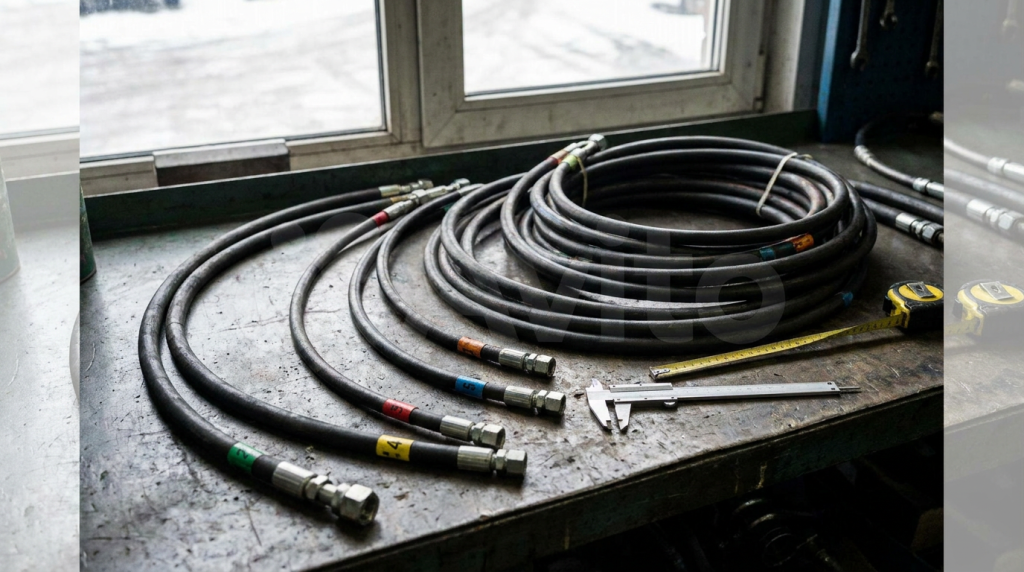
Hydraulic hose sizes can feel confusing at first. There are dash numbers, inside diameters, outside diameters, pressure ratings, fittings, threads, and bend radius charts. Yet, like many practical skills, once we slow down and understand the basics, the subject becomes much more approachable.
In Bhakti Yoga, the path of loving devotion, we learn that service is sacred when offered with sincerity. Even technical work—repairing a machine, maintaining equipment, helping a farm operate, or keeping a construction site safe—can become meaningful when done with care, honesty, and attention. A properly sized hydraulic hose is not only a mechanical choice; it is a choice that supports safety, efficiency, and responsible service.
This guide explains hydraulic hose sizes in simple terms so you can choose, measure, and understand hoses with more confidence.
For those looking to understand the intricacies of hydraulic hose sizes, a related article that may be of interest is about electric motor rewinding services. This article provides insights into the maintenance and repair of electric motors, which often rely on hydraulic systems for optimal performance. To learn more about this essential service and its connection to hydraulic applications, you can visit the article here: Electric Motor Rewinding Services.
What Hydraulic Hose Size Really Means
Hydraulic hose size usually refers to the inside diameter of the hose, often shortened to ID. This is the open space inside the hose where hydraulic fluid flows.
The inside diameter matters because hydraulic systems depend on the movement of fluid under pressure. If the hose is too small, fluid may be restricted. If it is too large, the system may lose efficiency, cost more, or become harder to route.
Inside Diameter, Outside Diameter, and Length
There are three basic measurements to understand:
Inside diameter, or ID, is the inner opening of the hose. This is the most important size for hydraulic flow.
Outside diameter, or OD, is the total width of the hose from outer edge to outer edge. This matters when routing hoses through tight spaces, clamps, guards, or protective sleeves.
Length is the measurement from one end of the hose assembly to the other. Depending on fitting style, hydraulic hose length may be measured differently, so it is important to follow the supplier’s method.
A simple way to remember this is: ID affects flow, OD affects space, and length affects fit.
Why Hose Size Is Not Just About Diameter
When people ask, “What size hydraulic hose do I need?” they often mean diameter. But the complete answer includes:
- Hose inside diameter
- Working pressure rating
- Burst pressure rating
- Temperature range
- Fluid compatibility
- Fitting type and thread size
- Bend radius
- Hose construction
- Application requirements
In other words, hose size is part of a larger system. Just as in spiritual life, one practice supports another—chanting, prayer, service, study, and community—the hydraulic hose works properly only when all parts are in harmony.
The Hydraulic Hose Dash Size System
One of the most common ways hydraulic hoses are sized is by the dash size system. A dash size is a shorthand number that represents the hose inside diameter in sixteenths of an inch.
For example, a -4 hydraulic hose has an inside diameter of 4/16 inch, which equals 1/4 inch.
Common Dash Sizes and Inch Measurements
Here are some common hydraulic hose dash sizes:
- -3 hose = 3/16 inch ID
- -4 hose = 1/4 inch ID
- -5 hose = 5/16 inch ID
- -6 hose = 3/8 inch ID
- -8 hose = 1/2 inch ID
- -10 hose = 5/8 inch ID
- -12 hose = 3/4 inch ID
- -16 hose = 1 inch ID
- -20 hose = 1 1/4 inch ID
- -24 hose = 1 1/2 inch ID
- -32 hose = 2 inch ID
The formula is simple:
Dash size ÷ 16 = hose ID in inches
So a -8 hose is 8/16 inch, or 1/2 inch.
Metric Hydraulic Hose Sizes
In many parts of the world, hydraulic hose sizes are listed in millimeters. For example:
- 1/4 inch is about 6.4 mm
- 3/8 inch is about 9.5 mm
- 1/2 inch is about 12.7 mm
- 3/4 inch is about 19 mm
- 1 inch is about 25.4 mm
Metric sizing can sometimes create confusion because a hose may be described by a nominal size rather than an exact measurement. When replacing a hose, it is best to confirm the actual inside diameter, fitting type, and pressure rating rather than relying only on a rough conversion.
Hose Size vs. Fitting Size
One common mistake is assuming the hose size and fitting thread size are always the same. They are related, but they are not identical.
For example, a -6 hose has a 3/8 inch inside diameter. But the fittings attached to that hose may have different thread styles or thread sizes, such as JIC, NPT, ORFS, BSPP, or metric threads.
The hose dash size tells you the hose ID. The fitting size tells you how the hose connects to the hydraulic component.
Please check out our latest article at https://cemindustrialsupply.com/news/ for more information.
Why Hydraulic Hose Size Matters
Choosing the correct hydraulic hose size helps the system operate safely and efficiently. A hose that is too small or too large can create problems.
Flow Rate and Fluid Velocity
Hydraulic fluid must move through the hose at the proper velocity. If the hose is too small, fluid has to move faster to deliver the same flow. This can cause heat, pressure drop, noise, and damage over time.
If the hose is too large, the system may become bulky and expensive. Larger hoses can also be harder to route and may not fit properly in existing brackets or machine spaces.
In a healthy hydraulic system, the hose size supports the correct flow without unnecessary restriction.
Pressure Drop and Heat
Pressure drop happens when fluid loses pressure as it moves through a hose, fitting, valve, or other restriction. Too much pressure drop can make equipment weaker, slower, or less efficient.
A hose that is undersized may create excessive friction. That friction becomes heat. Heat is one of the great enemies of hydraulic systems because it can damage seals, reduce oil life, and weaken hose materials.
Correct hose sizing helps keep fluid moving smoothly, reducing heat and protecting the system.
Safety and Service Life
Hydraulic systems can operate under very high pressure. A failed hose can release fluid with dangerous force. This is why correct sizing, proper routing, and pressure rating are serious matters.
A hose that is too small may be overstressed. A hose that is too short may be pulled tight during machine movement. A hose bent too sharply may weaken and fail early.
Choosing the right hose size is an act of responsibility. It protects workers, equipment, and the people who depend on that equipment.
Understanding hydraulic hose sizes is crucial for ensuring optimal performance in various applications. For those looking to enhance their knowledge further, a related article on abrasive wheel safety provides valuable insights into compliance and best practices in industrial settings. You can read more about this important topic in the article on abrasive wheel safety, which highlights common misconceptions and essential safety measures that every shop should consider.
How to Measure a Hydraulic Hose
Measuring a hydraulic hose correctly is essential when replacing or ordering a new assembly. If possible, remove the old hose safely after relieving system pressure. Always follow proper lockout and safety procedures.
Measuring the Inside Diameter
The inside diameter is usually not measured from the outside of the hose because hose wall thickness varies. If the hose is cut, you can measure the opening directly with calipers.
If the hose is already assembled and not cut, check the markings printed on the hose cover. Many hydraulic hoses list the size, pressure rating, standard, and manufacturer information.
For example, the hose may show something like:
SAE 100R2AT -08 4000 PSI
In this example, -08 means the hose is a -8 size, or 1/2 inch inside diameter.
Measuring Overall Hose Length
Hydraulic hose length can be measured differently depending on the fittings. In general, length is measured from the sealing surface or end connection of one fitting to the sealing surface or end connection of the other.
For straight fittings, you may measure from tip to tip. For elbows, you may measure to the centerline of the sealing surface. Because methods can vary, it is wise to bring the old hose to a trusted hydraulic shop or provide a clear diagram.
Reading Hose Markings
Hydraulic hose markings are like a helpful scripture for the technician—small lines of text that reveal important truth when read carefully.
Common markings may include:
- Manufacturer name
- Hose standard, such as SAE 100R1, SAE 100R2, or EN standard
- Hose size, such as -6 or DN10
- Working pressure
- Temperature range
- Date of manufacture or batch code
These markings help you match the hose properly. If the markings are worn away, the hose may need to be identified by measurement, fitting style, and system requirements.
Common Hydraulic Hose Sizes and Applications
Different hydraulic hose sizes are used for different types of machines and functions. There is no single “best” hose size for all applications. The right size depends on flow, pressure, fluid, and the machine’s design.
Small Hydraulic Hose Sizes
Smaller hoses, such as -3, -4, and -5, are often used in pilot lines, lubrication systems, control circuits, and compact equipment.
A -4 hose, with a 1/4 inch inside diameter, is common in many hydraulic applications where flow requirements are modest. It is flexible, easier to route, and suitable for many smaller circuits.
Medium Hydraulic Hose Sizes
Medium hose sizes such as -6, -8, and -10 are very common.
A -6 hose, or 3/8 inch ID, may be used in many mobile hydraulic systems.
A -8 hose, or 1/2 inch ID, is widely used where higher flow is needed.
A -10 hose, or 5/8 inch ID, can support greater fluid movement while still being manageable in size.
These sizes are common on tractors, loaders, skid steers, forklifts, presses, and industrial machines.
Large Hydraulic Hose Sizes
Larger sizes such as -12, -16, -20, and above are used when high flow is required. These hoses may appear on excavators, cranes, mining equipment, heavy manufacturing equipment, and return or suction lines.
Large hoses require extra attention to routing, support, bend radius, and installation. Because they carry more volume and can be heavy, poor installation can place stress on fittings and components.
Hydraulic Hose Pressure Ratings
Hydraulic hose size should never be chosen without considering pressure. Two hoses may have the same inside diameter but very different pressure ratings.
Working Pressure
Working pressure is the maximum pressure the hose is designed to handle during normal operation. The hose’s working pressure must meet or exceed the system’s maximum operating pressure.
For example, if a system operates at 3,000 PSI, the hose should be rated for at least 3,000 PSI, and preferably selected according to the machine manufacturer’s specifications.
Burst Pressure
Burst pressure is the pressure at which the hose may rupture during testing. It is much higher than working pressure, often four times higher, depending on the hose standard.
However, burst pressure is not a normal operating rating. It is a safety measure, not a permission to run the hose beyond its working pressure.
Pressure Ratings Can Change by Size
A very important point: pressure rating often changes as hose size changes. Larger hoses of the same construction may have lower pressure ratings than smaller hoses.
For example, a two-wire braided hose in a small size may have a higher working pressure than the same hose style in a larger size.
This is why it is not enough to say, “I need a two-wire hose.” You must confirm both the size and the pressure rating.
Hydraulic Hose Standards and Construction
Hydraulic hoses are made in different constructions to serve different needs. The size is only one part of the hose identity.
SAE Hydraulic Hose Standards
In North America, many hydraulic hoses are identified by SAE standards. SAE stands for the Society of Automotive Engineers.
Common examples include:
- SAE 100R1: one-wire braided hydraulic hose
- SAE 100R2: two-wire braided hydraulic hose
- SAE 100R12: four-spiral high-pressure hydraulic hose
- SAE 100R13: heavy-duty, high-pressure spiral hose
- SAE 100R15: very high-pressure hydraulic hose
- SAE 100R17: compact hydraulic hose
- SAE 100R16: compact two-wire hose
Each standard includes details about pressure, construction, performance, and use.
Wire Braid vs. Spiral Hose
Hydraulic hose reinforcement may be made with wire braid or spiral wire.
Wire braided hose is common, flexible, and suitable for many medium-pressure applications.
Spiral hose is often used for high-pressure, high-impulse applications. It is usually stronger under repeated pressure surges but may be less flexible than braided hose.
The correct choice depends on the system’s pressure, movement, impulse cycles, and environment.
Compact Hydraulic Hose
Compact hydraulic hoses are designed to provide high performance with a smaller outside diameter and tighter bend radius. They can be useful where space is limited.
However, compact does not automatically mean better for every application. Always confirm compatibility with pressure, fluid, fittings, and manufacturer recommendations.
Fittings, Threads, and Hose Ends
A hydraulic hose assembly includes the hose and the fittings attached to each end. Even if you choose the correct hose size, the assembly will not work if the fittings are wrong.
Common Hydraulic Fitting Types
Some common fitting types include:
JIC fittings, which have a 37-degree flare and are common in many hydraulic systems.
NPT fittings, which are tapered pipe threads often used in older or general industrial systems.
ORFS fittings, or O-ring face seal fittings, which seal with an O-ring and are known for good leak resistance.
BSP fittings, common in British and international equipment.
Metric fittings, common on many European and Asian machines.
Each fitting type seals differently. Some seal on threads, some on flares, and some with O-rings. Mixing them incorrectly can cause leaks or damage.
Straight, Elbow, and Angle Fittings
Hydraulic fittings may be straight, 45-degree, or 90-degree. The angle affects how the hose routes through the machine.
When replacing a hose, pay close attention to fitting orientation. A hose with two elbow fittings may need the fittings aligned at a specific angle. This is called the hose’s orientation or clocking.
If the orientation is wrong, the hose may twist during installation. Twisting a hydraulic hose can shorten its life and increase the risk of failure.
Crimped vs. Reusable Fittings
Most modern hydraulic hoses use crimped fittings. A crimping machine compresses the fitting onto the hose to create a secure assembly.
Reusable fittings can be installed without a crimper in some situations, but they must be matched carefully to the hose type. Not all hoses accept reusable fittings.
For safety, hydraulic hose assemblies should be made or inspected by trained people using proper equipment and specifications.
Bend Radius, Routing, and Installation
Even the correct hydraulic hose size can fail early if it is installed poorly. Proper routing is a vital part of hose life.
Minimum Bend Radius
Every hydraulic hose has a minimum bend radius. This is the tightest curve the hose can safely handle without damage.
Bending a hose tighter than its rating can weaken reinforcement, restrict flow, and cause early failure.
A gentle curve is better than a sharp bend. In spiritual life, too, a gentle and steady path often carries us farther than forceful strain. Bhakti Yoga teaches that sincere practice grows naturally when we make space for it each day.
Avoiding Twist
Hydraulic hoses are designed to bend, not twist. Twisting can damage the reinforcement and cause the hose to fail.
When installing a hose, make sure the fittings are aligned correctly. If the hose wants to twist into place, the fitting angle or hose length may be wrong.
Protecting Against Abrasion
Hydraulic hoses often run near metal edges, moving parts, heat sources, and rough surfaces. Abrasion is one of the most common causes of hose failure.
Use clamps, guards, sleeves, and proper routing to protect the hose. A small investment in protection can prevent costly downtime later.
How to Choose the Right Hydraulic Hose Size
Choosing the right hose size is not guesswork. It is a careful process based on the system’s needs.
Know the Flow Rate
The flow rate, usually measured in gallons per minute or liters per minute, helps determine the required hose ID.
Higher flow generally requires a larger hose. If flow is forced through a hose that is too small, fluid velocity becomes too high and the system may overheat.
Know the Pressure
Check the system’s maximum operating pressure. Choose a hose with a working pressure equal to or greater than that pressure.
Remember that pressure spikes can occur. Machines with frequent impulse loads may require a stronger hose construction.
Know the Fluid
Hydraulic hoses must be compatible with the fluid used in the system. Most standard hoses are designed for petroleum-based hydraulic oil, but some systems use water-glycol, biodegradable fluids, synthetic fluids, or other media.
Fluid compatibility affects the inner tube of the hose. The wrong hose material can soften, crack, or fail.
Know the Environment
Consider temperature, sunlight, chemicals, abrasion, movement, and exposure.
A hose used indoors on a stationary press may have different needs than a hose used outdoors on an excavator in mud, sunlight, and freezing weather.
Follow the Manufacturer’s Guidance
When possible, follow the machine manufacturer’s specifications. The original hose size and rating were chosen for a reason.
If you need to change hose size or routing, consult a hydraulic specialist. Changing one hose can affect system performance.
Common Mistakes When Sizing Hydraulic Hose
Learning from common mistakes can save time, money, and frustration.
Choosing Based Only on the Old Hose’s Outside Diameter
Outside diameter does not tell the full story. Two hoses with the same OD can have different inside diameters, pressure ratings, and constructions.
Always confirm the hose markings or measure the ID directly if possible.
Ignoring Pressure Rating
A hose may fit physically but still be unsafe if the pressure rating is too low.
Never choose a hose only because it “looks strong.” Read the rating.
Using the Wrong Fittings
Incorrect fittings can leak, loosen, or damage ports. Thread types may look similar but seal differently.
If unsure, use thread gauges, fitting identification charts, or professional help.
Making the Hose Too Short
A hose that is too short may pull tight when the machine moves. This creates stress at the fittings and can cause failure.
Allow for movement, vibration, and proper bend radius.
Forgetting About Suction and Return Lines
Not every hydraulic line is a high-pressure line. Suction and return lines have different requirements.
A suction hose may need to resist collapse under vacuum. A return line may need to handle flow with minimal restriction. Using the wrong hose type can create serious system problems.
A Simple Hydraulic Hose Size Checklist
When ordering or replacing a hydraulic hose, gather the following information:
- Hose inside diameter or dash size
- Hose length
- Working pressure rating
- Hose standard or construction
- Fluid type
- Temperature range
- Fitting type on each end
- Fitting thread size
- Fitting angle and orientation
- Bend radius requirements
- Environmental conditions
- Machine make and model, if available
This checklist can help you speak clearly with a hydraulic supplier and reduce the chance of mistakes.
Bringing Practical Work and Spiritual Intention Together
Hydraulic hose sizing is a technical subject, but the way we approach it can still reflect deeper values. In the Bhagavad-gita, a beloved Bhakti scripture, Krishna teaches that work can become sacred when offered with devotion and sincerity. Bhakti means loving service to God. Yoga means connection. So Bhakti Yoga is the path of reconnecting with God through love.
This does not mean we must leave our daily duties behind. Rather, we can bring prayerful awareness into them.
A mechanic choosing the correct hydraulic hose with care is serving safety. A farmer repairing equipment is serving the land and community. A technician preventing leaks is serving the environment. A business owner choosing quality parts is serving customers honestly.
Chanting, prayer, service, and thoughtful work can all support spiritual growth. A simple mantra, such as the Hare Krishna maha-mantra, can be chanted softly before beginning the day:
**Hare Krishna, Hare Krishna, Krishna Krishna, Hare Hare
Hare Rama, Hare Rama, Rama Rama, Hare Hare**
In this tradition, “Krishna” is a name of God meaning the all-attractive one, and “Rama” refers to the source of spiritual joy. Chanting is a way to invite divine remembrance into ordinary life.
Final Thoughts on Hydraulic Hose Sizes
Hydraulic hose sizes are mainly based on inside diameter, often shown as a dash size. But choosing the right hose also requires attention to pressure, flow, fittings, length, bend radius, fluid compatibility, and environment.
A properly sized hydraulic hose helps a system run safely, efficiently, and reliably. It reduces heat, prevents pressure loss, supports correct movement, and protects people and equipment.
If you are unsure, seek guidance from a qualified hydraulic professional. There is humility in asking for help, and humility is a strength in both practical work and spiritual life.
Wherever you are coming from, and whatever kind of work fills your day, you are welcome on the path of sincere growth. Take one sincere step toward God—through a prayer, a chant, an act of service, or a moment of gratitude—and let that step become the beginning of deeper connection.
[fluentform id=”3″]
FAQs
What are the common hydraulic hose sizes?
The most common hydraulic hose sizes are 1/4 inch, 3/8 inch, 1/2 inch, and 3/4 inch. These sizes refer to the internal diameter of the hose.
How do I determine the right hydraulic hose size for my application?
The right hydraulic hose size for your application depends on factors such as the flow rate, pressure, and type of fluid being conveyed. It is important to consult with a hydraulic hose specialist to determine the appropriate size for your specific needs.
What are the differences between the various hydraulic hose sizes?
The main differences between hydraulic hose sizes are their flow capacity and pressure rating. Smaller hose sizes have lower flow capacity and pressure ratings, while larger hose sizes can handle higher flow rates and pressures.
Can I use a different size hydraulic hose than what is recommended for my equipment?
It is not recommended to use a different size hydraulic hose than what is specified for your equipment. Using the wrong size hose can lead to performance issues, safety hazards, and potential damage to the equipment.
Where can I find more information about hydraulic hose sizes and specifications?
You can find more information about hydraulic hose sizes and specifications from hydraulic hose manufacturers, industry publications, and online resources. It is also advisable to consult with a hydraulic hose specialist for specific guidance.