
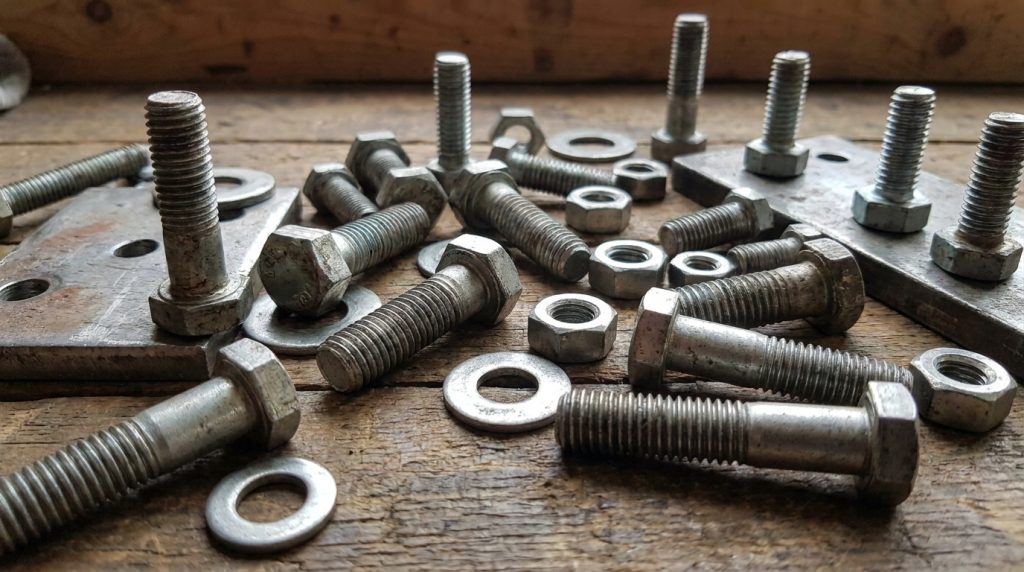
Hex bolts are externally threaded fasteners with a six-sided head designed to be tightened or loosened with a wrench, socket, or impact tool. They are among the most widely used industrial fasteners because they provide strong clamping force, easy installation, and reliable performance across construction, manufacturing, machinery repair, transportation, and maintenance operations.
A hex bolt typically consists of:
- Hex head: Six-sided head for tool engagement
- Shank: The unthreaded or threaded body below the head
- Threads: Spiral ridges that engage with a nut or tapped hole
- Bearing surface: The underside of the head that distributes load
- Point or end: The threaded end that enters the nut or receiving material
For contractors, mechanics, maintenance teams, and industrial buyers, selecting the correct hex bolt is not simply a matter of size. The right choice depends on material, grade, thread type, coating, tensile strength, corrosion resistance, and application requirements.
Using the wrong bolt can lead to loosening, corrosion, joint failure, equipment downtime, or safety risks. Using the right hex bolt improves assembly strength, service life, and jobsite reliability.
For those interested in understanding the various aspects of mechanical fasteners, the article “Hex Bolts Explained: Types, Grades & Applications” provides a comprehensive overview of hex bolts, including their specifications and uses in different industries. Additionally, readers may find it beneficial to explore the related article on gearbox oil leaks, which discusses the causes and urgency of addressing such issues in machinery. This can be particularly relevant for those working with equipment that utilizes hex bolts, as proper maintenance is crucial for ensuring optimal performance. You can read more about it here: gearbox oil leaks.
Hex Bolts vs. Hex Cap Screws: What’s the Difference?
Hex bolts and hex cap screws are often grouped together, and in many purchasing conversations, the terms are used interchangeably. However, there are technical differences worth understanding, especially for specification-driven work.
Hex Bolts
Hex bolts are commonly used with nuts and washers to fasten two or more components together. They may have a partially threaded shank, depending on length and standard.
Typical hex bolt applications include:
- Structural steel connections
- Wood-to-metal fastening
- Equipment frames
- Pipe supports
- Brackets and base plates
- General construction assemblies
Hex bolts are generally produced with wider tolerances than precision cap screws and are frequently used where a nut completes the assembly.
Hex Cap Screws
Hex cap screws are more tightly controlled dimensionally and are often installed into tapped holes instead of being paired with a nut. They usually have a washer face under the head and more precise body dimensions.
Common hex cap screw applications include:
- Machinery assemblies
- Engine components
- Industrial equipment
- Precision brackets
- OEM manufacturing
- Tapped-hole fastening
Quick Comparison: Hex Bolt vs. Hex Cap Screw
| Feature | Hex Bolt | Hex Cap Screw |
|---|---|---|
| Typical Use | Through-bolting with a nut | Threading directly into a tapped hole or threaded component |
| Dimensional Precision | General-purpose manufacturing tolerances | Manufactured to tighter dimensional tolerances |
| Bearing Surface | Varies by applicable standard | Typically features a washer-faced bearing surface |
| Common Applications | Construction, structural steel, maintenance, and general industrial assemblies | Machinery, equipment, OEM manufacturing, and precision mechanical assemblies |
| Installation | Typically installed with a matching nut and washer | Usually installed directly into a threaded hole or tapped component |
If your application requires precise fit, tapped-hole installation, or engineered assembly specifications, verify whether the print calls for a hex cap screw rather than a general hex bolt.
Common Types of Hex Bolts
Hex bolts are available in many forms to suit different loads, environments, and installation requirements. Understanding the main types helps buyers and installers avoid costly mismatches.
Fully Threaded Hex Bolts
Fully threaded hex bolts have threads running from the end of the bolt up to near the underside of the head. This design provides maximum thread engagement and adjustment range.
They are useful when:
- The joined materials are thin
- Maximum grip flexibility is needed
- The bolt passes through a slotted hole
- Field adjustment may be required
- The assembly uses a nut on the opposite side
Practical example: A maintenance technician fastening a light-duty equipment guard may choose fully threaded hex bolts because the assembly thickness varies and full-thread engagement allows easier adjustment.
Partially Threaded Hex Bolts
Partially threaded hex bolts have an unthreaded shank section beneath the head and threads near the end. The smooth shank can improve shear strength and alignment when the joint is loaded sideways.
They are commonly used in:
- Structural assemblies
- Heavy machinery
- Suspension and frame components
- Steel connections
- Wood construction
The unthreaded portion should ideally pass through the shear plane of the joint when shear resistance is important. Threads in the shear plane can create stress concentration and reduce performance.
Tap Bolts
Tap bolts are hex head fasteners that are fully threaded regardless of length. They are often used in drilled and tapped holes or applications where a full-length thread is required.
Common uses include:
- Machinery repair
- Mounting plates
- Tapped flanges
- Equipment maintenance
- Replacement fastening
Tap bolts are convenient for maintenance teams because they provide full thread engagement in variable-depth holes.
Heavy Hex Bolts
Heavy hex bolts have a larger head than standard hex bolts. The increased head size provides a larger bearing surface and stronger wrenching area.
They are frequently used in:
- Structural steel
- Bridges
- Heavy construction
- Petrochemical facilities
- Power generation
- Pressure vessels
- Anchor bolt assemblies
Heavy hex bolts are common where high clamping loads and robust installation are required. They are often specified by ASTM standards, especially for structural and industrial applications.
Structural Hex Bolts
Structural hex bolts are engineered for steel-to-steel structural connections. They are commonly manufactured to standards such as ASTM F3125 Grades A325 and A490.
Typical applications include:
- Steel buildings
- Bridges
- Transmission towers
- Industrial platforms
- Seismic-resistant connections
- Bolted beam and column joints
Structural bolts are often installed with hardened washers and heavy hex nuts. Installation may require specific pretensioning methods, depending on the project specification.
Flange Hex Bolts
Flange bolts include an integrated washer-like flange under the head. This flange distributes load over a wider area and can reduce the need for a separate washer.
Some flange bolts also have serrations that resist loosening. However, serrated flange bolts may damage painted or coated surfaces and may not be suitable for all applications.
Common uses include:
- Automotive assembly
- Light machinery
- HVAC equipment
- Sheet metal brackets
- Appliance manufacturing
- Maintenance repairs
Carriage Bolts vs. Hex Bolts
Carriage bolts are sometimes compared with hex bolts because both are used in construction and maintenance. However, carriage bolts have a round head and square neck, while hex bolts have a wrenchable head.
Carriage bolts are useful where a smooth finished head is needed or where one-sided tightening is possible. Hex bolts are better when installers need positive tool engagement from the head side.
For more articles on industrial supply, visit https://cemindustrialsupply.com/news/ for the latest updates.
Hex Bolt Materials and Finishes
The material and finish determine a bolt’s strength, corrosion resistance, temperature performance, and suitability for specific environments. Industrial buyers should match the bolt material and coating to the service conditions.
Carbon Steel Hex Bolts
Carbon steel is the most common material for hex bolts. It offers good strength, broad availability, and cost-effective performance.
Carbon steel hex bolts are used in:
- General construction
- Equipment mounting
- Fabrication
- Maintenance repair
- Agricultural machinery
- Material handling systems
Carbon steel bolts are often zinc plated, hot-dip galvanized, black oxide coated, or supplied plain depending on the application.
Alloy Steel Hex Bolts
Alloy steel bolts are made with additional elements such as chromium, molybdenum, or nickel to improve strength, hardness, and performance under demanding loads.
They are often used in:
- Heavy machinery
- Mining equipment
- High-strength assemblies
- Industrial presses
- Automotive and truck components
- Critical mechanical joints
Common high-strength alloy steel bolts include SAE Grade 8 and ASTM A490-type structural bolts.
Stainless Steel Hex Bolts
Stainless steel hex bolts provide improved corrosion resistance compared with plain carbon steel. They are commonly used in wet, corrosive, sanitary, or outdoor environments.
Popular stainless grades include:
- 18-8 stainless steel: General-purpose corrosion resistance
- 304 stainless steel: Widely used for food, architectural, and industrial applications
- 316 stainless steel: Better resistance to chlorides, saltwater, and harsh chemicals
Stainless steel is often selected for:
- Marine environments
- Food processing equipment
- Chemical plants
- Outdoor architectural installations
- Wastewater facilities
- Washdown areas
Important note: Stainless steel is corrosion resistant, not corrosion proof. In chloride-heavy environments, 316 stainless is usually preferred over 304 or 18-8.
Brass, Bronze, and Specialty Hex Bolts
Nonferrous hex bolts are used when corrosion resistance, conductivity, non-sparking properties, or appearance are important.
Examples include:
- Brass hex bolts: Electrical equipment, decorative hardware, low-friction applications
- Silicon bronze hex bolts: Marine hardware, wood boat construction, outdoor exposure
- Aluminum hex bolts: Lightweight assemblies where high strength is not the primary requirement
Specialty materials may be required in chemical processing, aerospace, defense, or high-temperature environments. Always confirm material compatibility before substitution.
Common Hex Bolt Finishes
| Finish or Coating | Primary Benefit | Common Applications |
|---|---|---|
| Plain / Black | Economical with basic corrosion protection | Indoor machinery, temporary assemblies, and dry-service applications |
| Zinc Plated | Light corrosion resistance | General maintenance, indoor equipment, and light-duty outdoor applications |
| Hot-Dip Galvanized | Heavy-duty corrosion protection | Outdoor construction, utility infrastructure, structural steel, and fencing |
| Black Oxide | Mild corrosion resistance with an attractive finish | Tools, industrial machinery, and indoor equipment |
| Cadmium Plated | Corrosion resistance with excellent lubricity | Aerospace and legacy military applications, where permitted by regulations |
| PTFE / Xylan-Type Coatings | Low friction with excellent chemical resistance | Petrochemical facilities, offshore platforms, chemical processing, and process piping |
| Mechanical Galvanized | Corrosion protection with reduced risk of hydrogen embrittlement | Structural steel, utility hardware, and high-strength fasteners |
For outdoor construction and utility work, hot-dip galvanized hex bolts are often preferred over standard zinc-plated bolts because the coating is thicker and more durable.
When exploring the various types and applications of hex bolts, it’s also essential to consider the broader context of home improvement projects that may require reliable hardware. For instance, if you’re planning a renovation that involves plumbing or structural changes, understanding the importance of quality fasteners can be crucial. You might find it helpful to read about how to choose trustworthy contractors for your remodeling needs in this informative article on finding reliable jacuzzi bath remodel contractors nearby. This can provide you with insights that complement your knowledge of hex bolts and their applications. For more details, check out the article here.
Hex Bolt Grades and Strength Ratings
Hex bolt grades identify mechanical properties such as tensile strength, yield strength, and hardness. Choosing the correct grade is critical for safety and performance.
SAE Hex Bolt Grades
SAE grades are commonly used in automotive, machinery, and general industrial applications in the United States.
| SAE Grade | Head Marking | Typical Material | Approx. Minimum Tensile Strength | Common Uses |
|---|---|---|---|---|
| Grade 2 | No radial lines | Low- or medium-carbon steel | 60,000 psi | Light-duty fastening, woodworking, furniture, and non-critical assemblies |
| Grade 5 | Three radial lines | Quenched and tempered medium-carbon steel | 120,000 psi | Automotive repair, industrial equipment, agricultural machinery, and general manufacturing |
| Grade 8 | Six radial lines | Quenched and tempered alloy steel | 150,000 psi | High-strength machinery, heavy equipment, structural mechanical assemblies, and other critical joints |
SAE Grade 5 is a common all-purpose choice for maintenance and mechanical work. SAE Grade 8 provides higher strength but is not automatically better for every application. Higher hardness can affect ductility and compatibility with mating components.
ASTM Hex Bolt Grades
ASTM specifications are often used in construction, structural steel, pressure systems, and engineered projects.
| ASTM Specification | Description | Common Applications |
|---|---|---|
| ASTM A307 | Low-carbon steel bolts for general-purpose fastening | General construction, light-duty structural connections, and utility applications |
| ASTM F3125 Grade A325 (formerly ASTM A325) | High-strength structural bolts for steel construction | Steel buildings, bridges, towers, and other structural steel connections |
| ASTM F3125 Grade A490 (formerly ASTM A490) | Higher-strength structural bolts for demanding structural applications | Heavy structural steel connections, bridges, and high-load assemblies |
| ASTM A193 Grade B7 | Heat-treated alloy steel bolts for elevated-temperature and pressure service | Pipe flanges, pressure vessels, refineries, power plants, and petrochemical facilities |
| ASTM A193 Grade B8 / B8M | Stainless steel bolting for corrosion-resistant and pressure-service applications | Chemical processing, marine environments, food processing, and high-temperature equipment |
| ASTM F1554 | Anchor bolts available in multiple strength grades for structural anchoring | Concrete foundations, structural columns, equipment bases, and industrial installations |
ASTM standards are specification-driven. If a project drawing calls for an ASTM grade, do not substitute based only on diameter and length.
Metric Hex Bolt Property Classes
Metric hex bolts use property classes rather than SAE grades. The most common include 8.8, 10.9, and 12.9.
| Metric Class | Approximate Equivalent Use | Common Applications |
|---|---|---|
| Class 4.6 | Low-strength fastening | Light-duty assemblies, equipment covers, brackets, and non-critical applications |
| Class 8.8 | Comparable working category to SAE Grade 5 | Industrial machinery, automotive equipment, construction, and general manufacturing |
| Class 10.9 | High-strength fastening | Heavy equipment, industrial machinery, structural mechanical assemblies, and high-load applications |
| Class 12.9 | Very high-strength engineered fastening | Socket head cap screws, tooling, dies, molds, precision machinery, and other high-load assemblies |
Metric property class numbers indicate strength characteristics. For example, Class 10.9 has a nominal tensile strength of approximately 1,000 MPa and a yield strength ratio of 0.9.
How to Read Hex Bolt Head Markings
Head markings help identify bolt grade, manufacturer, and sometimes material. For example:
- No radial lines: Often SAE Grade 2
- Three radial lines: SAE Grade 5
- Six radial lines: SAE Grade 8
- A325 or A490: Structural bolt grade
- 8.8, 10.9, 12.9: Metric property class
- Manufacturer mark: Required by many standards for traceability
Never rely solely on color or finish to identify bolt strength. A zinc-plated bolt may be Grade 2, Grade 5, or another grade entirely. Always check markings and documentation.
In addition to understanding hex bolts, it’s essential to explore various industrial components that complement their use, such as industrial fans. These fans play a crucial role in maintaining optimal working conditions in environments where hex bolts are commonly applied. For more information on how these fans can enhance efficiency in industrial settings, you can read this insightful article on industrial fans.
Hex Bolt Thread Types and Sizing
Hex bolt selection requires accurate sizing. Diameter, length, thread pitch, and thread fit all affect performance.
Diameter
Bolt diameter is measured across the outside of the threads. Common imperial sizes include:
- 1/4 inch
- 5/16 inch
- 3/8 inch
- 1/2 inch
- 5/8 inch
- 3/4 inch
- 1 inch and larger
Metric sizes are identified with an “M” followed by nominal diameter, such as M6, M8, M10, M12, M16, and M20.
Length
Hex bolt length is measured from under the head to the end of the bolt. The head itself is not included in the length measurement.
For example, a 1/2″-13 x 2″ hex bolt has:
- 1/2 inch diameter
- 13 threads per inch
- 2 inch length measured under the head
A bolt that is too short may not provide proper thread engagement. A bolt that is too long may interfere with moving parts, create safety hazards, or require unnecessary washers.
Coarse Threads vs. Fine Threads
Imperial hex bolts are commonly available in UNC coarse threads and UNF fine threads.
| Thread Type | Advantages | Common Uses |
|---|---|---|
| Coarse Thread | Faster installation, better performance in softer materials, greater resistance to cross-threading, and better tolerance for minor thread damage | Construction, general maintenance, woodworking, castings, and most general-purpose fastening |
| Fine Thread | Provides more precise tension control, greater thread engagement, and improved resistance to vibration loosening in many applications | Automotive, industrial machinery, aerospace, precision equipment, and high-performance mechanical assemblies |
Coarse threads are often preferred for field work because they install quickly and tolerate dirt or minor damage better. Fine threads are common in equipment assemblies where accurate clamping force is important.
Thread Engagement Rules of Thumb
Proper thread engagement depends on bolt diameter, material strength, and whether the bolt threads into a nut or tapped hole.
General guidelines:
- Steel nut engagement is often adequate at approximately one bolt diameter of full thread engagement.
- Softer materials such as aluminum may require more engagement.
- At least two full threads should extend beyond the nut in many standard assemblies.
- Avoid stacking excessive washers to compensate for incorrect bolt length.
For critical applications, follow engineering specifications, torque charts, and applicable standards.
Where Hex Bolts Are Used
Hex bolts are used across nearly every industrial sector. Their versatility makes them a standard inventory item for contractors, maintenance departments, OEMs, and repair shops.
Construction and Structural Steel
In construction, hex bolts are used to assemble steel members, secure brackets, fasten base plates, and connect framing components.
Common examples:
- Steel beam connections
- Guardrail systems
- Joist supports
- Column base plates
- Stair and platform assemblies
- Wood-to-steel connections
Structural applications often require ASTM-specified bolts, hardened washers, and compatible nuts. Documentation and traceability may be required for inspections.
Manufacturing and OEM Assembly
Manufacturers use hex bolts in production lines because they are easy to install, available in standardized sizes, and compatible with automated or manual tooling.
Typical OEM applications include:
- Equipment frames
- Conveyor systems
- Mounting brackets
- Motor bases
- Enclosures
- Industrial carts
- Agricultural implements
For repeat production, buyers should specify grade, finish, thread type, and packaging requirements to ensure consistency.
Heavy Equipment and Fleet Maintenance
Mechanics and fleet maintenance teams rely on hex bolts for repairs to trucks, trailers, construction equipment, loaders, forklifts, and agricultural machinery.
Common repair points include:
- Suspension brackets
- Engine accessories
- Hydraulic mounts
- Frame attachments
- Hitches and tow components
- Blade and bucket hardware
In these applications, bolt grade matters. Replacing a Grade 8 bolt with a lower-grade fastener can reduce joint capacity and create a failure point.
Industrial Maintenance and MRO
Maintenance, repair, and operations teams use hex bolts for daily plant upkeep and emergency repairs.
Applications include:
- Pump bases
- Gearbox mounts
- Pipe supports
- Safety guards
- Conveyor brackets
- HVAC equipment
- Electrical enclosures
For MRO buyers, keeping a balanced inventory of common diameters, lengths, nuts, and washers can reduce downtime.
Energy, Petrochemical, and Utilities
High-demand environments often require specific bolt materials and coatings.
Examples include:
- Flange bolting
- Pipeline supports
- Refinery equipment
- Offshore platforms
- Power plant systems
- Utility poles and hardware
- Wind and solar mounting systems
In pressure, temperature, or corrosive service, fasteners must meet applicable ASTM, ASME, or project requirements.
How to Choose the Right Hex Bolt
Selecting the right hex bolt requires matching the fastener to the load, environment, and installation method. The cheapest bolt is not always the most economical if it causes rework, corrosion, or failure.
Step 1: Identify the Application Load
Determine whether the bolt will primarily experience:
- Tension: Pulling force along the bolt axis
- Shear: Sideways force across the bolt
- Combined loading: Both tension and shear
- Vibration: Repeated movement or dynamic loading
- Fatigue: Cyclic stress over time
For high-load or safety-critical joints, consult an engineer or follow the equipment manufacturer’s specifications.
Step 2: Confirm the Required Grade
Use the specified grade from drawings, manuals, or standards. If the original bolt has head markings, match them whenever possible.
Do not downgrade bolt strength unless approved by engineering. Also avoid assuming that a stronger bolt is automatically acceptable. Some assemblies are designed with specific ductility, clamp load, and failure behavior in mind.
Step 3: Match the Material and Finish to the Environment
Consider exposure to:
- Moisture
- Salt spray
- Chemicals
- High temperature
- Outdoor weather
- Washdown cleaning
- Galvanic corrosion
- UV exposure affecting surrounding materials
For example:
- Indoor machinery may use zinc-plated Grade 5 bolts.
- Outdoor steel structures may require hot-dip galvanized structural bolts.
- Marine brackets may need 316 stainless steel or silicon bronze.
- High-temperature flanges may require ASTM A193 B7 or stainless pressure-service bolting.
Step 4: Select the Correct Thread Type
Choose coarse or fine threads based on the receiving material and application.
Use coarse threads for:
- General construction
- Field installation
- Softer materials
- Fast assembly
- Dirty or rugged environments
Use fine threads for:
- Machinery
- Automotive
- Tight clamping control
- Limited adjustment
- Applications requiring finer preload control
Step 5: Use Compatible Nuts and Washers
Bolts perform as part of a fastening system. A high-strength bolt paired with an incompatible nut or washer can compromise the joint.
Check compatibility for:
- Nut grade
- Washer hardness
- Coating compatibility
- Thread pitch
- Material pairing
- Galvanic corrosion risk
For example, structural bolts are typically paired with heavy hex nuts and hardened washers that meet project specifications.
Hex Bolt Installation Best Practices
Correct installation is just as important as correct fastener selection. Many bolt failures are caused by improper torque, poor joint preparation, or incompatible hardware.
Clean the Joint Surfaces
Before installation:
- Remove dirt, oil, paint buildup, and scale where required.
- Make sure holes align properly.
- Inspect for burrs or deformation.
- Verify that washers seat flat.
- Confirm that the bolt is not bottoming out in a blind hole.
Misaligned holes can introduce bending stress and reduce joint reliability.
Use the Right Tools
Hex bolts can be installed with:
- Combination wrenches
- Sockets and ratchets
- Torque wrenches
- Impact wrenches
- Hydraulic torque tools
- Tensioning equipment for certain structural or industrial bolts
For critical joints, use calibrated torque tools or specified tensioning methods. Impact tools are useful for speed but can easily over-tighten or under-tighten bolts if not controlled.
Follow Proper Torque Specifications
Torque is used to create clamp load, but torque values depend on bolt size, grade, lubrication, coating, and thread condition.
Key points:
- Lubricated threads require different torque than dry threads.
- Galvanized bolts have different friction characteristics than plain steel.
- Reused bolts may not achieve the same clamp load.
- Stainless steel bolts are more prone to galling if installed dry.
- Manufacturer torque charts are general references unless tied to a specific specification.
When equipment manuals provide torque values, follow them.
Prevent Loosening
Vibration and thermal cycling can loosen bolted joints. Depending on the application, use appropriate locking methods.
Common options include:
- Lock washers
- Nylon insert lock nuts
- All-metal lock nuts
- Thread-locking compounds
- Serrated flange nuts
- Prevailing torque nuts
- Double-nut arrangements
- Safety wire in specialized applications
Choose locking methods carefully. Some are not suitable for high temperatures, reuse, or structural assemblies.
Avoid Common Installation Mistakes
Common problems include:
- Mixing metric and imperial threads
- Reusing damaged or stretched bolts
- Installing lower-grade replacements
- Using the wrong nut grade
- Over-tightening stainless steel fasteners
- Failing to account for coating thickness
- Placing threads in high-shear zones
- Using too many washers as spacers
- Ignoring manufacturer torque requirements
A few minutes of verification can prevent hours of rework.
Hex Bolt Standards and Specifications
Hex bolts are manufactured to dimensional and mechanical standards that help ensure consistency. Industrial buyers should understand which standards apply to their industry.
ASME and IFI Standards
In the United States, dimensional standards may include ASME specifications for hex bolts and hex cap screws. These standards define head dimensions, thread length, tolerances, and other physical characteristics.
Common references include:
- ASME B18 series standards
- IFI fastener guidelines
- Unified Thread Standard for inch threads
These standards matter when fit, tooling, and interchangeability are important.
ASTM Standards
ASTM standards define mechanical properties, materials, testing, and performance requirements for many construction and industrial bolts.
Common ASTM bolt specifications include:
- ASTM A307
- ASTM A193
- ASTM A320
- ASTM F1554
- ASTM F3125
ASTM bolts may require test reports, traceability, lot control, or certification depending on the project.
ISO and DIN Standards
Metric hex bolts may follow ISO or DIN standards. These standards are common in global manufacturing, imported equipment, and multinational supply chains.
Examples include:
- ISO 4014 for hex head bolts with shank
- ISO 4017 for fully threaded hex head screws
- DIN 931 for partially threaded hex bolts
- DIN 933 for fully threaded hex bolts
When replacing metric fasteners on imported equipment, confirm both the thread pitch and property class.
Hex Bolt Buying Guide for Industrial Buyers
Procurement teams and maintenance departments can reduce downtime by standardizing specifications and stocking the right fasteners.
Information to Include When Ordering
When requesting a quote or placing an order, specify:
- Diameter
- Length
- Thread pitch
- Fully threaded or partially threaded
- Grade or property class
- Material
- Finish or coating
- Standard or specification
- Quantity
- Nut and washer requirements
- Certification requirements
- Packaging or labeling needs
Example order description:
1/2″-13 x 2″ Grade 5 hex cap screw, zinc plated, partially threaded, with matching Grade 5 zinc hex nuts and flat washers.
For a structural application, a more detailed order may specify:
ASTM F3125 Grade A325 Type 1 heavy hex structural bolts, 3/4″-10 x 2-1/2″, hot-dip galvanized, with compatible heavy hex nuts and hardened washers, certifications required.
Inventory Tips for Maintenance Teams
For MRO stockrooms, consider keeping common sizes in organized bins with clear labels.
Useful inventory categories:
- Grade 2 zinc for light-duty repairs
- Grade 5 zinc for general equipment work
- Grade 8 plain or zinc/yellow for high-strength mechanical repairs
- Stainless steel 18-8 or 316 for corrosion-prone areas
- Hot-dip galvanized bolts for outdoor maintenance
- Matching nuts and washers by grade and finish
Do not mix grades in unmarked bins. A Grade 2 and Grade 8 bolt of the same size may look similar to untrained personnel but perform very differently.
Hex Bolt Troubleshooting: Common Problems and Solutions
Even properly selected hex bolts can fail if the joint conditions are wrong. Maintenance professionals should inspect both the fastener and the assembly when problems occur.
Problem: Bolt Keeps Loosening
Possible causes:
- Vibration
- Insufficient preload
- Wrong locking method
- Soft joint materials compressing
- Improper torque
- Damaged threads
Possible solutions:
- Re-torque using correct specifications
- Use appropriate locking nuts or threadlocker
- Add hardened washers if specified
- Improve joint surface contact
- Check for vibration isolation needs
Problem: Bolt Corrosion
Possible causes:
- Wrong coating for environment
- Galvanic reaction between dissimilar metals
- Damaged plating
- Chemical exposure
- Saltwater or deicing salt exposure
Possible solutions:
- Switch to hot-dip galvanized or stainless steel
- Use 316 stainless in chloride environments
- Isolate dissimilar metals where practical
- Use compatible coatings
- Inspect and replace corroded fasteners during scheduled maintenance
Problem: Threads Strip During Installation
Possible causes:
- Over-torque
- Cross-threading
- Wrong thread pitch
- Weak tapped material
- Damaged bolt or nut
- Insufficient thread engagement
Possible solutions:
- Verify thread pitch before installation
- Use proper torque values
- Replace damaged nuts and bolts
- Increase engagement in softer materials
- Use thread repair inserts when appropriate
Problem: Bolt Breaks
Possible causes:
- Over-tightening
- Fatigue
- Wrong grade
- Improper joint design
- Hydrogen embrittlement in high-strength plated bolts
- Severe corrosion
- Threads located in shear plane
Possible solutions:
- Match original grade and specification
- Review torque and lubrication assumptions
- Inspect for fatigue loading
- Use proper coating and plating controls
- Consult engineering for critical failures
Frequently Asked Questions About Hex Bolts
Are Hex Bolts Stronger Than Screws?
Not necessarily. Strength depends on material, grade, diameter, thread engagement, and installation. A high-grade hex cap screw may be much stronger than a low-grade hex bolt. Always compare specifications rather than fastener names alone.
Can I Use Stainless Steel Hex Bolts Instead of Grade 5 or Grade 8?
Only if the stainless bolt meets the mechanical requirements of the application. Many common stainless steel bolts have lower tensile strength than SAE Grade 5 or Grade 8 bolts. Stainless is excellent for corrosion resistance, but it is not always a direct strength substitute.
What Is the Best Hex Bolt for Outdoor Use?
For many outdoor construction applications, hot-dip galvanized carbon steel hex bolts provide strong corrosion protection. For marine or highly corrosive environments, 316 stainless steel may be a better choice. The best option depends on load, exposure, and material compatibility.
Why Do Some Hex Bolts Have Partial Threads?
Partial threads leave a smooth shank section that can improve shear performance and alignment. In structural or mechanical joints, placing the unthreaded shank through the shear plane can be beneficial.
Should I Lubricate Hex Bolt Threads?
It depends on the application. Lubrication changes the relationship between torque and clamp load. Some fasteners are installed dry, while others require lubrication or come with coatings that affect friction. Follow the manufacturer’s or project’s torque specification.
Conclusion: Choose Hex Bolts by Specification, Not Guesswork
Hex bolts are essential fasteners for construction, manufacturing, equipment repair, structural steel, industrial maintenance, and countless mechanical assemblies. Their simple appearance can be misleading: the right hex bolt must match the application’s load, environment, thread requirements, grade, material, and installation method.
For reliable results, confirm the bolt type, size, grade, finish, and compatible nuts and washers before installation. Check head markings, follow torque guidance, and avoid substitutions in safety-critical or specification-controlled work.
If you are sourcing hex bolts for a jobsite, maintenance stockroom, production line, or engineered project, work with a knowledgeable fastener supplier that can provide the correct specifications, compatible hardware, and documentation when needed.
Ready to select the right hex bolts for your application? Review your size, grade, finish, and certification requirements, then contact your fastener supplier or request a quote for application-specific support.