
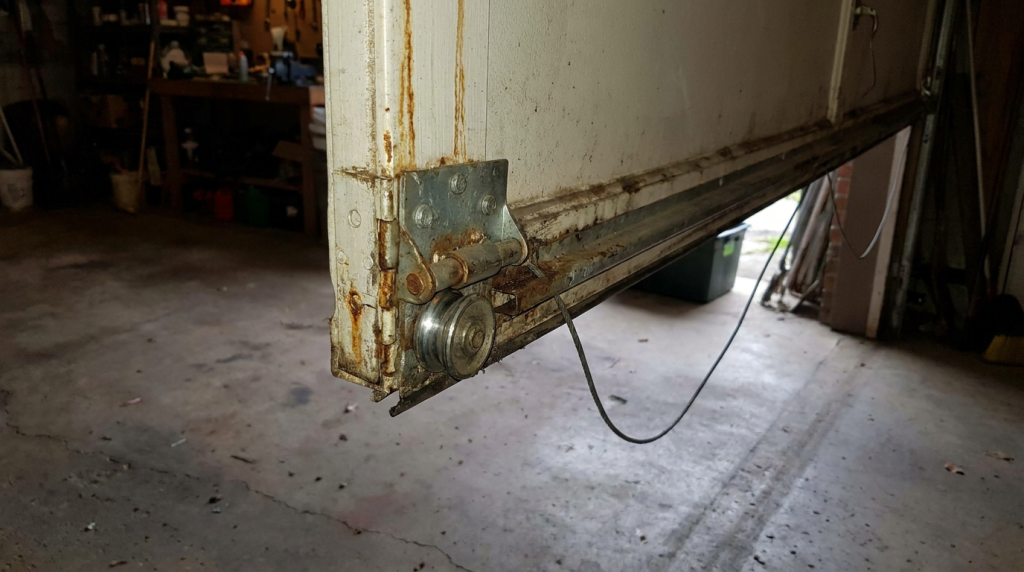
A squeaky garage door is more than an annoyance—it can be an early warning sign that your garage door system needs maintenance. Squeaking, grinding, rattling, or popping noises often result from dry moving parts, loose hardware, worn rollers, or aging springs. Fortunately, many of these issues can be corrected with basic maintenance before they become expensive repairs.
Whether you have a sectional garage door, roll-up door, or overhead garage door, this guide explains how to identify the source of the noise, lubricate moving components properly, and know when it’s time to call a professional.
Why Garage Doors Squeak
A garage door contains dozens of moving parts that work together every time the door opens or closes.
Common causes of squeaking include:
- Dry hinges
- Worn rollers
- Loose hardware
- Dry springs
- Dirty tracks
- Rust
- Misaligned components
- Aging garage door openers
Because these parts move under heavy loads, even minor wear can create noticeable noise.
Common Garage Door Noises and Their Causes
Different sounds often indicate different problems.
Squeaking
Usually caused by:
- Lack of lubrication
- Dry hinges
- Dry roller bearings
Grinding
May indicate:
- Worn rollers
- Damaged bearings
- Garage door opener problems
Rattling
Often caused by:
- Loose bolts
- Loose hinges
- Vibrating tracks
- Loose brackets
Popping
May point to:
- Aging springs
- Binding panels
- Structural movement
Identifying the type of noise helps narrow down the source of the problem.
Tools You’ll Need
Most garage door maintenance requires only basic tools.
Recommended supplies include:
- Step ladder
- Work gloves
- Safety glasses
- Socket wrench
- Adjustable wrench
- Garage door lubricant
- Silicone spray
- White lithium grease
- Clean shop towels
- Soft brush
- Flashlight
Most homeowners already have these tools available.
Choose the Right Lubricant
Not every lubricant is suitable for garage doors.
Recommended products include:
- Silicone-based garage door lubricant
- White lithium grease
- Manufacturer-approved opener lubricant
Avoid using heavy grease on tracks because it attracts dirt and debris.
Standard WD-40 is primarily a cleaner and water displacer—not a long-term lubricant. If you prefer WD-40 products, choose one specifically formulated as a garage door lubricant or white lithium grease.
Step 1: Disconnect the Garage Door Opener
Before beginning:
- Close the garage door.
- Unplug the opener.
- Pull the emergency release cord if necessary.
This prevents accidental operation while you’re working.
Step 2: Inspect the Entire Door
Look closely at:
- Hinges
- Rollers
- Tracks
- Springs
- Cables
- Bearing plates
- Brackets
- Fasteners
Watch for:
- Rust
- Loose hardware
- Cracked rollers
- Bent tracks
- Missing fasteners
- Worn components
Step 3: Tighten Loose Hardware
Years of vibration naturally loosen fasteners.
Check and tighten:
- Hinge bolts
- Track brackets
- Roller brackets
- Mounting bolts
Do not overtighten hardware.
Step 4: Lubricate Hinges
Apply lubricant directly to the hinge pivot points.
Open and close the door several times to distribute the lubricant evenly.
Wipe away excess lubricant afterward.
Step 5: Lubricate the Rollers
Lubricate the roller bearings—not the wheel surface itself.
If your rollers are:
- Cracked
- Flat-spotted
- Wobbling
- Severely worn
they should be replaced.
Upgrading to sealed nylon rollers often makes garage doors dramatically quieter.
Step 6: Clean the Tracks
Use a clean cloth to remove:
- Dirt
- Dust
- Cobwebs
- Leaves
- Old debris
Do not heavily lubricate the tracks.
Rollers are designed to roll inside the tracks—not slide.
Step 7: Lubricate Springs
Lightly lubricate:
- Torsion springs
- Extension springs
This helps reduce friction and surface rust.
Never attempt to adjust spring tension yourself.
Garage door springs are under extreme pressure and should only be repaired by trained professionals.
Step 8: Lubricate Bearing Plates
Apply a small amount of lubricant where the torsion shaft rotates inside the bearing plates.
These bearings commonly become noisy with age.
Step 9: Inspect the Garage Door Opener
Depending on the opener type:
Chain Drive
Inspect:
- Chain tension
- Chain lubrication
Screw Drive
Lubricate the screw drive using the lubricant recommended by the manufacturer.
Belt Drive
Generally requires minimal lubrication but should still be inspected.
Step 10: Test the Door
Reconnect the opener.
Operate the door several times.
Listen carefully.
If the noise has disappeared, routine maintenance has likely solved the issue.
If not, continue inspecting for worn components.
When Lubrication Isn’t Enough
Persistent squeaking may indicate parts requiring replacement.
Common culprits include:
- Worn rollers
- Damaged hinges
- Bent tracks
- Worn bearings
- Rusted components
- Aging springs
Replacing worn parts often eliminates long-term noise problems.
Replace Worn Rollers
Old steel rollers frequently become noisy.
High-quality nylon rollers with sealed bearings provide:
- Quieter operation
- Less maintenance
- Longer service life
- Smoother movement
Roller replacement is one of the most effective noise-reduction upgrades.
Common Mistakes to Avoid
Avoid these common errors:
Using heavy grease on tracks
Using standard WD-40 as the only lubricant
Ignoring loose hardware
Attempting spring repairs
Over-lubricating components
Ignoring worn rollers
Continuing to operate a damaged door
Proper maintenance is usually simple—but certain repairs should always be left to professionals.
Prevent Future Garage Door Noise
Routine maintenance helps prevent squeaks from returning.
Every 3 to 6 months:
- Inspect the door.
- Tighten visible hardware.
- Clean the tracks.
- Lubricate moving parts.
- Check for rust.
- Test door balance.
- Listen for unusual sounds.
Regular inspections help identify small problems before they become expensive repairs.
When to Call a Professional
Contact a qualified garage door technician if:
- The door feels unusually heavy.
- A spring has broken.
- Cables appear frayed.
- The door is crooked.
- The tracks are severely bent.
- The door shakes violently.
- Rollers come off the track.
- You suspect opener failure.
Never attempt repairs involving torsion springs or lift cables.
Related Articles
Continue improving your home with these helpful guides:
- Replace Garage Door Rollers
- Repair Rusted Metal Gates
- Install a New Door Closer
- How to Choose a General Contractor in Michigan
- What to Expect from Basement and Foundation Contractors
Frequently Asked Questions
Why is my garage door squeaking?
Most squeaks are caused by dry hinges, roller bearings, springs, or loose hardware. Regular lubrication typically resolves the issue.
What lubricant should I use on a garage door?
Use a silicone-based garage door lubricant or white lithium grease designed specifically for garage door components.
Can I spray WD-40 on my garage door?
Standard WD-40 is primarily a cleaner and water displacer, not a long-term lubricant. Use a dedicated garage door lubricant for best results.
How often should I lubricate my garage door?
Lubricate moving parts every three to six months, or more frequently if the door operates several times each day.
When should I call a garage door repair company?
Call a professional if you notice broken springs, damaged cables, severe track misalignment, excessive vibration, or if the door becomes difficult to lift manually.
Restore Quiet, Smooth Garage Door Operation
A squeaky garage door is often easy to fix with routine maintenance, proper lubrication, and timely replacement of worn components. Regular inspections help extend the life of your garage door system while preventing more serious mechanical failures.
Whether you’re maintaining a residential garage door, commercial overhead door, or workshop entrance, CEM Industrial Supply offers professional-grade lubricants, hand tools, fasteners, safety equipment, replacement hardware, and maintenance supplies to keep your garage door operating safely and quietly for years to come.