
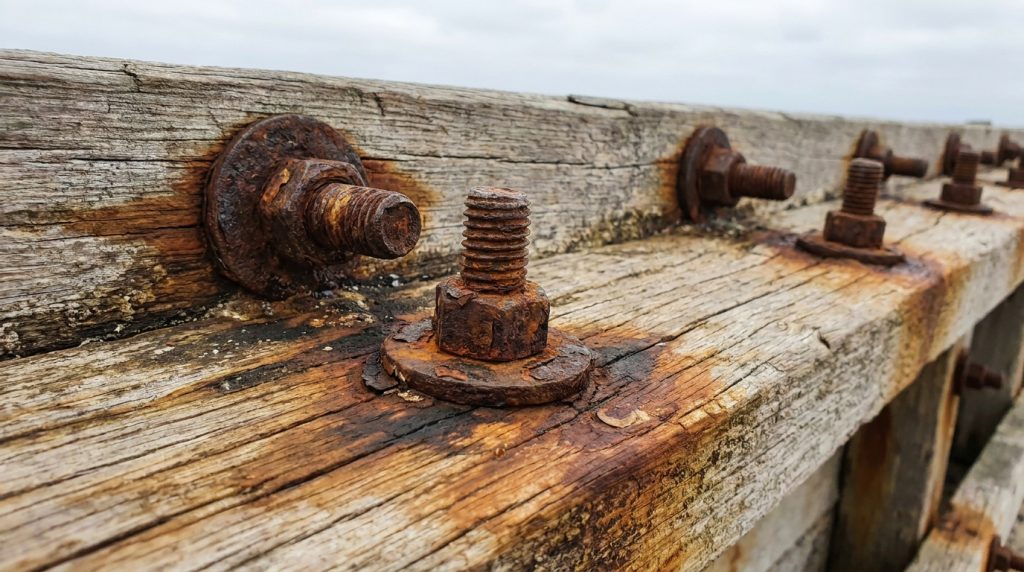
Fastener corrosion is one of the most common—and costly—failure modes in construction, manufacturing, transportation, marine, energy, and facility maintenance environments. A corroded bolt, screw, nut, washer, anchor, rivet, or threaded rod can compromise clamp load, reduce structural integrity, seize during removal, contaminate assemblies, and create safety hazards.
For contractors and maintenance professionals, corrosion can mean unplanned downtime, difficult repairs, failed inspections, and liability exposure. For manufacturers and industrial buyers, it can result in warranty claims, production delays, shortened service life, and higher total cost of ownership.
The good news: most fastener corrosion can be prevented or controlled with the right material selection, coating, installation method, and maintenance plan. This guide explains the causes of fastener corrosion, how to prevent it, how to repair corroded fasteners, and how to choose corrosion-resistant fasteners for demanding applications.
In addition to understanding fastener corrosion, it’s essential to consider the role of environmental factors in industrial settings, which can significantly impact the longevity and performance of various components. For more insights on how to maintain equipment and ensure optimal performance, you can read about industrial fans and their importance in managing air quality and temperature in facilities by visiting this article: Industrial Fans.
What Is Fastener Corrosion?
Fastener corrosion is the deterioration of a fastener material caused by chemical or electrochemical reactions with its environment. In most industrial and outdoor applications, corrosion involves metal reacting with moisture, oxygen, salts, acids, chemicals, or dissimilar metals.
Corrosion can affect:
- Bolts
- Nuts
- Screws
- Washers
- Anchors
- Rivets
- Threaded rod
- Studs
- Pins
- Clips and clamps
- Structural fasteners
- Machine fasteners
Fastener corrosion is not always visible at first. A bolt head may look acceptable while threads, shanks, or hidden contact surfaces are actively corroding. This is especially common in lap joints, flange assemblies, equipment bases, structural connections, and fasteners installed through dissimilar materials.
Why Corrosion Is a Fastener Performance Issue
Fasteners are designed to hold components together under specific load conditions. Corrosion can reduce performance by:
- Decreasing cross-sectional area
- Weakening threads
- Reducing tensile strength
- Reducing fatigue resistance
- Changing friction during tightening
- Causing galling, seizing, or thread damage
- Reducing clamp load over time
- Creating stress concentrations
- Making removal difficult or impossible
In structural, mechanical, and safety-critical assemblies, corrosion is not just cosmetic. It can lead to joint loosening, leakage, equipment failure, or structural instability.
Common Causes of Fastener Corrosion
Understanding the cause of corrosion is the first step toward prevention. Fasteners are often exposed to harsh service conditions, but corrosion usually accelerates when several risk factors occur together.
Moisture and Oxygen Exposure
The most common cause of steel fastener corrosion is exposure to water and oxygen. When unprotected carbon steel or low-alloy steel fasteners are used outdoors or in humid environments, rust can develop quickly.
Common moisture sources include:
- Rain and snow
- Washdown water
- Condensation
- High humidity
- Standing water
- Cooling systems
- Leaks
- Soil contact
- Marine spray
Fasteners installed in recessed areas, horizontal surfaces, or crevices are especially vulnerable because water can collect and remain trapped.
Salt and Chloride Exposure
Chlorides are aggressive corrosion accelerators. Salt breaks down protective oxide films and increases the conductivity of water, making electrochemical corrosion more active.
High-risk chloride environments include:
- Coastal construction
- Marine vessels and docks
- Bridges and highway infrastructure
- Deicing salt exposure
- Food processing plants
- Chemical plants
- Wastewater facilities
- Pool and spa equipment
Even stainless steel fasteners can suffer pitting or crevice corrosion in chloride-rich environments if the wrong stainless grade is selected.
Galvanic Corrosion Between Dissimilar Metals
Galvanic corrosion occurs when two dissimilar metals are in electrical contact in the presence of an electrolyte such as water, saltwater, or chemical solution. One metal becomes the anode and corrodes faster, while the other becomes the cathode and is protected.
Examples include:
- Carbon steel fasteners used with stainless steel components
- Aluminum panels fastened with stainless steel screws
- Zinc-plated fasteners used against copper or brass
- Steel bolts installed through aluminum frames
- Mixed-metal equipment assemblies exposed to moisture
Galvanic corrosion is a major concern for manufacturers, HVAC contractors, metal fabricators, marine mechanics, and maintenance teams working with aluminum, stainless steel, copper, and coated steel.
Chemical Exposure
Industrial fasteners may be exposed to acids, alkalis, solvents, fuels, cleaning agents, fertilizers, processing chemicals, or wastewater. These chemicals can attack the base metal, degrade coatings, or create localized corrosion.
Common high-risk facilities include:
- Chemical processing plants
- Refineries
- Pulp and paper mills
- Food and beverage plants
- Pharmaceutical facilities
- Water treatment plants
- Agricultural equipment operations
- Battery manufacturing facilities
Chemical compatibility should always be reviewed before selecting fastener material or coating.
Crevice Corrosion
Crevice corrosion occurs in tight gaps where oxygen levels become depleted, creating a localized corrosive environment. Fasteners naturally create crevices under heads, washers, nuts, gaskets, brackets, and overlapping materials.
Common crevice corrosion locations include:
- Under bolt heads
- Beneath washers
- Inside threaded holes
- Between flanges
- Under mounting plates
- In lap joints
- Around anchor bolts
- In gasketed assemblies
This type of corrosion can be severe because it is often hidden until disassembly or failure.
Damaged Coatings and Improper Installation
Protective coatings help prevent corrosion, but they can be damaged during handling or installation. Scratched zinc plating, chipped galvanizing, over-torqued fasteners, cross-threading, or improper tools can expose bare metal.
Common installation-related causes include:
- Using impact tools without proper control
- Reusing damaged fasteners
- Installing coated fasteners with mismatched nuts
- Cutting or grinding coated fasteners without touch-up
- Using washers that damage the coating
- Storing fasteners in wet jobsite conditions
- Contaminating stainless steel with carbon steel particles
Proper installation practices are just as important as choosing the right fastener.
For more articles on industrial supply, visit https://cemindustrialsupply.com/news/ for the latest updates.
Types of Fastener Corrosion
Different types of corrosion require different prevention and repair strategies. Identifying the corrosion pattern helps contractors, mechanics, and maintenance teams choose the right corrective action.
Uniform Corrosion
Uniform corrosion occurs evenly across the exposed fastener surface. This is common with uncoated carbon steel exposed to moisture.
Signs include:
- General rusting
- Surface discoloration
- Even material loss
- Rough texture
- Reduced fastener diameter over time
Uniform corrosion is usually easier to detect than localized corrosion, but it still reduces service life and joint reliability.
Pitting Corrosion
Pitting corrosion creates small holes or cavities in the fastener surface. It is especially dangerous because pits can penetrate deeply while the surrounding surface looks relatively unaffected.
Pitting is common in:
- Stainless steel exposed to chlorides
- Marine environments
- Chemical processing applications
- Poorly drained assemblies
- Fasteners with coating defects
Pits act as stress concentrators and can lead to fatigue cracking or sudden failure.
Crevice Corrosion
Crevice corrosion develops in shielded areas where stagnant moisture or chemicals collect. It is common beneath washers, bolt heads, clamps, and seals.
This type of corrosion can be difficult to detect without removing the fastener. When inspecting critical joints, pay close attention to staining, rust bleed, swelling, or joint separation around fastener interfaces.
Galvanic Corrosion
Galvanic corrosion is localized to areas where dissimilar metals are in contact. It often appears around the joint interface and may cause rapid attack on the less noble metal.
For example, stainless steel screws installed in aluminum without isolation can accelerate aluminum corrosion around the screw holes, especially in wet or coastal environments.
Stress Corrosion Cracking
Stress corrosion cracking, often called SCC, occurs when tensile stress and a corrosive environment act together on a susceptible material. The fastener may crack with little visible corrosion.
SCC can affect certain stainless steels, high-strength steels, and plated fasteners in specific environments. Hydrogen embrittlement is also a related concern for high-strength fasteners, especially after certain plating processes or acid cleaning.
For safety-critical applications, consult engineering specifications and applicable standards before substituting fastener materials or coatings.
Understanding fastener corrosion is crucial for maintaining the integrity of various structures and equipment. For those looking to enhance their home, especially in areas like bathrooms, it’s important to consider the quality of materials used, including fasteners. A related article that provides valuable insights on finding reliable contractors for bathroom remodels can be found here: top tips for finding reliable jacuzzi bath remodel contractors nearby. This resource can help ensure that any renovations are done with durable materials that resist corrosion, ultimately leading to a longer-lasting and more dependable bathroom space.
Fastener Materials and Corrosion Resistance
Material selection is one of the most important decisions in corrosion prevention. No single fastener material is best for every environment. The correct choice depends on exposure, strength requirements, temperature, cost, compatibility, and service life expectations.
Carbon Steel Fasteners
Carbon steel fasteners are widely used because they are strong, economical, and available in many grades and sizes. However, bare carbon steel corrodes quickly when exposed to moisture.
Best suited for:
- Indoor dry applications
- Painted assemblies
- Temporary fixtures
- Applications where coating provides protection
- Controlled environments
Common protection methods include zinc plating, hot-dip galvanizing, mechanical galvanizing, phosphate coating, paint, or other engineered coatings.
Zinc-Plated Fasteners
Zinc plating provides sacrificial corrosion protection for steel fasteners. The zinc corrodes preferentially, helping protect the steel underneath.
Advantages:
- Economical
- Clean appearance
- Good for indoor or light-duty use
- Commonly available
- Compatible with many standard fastener types
Limitations:
- Not ideal for marine or heavy industrial exposure
- Thin coating can be damaged during installation
- Limited life in outdoor environments
- May not meet severe corrosion requirements
Zinc-plated fasteners are commonly used in general manufacturing, equipment assembly, electrical work, HVAC, and light construction.
Hot-Dip Galvanized Fasteners
Hot-dip galvanizing applies a thicker zinc coating than standard zinc plating, making it better suited for outdoor and structural applications.
Advantages:
- Strong corrosion protection for steel
- Good for outdoor construction
- Common for structural bolts, nuts, and washers
- Sacrificial protection at scratches and cut edges
- Long service life in many atmospheric environments
Limitations:
- Thicker coating affects thread fit
- Requires compatible galvanized nuts
- Not ideal in all chemical environments
- Can react with some materials
Hot-dip galvanized fasteners are often used in bridges, utility structures, fencing, guardrails, outdoor steelwork, and infrastructure projects.
Stainless Steel Fasteners
Stainless steel fasteners resist corrosion because chromium forms a passive oxide layer on the surface. However, stainless steel is not immune to corrosion, especially in chloride-rich or low-oxygen environments.
Common stainless grades include:
| Stainless Grade | Typical Use | Corrosion Resistance | Notes |
|---|---|---|---|
| 304 stainless steel | General indoor and outdoor applications | Good | Widely used and versatile, but less suitable for prolonged marine or chloride exposure |
| 316 stainless steel | Marine, coastal, chemical processing, and food equipment | Very good | Contains molybdenum for improved resistance to pitting and chloride corrosion |
| 410 stainless steel | Self-drilling screws, fasteners, and wear-resistant components | Moderate | Magnetic and stronger than 304 or 316, but offers lower corrosion resistance |
| 18-8 stainless steel | General-purpose fasteners, including machine screws, bolts, nuts, and washers | Good | Common fastener designation with corrosion resistance similar to 304 stainless steel |
| Duplex stainless steel | Severe industrial, offshore, and marine environments | Excellent | Combines high strength with outstanding resistance to chlorides and stress corrosion cracking |
Stainless steel is a strong choice for corrosion-resistant fasteners, but grade selection matters. For coastal, marine, or chemical environments, 316 stainless steel is often preferred over 304.
Alloy and Specialty Fasteners
For severe environments, specialty alloys may be required. These include nickel alloys, silicon bronze, brass, titanium, duplex stainless steel, and other engineered materials.
Common applications include:
- Offshore platforms
- Chemical processing
- High-temperature equipment
- Marine hardware
- Aerospace systems
- Power generation
- Desalination plants
- Medical and food-grade equipment
Specialty fasteners cost more upfront, but they can reduce downtime, replacement frequency, and failure risk in aggressive environments.
Coatings and Finishes That Help Prevent Fastener Corrosion
Fastener coatings protect the base metal by acting as a barrier, sacrificial layer, or both. The correct coating depends on the service environment, fastener strength, installation process, and compatibility requirements.
Common Fastener Coatings
| Coating or Finish | Best For | Strengths | Limitations |
|---|---|---|---|
| Zinc plating | Indoor and light-duty applications | Economical, widely available, and provides basic corrosion protection | Limited durability in outdoor or harsh environments |
| Hot-dip galvanizing | Outdoor structural steel and heavy-duty construction | Thick sacrificial zinc coating offers excellent long-term corrosion resistance | Increased coating thickness may require oversized nuts or thread adjustments |
| Mechanical galvanizing | Hardened fasteners and high-strength bolts | Lower risk of hydrogen embrittlement than electroplating while providing good corrosion protection | Less commonly available than hot-dip galvanizing |
| Zinc flake coatings | Automotive, industrial machinery, and OEM applications | Thin coating with excellent corrosion resistance and consistent thread fit | Must be specified correctly for the intended application |
| Phosphate coating | Fasteners requiring lubrication or a paint base | Improves paint adhesion and provides good lubrication in controlled environments | Offers limited corrosion resistance without additional oil or topcoat |
| Black oxide | Decorative finishes and light corrosion protection | Minimal dimensional change with an attractive black appearance | Requires oil or wax for protection and performs poorly in outdoor environments |
| PTFE or fluoropolymer coatings | Chemical processing equipment and low-friction applications | Excellent chemical resistance and reduced thread friction | Performance depends on proper specification and application |
| Ceramic or aluminum-rich coatings | High-temperature industrial and corrosive environments | Specialized protection against heat, corrosion, and oxidation | Must be carefully matched to the operating environment and service conditions |
Coating Selection Considerations
When choosing coated fasteners, evaluate:
- Exposure to moisture, salt, or chemicals
- Required service life
- Temperature range
- Torque-tension requirements
- Thread fit and dimensional tolerance
- Electrical conductivity requirements
- Risk of hydrogen embrittlement
- Compatibility with mating materials
- Appearance requirements
- Applicable industry standards
If you manage industrial purchasing or maintenance planning, consider building a fastener specification guide for common applications. Internal linking opportunity: connect this article to a related resource such as [Fastener Material Selection Guide], [Bolt Grades and Strength Chart], or [Stainless Steel vs. Galvanized Fasteners].
How to Prevent Fastener Corrosion
Preventing fastener corrosion requires a system-level approach. The fastener, coating, mating materials, environment, installation method, and maintenance schedule all work together.
Choose the Right Material for the Environment
Start with the actual operating conditions, not just the lowest purchase price. A low-cost fastener that corrodes quickly can be far more expensive over the life of the assembly.
Practical examples:
- Use hot-dip galvanized structural bolts for outdoor steel connections where specifications allow.
- Use 316 stainless steel fasteners for coastal railings, docks, and marine hardware.
- Use zinc-plated fasteners only in dry indoor or light-duty environments.
- Use coated or stainless fasteners for equipment exposed to washdown or cleaning chemicals.
- Use specialty alloys for chemical processing or high-temperature corrosive applications.
For manufacturers, corrosion testing such as salt spray testing, cyclic corrosion testing, or application-specific field testing may be necessary before finalizing a fastener specification.
Avoid Dissimilar Metal Contact
To reduce galvanic corrosion, avoid placing metals far apart on the galvanic series in direct contact when moisture is present.
Prevention methods include:
- Use compatible fastener and base materials.
- Add non-conductive washers, bushings, or sleeves.
- Apply sealants or barrier coatings between metals.
- Use isolation pads in structural or equipment connections.
- Keep joints dry through drainage and design.
- Select fasteners closer in galvanic compatibility to the base material.
Example: When fastening aluminum panels, consider aluminum-compatible fasteners, coated stainless fasteners, or isolation washers to reduce galvanic attack.
Control Moisture and Improve Drainage
Moisture control is one of the most effective ways to prevent corrosion. Design and maintenance teams should avoid conditions where water collects around fasteners.
Best practices include:
- Add drain holes where appropriate.
- Avoid horizontal ledges that trap water.
- Use sloped surfaces when possible.
- Seal exposed joints.
- Avoid absorbent materials against fasteners.
- Use caps, plugs, or covers for exposed anchors.
- Keep equipment bases above standing water.
- Repair leaks promptly.
For outdoor and industrial equipment, simple drainage improvements can significantly extend fastener life.
Use Proper Washers, Sealants, and Thread Compounds
Washers and sealants can either protect or harm an assembly depending on their material and application.
Helpful options include:
- Sealing washers for roofing and exterior panels
- Nylon or polymer washers for electrical isolation
- Stainless washers with stainless fasteners
- Galvanized washers with galvanized bolts
- Anti-seize compounds for stainless steel threads
- Corrosion-inhibiting thread compounds
- Gasket-compatible sealants
Avoid mixing coated and uncoated washers without checking compatibility. A washer can create a crevice, damage a coating, or create a galvanic cell if selected incorrectly.
Store Fasteners Correctly Before Installation
Fasteners can begin corroding before they are ever installed. Jobsite and warehouse storage practices matter.
Recommended storage practices:
- Keep fasteners dry and covered.
- Store in original packaging until use.
- Avoid direct contact with floors or soil.
- Do not mix stainless and carbon steel fasteners in open bins.
- Keep fasteners away from chemicals and cleaning agents.
- Use first-in, first-out inventory control.
- Inspect long-stored fasteners before use.
- Protect partially used boxes from moisture.
For industrial buyers, supplier packaging and storage conditions should be considered part of quality control.
Follow Correct Installation Procedures
Improper installation can damage coatings, reduce clamp load, and increase corrosion risk.
Best practices include:
- Use correct torque values.
- Use calibrated torque tools for critical joints.
- Avoid over-tightening.
- Avoid cross-threading.
- Do not reuse damaged fasteners in critical applications.
- Use compatible nuts and washers.
- Touch up damaged galvanized coatings when required.
- Avoid cutting coated fasteners unless protected afterward.
- Use proper drill sizes for self-drilling and self-tapping screws.
- Prevent carbon steel contamination on stainless fasteners.
For stainless steel fasteners, galling can be a major issue. Use appropriate lubrication or anti-seize compounds, especially with larger diameters or high-speed installation.
How to Inspect Fasteners for Corrosion
Routine inspection helps identify fastener corrosion before it causes failure. Maintenance professionals should include fasteners in preventive maintenance programs, especially in harsh environments.
Visual Inspection Checklist
Look for:
- Red rust on steel fasteners
- White corrosion products on zinc coatings
- Rust staining around joints
- Pitting or surface cavities
- Swelling around anchors or embedded fasteners
- Loose or missing fasteners
- Cracked coatings
- Damaged bolt heads or nuts
- Seized threads
- Leaks around flanged joints
- Discoloration near dissimilar metals
Rust staining does not always mean the fastener has failed, but it is a sign that further evaluation is needed.
Mechanical and Structural Warning Signs
Corrosion may also show up as performance problems.
Watch for:
- Loss of clamp load
- Joint movement
- Vibration loosening
- Misalignment
- Abnormal noise
- Leaking gaskets or flanges
- Difficulty removing fasteners
- Broken bolt heads
- Thread stripping
- Cracked concrete around anchors
- Equipment base movement
In safety-critical structures or machinery, inspection should be performed by qualified personnel following applicable codes, standards, and engineering requirements.
When to Replace Instead of Repair
Replacement is usually recommended when fasteners show:
- Significant section loss
- Deep pitting
- Cracked heads or shanks
- Damaged or missing threads
- Severe crevice corrosion
- Evidence of stress corrosion cracking
- Unknown grade or material in critical joints
- Compromised coating in severe environments
- Loss of specified torque or preload
- Corrosion on load-bearing structural connections
If a fastener is part of a critical lifting, pressure-retaining, structural, rotating, or safety-related assembly, do not rely on cosmetic cleaning alone.
How to Repair Corroded Fasteners
Fastener corrosion repair depends on the severity of corrosion and the role of the fastener. Minor surface corrosion may be cleaned and protected. Severe corrosion usually requires removal and replacement.
Step 1: Assess the Application Risk
Before repair, determine whether the fastener is safety-critical.
High-risk applications include:
- Structural steel connections
- Pressure vessels and piping flanges
- Lifting equipment
- Cranes and hoists
- Vehicle suspension or braking systems
- Machinery guards and rotating equipment
- Electrical grounding connections
- Fall protection anchors
- Bridge or tower fasteners
- Load-bearing concrete anchors
For these applications, follow engineering guidance and replace suspect fasteners with specified parts.
Step 2: Clean Light Surface Corrosion
For non-critical applications with light corrosion, cleaning may be acceptable.
Common cleaning methods include:
- Wire brushing
- Nylon abrasive pads
- Mild chemical rust removers
- Mechanical cleaning with hand tools
- Low-speed abrasive cleaning
- Solvent cleaning for contamination
Avoid aggressive grinding on load-bearing fasteners because it can remove material, create stress risers, or alter dimensions.
Step 3: Apply Corrosion Protection
After cleaning, protect the exposed surface.
Options include:
- Zinc-rich primer
- Galvanizing repair compound
- Corrosion-inhibiting spray
- Paint or epoxy coating
- Protective grease
- Wax-based corrosion inhibitor
- Thread compound
- Sealant around exposed joints
Touch-up products should be compatible with the original coating and service environment. For galvanized fasteners, use repair materials suitable for zinc-coated steel.
Step 4: Remove Seized or Heavily Corroded Fasteners
Corroded fasteners may seize due to rust expansion, galling, or thread damage.
Removal methods include:
- Penetrating oil and soak time
- Controlled heat where safe
- Impact tools with caution
- Bolt extractors
- Nut splitters
- Left-hand drill bits
- Thread chasers
- Cutting tools
- Stud removal tools
Before using heat, confirm that it will not damage coatings, seals, bearings, electrical components, pressure systems, or heat-treated fasteners. In hazardous environments, follow hot work procedures.
Step 5: Repair Threads and Mating Surfaces
After fastener removal, inspect the mating threads and surrounding material.
Possible repairs include:
- Cleaning internal threads with a tap or thread chaser
- Installing thread inserts
- Re-tapping to the correct size
- Replacing damaged nuts
- Repairing mounting holes
- Cleaning corrosion from mating surfaces
- Replacing washers or spacers
- Applying anti-seize or thread compound
- Sealing the joint before reassembly
Do not install a new fastener into severely corroded or damaged threads without proper repair.
Step 6: Replace With the Correct Fastener
Replacement fasteners must match or exceed the original specifications for:
- Diameter
- Length
- Thread pitch
- Grade or property class
- Material
- Coating
- Head style
- Nut compatibility
- Washer requirements
- Torque specification
- Industry standard
Never substitute stainless steel for high-strength carbon steel bolts without verifying strength requirements. Stainless fasteners often have different mechanical properties than structural or graded alloy steel fasteners.
Internal linking opportunity: direct readers to [Fastener Strength Grades Explained], [How to Measure Bolts and Screws], or [Torque Chart for Bolts] for correct replacement selection.
Corrosion Prevention by Industry and Application
Different industries face different corrosion risks. Fastener selection should be tailored to the environment and performance requirements.
Construction and Structural Steel
Common corrosion risks:
- Outdoor weather exposure
- Trapped water in steel connections
- Deicing salts
- Dissimilar metal contact
- Damaged coatings during erection
Recommended practices:
- Use specified structural fasteners.
- Match galvanized bolts, nuts, and washers.
- Repair damaged coatings promptly.
- Avoid water-trapping joint designs.
- Inspect exposed connections periodically.
- Follow project specifications and applicable codes.
Marine and Coastal Applications
Common corrosion risks:
- Salt spray
- Immersion
- Chloride pitting
- Galvanic corrosion with aluminum
- Crevice corrosion under hardware
Recommended practices:
- Use 316 stainless steel or appropriate marine-grade alloys.
- Isolate dissimilar metals.
- Avoid stagnant crevices where possible.
- Rinse salt deposits when practical.
- Use marine-compatible sealants.
- Inspect below-deck and hidden fasteners.
Manufacturing and Equipment Assembly
Common corrosion risks:
- Mixed-metal assemblies
- Coolants and lubricants
- Washdown
- Chemical exposure
- Packaging and storage humidity
Recommended practices:
- Standardize fastener materials by assembly type.
- Use corrosion testing for new products.
- Specify coatings based on actual exposure.
- Prevent contamination during assembly.
- Use corrosion-resistant packaging.
- Document approved substitutions.
Automotive, Fleet, and Heavy Equipment
Common corrosion risks:
- Road salt
- Mud and debris
- Vibration
- Heat cycles
- Fuel and oil exposure
- Field repairs with mismatched fasteners
Recommended practices:
- Use OEM-specified coated fasteners.
- Apply anti-seize where approved.
- Replace severely corroded suspension, brake, and frame fasteners.
- Wash salt from undercarriages.
- Avoid mixing incompatible metals.
- Maintain spare fastener inventory by grade and coating.
Food Processing and Washdown Facilities
Common corrosion risks:
- Frequent cleaning
- Sanitizers
- Chlorides
- Acids and alkalis
- Moisture trapped in equipment frames
Recommended practices:
- Use appropriate stainless steel grades.
- Avoid crevices and exposed threads where hygienic design is required.
- Verify chemical compatibility with cleaning agents.
- Replace pitted or rough fasteners that can harbor contaminants.
- Use sealed or capped fastener designs where appropriate.
Fastener Corrosion Comparison: Stainless vs. Galvanized vs. Zinc-Plated
Choosing between stainless steel, hot-dip galvanized, and zinc-plated fasteners is a common decision for contractors and industrial buyers.
| Fastener Type | Corrosion Resistance | Strength Availability | Typical Cost | Best Applications |
|---|---|---|---|---|
| Zinc-plated steel | Low to moderate | Wide range | Low | Indoor, dry environments, light-duty applications, and general assembly |
| Hot-dip galvanized steel | Good to very good outdoors | Common structural grades | Moderate | Outdoor construction, infrastructure, fencing, and utility projects |
| 304 stainless steel | Good | Moderate | Moderate to high | General outdoor equipment, architectural applications, and industrial machinery |
| 316 stainless steel | Very good in chloride environments | Moderate | High | Marine, coastal, chemical processing, and food manufacturing applications |
| Specialty alloys | Excellent in specific environments | Varies by alloy | High | Severe chemical service, offshore installations, aerospace, and high-temperature applications |
Quick Selection Guide
Use this general guide as a starting point:
- Dry indoor use: zinc-plated or plain steel if corrosion is not a concern
- General outdoor steel construction: hot-dip galvanized
- Decorative outdoor hardware: 304 stainless or coated fasteners
- Coastal or marine exposure: 316 stainless or marine-grade alloy
- Aluminum assemblies: compatible fasteners with isolation to prevent galvanic corrosion
- Chemical exposure: material selected based on chemical compatibility
- High-strength structural joints: specified structural fasteners only
Always confirm engineering requirements before changing fastener material or coating.
Common Mistakes That Lead to Fastener Corrosion
Many corrosion problems are preventable. Avoid these common mistakes:
- Selecting fasteners based only on purchase price
- Using zinc-plated fasteners outdoors in harsh conditions
- Mixing stainless steel and aluminum without isolation
- Installing uncoated carbon steel in wet environments
- Reusing corroded or stretched fasteners
- Using the wrong washer material
- Damaging coatings with impact tools
- Ignoring trapped water in joint design
- Failing to touch up cut or scratched galvanized coatings
- Substituting fastener grades without approval
- Storing fasteners in damp jobsite containers
- Assuming all stainless steel is corrosion-proof
- Overlooking chemical cleaning exposure
- Skipping routine inspections in corrosive environments
A reliable corrosion prevention program combines purchasing standards, installation training, inspection procedures, and documentation.
Best Practices for Industrial Buyers and Maintenance Teams
For organizations that purchase and install fasteners regularly, corrosion control should be part of the procurement and maintenance process.
Create an Approved Fastener Specification
Your fastener specification should include:
- Material
- Grade or property class
- Coating or finish
- Applicable standard
- Approved manufacturers or suppliers
- Torque requirements
- Washer and nut compatibility
- Environmental limitations
- Replacement rules
- Storage requirements
This reduces unauthorized substitutions and helps ensure consistent performance across projects and facilities.
Keep Critical Fasteners Traceable
For critical applications, maintain records for:
- Lot numbers
- Material certifications
- Coating certifications
- Test reports
- Supplier documentation
- Installation torque logs
- Inspection history
- Replacement dates
Traceability supports quality assurance, safety compliance, and failure analysis if a problem occurs.
Train Installers and Mechanics
Even the right fastener can fail early if installed incorrectly. Training should cover:
- Material identification
- Grade markings
- Coating compatibility
- Torque procedures
- Use of lubricants and anti-seize
- Galvanic corrosion basics
- Inspection criteria
- When to replace instead of reuse
- Proper storage and handling
This is especially important for field crews, maintenance mechanics, and production assemblers working under time pressure.
Frequently Asked Questions About Fastener Corrosion
What causes bolts and screws to rust?
Bolts and screws rust when steel reacts with oxygen and moisture. Salt, chemicals, damaged coatings, and trapped water accelerate the process. Bare carbon steel rusts quickly outdoors unless protected by coatings, paint, oil, or environmental controls.
Are stainless steel fasteners corrosion-proof?
No. Stainless steel fasteners are corrosion-resistant, not corrosion-proof. They can corrode in chloride-rich, low-oxygen, acidic, or high-temperature environments. Selecting the correct stainless grade, such as 316 stainless for marine exposure, is essential.
Is galvanized better than stainless steel?
It depends on the application. Hot-dip galvanized fasteners perform well in many outdoor steel construction applications and are often cost-effective. Stainless steel offers better corrosion resistance in many wet or chemical environments, especially when using 316 stainless, but may not match the strength of certain structural steel fasteners.
Can corroded fasteners be reused?
Corroded fasteners should not be reused in critical applications. Light surface corrosion may be acceptable in non-critical uses after cleaning and inspection, but fasteners with pitting, thread damage, section loss, cracking, or unknown strength should be replaced.
How do you prevent galvanic corrosion on fasteners?
Use compatible metals, isolate dissimilar materials with non-conductive washers or sleeves, apply barrier coatings, seal joints against moisture, and design for drainage. Avoid direct electrical contact between metals that are far apart on the galvanic series when moisture is present.
Conclusion: Prevent Fastener Corrosion Before It Becomes a Failure
Fastener corrosion is a practical engineering, maintenance, and purchasing issue—not just a cosmetic problem. Corroded fasteners can reduce clamp load, weaken joints, damage equipment, delay projects, and create safety risks. The most effective strategy is prevention: choose the right material, specify the correct coating, avoid galvanic mismatches, control moisture, install fasteners properly, and inspect them on a regular schedule.
For contractors, mechanics, manufacturers, and industrial buyers, the right fastener decision can extend service life, reduce downtime, and lower long-term repair costs. Before your next project or maintenance shutdown, review your fastener specifications and replace corrosion-prone hardware with materials and coatings suited to the actual environment.
Need help choosing corrosion-resistant fasteners for a specific application? Connect this guide with your internal resources on fastener materials, bolt grades, stainless steel fasteners, galvanized hardware, and torque specifications, or consult a qualified fastener supplier for application-specific recommendations.