
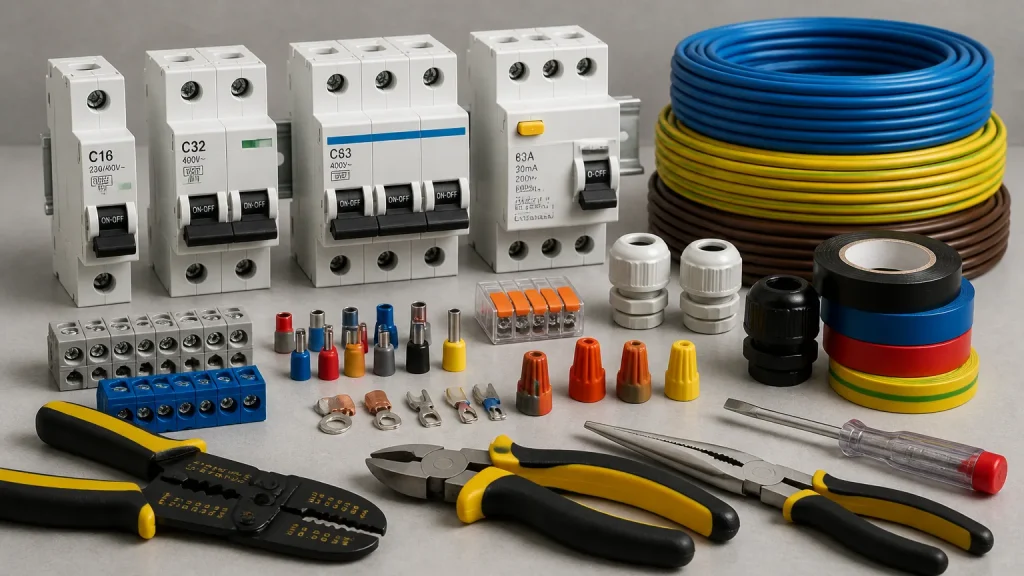
Understanding the ins and outs of essential electrical components is crucial for both contractors and DIYers. Whether you’re tackling a simple lighting installation or a more complex wiring project, knowing your components can make all the difference. Common projects like adding outlets, upgrading circuits, or installing new fixtures require a solid grasp of these elements for safety and efficiency.
In southern Michigan, the demand for skilled electrical work continues to rise. As homes and businesses evolve, so does the need for knowledgeable professionals who can navigate the complexities of electrical systems. A strong foundation in electrical components not only enhances your skill set but also ensures you meet safety standards.
Moreover, mastering these components can save you time and money. For instance, selecting the right circuit breakers or connectors can prevent costly mistakes. To further streamline your projects, consider exploring our article on Power Tool Accessories That Matter (And the Ones That Just Waste Money). Understanding what tools and components you truly need will empower you to tackle your next electrical challenge confidently.
1. Circuit Breakers: The First Line of Defense
Circuit breakers play a crucial role in protecting your electrical systems. They automatically interrupt the flow of electricity when an overload occurs. This action prevents potential hazards like electrical fires and equipment damage.
There are several types of circuit breakers. Standard breakers protect against overloads and short circuits. Ground fault circuit interrupters (GFCIs) prevent shocks in wet areas, while arc fault circuit interrupters (AFCIs) protect against arc faults that can lead to fires. Understanding these options is vital for effective protection.
When selecting a circuit breaker, consider the specific application. Check the amperage rating to ensure it matches your needs. Also, think about the environment—GFCIs are essential for kitchens and bathrooms, while AFCIs are great for living spaces.
Invest in quality circuit breakers for peace of mind. They are a small but mighty component of your electrical system.
2. Outlets and Switches: Key Interfaces for Power Distribution
Outlets and switches are crucial electrical components that connect your devices to power. Understanding their types ensures usability and safety in your projects.
Standard outlets are common in most homes. They handle everyday appliances but lack advanced safety features. For wet areas like kitchens and bathrooms, Ground Fault Circuit Interrupter (GFCI) outlets are essential. They prevent electrical shock by cutting off power when moisture is detected. In living spaces, Arc Fault Circuit Interrupter (AFCI) outlets help protect against electrical fires by detecting arcing conditions.
Choosing the right switch for your application is equally important. Toggle switches are straightforward for general use, while dimmer switches offer versatility for ambience. Smart switches allow for remote control, adding convenience to your lifestyle.
For DIYers, installation can be straightforward. Always turn off the power at the circuit breaker before starting. Follow the manufacturer’s instructions carefully, and use a voltage tester to ensure safety. With the right knowledge, you can confidently upgrade your outlets and switches for better performance.
3. Wires: The Lifeblood of Electrical Systems
Wires are crucial for any electrical system. They carry electricity from one point to another, making them essential for functionality. Understanding wire gauge is key; thicker wires (lower gauge numbers) handle more current. Using the right gauge ensures safety and efficiency.
Insulation types also play a vital role. For instance, NM-B (non-metallic sheathed cable) is ideal for indoor residential use, while UF (underground feeder) is suitable for outdoor applications. Choose insulation based on the environment to prevent hazards.
Common wiring mistakes can lead to serious issues. Overloading circuits or using incorrect wire types can cause fires. Always verify the amperage rating and match it to your project’s needs.
When selecting wire, consider your specific requirements. For example, if you’re working on a DIY project in a damp area, opt for moisture-resistant wire. For more on essential tools, check out our guide on Wrenches: Combination vs Ratcheting vs Flare Nut — Which One Should You Use?. This knowledge will help you make informed choices and ensure safety in your electrical work.
4. Fuses: A Critical Safety Component
Fuses play a vital role in protecting electrical systems from overloads and short circuits. They act as a safety device by breaking the circuit when the current exceeds a safe level. This prevents potential fires and damage to your electrical components.
There are several common types of fuses used in both residential and commercial settings. The most prevalent are cartridge fuses and plug fuses. Cartridge fuses are often found in industrial applications, while plug fuses are typical in older homes. Understanding the type you need is crucial for safety and functionality.
When it comes to replacing a fuse, always ensure the power is turned off first. Check the fuse for any visible damage, and replace it with one that matches the amperage rating. Regular maintenance is key; inspect fuses periodically for wear and ensure they are securely connected. Keeping your fuses in good shape is essential for a safe and reliable electrical system.
5. Connectors and Terminals: Ensuring Secure Connections
Connectors and terminals are vital for establishing secure and reliable electrical connections. They come in various types, including wire nuts, butt connectors, and terminal blocks. Choosing the right connector depends on your project’s requirements and the type of wires you’re using.
When it comes to joining wires, soldering and crimping are two common methods. Soldering creates a permanent bond but requires skill and practice. Crimping, on the other hand, is faster and easier, making it ideal for DIYers. Both methods, when done correctly, ensure a solid connection.
To avoid connectivity issues, follow best practices during installation. Always strip wires to the correct length and ensure no exposed copper is showing. Use quality electrical tape for added insulation; check out our guide on Built to Stick: Choosing the Right Tape for the Job for more tips. Secure connections lead to safer, more efficient electrical systems.
Bringing It All Together
Understanding essential electrical components is crucial for both contractors and DIYers. Each component plays a pivotal role in ensuring safe and efficient electrical systems. From circuit breakers to GFCIs, knowing how these parts work can prevent costly mistakes and enhance your project outcomes.
Safety should always be your top priority. Ongoing education in electrical work helps you stay informed about best practices and new technologies. Regularly assess your knowledge and skills, and seek out resources to improve. For contractors and DIYers in southern Michigan, our guides and local expertise can be invaluable.
For emergency situations, familiarize yourself with our “Emergency Downtime” Playbook: What to Bring or Send for a Fast Quote. Having the right tools and components on hand can make all the difference. Stay safe, stay informed, and tackle your next electrical challenge with confidence.