
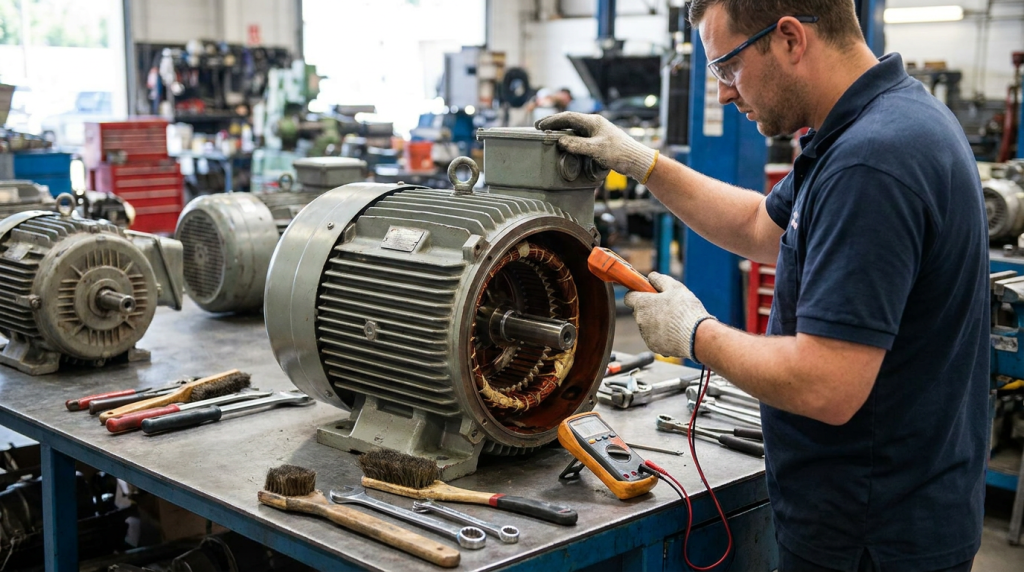
Electric motors power countless industrial machines, HVAC systems, pumps, compressors, conveyors, fans, and manufacturing equipment. Although they often operate quietly in the background, they are among the most critical components in any facility.
Proper preventive maintenance helps improve efficiency, reduce energy consumption, minimize downtime, and significantly extend motor life.
This guide covers proven electric motor maintenance tips, including cleaning, lubrication, electrical testing, vibration analysis, alignment, troubleshooting, and preventive maintenance best practices to help keep your motors operating at peak performance.
Why Electric Motor Maintenance Is Important
Electric motors are designed to provide years of reliable service, but they require routine inspection and maintenance to perform efficiently. Heat, vibration, dirt, moisture, overloaded conditions, and poor electrical power can all shorten motor life. A proactive maintenance program helps identify developing problems before they lead to costly failures, reducing repair expenses while improving equipment reliability and workplace safety.
Benefits of Preventive Motor Maintenance
Preventive maintenance focuses on detecting wear before equipment fails. Regular inspections reduce unplanned downtime while improving overall system performance.
Key Benefits Include
- Reduced equipment downtime
- Lower maintenance costs
- Improved energy efficiency
- Extended bearing life
- Longer insulation life
- Increased equipment reliability
- Improved workplace safety
- Better overall productivity
Develop a Preventive Maintenance Schedule
Every facility should establish a maintenance schedule based on equipment criticality, operating environment, and manufacturer recommendations.
Typical Maintenance Intervals
Daily or Weekly
- Visual inspections
- Listen for unusual sounds
- Check operating temperature
Monthly
- Clean the motor
- Inspect cooling vents
- Inspect mounting hardware
Quarterly
- Check vibration levels
- Inspect bearings
- Verify electrical connections
Semi-Annually
- Lubricate bearings where applicable
- Inspect alignment
- Inspect couplings and belts
Annually
- Electrical testing
- Insulation resistance testing
- Comprehensive motor inspection
Maintain Accurate Maintenance Records
Maintenance records provide valuable information about motor performance and help identify recurring issues before they become serious failures.
Record Information Such As
- Inspection dates
- Temperature readings
- Vibration measurements
- Lubrication dates
- Bearing replacements
- Current readings
- Voltage readings
- Repairs performed
- Component replacements
Accurate maintenance documentation improves troubleshooting and supports long-term asset management.
Keep Electric Motors Clean
Clean motors operate cooler and more efficiently. Dust, grease, oil, and debris restrict airflow, trap heat, and increase the likelihood of insulation failure. Regular cleaning is one of the simplest and most effective preventive maintenance tasks.
Remove Dirt and Dust
Contaminants accumulate on motor housings, cooling fins, and ventilation openings over time.
Recommended Cleaning Methods
Use:
- Soft brushes
- Dry microfiber cloths
- Industrial vacuums
- Low-pressure compressed air where appropriate
Avoid forcing debris into ventilation openings or electrical components.
Maintain Proper Airflow
Most electric motors rely on continuous airflow to dissipate heat.
Check That
- Cooling vents remain unobstructed.
- Fan covers are clean.
- External cooling fans operate properly.
- Equipment has adequate clearance.
- Air passages remain free of debris.
Restricted airflow is one of the leading causes of motor overheating.
Protect Motors from Moisture
Water and humidity damage insulation, promote corrosion, and reduce bearing life.
Moisture Prevention Tips
- Use motors with the proper enclosure rating.
- Inspect seals and gaskets regularly.
- Keep drain openings clear.
- Store spare motors indoors.
- Prevent standing water around equipment.
Motors exposed to flooding or severe moisture should be professionally tested before returning to service.
Monitor Temperature, Noise, and Vibration
Electric motors often provide early warning signs before failure occurs. Monitoring operating conditions helps maintenance personnel identify problems before costly damage develops.
Watch for Overheating
Heat is one of the primary causes of premature motor failure.
Common Causes
- Overloading
- Dirty cooling passages
- Voltage imbalance
- Poor ventilation
- Bearing failure
- Excessive starting cycles
- High ambient temperatures
Infrared thermometers and thermal imaging cameras provide fast, non-contact temperature monitoring for preventive maintenance.
Listen for Unusual Noise
Changes in operating sound often indicate developing mechanical or electrical problems.
Common Warning Sounds
- Grinding
- Squealing
- Clicking
- Rattling
- Scraping
- Loud humming
- Knocking
Investigating abnormal sounds early often prevents major repairs.
Monitor Vibration Levels
Excessive vibration accelerates wear on bearings, couplings, shafts, and connected equipment.
Common Causes of Vibration
- Misalignment
- Rotor imbalance
- Loose mounting bolts
- Worn bearings
- Bent shafts
- Damaged couplings
- Belt problems
Facilities operating critical equipment should consider periodic vibration analysis as part of their predictive maintenance program.
Proper Bearing Lubrication
Bearings are among the most critical components of an electric motor. Proper lubrication minimizes friction, reduces heat, and extends bearing life, while improper lubrication can quickly lead to overheating, excessive vibration, and premature failure. Following the manufacturer’s lubrication recommendations helps maximize reliability and reduce maintenance costs.
Use the Correct Lubricant
Not all bearing greases are the same. Different motor designs require specific grease formulations based on operating speed, temperature, load, and environmental conditions.
Verify These Specifications
Before lubricating, confirm the:
- Recommended grease type
- Lubrication interval
- Bearing design
- Motor speed
- Operating temperature
- Service conditions
Never mix incompatible greases, as doing so can reduce lubrication effectiveness and damage bearings.
Avoid Over-Greasing
One of the most common maintenance mistakes is applying too much grease.
Problems Caused by Over-Greasing
Excess grease can cause:
- Increased operating temperatures
- Seal damage
- Bearing drag
- Grease contamination of windings
- Premature bearing failure
Always follow the manufacturer’s recommended grease volume and lubrication procedure.
Recognize Bearing Failure Early
Bearing problems often develop gradually before complete failure occurs.
Common Symptoms
Watch for:
- Grinding noises
- Rumbling sounds
- Increased vibration
- Rising bearing temperatures
- Grease leakage
- Shaft movement
- Frequent overload trips
Replacing worn bearings early can often prevent costly damage to the motor shaft, rotor, and housing.
Inspect Electrical Components
An electric motor’s performance depends on both mechanical condition and electrical integrity. Loose electrical connections, poor voltage quality, and deteriorating insulation can significantly shorten motor life.
Inspect Electrical Connections
Loose terminals create resistance, excessive heat, and electrical arcing.
Inspect These Components
Check:
- Terminal blocks
- Motor leads
- Junction boxes
- Contactors
- Overload relays
- Ground connections
- Cable insulation
Look for discoloration, corrosion, loose terminals, or evidence of overheating.
Monitor Voltage and Current
Voltage problems often cause overheating and insulation failure.
Record Electrical Measurements
Monitor:
- Line voltage
- Phase-to-phase voltage
- Current draw
- Starting current
- Running current
- Full-load amperage
Compare readings with the motor nameplate to identify overload conditions or power quality issues.
Perform Insulation Resistance Testing
Insulation testing helps detect deteriorating windings before catastrophic failure occurs.
Benefits of Insulation Testing
Routine testing helps identify:
- Moisture contamination
- Insulation breakdown
- Dirt accumulation
- Heat damage
- Aging insulation
- Developing winding faults
Critical motors should undergo periodic insulation resistance testing as part of a predictive maintenance program.
Maintain Proper Alignment
Many motor failures originate in the driven equipment rather than the motor itself. Proper shaft alignment reduces vibration, lowers bearing loads, and improves overall system efficiency.
Check Shaft Alignment
Misalignment places excessive stress on bearings, couplings, and shafts.
Common Alignment Problems
Inspect for:
- Angular misalignment
- Parallel misalignment
- Soft foot
- Uneven mounting surfaces
- Thermal growth issues
Laser alignment systems provide the highest level of accuracy for critical equipment.
Inspect Belts and Pulleys
Belt-driven motors require regular inspection to maintain proper power transmission.
Inspect for Belt Wear
Check belts for:
- Cracking
- Fraying
- Glazing
- Uneven wear
- Proper tension
- Pulley alignment
Replace worn belts as a matched set whenever possible to maintain consistent tension.
Examine Flexible Couplings
Couplings transfer torque between the motor and driven equipment.
Inspect for
- Cracked inserts
- Loose hardware
- Excessive wear
- Shaft movement
- Misalignment
- Damaged keyways
Routine coupling inspections help prevent unnecessary vibration and bearing failures.
Prevent Motor Overloading
Electric motors are designed to operate within specific load limits. Continuous overloading increases operating temperature, reduces insulation life, and accelerates mechanical wear.
Understand the Motor Nameplate
The motor nameplate provides essential operating information that should always be referenced during maintenance and troubleshooting.
Verify These Ratings
- Horsepower
- Voltage
- Frequency
- Full-load amperage
- RPM
- Service factor
- Insulation class
- Efficiency rating
- Enclosure type
Comparing actual operating conditions with the nameplate helps identify overloaded or improperly applied motors.
Verify Overload Protection
Properly functioning overload protection helps prevent catastrophic motor damage.
Inspect Overload Devices
Ensure overload protection is:
- Properly sized
- Correctly adjusted
- Periodically tested
- Operating properly
If overload devices trip repeatedly, determine the root cause before resetting the system.
Protect Motors in Harsh Environments
Operating conditions significantly affect motor life.
Consider Specialized Motors For
- Dusty facilities
- Chemical processing
- Washdown areas
- Outdoor installations
- High-temperature environments
- Hazardous locations
Selecting the proper motor enclosure for the application dramatically improves long-term reliability.
Improve Energy Efficiency
Electric motors account for a significant percentage of industrial electricity consumption. Even small improvements in motor efficiency can generate substantial energy savings over time.
Size Motors Correctly
Oversized and undersized motors both reduce efficiency.
Proper Motor Sizing Helps
- Lower energy consumption
- Reduce operating temperatures
- Extend equipment life
- Improve system performance
- Lower operating costs
Evaluate motor loading periodically to ensure equipment remains appropriately sized for the application.
Consider Variable Frequency Drives (VFDs)
Variable Frequency Drives improve efficiency by matching motor speed to process demand.
Benefits of VFDs
- Reduced energy consumption
- Soft starting
- Lower mechanical stress
- Improved process control
- Reduced starting current
- Extended equipment life
VFDs are particularly effective on pumps, fans, blowers, and other variable-load applications.
Upgrade Older Motors
Modern premium-efficiency motors often consume significantly less electricity than older models.
Consider Replacement When
- Repairs become frequent.
- Energy costs continue increasing.
- Downtime becomes unacceptable.
- Replacement parts become difficult to obtain.
- Existing motors operate continuously.
Evaluating total life-cycle cost—not just purchase price—helps determine whether replacing an aging motor is the most economical long-term decision.
Electric Motor Safety Best Practices
Safety should always be the first priority when inspecting, maintaining, or repairing electric motors. Electric motors involve high voltage, rotating components, stored mechanical energy, and elevated operating temperatures. Following proper safety procedures helps protect personnel, reduce equipment damage, and maintain compliance with workplace safety standards. Before performing any maintenance, always disconnect power and verify that all energy sources have been safely isolated.
Follow Lockout/Tagout Procedures
Unexpected equipment startup can result in serious injury. Lockout/tagout (LOTO) procedures ensure electrical and mechanical energy are isolated before maintenance begins.
Lockout/Tagout Checklist
Before servicing an electric motor:
- Disconnect electrical power.
- Lock the disconnect switch.
- Attach warning tags.
- Verify zero voltage.
- Release stored mechanical energy.
- Confirm the motor cannot restart.
Only trained and authorized personnel should perform lockout/tagout procedures.
Wear Proper Personal Protective Equipment
The appropriate personal protective equipment (PPE) depends on the maintenance task being performed and the potential hazards involved.
Recommended PPE
Use:
- Safety glasses
- Cut-resistant gloves
- Hearing protection
- Steel-toe boots
- Arc-rated PPE when required
- Face shield for electrical work
- Flame-resistant clothing where applicable
Always follow your company’s safety policies and applicable OSHA requirements.
Keep Safety Guards Installed
Motor guards protect personnel from rotating components and moving machinery.
Inspect Protective Guards
Verify that:
- Fan guards are secure.
- Belt guards are installed.
- Coupling guards are in place.
- Protective covers are undamaged.
- Fasteners are tight.
Never operate equipment with missing or damaged guards unless approved maintenance procedures specifically require temporary removal.
Store Spare Electric Motors Properly
Spare motors represent a significant investment and should be stored correctly to prevent deterioration before installation.
Store Motors in a Clean, Dry Environment
Poor storage conditions can damage bearings, insulation, and electrical components long before the motor is placed into service.
Proper Storage Practices
Store motors:
- Indoors whenever possible.
- Away from moisture.
- In temperature-controlled areas.
- Protected from dust.
- Away from corrosive chemicals.
- Off concrete floors when practical.
If long-term storage is expected, inspect stored motors periodically.
Rotate the Shaft Periodically
Long-term storage can create bearing damage if the shaft remains stationary.
Recommended Practice
Rotate the shaft by hand at regular intervals to:
- Redistribute bearing grease.
- Prevent false brinelling.
- Reduce corrosion.
- Maintain bearing condition.
Consult the motor manufacturer for recommended storage intervals.
Inspect Before Installation
Never assume a stored motor is ready for immediate use.
Perform These Checks
Before installation:
- Inspect bearings.
- Check insulation resistance.
- Verify shaft rotation.
- Inspect wiring.
- Clean the motor.
- Check for corrosion or moisture damage.
A thorough inspection helps prevent startup failures and unnecessary downtime.
When to Call a Professional
Many routine maintenance tasks can be handled by trained maintenance personnel. However, some repairs require specialized equipment, advanced diagnostics, and experienced technicians.
Electrical Problems
Professional assistance is recommended whenever electrical faults extend beyond routine inspection.
Call a Qualified Technician For
- Repeated breaker trips
- Ground faults
- Burned windings
- Insulation failure
- Severe voltage imbalance
- Motor control failures
- Smoke or burning odors
- VFD programming issues
Attempting complex electrical repairs without proper training can create serious safety hazards.
Advanced Vibration Analysis
Persistent vibration often indicates underlying mechanical problems that require specialized diagnostic equipment.
Professional Vibration Analysis Can Identify
- Bearing defects
- Rotor imbalance
- Shaft misalignment
- Mechanical looseness
- Resonance
- Coupling problems
- Structural issues
Early diagnosis often prevents catastrophic failures and reduces repair costs.
Motor Rebuilding and Repair
Industrial motor repair facilities can restore many motors to like-new operating condition.
Common Motor Shop Services
Professional repair shops may provide:
- Bearing replacement
- Rotor balancing
- Stator rewinding
- Dynamic balancing
- Shaft repair
- Electrical testing
- Cleaning and inspection
- Performance testing
Selecting a reputable repair facility helps ensure long-term reliability after repairs are completed.
Build a Proactive Maintenance Program
The most successful maintenance programs emphasize prevention rather than reaction. Establishing standard inspection procedures, documenting maintenance activities, and training personnel to recognize early warning signs significantly improves equipment reliability.
Train Equipment Operators
Operators are often the first to notice changes in motor performance.
Teach Personnel to Report
- Unusual noises
- Excessive vibration
- Overheating
- Burning odors
- Oil or grease leaks
- Frequent overload trips
- Reduced performance
- Damaged guards
Prompt reporting allows maintenance teams to address problems before failures occur.
Maintain the Right Tools
Proper diagnostic equipment improves inspection accuracy and reduces troubleshooting time.
Recommended Maintenance Equipment
- Infrared thermometer
- Thermal imaging camera
- Digital multimeter
- Clamp meter
- Vibration analyzer
- Insulation resistance tester
- Laser alignment system
- Torque wrench
- Grease gun
- Lockout/tagout kit
Investing in quality maintenance tools improves both safety and reliability.
Review Maintenance Records Regularly
Maintenance records provide valuable insights into equipment health and long-term performance trends.
Review Data Such As
- Temperature history
- Vibration trends
- Bearing replacements
- Lubrication intervals
- Electrical measurements
- Repair frequency
- Downtime history
- Operating hours
Trend analysis helps identify recurring issues and supports better maintenance planning.
Frequently Asked Questions
How often should an electric motor be inspected?
Most electric motors should receive a visual inspection at least monthly, with more detailed preventive maintenance performed quarterly or annually depending on operating hours, environmental conditions, and equipment criticality.
What causes electric motors to overheat?
Common causes include overloaded conditions, poor ventilation, dirty cooling passages, bearing failure, voltage imbalance, excessive ambient temperatures, and improper lubrication.
How often should electric motor bearings be lubricated?
Lubrication intervals vary depending on motor size, bearing type, operating speed, and service conditions. Always follow the manufacturer’s lubrication schedule and use the recommended grease.
What are the warning signs of motor failure?
Early warning signs include unusual noise, excessive vibration, rising operating temperatures, burning odors, reduced performance, repeated overload trips, and increased current draw.
Can dirty motors reduce energy efficiency?
Yes. Dirt and debris restrict airflow, increase operating temperatures, and force motors to work harder. Keeping motors clean improves cooling, efficiency, and overall reliability.
Conclusion
Routine electric motor maintenance is one of the most cost-effective ways to improve equipment reliability, extend service life, and reduce operating costs. Regular cleaning, proper lubrication, electrical inspections, vibration monitoring, alignment checks, and preventive maintenance scheduling help identify small issues before they become major failures.
Whether your facility operates a handful of electric motors or hundreds across multiple production lines, developing a proactive maintenance strategy will reduce unexpected downtime, improve energy efficiency, and maximize the return on your equipment investment. By following manufacturer recommendations, maintaining accurate service records, and responding quickly to warning signs, you can keep your electric motors operating safely and efficiently for years to come.
If you’re looking for industrial maintenance supplies, lubricants, bearings, electrical components, cleaning products, threadlockers, fasteners, and MRO solutions, CEM Industrial Supply offers a wide selection of products to help maintain electric motors and other critical industrial equipment. Browse our latest maintenance resources and product offerings to keep your operation running at peak performance.