
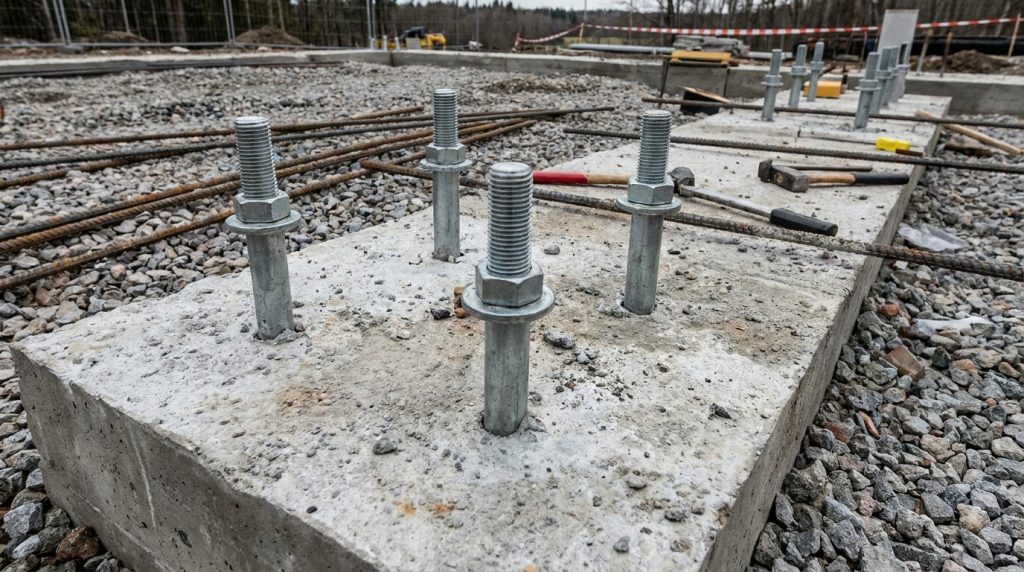
Anchor bolts are small components with a big job: they connect equipment, steel, wood, concrete, masonry, and structural assemblies to a base material so loads can be transferred safely. For contractors, maintenance professionals, manufacturers, mechanics, and industrial buyers, choosing the right anchor bolt is not just a purchasing decision—it affects safety, uptime, installation speed, code compliance, and long-term performance.
Whether you are anchoring a steel column to a concrete foundation, securing a pallet rack in a warehouse, fastening machinery to a production floor, or installing handrails, the anchor must match the base material, load requirements, environmental conditions, and installation method.
This guide explains the major types of anchor bolts, where they are used, how they perform, and what to consider before buying or specifying them. It also covers common mistakes, inspection tips, material choices, and practical examples to help you make better jobsite and procurement decisions.
In addition to understanding anchor bolts and their various types and uses, you might find it helpful to explore the article on oscillating multi-tools, which discusses their best applications and the different blade types available. This information can be particularly useful for those involved in construction or renovation projects, as it complements the knowledge of anchor bolts by providing insights into the tools that can be used in conjunction with them. For more details, check out the article here: Oscillating Multi-Tool: What It’s Best For & Blade Types.
What Are Anchor Bolts?
Anchor bolts are fasteners used to attach structural or non-structural components to concrete, masonry, stone, or other solid base materials. They typically consist of a threaded end for a nut and washer, plus a body or embedded portion that creates resistance against pullout, shear, vibration, or movement.
In construction and industrial settings, anchor bolts are commonly used to fasten:
- Steel columns and base plates
- Structural supports
- Equipment skids
- Machinery and pumps
- Conveyor systems
- Guardrails and handrails
- Racking and shelving
- Light poles and sign structures
- Pipe supports
- HVAC units
- Building frames and foundations
The best anchor bolt for a job depends on how the load is applied, the strength and condition of the base material, installation access, and whether the anchor is installed before or after the concrete cures.
Cast-in-Place vs. Post-Installed Anchor Bolts
Anchor bolts are generally grouped into two main categories: cast-in-place anchors and post-installed anchors.
| Anchor Category | When Installed | Common Uses | Key Advantage | Key Limitation |
|---|---|---|---|---|
| Cast-in-place anchor bolts | Before concrete is poured | Foundations, structural steel, and heavy equipment pads | High strength with reliable embedment | Requires accurate placement before the concrete pour |
| Post-installed anchor bolts | After concrete has cured | Repairs, retrofits, machinery installation, and handrails | Flexible and efficient for existing concrete | Requires proper drilling, cleaning, and installation procedures |
Cast-in-place anchors are planned during design and placed into wet concrete. Post-installed anchors are installed later by drilling into cured concrete or masonry.
Why Proper Anchor Selection Is Critical
Anchor bolts must resist forces that may include:
- Tension loads: Pulling force away from the base material
- Shear loads: Sideways force across the anchor
- Combined loads: Tension and shear acting together
- Dynamic loads: Repeated movement, vibration, or impact
- Seismic loads: Earthquake-related forces
- Wind loads: Common with signs, towers, rooftop equipment, and exterior structures
Using the wrong anchor type can lead to loosening, cracking, pullout, corrosion, misalignment, or structural failure. In critical applications, anchor selection should be based on engineered calculations, manufacturer data, and applicable building codes.
Main Types of Anchor Bolts and How They Work
Anchor bolts come in many configurations. Each type is designed for specific installation methods, base materials, and load conditions.
L-Shaped Anchor Bolts
L-shaped anchor bolts have a straight threaded shank with a 90-degree bend at the embedded end. They are usually cast into concrete before it cures.
Common applications include:
- Light pole bases
- Steel column base plates
- Sign structures
- Equipment pads
- Foundation anchoring
The bent end helps resist pullout by mechanically engaging with the hardened concrete. These anchors are often supplied with nuts and washers and may be made from carbon steel, galvanized steel, or stainless steel depending on the environment.
Best for: New concrete foundations where anchor location is planned in advance.
Limitations: Placement accuracy is critical. If the bolt shifts during the concrete pour, base plates may not fit without costly field modifications.
J-Bolts
J-bolts are similar to L-shaped anchor bolts but have a curved hook at the embedded end. They are also commonly cast into concrete.
Typical uses include:
- Foundation anchoring
- Pole bases
- Small structural frames
- Light industrial supports
- Agricultural and utility structures
The hook shape improves mechanical lock-in within concrete. However, J-bolts are less common in some modern structural applications where headed anchor bolts or engineered post-installed anchors may be preferred.
Best for: Moderate-duty anchoring in cast-in-place concrete.
Limitations: Like L-bolts, they require accurate positioning before concrete placement.
Headed Anchor Bolts
Headed anchor bolts have a forged or welded head at the embedded end, similar to a large bolt head. The head provides bearing resistance inside the concrete.
They are commonly used in:
- Structural steel connections
- Bridge and infrastructure work
- Heavy equipment foundations
- Pre-engineered metal buildings
- Industrial construction
Headed anchor bolts are often specified for demanding applications because they offer predictable load transfer when properly embedded. They may be manufactured to standards such as ASTM F1554, depending on project requirements.
Best for: Structural and heavy-duty applications requiring reliable tension resistance.
Limitations: Must be installed before concrete cures and held accurately with templates.
Wedge Anchors
Wedge anchors are post-installed mechanical anchors used in solid concrete. They consist of a threaded stud, expansion clip, nut, and washer. After the anchor is inserted into a drilled hole, tightening the nut pulls the wedge clip upward, expanding it against the concrete wall.
Common uses include:
- Anchoring equipment to concrete floors
- Securing guardrails and handrails
- Attaching steel base plates
- Installing warehouse racking
- Mounting brackets and supports
Wedge anchors are popular because they are strong, readily available, and relatively simple to install.
Best for: Solid concrete and heavy-duty post-installed applications.
Limitations: Not recommended for brick, block, or weak concrete. They require proper hole diameter, embedment depth, and edge distance to avoid cracking or reduced capacity.
Sleeve Anchors
Sleeve anchors are versatile mechanical anchors used in concrete, brick, block, and some masonry materials. They include a threaded stud or bolt, an expansion sleeve, a cone, nut, and washer.
When tightened, the cone pulls into the sleeve and expands it outward against the hole wall.
Common applications include:
- Masonry fastening
- Light structural attachments
- Door frames
- Handrails
- Electrical and mechanical supports
- Signage and fixtures
Sleeve anchors are especially useful when the base material may not be solid concrete.
Best for: Concrete, brick, and concrete block applications with light to medium loads.
Limitations: Load capacity is generally lower than wedge anchors in solid concrete. Installation torque and hole cleaning still matter.
Drop-In Anchors
Drop-in anchors are internally threaded expansion anchors installed into drilled holes in concrete. A setting tool expands the anchor inside the hole, creating a threaded insert flush with the concrete surface.
They are often used for:
- Hanging threaded rod
- HVAC supports
- Pipe hangers
- Suspended electrical systems
- Mechanical systems
- Removable fixtures
Because they are internally threaded, drop-in anchors allow bolts or threaded rod to be removed without leaving a protruding stud above the surface.
Best for: Overhead anchoring, threaded rod installation, and applications where a flush surface is preferred.
Limitations: Usually intended for solid concrete only. Proper setting tools are required.
Concrete Screw Anchors
Concrete screw anchors, often called screw anchors or masonry screws, cut threads into concrete, brick, or masonry as they are driven into a predrilled hole.
They are used for:
- Temporary anchoring
- Light to medium-duty fastening
- Wood-to-concrete connections
- Electrical boxes
- Metal brackets
- Interior fixtures
They install quickly and can often be removed more easily than expansion anchors. Some heavy-duty screw anchors are engineered for structural use when installed according to manufacturer specifications.
Best for: Fast installation and removable fastening in concrete or masonry.
Limitations: Performance depends heavily on hole size, base material quality, and thread engagement.
Epoxy and Adhesive Anchors
Adhesive anchors use epoxy, hybrid adhesive, or polyester resin to bond a threaded rod or rebar into a drilled hole. The adhesive fills the annular space between the anchor and base material, transferring load through chemical bonding and friction.
Common uses include:
- Rebar doweling
- Structural retrofits
- Seismic upgrades
- Heavy equipment anchoring
- Close-to-edge applications
- Cracked concrete applications when approved by the manufacturer
Adhesive anchors are widely used in industrial and structural work because they can provide high capacity and flexibility in anchor depth and rod diameter.
Best for: High-load applications, rebar doweling, retrofits, and installations near edges where expansion stress is a concern.
Limitations: Requires strict hole cleaning, adhesive mixing, cure time, temperature control, and installer training. Overhead applications may require special adhesive approvals.
Toggle Anchors for Hollow Materials
Toggle anchors are designed for hollow walls or hollow masonry where standard expansion anchors may not develop sufficient holding power. They use wings or a toggle mechanism that opens behind the wall.
Common uses include:
- Hollow block fastening
- Drywall-to-light-duty fixture mounting
- Light brackets
- Accessory installations
In industrial settings, toggle anchors are usually limited to non-structural applications unless specifically engineered for the base material and load.
Best for: Hollow materials and light-duty fastening.
Limitations: Not suitable for heavy structural loads or critical safety applications without engineering approval.
For more articles on industrial supply, visit https://cemindustrialsupply.com/news/ for the latest updates.
Anchor Bolt Materials, Coatings, and Standards
Anchor bolt material affects strength, corrosion resistance, service life, and compatibility with surrounding materials. Industrial buyers should consider more than just size and price.
Carbon Steel Anchor Bolts
Carbon steel is widely used because it offers good strength at a cost-effective price. It is common in indoor, dry, and non-corrosive environments.
Typical uses:
- Interior equipment anchoring
- Structural base plates
- General construction
- Warehouse racking
- Machinery mounting
Carbon steel anchors may be plain finish, zinc-plated, hot-dip galvanized, or coated for corrosion protection.
Stainless Steel Anchor Bolts
Stainless steel anchor bolts are used where corrosion resistance is important. Common grades include 304 and 316 stainless steel.
- 304 stainless steel: Good general corrosion resistance for many commercial and industrial settings.
- 316 stainless steel: Better resistance to chlorides, saltwater, chemical exposure, and harsh environments.
Typical applications include:
- Marine environments
- Food processing facilities
- Chemical plants
- Wastewater treatment facilities
- Exterior coastal installations
- Pharmaceutical and sanitary environments
Stainless steel usually costs more than carbon steel but may reduce maintenance and replacement costs in corrosive environments.
Hot-Dip Galvanized Anchor Bolts
Hot-dip galvanizing coats steel with a thick zinc layer for corrosion protection. Galvanized anchor bolts are common in outdoor construction, utility work, transportation, and industrial facilities.
Typical uses:
- Exterior structural steel
- Pole bases
- Sign supports
- Outdoor equipment pads
- Agricultural and utility structures
When using hot-dip galvanized bolts, confirm nut compatibility because galvanizing increases thread thickness. Matching galvanized nuts are often tapped oversize to fit properly.
Zinc-Plated Anchor Bolts
Zinc plating provides a thinner protective coating than hot-dip galvanizing. It is suitable for light corrosion protection in indoor or mildly exposed environments.
Typical uses:
- Interior fixtures
- Light-duty mechanical fastening
- Dry commercial spaces
- Temporary installations
Zinc-plated anchors should not be assumed suitable for harsh outdoor or chemical environments.
Common Specifications and Standards
Anchor bolts may be manufactured or specified according to recognized standards. Common references include:
- ASTM F1554: Anchor bolts for concrete foundations, commonly used for structural applications.
- ASTM A307: Carbon steel bolts and studs for general applications.
- ASTM A193: Alloy and stainless steel bolting for high-temperature or pressure service.
- ASTM F593: Stainless steel bolts, hex cap screws, and studs.
- ACI 318: Concrete design provisions, including anchoring to concrete.
- ICC-ES evaluation reports: Product-specific approvals and tested performance data for post-installed anchors.
For engineered projects, always follow the project drawings, specifications, and manufacturer installation instructions.
For those looking to deepen their understanding of construction fasteners, a related article on the importance of proper installation techniques can be quite enlightening. This resource emphasizes how crucial it is to select the right type of anchor bolt for specific applications, ensuring safety and stability in various structures. You can read more about it in this informative piece on installation techniques.
Anchor Bolt Uses by Industry and Application
Anchor bolts are used across construction, manufacturing, maintenance, and mechanical trades. The right anchor depends on the application and risk level.
Construction and Structural Steel
In building construction, anchor bolts connect structural members to concrete foundations. Steel columns, base plates, and frames rely on properly positioned anchor bolts to transfer building loads into the foundation.
Common anchor choices:
- Headed anchor bolts
- L-bolts
- ASTM F1554 anchor rods
- Heavy-duty adhesive anchors for retrofits
- Wedge anchors for non-primary structural attachments
Practical example: A contractor erecting a pre-engineered metal building may use cast-in-place anchor rods set with a template to match the base plate hole pattern. If the anchors are misplaced, steel erection can be delayed, so survey and template control are essential.
Industrial Machinery and Equipment
Manufacturers and plant maintenance teams use anchor bolts to secure machinery, pumps, compressors, presses, robotic cells, skids, and conveyors.
Common anchor choices:
- Wedge anchors
- Adhesive anchors with threaded rod
- Heavy-duty screw anchors
- Cast-in-place anchor bolts for new pads
- Leveling studs and grout-compatible anchor systems
Practical example: A maintenance team installing a pump skid may use adhesive anchors when vibration resistance and high pullout capacity are required. The base plate may be leveled, grouted, and torqued after the adhesive has fully cured.
Warehouse and Material Handling
Warehouses use anchor bolts to secure pallet racks, guard posts, bollards, conveyors, mezzanines, and safety barriers.
Common anchor choices:
- Wedge anchors
- Concrete screw anchors
- Sleeve anchors
- Specialty rack anchors
Practical example: A warehouse racking contractor may use wedge anchors in a sound concrete slab, but slab thickness, edge distance, and rack manufacturer requirements must be checked before installation.
Mechanical, Electrical, and Plumbing Systems
MEP professionals use anchors for pipe supports, conduit racks, equipment hangers, trapeze supports, rooftop units, and mechanical room equipment.
Common anchor choices:
- Drop-in anchors
- Concrete screw anchors
- Wedge anchors
- Adhesive anchors
- Sleeve anchors for masonry walls
Practical example: A mechanical contractor hanging pipe from a concrete ceiling may choose drop-in anchors with threaded rod. The installer must use the correct setting tool and verify embedment depth before loading the anchor.
Infrastructure, Utilities, and Outdoor Installations
Outdoor and infrastructure projects often expose anchor bolts to moisture, deicing salts, UV exposure, temperature swings, and vibration.
Common applications:
- Traffic signs
- Light poles
- Bridge components
- Utility supports
- Guardrail systems
- Outdoor equipment bases
Common anchor choices:
- Hot-dip galvanized anchor bolts
- Stainless steel anchor bolts
- Cast-in-place anchor rods
- Adhesive anchors rated for exterior use
Practical example: A light pole foundation may use galvanized L-shaped or headed anchor bolts installed with a bolt circle template before concrete placement.
For those interested in construction and home improvement, understanding the various components that contribute to structural integrity is essential. A related article that offers valuable insights is about finding reliable Jacuzzi bath remodel contractors nearby. You can read more about it here. This resource not only highlights the importance of quality workmanship but also emphasizes how crucial it is to select the right professionals for your remodeling projects, ensuring that every aspect, including anchor bolts, is properly installed for safety and durability.
How to Choose the Right Anchor Bolt
Anchor bolt selection should be based on the base material, loading, environment, installation method, and compliance requirements.
Step 1: Identify the Base Material
The base material determines which anchor types can work.
| Base Material | Suitable Anchor Types | Notes |
|---|---|---|
| Solid concrete | Wedge anchors, adhesive anchors, drop-in anchors, concrete screw anchors, and cast-in-place anchor bolts | Offers the widest range of anchoring options and the highest load capacities |
| Cracked concrete | Approved adhesive anchors and approved mechanical anchors | Use anchors specifically rated for cracked concrete when required by code or engineering specifications |
| Brick | Sleeve anchors, concrete screw anchors, and adhesive anchors with screen tubes | Avoid excessive expansion forces that may crack or damage the brick |
| Concrete block | Sleeve anchors, toggle anchors, and adhesive anchors with screen tubes | Load capacity depends on whether the block is hollow or fully grouted |
| Stone | Adhesive anchors, sleeve anchors, and specialty stone anchors | A test installation may be recommended, as stone strength can vary |
| Hollow walls | Toggle anchors and hollow-wall anchors | Best suited for light-duty, non-structural applications |
Never assume that an anchor rated for solid concrete is acceptable in hollow block or brick.
Step 2: Determine Load Requirements
Anchor loads may include tension, shear, or a combination of both. For critical applications, a qualified engineer should calculate loads and specify the anchor system.
Consider:
- Dead load of the attached component
- Live loads from use or operation
- Vibration from machinery
- Wind or seismic loads
- Impact from forklifts or equipment
- Safety factors required by code or manufacturer
If the application supports life safety, structural components, overhead loads, or expensive equipment, do not rely on guesswork.
Step 3: Check Edge Distance and Spacing
Anchors installed too close to an edge or too close to each other may cause concrete breakout or reduced load capacity.
Important factors include:
- Minimum edge distance
- Minimum spacing between anchors
- Concrete thickness
- Embedment depth
- Hole diameter
- Reinforcement location
Manufacturer technical data typically provides minimum values and allowable loads. For engineered anchors, calculations should follow applicable code requirements.
Step 4: Evaluate Environmental Exposure
Corrosion can reduce anchor strength over time. Match the anchor material or coating to the environment.
| Environment | Recommended Material or Coating |
|---|---|
| Dry indoor | Plain carbon steel or zinc-plated steel |
| Mild outdoor | Hot-dip galvanized steel or an approved corrosion-resistant coating |
| Coastal or marine | 316 stainless steel |
| Food processing | Stainless steel (typically 304 or 316, depending on the environment) |
| Chemical exposure | Stainless steel or a specialty alloy selected for the specific chemicals present |
| Wastewater | 316 stainless steel or an engineered corrosion-resistant material |
When in doubt, consult the anchor manufacturer or a corrosion specialist.
Step 5: Consider Installation Conditions
Installation conditions affect both productivity and performance.
Ask:
- Is the concrete new or existing?
- Is drilling permitted?
- Is the installation overhead?
- Are anchors needed immediately, or can adhesive cure?
- Is dust control required?
- Is the concrete cracked or uncracked?
- Is access limited?
- Will the anchor need to be removable?
For example, adhesive anchors may offer excellent strength, but they require cure time. Wedge anchors can be loaded sooner, but they create expansion forces in the concrete.
Anchor Bolt Installation Best Practices
Correct installation is just as important as anchor selection. Many anchor failures are caused by poor installation rather than poor product quality.
Drilling the Correct Hole
Post-installed anchors require holes drilled to the correct diameter and depth. Use the drill bit size specified by the manufacturer.
Best practices:
- Use carbide-tipped bits or approved drilling systems.
- Drill perpendicular to the surface unless otherwise specified.
- Avoid oversized holes.
- Confirm hole depth, especially for drop-in and wedge anchors.
- Use depth stops for consistency.
An oversized hole can reduce expansion pressure or adhesive bond, lowering anchor performance.
Cleaning the Hole Properly
Hole cleaning is especially critical for adhesive anchors, but it also matters for mechanical anchors. Dust can prevent proper bonding or seating.
Common cleaning methods include:
- Blow out dust with compressed air or a hand pump.
- Brush the hole with the correct wire brush.
- Repeat blow-brush-blow steps as specified.
- Use hollow drill bits with vacuum systems where permitted.
For adhesive anchors, skipping proper cleaning can significantly reduce bond strength.
Setting and Torqueing Anchors
Mechanical anchors usually require proper torque to expand or clamp correctly. Over-torqueing can damage threads, crack concrete, or reduce performance. Under-torqueing can leave the anchor loose.
Best practices:
- Use a calibrated torque wrench when required.
- Follow published torque values.
- Install washers as specified.
- Do not use impact tools unless allowed by the manufacturer.
- Recheck torque only if recommended; repeated torqueing may not be appropriate for every anchor.
Managing Adhesive Anchor Cure Time
Adhesive anchors require cure time before loading. Cure time varies based on adhesive type and temperature.
Important considerations:
- Cold temperatures slow curing.
- Hot temperatures may reduce working time.
- Expired adhesive should not be used.
- Discard initial unmixed adhesive until color is uniform.
- Use the correct nozzle and dispensing tool.
- Fill holes from the bottom to avoid air pockets.
For overhead or horizontal applications, use products approved for that orientation.
Using Templates for Cast-in-Place Anchors
Cast-in-place anchor bolts must be held in position during concrete placement.
Recommended practices:
- Use steel or plywood templates.
- Verify bolt circle, projection, and spacing.
- Secure anchors against movement during the pour.
- Protect threads from concrete contamination.
- Check elevation and alignment before concrete sets.
- Confirm final position before equipment or steel arrives.
Misaligned anchor bolts can delay projects and may require engineering review before correction.
Anchor Bolt Sizing: Diameter, Length, and Embedment
Anchor bolt sizing depends on load requirements, base material strength, fixture thickness, embedment depth, and installation method.
Anchor Diameter
Common anchor bolt diameters include:
- 1/4 inch
- 3/8 inch
- 1/2 inch
- 5/8 inch
- 3/4 inch
- 7/8 inch
- 1 inch
- Larger diameters for heavy structural and industrial work
Larger diameter anchors generally provide greater load capacity, but they also require larger holes, more edge distance, and proper installation tools.
Anchor Length
Anchor length must account for:
- Embedment depth
- Fixture thickness
- Washer and nut thickness
- Leveling nuts if used
- Grout space under base plates
- Required thread projection
For wedge anchors, length must include the fixture thickness plus minimum embedment and room for the nut and washer. For cast-in-place anchor bolts, projection above the concrete must match the base plate and nut requirements.
Embedment Depth
Embedment depth is the distance the anchor extends into the base material. Deeper embedment often increases capacity, but only within manufacturer or design limits.
Too little embedment can cause pullout. Too much embedment may hit rebar, create installation difficulty, or exceed product limits.
Always verify:
- Minimum embedment
- Effective embedment depth
- Concrete thickness
- Drilled hole depth
- Required clearance below the anchor
Anchor Bolt Comparison Table
The table below summarizes common anchor bolt types and their typical uses.
| Anchor Type | Installation Method | Best Base Material | Typical Load Range | Common Uses |
|---|---|---|---|---|
| L-shaped anchor bolt | Cast-in-place | Concrete | Medium to heavy | Foundations, utility poles, and base plates |
| J-bolt | Cast-in-place | Concrete | Light to medium | Foundations, small structural frames, and utility installations |
| Headed anchor bolt | Cast-in-place | Concrete | Heavy | Structural steel connections and industrial foundations |
| Wedge anchor | Post-installed mechanical | Solid concrete | Medium to heavy | Machinery, storage racks, handrails, and base plates |
| Sleeve anchor | Post-installed mechanical | Concrete, brick, or block | Light to medium | Masonry fastening, fixtures, brackets, and supports |
| Drop-in anchor | Post-installed mechanical | Solid concrete | Light to medium | Threaded rod installations and overhead supports |
| Concrete screw anchor | Post-installed mechanical | Concrete and masonry | Light to medium (some heavy-duty applications) | Temporary fastening, brackets, fixtures, and equipment |
| Adhesive anchor | Post-installed bonded | Concrete and masonry | Medium to heavy | Structural retrofits, rebar doweling, and equipment anchoring |
| Toggle anchor | Post-installed mechanical | Hollow materials | Light | Hollow block, drywall, and light-duty wall fixtures |
Common Anchor Bolt Problems and How to Avoid Them
Anchor bolt issues often appear after installation, when correction is more expensive. Understanding common failure points helps prevent downtime and rework.
Misaligned Anchor Bolts
Misalignment is common with cast-in-place anchors. It can prevent base plates from fitting or cause uneven load transfer.
Prevention tips:
- Use rigid templates.
- Verify layout before and during the pour.
- Check anchor projection.
- Protect threads.
- Survey critical anchor groups.
If anchor bolts are misplaced, do not torch-cut base plates or bend bolts without engineering approval.
Loose Anchors
Loose anchors may result from under-torqueing, oversized holes, weak concrete, vibration, or incorrect anchor choice.
Prevention tips:
- Drill the correct hole size.
- Follow torque requirements.
- Use vibration-resistant anchoring methods where needed.
- Consider adhesive anchors for dynamic equipment.
- Inspect anchors after equipment startup.
Concrete Cracking or Breakout
Cracking can occur when anchors are too close to edges, overloaded, over-torqued, or installed in weak concrete.
Prevention tips:
- Maintain required edge distance and spacing.
- Verify concrete strength and thickness.
- Avoid over-expansion in fragile materials.
- Use anchors rated for cracked concrete where required.
- Consult engineering for high-load applications.
Corrosion and Seizing
Corrosion can weaken anchors and make maintenance difficult. Dissimilar metal contact can also cause galvanic corrosion in certain environments.
Prevention tips:
- Specify stainless steel or hot-dip galvanized anchors when needed.
- Use compatible nuts and washers.
- Avoid mixing metals without evaluating galvanic risk.
- Apply anti-seize where appropriate for stainless fasteners.
- Include anchor condition in maintenance inspections.
Adhesive Anchor Failures
Adhesive anchor failures can result from poor hole cleaning, improper mixing, wrong adhesive, insufficient cure time, or installation in unsuitable temperatures.
Prevention tips:
- Follow manufacturer instructions exactly.
- Train installers.
- Confirm adhesive expiration dates.
- Use approved dispensing tools and nozzles.
- Do not load anchors before full cure.
- Document installation for critical work.
Inspection and Maintenance Tips for Anchor Bolts
Anchor bolts should be inspected periodically in industrial, commercial, and safety-related applications. Inspection frequency depends on service conditions, vibration, exposure, and consequences of failure.
What to Look For During Inspection
Check for:
- Loose nuts
- Visible movement
- Cracked concrete around anchors
- Corrosion or rust staining
- Bent or damaged studs
- Missing washers
- Base plate gaps
- Grout deterioration
- Thread damage
- Signs of impact from vehicles or equipment
For machinery, also inspect after startup, after major maintenance, and after unusual vibration events.
When to Replace Anchor Bolts
Replacement may be needed when anchors show:
- Severe corrosion
- Loss of thread engagement
- Concrete breakout
- Permanent bending
- Repeated loosening
- Damage from impact
- Improper installation discovered during inspection
For structural or safety-critical anchors, replacement should be reviewed by a qualified engineer or the equipment manufacturer.
Documentation for Critical Anchors
For high-risk or engineered installations, maintain records such as:
- Anchor type and size
- Manufacturer and lot number
- Drill bit size
- Hole cleaning method
- Torque values
- Adhesive batch and expiration date
- Cure time and temperature
- Installer name or certification
- Inspection results
Good documentation supports quality control, audits, warranty claims, and future maintenance planning.
Buying Anchor Bolts: What Industrial Buyers Should Specify
Procurement teams can reduce delays and field problems by ordering anchor bolts with clear specifications.
Key Details to Include in a Purchase Order
Specify:
- Anchor type
- Diameter and length
- Thread length
- Material grade
- Coating or finish
- Nut and washer requirements
- Quantity
- Applicable ASTM or project specification
- Certification requirements
- Packaging and labeling
- Delivery deadline
- Template requirements for cast-in-place anchors
For example, instead of ordering “1-inch anchor bolts,” a buyer may specify: “1-inch diameter ASTM F1554 Grade 55 headed anchor bolts, hot-dip galvanized, 36 inches long, with galvanized heavy hex nuts and washers, certified material test reports required.”
Questions to Ask Before Purchasing
Before placing an order, confirm:
- Is the anchor for concrete, masonry, or another base material?
- Is it cast-in-place or post-installed?
- Is the environment corrosive?
- Are certifications required?
- Are nuts and washers included?
- Are installation tools needed?
- Is the anchor approved for cracked concrete or seismic use?
- Are ICC-ES reports required?
- Are lead times acceptable for custom anchor bolts?
Internal Linking Opportunities
If this article is part of a contractor supply, industrial hardware, or fastener website, consider linking to related resources using natural anchor text such as:
- Concrete fasteners and masonry anchors
- ASTM F1554 anchor bolts
- Hot-dip galvanized fasteners
- Stainless steel bolts and hardware
- Threaded rod and studs
- Wedge anchors for concrete
- Epoxy anchoring systems
- Fastener material grades guide
- Bolt torque charts
- Industrial maintenance supplies
These internal links help users find related products and technical guidance while improving site structure for search engines.
Frequently Asked Questions About Anchor Bolts
What Is the Difference Between an Anchor Bolt and an Anchor Rod?
The terms are often used interchangeably, but “anchor bolt” may refer to a headed, bent, or post-installed fastener, while “anchor rod” often refers to a straight threaded rod embedded in concrete or used with adhesive. In structural specifications, anchor rods are commonly covered under ASTM F1554.
Can Anchor Bolts Be Installed in Existing Concrete?
Yes. Post-installed anchors such as wedge anchors, sleeve anchors, drop-in anchors, concrete screw anchors, and adhesive anchors are designed for existing concrete or masonry. The correct choice depends on load, base material, edge distance, and environmental conditions.
Are Wedge Anchors Removable?
The nut and fixture can usually be removed, but the wedge anchor body typically remains embedded in the concrete. If a flush surface is needed later, the protruding stud may need to be cut off or driven below the surface if installation depth allows.
What Anchor Bolt Is Best for Heavy Machinery?
Heavy machinery often requires wedge anchors, adhesive anchors, or cast-in-place anchor bolts, depending on the equipment, vibration, slab condition, and load requirements. For high-value or vibrating equipment, consult the equipment manufacturer or an engineer.
Can Anchor Bolts Be Reused?
Some removable concrete screw anchors may be reusable in limited applications if permitted by the manufacturer, but many expansion anchors are not intended for reuse after installation. Cast-in-place anchors are permanent. For critical applications, do not reuse anchors unless the manufacturer specifically allows it.
Do Anchor Bolts Need Washers?
Most anchor bolt installations use washers to distribute clamping force and protect the fixture. Structural applications may require specific washer types. Always follow the project specification or manufacturer instructions.
How Deep Should Anchor Bolts Be Embedded?
Embedment depth depends on anchor type, diameter, load, concrete strength, and manufacturer data. There is no universal depth that applies to all anchors. Use the specified minimum embedment and engineering requirements for the application.
Conclusion: Choose Anchor Bolts Based on Load, Material, and Installation Conditions
Anchor bolts are essential to safe, durable fastening in construction, manufacturing, maintenance, and industrial operations. The right anchor bolt depends on the base material, load type, environment, installation method, and code or manufacturer requirements.
For new concrete foundations, cast-in-place L-bolts, J-bolts, headed anchor bolts, and anchor rods offer reliable embedded connections when properly positioned. For existing concrete and masonry, wedge anchors, sleeve anchors, drop-in anchors, concrete screws, and adhesive anchors provide flexible options for retrofits, repairs, equipment installation, and facility maintenance.
The best results come from matching the anchor to the application, following manufacturer installation instructions, using proper drilling and cleaning methods, and verifying materials and coatings before purchase.
If you are specifying anchor bolts for a project, replacing worn anchors, or sourcing fasteners for industrial maintenance, work with a knowledgeable supplier that can help you choose the correct anchor type, material, finish, and standard. Review your application requirements, confirm technical data, and request the right documentation before the job starts to avoid delays, rework, and safety risks.