
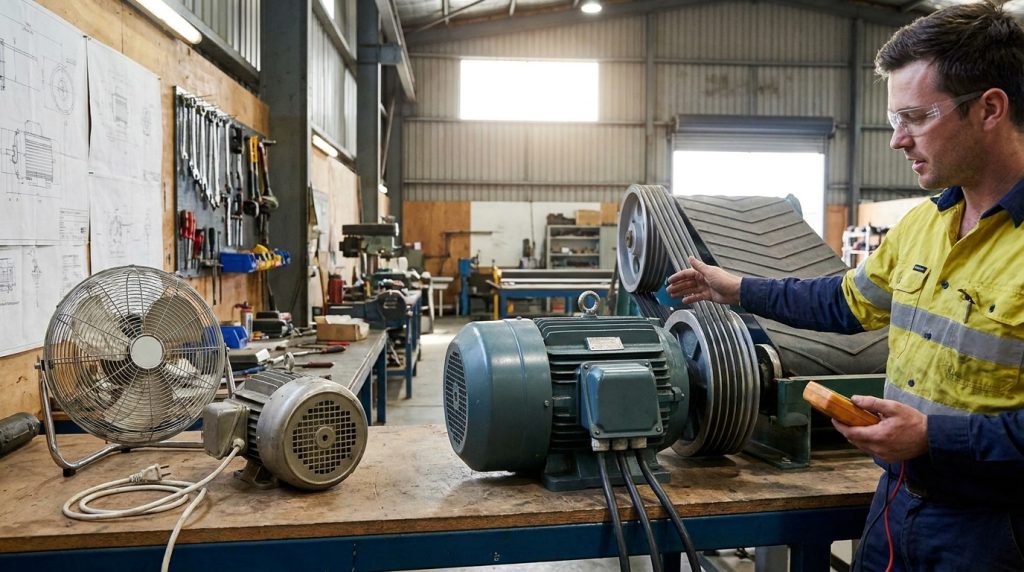
Understanding Single-Phase vs. Three-Phase Motors: A Comprehensive Guide for Industrial Applications
In the realm of industrial machinery and equipment, electric motors are the workhorses that drive productivity. Whether you’re maintaining critical machinery in a manufacturing plant, outfitting a new construction project, or simply ensuring the reliable operation of essential equipment, understanding the nuances of electric motors is paramount. Two of the most common types of electric motors encountered are single-phase and three-phase motors. While both serve the fundamental purpose of converting electrical energy into mechanical energy, their operational principles, applications, and characteristics differ significantly. This comprehensive guide, brought to you by CEM Industrial Supply, your trusted partner in industrial supply and electric motor repair in Coldwater, Michigan, aims to demystify these differences, empowering industrial maintenance technicians, plant managers, electricians, contractors, and equipment owners with the knowledge to make informed decisions and ensure optimal performance.
When considering the differences between single-phase and three-phase motors, it’s essential to understand their applications and efficiency levels. For those looking to enhance their knowledge on related topics, such as selecting the right materials for various industrial applications, you might find the article on how to choose the right abrasive for metal, steel, and stainless steel particularly useful. This resource provides valuable insights that can complement your understanding of motor types and their operational contexts. You can read more about it here: how to choose the right abrasive for metal, steel, and stainless.
The Fundamental Design and Operation of Electric Motors
Before delving into the specific distinctions between single-phase and three-phase motors, it’s crucial to grasp the basic principles governing all induction motors, the most prevalent type in industrial settings. At their core, these motors operate on the principle of electromagnetic induction. An electric current flowing through a stationary winding (the stator) generates a rotating magnetic field. This rotating magnetic field then induces a current in a rotating component (the rotor), which in turn creates its own magnetic field. The interaction between these two magnetic fields results in a torque that causes the rotor to spin, delivering mechanical power. The key to understanding the difference between single-phase and three-phase motors lies in how this rotating magnetic field is created and sustained.
Stator and Rotor: The Core Components
The stator, the stationary part of the motor, houses the windings that are connected to the power source. When electricity flows through these windings, it generates a magnetic field. The rotor, the rotating part, is typically a cylindrical assembly with conductive bars (in a squirrel cage rotor) or windings. The magnetic field generated by the stator interacts with the rotor, causing it to rotate.
Electromagnetic Induction: The Driving Force
The principle of electromagnetic induction is central to motor operation. According to Faraday’s Law of Induction, a changing magnetic field will induce an electromotive force (EMF) or voltage in a conductor. In an induction motor, the rotating magnetic field from the stator induces voltage and current in the rotor. This induced current creates a magnetic field in the rotor that opposes the stator’s field, leading to a force that drives rotation.
Single-Phase Motors: Powering Everyday Applications
Single-phase motors are characterized by their reliance on a single alternating current (AC) power source. This means the voltage and current fluctuate in a sinusoidal pattern, crossing zero twice per cycle. While ubiquitous in residential and light commercial settings, they also find applications in specific industrial scenarios where high power isn’t a primary requirement.
How Single-Phase Power Works
In a single-phase system, electricity is delivered through two wires: one carrying the alternating current and the other acting as a return path (or neutral). The voltage oscillates between a positive and negative peak, reaching zero twice during each cycle. This means the magnetic field generated by a simple winding in a single-phase motor will pulsate rather than rotate smoothly, making it difficult to initiate rotation without additional mechanisms.
Starting Mechanisms: Overcoming the Pulsating Field
The primary challenge with single-phase motors is their inability to produce a true rotating magnetic field on their own. A single winding, when energized by single-phase AC, creates a pulsating magnetic field, which oscillates back and forth but doesn’t inherently rotate. To overcome this, single-phase motors incorporate various starting mechanisms that briefly create a secondary, out-of-phase magnetic field to initiate rotation. Once the motor reaches a sufficient speed, this starting mechanism is often disengaged.
Capacitor-Start Motors
Capacitor-start motors are one of the most common types. They utilize a capacitor in series with an auxiliary starting winding. This capacitor shifts the phase of the current in the starting winding, creating a temporary rotating magnetic field that allows the motor to start. Once the motor reaches about 75% of its full speed, a centrifugal switch opens, disconnecting the starting winding and capacitor. These motors offer high starting torque, making them suitable for applications like compressors, pumps, and some machinery.
Capacitor-Run Motors
In capacitor-run motors, the capacitor remains connected in the circuit during both starting and running. This configuration provides a smoother running operation and improved efficiency compared to capacitor-start motors, but it generally offers lower starting torque. They are often used in applications where continuous operation and smoother performance are prioritized over high initial starting force, such as in fans and blowers.
Capacitor-Start, Capacitor-Run Motors
These motors combine the benefits of both capacitor-start and capacitor-run designs. They employ one capacitor for starting and a different capacitor (or sometimes the same one) that remains in the circuit during running. This offers both high starting torque and efficient, smooth running operation, making them a versatile choice for a wide range of demanding applications.
Split-Phase Motors
Split-phase motors are the simplest type of single-phase motor and are generally used for light-duty applications. They have two windings: a main winding and an auxiliary starting winding with higher resistance. The difference in resistance creates a slight phase shift, providing just enough torque to start the motor. However, their starting torque is relatively low, limiting their use to applications like small fans and appliances.
Shaded-Pole Motors
Shaded-pole motors are inexpensive and simple, but they have very low starting torque and efficiency. They use a short-circuited copper loop (shading coil) on a portion of each stator pole. This coil delays the magnetic flux in that part of the pole, creating a rudimentary sweeping magnetic field that allows the motor to start. They are typically found in very low-power applications like small fans in appliances and timers.
Applications of Single-Phase Motors
Single-phase motors are ideal for applications that do not require extremely high power output or heavy starting loads. Their prevalence in homes and smaller businesses stems from the widespread availability of single-phase power.
- Residential Appliances: Refrigerators, washing machines, dishwashers, and dryers all commonly utilize single-phase motors.
- Small Pumps and Fans: Many HVAC systems, sump pumps, and ventilation fans in commercial buildings employ single-phase motors.
- Light Industrial Equipment: Smaller machine tools, conveyors, and some compressors in workshops or light manufacturing settings might use single-phase motors.
- Agricultural Equipment: Smaller water pumps and fans on farms can also be single-phase powered.
Advantages and Disadvantages of Single-Phase Motors
Advantages:
- Simplicity and Cost-Effectiveness: Generally less complex and cheaper to manufacture than three-phase motors.
- Availability of Power: Single-phase power is readily available in most residential and commercial locations.
- Ease of Installation: Simpler wiring and power requirements.
Disadvantages:
- Lower Power Output: Generally limited to lower horsepower ratings compared to three-phase motors.
- Lower Efficiency: Tend to be less efficient than three-phase motors, especially at higher power ratings.
- Lower Starting Torque: Many single-phase designs require special starting mechanisms, which can limit their ability to start under heavy loads.
- Higher Maintenance on Starting Components: Starting capacitors and centrifugal switches can be points of failure.
Three-Phase Motors: The Industrial Powerhouses
Three-phase motors are the backbone of industrial operations due to their inherent efficiency, robust design, and ability to deliver high power. They are powered by a three-phase AC power system, which consists of three separate alternating currents that are out of phase with each other by 120 electrical degrees.
How Three-Phase Power Works
A three-phase system utilizes three or four wires. The three “hot” wires each carry an AC waveform, but these waveforms are offset from each other. This offset ensures that at any given moment, the power delivered by the system is more constant and continuous than in a single-phase system. This continuous power delivery is crucial for high-demand industrial applications. The three phases work in concert to create a smooth, rotating magnetic field within the motor.
The Magic of the Rotating Magnetic Field
The fundamental advantage of three-phase power is its ability to inherently create a rotating magnetic field in the motor’s stator. When the three AC currents, each flowing through its own set of windings in the stator, are applied, their interactions naturally produce a magnetic field that rotates at a constant speed. This eliminates the need for complex starting mechanisms found in single-phase motors, leading to simpler construction, higher reliability, and superior performance.
Types of Three-Phase Motors
The vast majority of three-phase motors used in industrial settings are induction motors, specifically squirrel cage induction motors.
Squirrel Cage Induction Motors (SCIM)
These are the most common type of electric motor worldwide. The rotor consists of a laminated core with conductive bars (usually aluminum or copper) running parallel to the shaft and connected at the ends by rings. This design resembles a squirrel cage. When the rotating magnetic field from the stator induces current in these rotor bars, it creates a magnetic field that interacts with the stator’s field, producing torque. SCIMs are known for their durability, low maintenance, and cost-effectiveness.
Wound Rotor Induction Motors (WRIM)
In wound rotor motors, the rotor contains windings similar to the stator windings, connected to slip rings. This allows external resistors to be connected into the rotor circuit via brushes. By varying the resistance, engineers can control the motor’s starting torque and speed. This makes WRIMs suitable for applications requiring very high starting torque or precise speed control, such as cranes, hoists, and some large fan applications. However, they are more complex and require more maintenance than squirrel cage motors.
Applications of Three-Phase Motors
Three-phase motors are the workhorses of industry, powering a vast array of equipment across numerous sectors. Their ability to handle high loads and operate efficiently makes them indispensable.
- Manufacturing and Production Lines: Conveyors, mixers, pumps, compressors, machine tools, and automated machinery all rely heavily on three-phase motors.
- Heavy Machinery: Cranes, hoists, excavators, and large industrial pumps are powered by three-phase motors.
- HVAC Systems in Large Buildings: Large chillers, air handlers, and industrial ventilation systems.
- Water and Wastewater Treatment: Large pumps for water distribution and sewage treatment.
- Mining and Oil & Gas: Heavy-duty pumps, conveyors, and processing equipment.
Advantages and Disadvantages of Three-Phase Motors
Advantages:
- High Power Output: Available in a wide range of horsepower, from fractional to thousands of horsepower.
- High Efficiency: Generally more efficient than single-phase motors, leading to lower energy consumption and operational costs.
- High Starting Torque: Can start under heavy loads without special starting mechanisms, especially for squirrel cage designs.
- Robust Construction and Reliability: Simpler starting mechanisms (or none at all) lead to fewer failure points and longer lifespan.
- Smooth Operation: The inherent rotating magnetic field results in smoother operation and less vibration.
Disadvantages:
- Availability of Power: Three-phase power is not as universally available as single-phase power, typically requiring specialized infrastructure.
- Higher Initial Cost: Can be more expensive to purchase than equivalent single-phase motors, especially at lower horsepower ratings.
- More Complex Wiring: Requires more conductors and specialized electrical panels.
When exploring the differences between single-phase and three-phase motors, it’s beneficial to understand the broader context of electrical components used in various applications. A related article that delves into essential electrical components can provide valuable insights for contractors and DIY enthusiasts alike. You can read more about this in the complete guide available here, which covers a range of topics that complement the discussion on motor types and their applications.
Key Differences Summarized: Single-Phase vs. Three-Phase Motors
To provide a clear overview, here’s a summary of the primary distinctions:
| Feature | Single-Phase Motors | Three-Phase Motors |
| : | :- | : |
| Power Supply | Single alternating current (AC) | Three alternating currents, 120° out of phase |
| Starting Mechanism | Requires auxiliary starting winding, capacitor, etc. | Self-starting due to inherent rotating magnetic field |
| Torque | Lower starting torque, pulsating torque | Higher starting torque, consistent torque |
| Efficiency | Generally lower | Generally higher |
| Power Range | Typically up to 10 HP (though some larger exist) | Fractional HP to thousands of HP |
| Cost | Lower initial cost for motor and installation | Higher initial cost for motor and infrastructure |
| Complexity | More complex starting components | Simpler construction, more complex power distribution |
| Applications | Residential, light commercial, small equipment | Industrial, heavy machinery, large commercial |
| Maintenance | Can require more maintenance of starting components | Generally lower maintenance |
| Reliability | Can be lower due to starting components | Generally higher |
Choosing the Right Motor for Your Application
Selecting the appropriate motor type is a critical decision that impacts performance, efficiency, and long-term costs. CEM Industrial Supply is here to help you navigate these choices.
Evaluating Power Requirements
The first step in selecting a motor is to accurately determine the power (measured in horsepower or kilowatts) required for the application. Consider not only the normal operating load but also any peak loads or starting torque requirements. For heavy starting loads, three-phase motors generally have an advantage.
Considering the Available Power Supply
The most significant factor is the type of electrical power available at the installation site. If only single-phase power is accessible and significant power is needed, a three-phase motor might require the installation of a phase converter, which adds complexity and cost. Conversely, if three-phase power is readily available, it’s almost always the preferred choice for industrial applications.
Efficiency and Energy Costs
While single-phase motors may have a lower initial purchase price, their lower efficiency can lead to significantly higher energy costs over the motor’s lifetime, especially for continuous-duty applications. Investing in a more efficient three-phase motor, even with a higher upfront cost, can result in substantial savings in energy consumption.
Maintenance and Reliability Needs
For critical industrial processes, minimizing downtime is paramount. Three-phase motors, with their simpler design and fewer failure-prone starting components, generally offer greater reliability and require less maintenance than their single-phase counterparts.
Common Scenarios and Recommendations
- A manufacturing plant with heavy machinery: Three-phase motors are the clear choice due to power requirements, efficiency, and reliability needs.
- A small workshop with light-duty tools: Single-phase motors might be sufficient if only single-phase power is available and the budget is a primary concern.
- A commercial building’s HVAC system: Three-phase motors will be used for the larger air handling units and chillers for efficiency and power. Smaller ventilation fans might be single-phase.
- A rural farm with limited power infrastructure: Single-phase motors might be used for smaller pumps and fans, but larger operations would likely require three-phase power.
Troubleshooting Common Motor Issues
Regardless of whether you’re working with single-phase or three-phase motors, understanding common troubleshooting steps is essential for maintaining operational uptime. At CEM Industrial Supply, we offer expert electric motor repair services and are well-equipped to diagnose and fix a wide range of motor problems.
Motor Not Starting
- Check Power Supply: Verify that the correct voltage and phase are present at the motor terminals. For single-phase motors, ensure the capacitor and centrifugal switch (if applicable) are functioning correctly. For three-phase, check for open phases.
- Overload Protection: Examine the motor’s overload relay or circuit breaker. It may have tripped due to an excessive load or a short circuit.
- Mechanical Binding: Attempt to rotate the motor shaft manually. If it’s stiff or won’t turn, there’s a mechanical issue in the driven equipment or the motor’s bearings.
- Internal Wiring Issues: Loose connections or damaged windings can prevent starting.
Motor Overheating
- Excessive Load: The motor is being asked to do more work than it’s rated for. Reduce the load if possible.
- Poor Ventilation: Ensure the motor’s cooling vents are clear of debris. Blocked ventilation prevents heat dissipation.
- Bearing Issues: Worn or improperly lubricated bearings generate friction and heat.
- Low Voltage or Imbalanced Phases (Three-Phase): This can cause the motor to draw excessive current, leading to overheating.
- Winding Faults: Shorted windings can cause significant heat generation.
Motor Making Unusual Noises
- Bearing Noise: Grinding, squealing, or knocking sounds often indicate worn bearings.
- Loose Components: Rattling or vibrating noises can be due to loose mounting bolts or internal parts.
- Rotor Issues: In some cases, a damaged rotor can produce humming or knocking sounds.
- Fan Noise: Ensure the motor’s cooling fan is intact and not striking the motor housing.
Reduced Motor Speed or Torque
- Low Voltage: Insufficient voltage can lead to reduced speed and torque.
- Overload: As with overheating, an overload will cause a speed reduction.
- Winding Problems: Partial short circuits or open windings can significantly affect performance.
- Bearing Drag: Increased friction from bad bearings will slow the motor.
Preventative Maintenance for Motor Longevity
Regular preventative maintenance is key to maximizing the lifespan of your electric motors and minimizing unexpected downtime. Investing a little time and effort upfront can save significant costs and headaches down the line.
Regular Inspections
- Visual Checks: Look for signs of overheating (discoloration), oil leaks, loose connections, or damaged insulation.
- Auditory Checks: Listen for unusual noises, which can indicate bearing wear or other issues.
- Vibration Analysis: While more advanced, regular vibration analysis can detect developing issues before they become critical.
Lubrication
- Proper Lubrication: Follow the manufacturer’s recommendations for the type and quantity of lubricant. Over- or under-lubrication can both cause problems.
- Scheduled Lubrication: Establish a schedule for greasing or oiling motor bearings.
Cleaning
- Keep Vents Clear: Regularly clean dust, dirt, and debris from motor cooling vents to ensure proper airflow.
- Clean Motor Housing: A clean motor operates more efficiently and allows for easier inspection.
Electrical Checks
- Voltage and Current Readings: Periodically check input voltage and current draw to ensure they are within specifications.
- Insulation Resistance Testing (Megger Testing): This test checks the integrity of the motor’s winding insulation, identifying potential short circuits or grounding issues.
Load Management
- Avoid Overloading: Ensure that motors are not consistently operated beyond their rated capacity.
- Proper Alignment: For belted or coupled drives, ensure proper alignment to prevent excessive stress on the motor shaft and bearings.
Safety Precautions When Working with Electric Motors
Electric motors, especially those operating on higher voltages, can pose serious safety hazards. Always prioritize safety when working with or around them.
Lockout/Tagout (LOTO) Procedures
- De-energize and Secure: Always follow proper LOTO procedures before performing any maintenance or inspection on an electric motor. This ensures the motor cannot be accidentally energized while you are working on it.
- Verify Zero Energy State: Use a lockout device to secure the disconnect switch and verify that no voltage is present with a reliable testing instrument.
Personal Protective Equipment (PPE)
- Eye Protection: Wear safety glasses or a face shield to protect against flying debris.
- Hand Protection: Use insulated gloves when working near electrical connections.
- Foot Protection: Wear safety shoes with electrical hazard protection.
- Flame-Resistant Clothing (FRC): For higher voltage work, wear FRC to protect against arc flash hazards.
Working with High Voltage
- Qualified Personnel Only: Only trained and qualified electricians should perform work on high-voltage electrical systems or motor wiring.
- Awareness of Arc Flash Hazards: Understand the potential for arc flash incidents and take appropriate precautions.
- Proper Grounding: Ensure all equipment and enclosures are properly grounded to prevent electrical shock.
Partnering with CEM Industrial Supply for Your Motor Needs
Understanding the differences between single-phase and three-phase motors is crucial for any industrial operation. Whether you’re looking to optimize your existing machinery, purchase new equipment, or require expert electric motor repair in Coldwater, Michigan, CEM Industrial Supply is your comprehensive resource. We offer a wide range of industrial supplies, including motors, drives, and control components, and our experienced technicians provide reliable repair and maintenance services to keep your operations running smoothly.
Expert Consultation and Support
Our team of knowledgeable professionals at CEM Industrial Supply can provide expert advice to help you select the right motor for your specific application. We understand the demands of industrial environments and can guide you through the technical specifications and considerations involved.
Quality Electric Motor Repair Services
When your motors require attention, trust CEM Industrial Supply for prompt and professional electric motor repair. Our skilled technicians have the expertise to diagnose and fix a broad spectrum of motor issues, ensuring minimal downtime and restored performance.
Comprehensive Industrial Supply Inventory
Beyond motor services, CEM Industrial Supply is your go-to source for a vast array of industrial supplies. From fasteners and tools to electrical components and safety equipment, we stock the products you need to maintain and operate your facility efficiently. Explore our industrial supplies to find what you need.
Frequently Asked Questions (FAQs) About Single-Phase vs. Three-Phase Motors
Q1: Can I use a single-phase motor on a three-phase power supply?
Generally, no. You cannot directly connect a single-phase motor to a three-phase power supply. Doing so could damage the motor and create a safety hazard. Conversely, you can use a phase converter to create a single-phase output from a three-phase supply, but this is usually more complex and less efficient than using a three-phase motor directly if three-phase power is available.
Q2: What is the typical horsepower range for single-phase motors?
Single-phase motors are typically available in horsepower ratings from fractional up to about 10 HP. While larger single-phase motors exist, they become less common and less efficient compared to three-phase alternatives.
Q3: How do I know if my application needs a three-phase motor?
If your application requires high power output, frequent starting under heavy loads, high efficiency for continuous operation, or consistent, smooth power delivery, a three-phase motor is likely the best choice. Most industrial machinery operating at significant power levels will utilize three-phase motors.
Q4: What is an “inverter duty” motor?
An “inverter duty” motor is specifically designed to withstand the demands of being driven by a variable frequency drive (VFD). VFDs can cause electrical noise, over-heating due to pulsed power, and increased axial thrust on bearings. Inverter duty motors have enhanced insulation, improved bearing designs, and sometimes specific rotor configurations to handle these stresses.
Q5: How much does electric motor repair cost?
The cost of electric motor repair varies significantly depending on the type and size of the motor, the nature of the problem, and the labor involved. Simple repairs like bearing replacement might be relatively inexpensive, while rewinding a large motor can be a substantial investment. Contact CEM Industrial Supply for a diagnostic assessment and a repair estimate.
Conclusion: Powering Your Operations with Expertise
The choice between single-phase and three-phase motors is fundamental to efficient and reliable industrial operations. Understanding their distinct characteristics, applications, and the importance of proper selection and maintenance is crucial. For industrial maintenance technicians, plant managers, electricians, contractors, and equipment owners in Coldwater, Michigan, and the surrounding areas, CEM Industrial Supply stands ready to be your trusted partner.
Whether you’re facing a motor failure that requires immediate attention through our expert electric motor repair services, seeking to source the right electric motors for a new project, or need a reliable supplier for all your industrial supplies, CEM Industrial Supply offers the expertise, products, and services to keep your operations running at peak performance. Don’t let motor issues hinder your productivity. Contact CEM Industrial Supply today for diagnostics, repair, consultation, and all your industrial supply needs.