
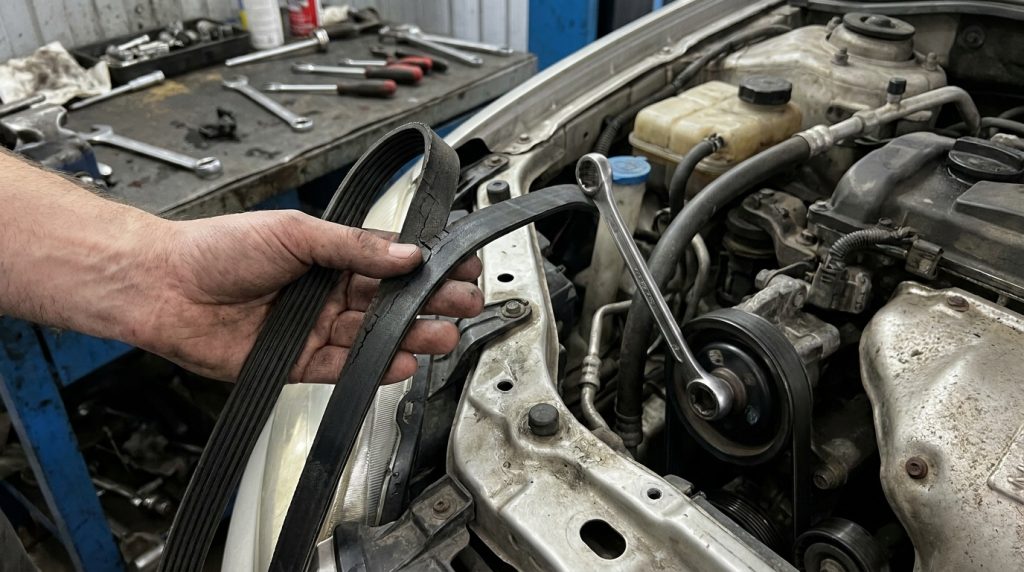
Common Causes of Premature Belt Wear
While belts naturally wear over time, several factors can significantly shorten their lifespan. Identifying and correcting these issues early can prevent repeated belt failures and reduce costly repairs.
Heat and Age
Engine compartments are exposed to extreme temperatures that gradually cause rubber belts to harden and deteriorate.
Over time, excessive heat can lead to:
- Surface cracking
- Loss of flexibility
- Dry rot
- Reduced grip
- Brittle rubber
Even vehicles driven infrequently should have belts inspected periodically, as rubber continues to age regardless of mileage.
Fluid Contamination
Oil, coolant, transmission fluid, and power steering fluid can quickly damage belt materials.
Common effects include:
- Belt swelling
- Softening
- Slippage
- Reduced traction
- Accelerated deterioration
If a leaking seal or hose contaminates a belt, the leak should be repaired before installing a replacement belt.
Worn Belt Tensioner
A belt relies on proper tension to maintain contact with pulleys.
A failing tensioner may cause:
- Belt squeal
- Uneven wear
- Belt vibration
- Slipping
- Premature belt failure
Whenever a serpentine belt is replaced, inspecting the automatic belt tensioner is considered a best practice.
Damaged or Misaligned Pulleys
A worn pulley can destroy a new belt surprisingly quickly.
Inspect pulleys for:
- Rough bearings
- Cracks
- Bent mounting points
- Rust buildup
- Misalignment
- Excessive wobble
Replacing damaged pulleys can significantly increase the service life of a new belt.
Improper Installation
Incorrect installation is another common cause of premature failure.
Problems may include:
- Incorrect routing
- Wrong belt size
- Improper tension
- Twisted installation
- Damaged ribs during installation
Always follow the manufacturer’s routing diagram and installation procedures.
When Should You Replace a Belt?
Waiting for complete belt failure can leave you stranded and may lead to expensive engine repairs. Preventive replacement is generally the safest and most economical approach.
Replace Belts Showing Visible Damage
Replace a belt if you notice:
- Cracks
- Fraying
- Missing ribs
- Glazing
- Rubber chunks missing
- Edge wear
- Separation between layers
Even if the belt is still functioning, visible damage indicates that replacement is approaching.
Follow Manufacturer Service Intervals
Vehicle manufacturers specify replacement intervals based on both mileage and time.
Typical recommendations include:
- Serpentine belts: Inspect regularly and replace as needed.
- Timing belts: Often between 60,000 and 100,000 miles, depending on the manufacturer.
Always consult your owner’s manual or service documentation for the recommended maintenance schedule.
Replace Related Components
Replacing only the belt may not solve the underlying problem.
Depending on the application, technicians may also recommend replacing:
- Belt tensioners
- Idler pulleys
- Water pumps (during timing belt service)
- Bearings
- Belt guides
Replacing worn supporting components at the same time can reduce future labor costs and improve system reliability.
What Happens If You Ignore a Worn Belt?
Ignoring a damaged belt can lead to far more serious mechanical problems than the cost of a routine replacement.
Vehicle Breakdown
A broken serpentine belt may stop the alternator, water pump, power steering pump, or air conditioning compressor from operating.
This can leave you stranded unexpectedly and require emergency roadside assistance.
Engine Overheating
If the water pump stops turning because of a failed belt, coolant circulation may cease almost immediately.
Continued driving with an overheating engine can result in:
- Blown head gasket
- Warped cylinder head
- Engine seizure
- Costly engine repairs
If your temperature gauge rises unexpectedly, stop driving as soon as it is safe to do so.
Loss of Power Steering
Many vehicles rely on the serpentine belt to drive the power steering pump.
If the belt fails:
- Steering effort increases dramatically.
- Low-speed maneuvering becomes difficult.
- Emergency handling may be compromised.
Loss of power steering can create a significant safety hazard.
Severe Engine Damage
Timing belt failure is one of the most serious belt-related problems.
On interference engines, a broken timing belt may allow valves and pistons to collide, potentially resulting in:
- Bent valves
- Damaged pistons
- Cylinder head damage
- Complete engine rebuild
Replacing a timing belt at the recommended interval is significantly less expensive than repairing catastrophic engine damage.
How to Inspect a Belt Safely
Routine belt inspections can help identify problems before they lead to roadside breakdowns or expensive repairs. Fortunately, many basic inspections can be performed without specialized tools.
Turn the Engine Off
Never inspect or touch belts while the engine is running.
Before beginning an inspection:
- Park on a level surface.
- Turn off the engine.
- Remove the ignition key.
- Allow the engine to cool completely.
- Set the parking brake.
Working around moving belts and pulleys can result in serious injury.
Perform a Visual Inspection
Using a flashlight, inspect as much of the belt as possible.
Look for:
- Cracks
- Fraying
- Missing ribs
- Glazing
- Uneven wear
- Rubber separation
- Contamination from oil or coolant
Rotate the engine manually only if recommended by the vehicle manufacturer to inspect hidden portions of the belt.
Check Belt Tension
Belts should maintain proper tension throughout operation.
Signs of improper tension include:
- Excessive movement
- Slack
- Belt vibration
- Chirping noises
- Squealing during startup
Modern vehicles often use automatic belt tensioners that should also be inspected for proper operation.
Inspect Pulleys
The belt itself may not always be the source of the problem.
Inspect pulleys for:
- Rust
- Cracks
- Wobbling
- Bearing noise
- Misalignment
- Excessive wear
A damaged pulley can rapidly destroy a new belt if it is not replaced.
Check for Fluid Leaks
Fluid contamination is one of the leading causes of premature belt failure.
Inspect nearby components for leaks from:
- Engine oil
- Coolant
- Power steering fluid
- Transmission fluid
Repairing the leak before replacing the belt helps prevent repeat failures.
Preventive Maintenance Tips
Preventive maintenance is the most effective way to maximize belt life and reduce unexpected repairs.
Follow a Routine Inspection Schedule
Inspect belts during every oil change or scheduled vehicle service.
Routine inspections help identify:
- Developing cracks
- Worn pulleys
- Loose tensioners
- Fluid leaks
- Belt contamination
Early detection often prevents more extensive repairs later.
Replace Belts Before Failure
Belts are wear items designed to be replaced periodically.
Waiting until a belt breaks can result in:
- Towing expenses
- Lost work time
- Emergency repairs
- Additional component damage
Preventive replacement is typically far less expensive than repairing damage caused by a failed belt.
Keep the Engine Clean
A clean engine compartment makes inspections easier and helps reduce contamination.
Benefits include:
- Easier leak detection
- Longer belt life
- Better cooling
- Simpler maintenance
- Improved reliability
Cleaning should be performed carefully to avoid forcing water into sensitive electrical components.
Use Quality Replacement Parts
Replacement belts should meet or exceed the vehicle manufacturer’s specifications.
High-quality belts typically offer:
- Better heat resistance
- Longer service life
- Improved flexibility
- Reduced stretching
- Better overall durability
Selecting reputable replacement components helps improve long-term reliability.
Replace Related Components Together
When replacing major belt-driven components, inspect related parts at the same time.
Depending on the repair, this may include:
- Belt tensioners
- Idler pulleys
- Water pumps
- Bearings
- Belt guides
- Seals
Replacing worn supporting components together often reduces future labor costs and improves overall system performance.
Frequently Asked Questions
How long does a serpentine belt typically last?
Most serpentine belts last between 60,000 and 100,000 miles, although actual service life depends on driving conditions, climate, vehicle design, and maintenance practices. Regular inspections are recommended regardless of mileage.
How can I tell if my timing belt needs replacement?
Unlike serpentine belts, timing belts often show few visible warning signs before failure. The safest approach is to follow the manufacturer’s recommended replacement interval. If your vehicle has reached the recommended mileage or age limit, schedule an inspection or replacement.
Can I drive with a squealing belt?
A squealing belt should never be ignored. While the noise may result from moisture or minor slippage, it can also indicate belt wear, improper tension, pulley problems, or contamination. Prompt inspection helps prevent more serious mechanical issues.
What causes belts to wear out early?
Common causes include:
- High engine temperatures
- Oil or coolant leaks
- Worn belt tensioners
- Misaligned pulleys
- Poor-quality replacement parts
- Improper installation
- Lack of routine maintenance
Correcting these issues helps maximize the life of replacement belts.
Is replacing a belt expensive?
Compared to the potential cost of engine damage or roadside breakdowns, replacing a worn belt is generally an affordable preventive maintenance service. Labor costs vary depending on the type of belt and the accessibility of the engine.
Conclusion
Vehicle belts play a critical role in keeping essential engine systems operating reliably. Whether driving the alternator, water pump, power steering pump, air conditioning compressor, or maintaining precise engine timing, belts are subject to constant stress, heat, and wear.
Recognizing the warning signs of belt wear—including cracks, fraying, glazing, squealing, slipping, overheating, charging issues, and steering problems—allows you to address minor issues before they become major repairs. Routine inspections, timely replacement, and proper maintenance of related components such as tensioners and pulleys can significantly extend the life of your vehicle and reduce unexpected downtime.
Preventive maintenance remains one of the most cost-effective ways to protect your investment and improve vehicle reliability. Following manufacturer service intervals and using quality replacement parts helps ensure dependable performance for years to come.
If you’re looking for automotive belts, industrial drive belts, V-belts, serpentine belts, timing belts, belt tensioners, pulleys, bearings, power transmission products, lubricants, or other MRO supplies, CEM Industrial Supply offers a wide selection of maintenance products to help keep your equipment and vehicles operating at peak performance. Our knowledgeable team can help you find the right components and maintenance solutions for your application.