
Choosing the right abrasive tool can make your work safer, cleaner, and more efficient. If you are comparing a wire wheel vs flap disc, you are likely preparing metal, removing rust, cleaning welds, stripping paint, or smoothing a rough surface.
Both tools are useful. Both can serve a good purpose. But they are not the same.
A wire wheel is mainly a cleaning and stripping tool. A flap disc is mainly a grinding, blending, and finishing tool. When we understand their strengths and limitations, we can work with more care, less frustration, and better results.
In any kind of hands-on work, whether in a home garage, metal shop, farm, or repair space, there is something meaningful about learning to use tools wisely. Good work requires patience, attention, and humility. In Bhakti Yoga, the path of devotion, even ordinary work can become an offering when done with care, safety, and a spirit of service.
A wire wheel is an abrasive attachment made of many steel, stainless steel, brass, or coated wires. These wires are arranged around a wheel, cup, or brush shape. Wire wheels are commonly used with angle grinders, bench grinders, drills, and rotary tools.
Their main job is surface cleaning. They remove unwanted material from the top layer without aggressively grinding away the base metal.
Common Uses for a Wire Wheel
A wire wheel is often used for:
- Removing rust from metal
- Cleaning old paint or flaky coatings
- Stripping scale and oxidation
- Cleaning welds before or after welding
- Removing dirt, grime, and corrosion
- Preparing a metal surface for primer or paint
- Cleaning threads, bolts, tools, and machinery parts
If you are restoring an old gate, cleaning a rusty trailer, preparing farm equipment, or removing corrosion from steel parts, a wire wheel can be very helpful.
Types of Wire Wheels
There are several types of wire wheels, and each one behaves differently.
A crimped wire wheel has wavy wires. It is more flexible and better for light cleaning, polishing, and irregular surfaces.
A knotted or twisted wire wheel has groups of wires twisted together. It is more aggressive and better for heavy rust, thick scale, and tough coatings.
A wire cup brush is shaped like a cup and is excellent for larger flat areas.
A wire end brush is small and useful for corners, holes, and tight spaces.
What a Wire Wheel Does Best
A wire wheel is best when you want to clean a surface without changing its shape too much. It can remove loose material while preserving edges, contours, and details.
This makes it a gentle but effective option for restoration work.
However, “gentle” does not mean harmless. Wire wheels can throw sharp wire bristles, dust, rust, and debris. They must always be used with proper protection and respect.
When considering the best tools for your grinding and finishing needs, it’s essential to understand the differences between wire wheels and flap discs. Each has its unique advantages depending on the task at hand. For a deeper dive into the importance of choosing the right power tool accessories and how they can impact your projects, check out this insightful article on power tool accessories that matter and the ones that just waste money.
What Is a Flap Disc?
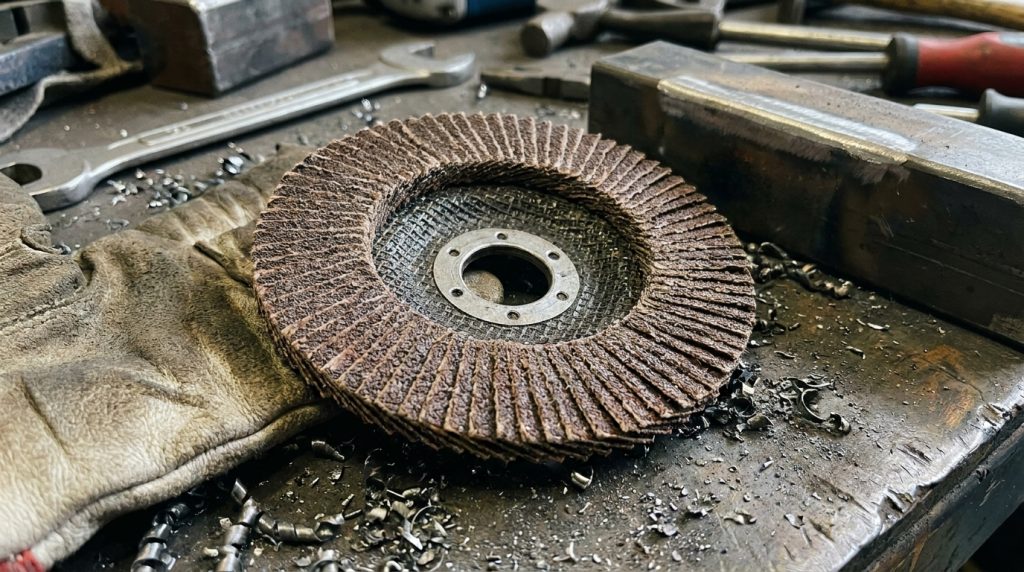
A flap disc is an abrasive disc made of overlapping pieces, or “flaps,” of sandpaper-like abrasive material. These flaps are bonded to a backing plate and used mostly on angle grinders.
Flap discs are designed to grind, smooth, blend, and finish metal. Unlike a wire wheel, a flap disc removes base material more directly.
Common Uses for a Flap Disc
A flap disc is commonly used for:
- Grinding welds
- Smoothing sharp edges
- Blending metal surfaces
- Removing light weld spatter
- Shaping steel or aluminum
- Preparing metal for paint or coating
- Finishing after grinding
- Deburring cut metal
If you have just welded two pieces of steel and want to smooth the weld bead, a flap disc is usually a better choice than a wire wheel.
Flap Disc Grit Options
Flap discs come in different grit levels. The grit number tells you how coarse or fine the abrasive is.
Lower grit numbers are more aggressive.
Higher grit numbers are smoother.
Common options include:
- 36 grit: heavy grinding and fast stock removal
- 40 grit: aggressive shaping and weld removal
- 60 grit: general grinding and blending
- 80 grit: smoother finishing
- 120 grit: fine finishing and surface preparation
Choosing the right grit matters. A 36-grit flap disc can remove metal quickly, but it may leave deep scratches. An 80-grit or 120-grit disc gives a smoother finish but works more slowly.
What a Flap Disc Does Best
A flap disc is best when you need to shape, smooth, or blend metal. It gives more control than a hard grinding wheel and can leave a better finish.
Many workers like flap discs because they combine grinding and finishing in one tool. They are less harsh than grinding wheels, but still strong enough for serious work.
Wire Wheel vs Flap Disc: Main Differences
When comparing a wire wheel vs flap disc, the biggest difference is what each tool removes.
A wire wheel removes surface contamination.
A flap disc removes surface contamination and base material.
That simple difference can guide your choice in most situations.
Material Removal
A wire wheel is not meant for heavy stock removal. It scrubs the surface. It can remove rust, paint, scale, and corrosion, but it does not flatten welds or reshape metal effectively.
A flap disc removes metal. It can level a weld, smooth a cut edge, and blend uneven surfaces. It is much more effective when the job requires grinding.
If you need to clean, choose a wire wheel.
If you need to grind, choose a flap disc.
Surface Finish
A wire wheel may leave a brushed or burnished look. It can polish high spots and clean textured areas, but it may not create an even, sanded finish.
A flap disc leaves scratch marks according to its grit. A coarse flap disc leaves rough scratches. A fine flap disc leaves a smoother finish that may be ready for primer, paint, or further sanding.
For decorative metalwork, you may need to follow a flap disc with finer abrasives.
Surface Shape and Detail
A wire wheel is more flexible. It can follow contours, grooves, edges, threads, and irregular shapes. This is one of its greatest strengths.
A flap disc is flatter and more rigid. It works best on accessible surfaces. It can round edges or change the shape of the metal if held too long in one place.
For detailed restoration, a wire wheel may be safer.
For controlled smoothing, a flap disc may be better.
Heat and Pressure
Both tools create heat, but a flap disc often generates more heat because it removes metal through friction.
Too much pressure with a flap disc can overheat the surface, wear out the disc quickly, and leave gouges.
A wire wheel also needs light pressure. Pressing too hard can bend wires, reduce cleaning action, and increase the chance of wires breaking off.
With both tools, let the tool do the work. A patient hand often gives the best result.
Please check out our latest article at https://cemindustrialsupply.com/news/ for more information.
When to Use a Wire Wheel
A wire wheel is the right choice when your goal is cleaning rather than grinding. It is especially useful when the base metal is still in good condition and you simply need to remove rust, paint, dirt, or loose material.
Removing Rust
For rust removal, a wire wheel is one of the most common tools. It works well on surface rust and flaky rust.
If the rust is deep and pitted, the wire wheel will clean the surface but may not remove all corrosion from deep holes. In that case, you may need chemical rust treatment, sanding, blasting, or replacement of the damaged part.
Use a knotted wire wheel for heavy rust.
Use a crimped wire wheel for lighter rust or more delicate work.
Cleaning Welds
A wire wheel is helpful for cleaning welds before inspection or painting. It can remove slag, soot, discoloration, and light spatter.
For welding processes that create slag, such as stick welding or flux-core welding, a wire wheel can be very useful after chipping away the slag.
However, if you need to flatten the weld bead, use a flap disc instead.
Stripping Paint and Coatings
Wire wheels can remove old paint, especially loose or peeling paint. They are helpful on outdoor metal furniture, railings, trailers, and machinery.
But be careful with old coatings. Some older paints may contain lead or other harmful materials. Always use proper respiratory protection and dust control.
A wire wheel can also smear certain soft coatings rather than remove them cleanly. In that case, a stripping disc or chemical remover may work better.
Cleaning Threads and Small Parts
Wire wheels are excellent for cleaning bolts, nuts, threaded rods, and small tools. A bench grinder with a wire wheel can quickly clean hardware.
Use caution. Small parts can catch and fly from your hands. Hold pieces firmly with pliers or a suitable fixture.
When considering the best tools for metal finishing, it’s essential to understand the differences between wire wheels and flap discs. Each has its unique advantages depending on the task at hand, such as material removal or surface preparation. For those looking to enhance their job site efficiency, you might find valuable insights in a related article that discusses essential gear and pro tips for maintaining a clean workspace. Check out this informative piece on how to clean up a job site for more details here.
When to Use a Flap Disc
A flap disc is the right tool when you need to grind, smooth, blend, or finish metal. It is more aggressive than a wire wheel and gives you more ability to shape the surface.
Smoothing Welds
This is one of the most common uses for a flap disc. After welding, a raised bead may need to be blended into the surrounding metal.
A 40-grit or 60-grit flap disc can smooth welds efficiently. For a finer finish, follow with 80 grit or 120 grit.
Be careful not to over-grind. Removing too much weld can weaken the joint. The goal is not always to make the weld disappear. The goal is to meet the structural and visual needs of the project.
Deburring Cut Metal
After cutting steel, aluminum, or stainless steel, sharp burrs can remain. A flap disc is excellent for removing these burrs.
It can also slightly round sharp edges, making the part safer to handle.
This is important in a practical and people-first way. Sharp edges cause injuries. Taking time to deburr is an act of care for whoever will use, install, or touch the finished piece.
Preparing Metal for Paint
A flap disc can prepare metal by removing mill scale, smoothing imperfections, and creating a surface profile for paint or primer.
However, do not make the surface too polished if paint needs to grip. Often, a moderate grit like 80 grit gives a good paintable surface.
For rusted metal, you may use a wire wheel first to remove loose rust, then a flap disc to smooth rough areas.
Shaping and Blending
A flap disc gives you control when shaping metal. It can soften corners, blend patch panels, smooth fabrication marks, and refine surfaces before final finishing.
If appearance matters, practice on scrap material first. The angle, pressure, and movement of the grinder all affect the result.
Wire Wheel vs Flap Disc for Rust Removal
Rust removal is one of the main reasons people compare a wire wheel vs flap disc. Both can remove rust, but they do it differently.
Light Surface Rust
For light surface rust, a wire wheel is often the better first choice. It cleans without removing too much metal.
Use a crimped wire wheel for mild rust and delicate surfaces. Use a knotted wire wheel if the rust is more stubborn.
After wire brushing, wipe the surface clean and apply primer, paint, oil, or rust inhibitor quickly. Bare metal can begin rusting again, especially in humid conditions.
Heavy Rust and Pitting
For heavy rust, the answer depends on the condition of the metal.
A wire wheel can remove loose rust and expose the surface. But if the rust has created pits, the wire may not reach every low spot.
A flap disc can grind down rough areas, but it may remove good metal along with rust. If used too aggressively, it can thin the part.
For heavily rusted structural parts, do not rely only on cleaning. Inspect the metal carefully. If it has lost strength, replacement may be necessary.
Best Combined Method
Often, the best method is to use both tools.
Start with a wire wheel to remove loose rust and scale.
Then use a flap disc where you need smoothing or leveling.
Finally, clean the surface and apply protection.
This balanced approach saves time and preserves more material.
Wire Wheel vs Flap Disc for Paint Removal
Paint removal can be simple or complicated depending on the coating, age, thickness, and surface.
Wire Wheel for Paint Removal
A wire wheel works well on loose, cracked, or peeling paint. It can also reach corners and textured surfaces better than a flap disc.
However, wire wheels can sometimes polish paint or heat it up rather than remove it efficiently. Soft paint may gum up the wires.
Wire wheels also create flying debris, so eye and face protection are essential.
Flap Disc for Paint Removal
A flap disc can remove paint quickly, especially on flat metal surfaces. But it may load up with paint and become less effective.
It can also remove metal underneath if you are not careful.
For paint removal alone, a dedicated paint stripping disc may be better than either a wire wheel or flap disc. These non-woven stripping discs remove coatings without grinding deeply into the metal.
Health and Safety with Old Paint
Be very careful with old paint. It may contain lead, chromates, or other toxic substances.
Use respiratory protection, ventilation, gloves, and safe cleanup methods. Do not create dust in areas where children, pets, or food preparation may be present.
A wise worker protects not only themselves, but also everyone around them.
Wire Wheel vs Flap Disc for Welding Projects
In welding and fabrication, both tools have a place. Many metalworkers keep both nearby because each one serves a different step.
Before Welding
Before welding, clean metal is important. Rust, paint, oil, and mill scale can affect weld quality.
A wire wheel can remove loose rust and dirt.
A flap disc can remove mill scale and create cleaner bare metal where the weld will go.
For critical welds, clean thoroughly. A clean joint supports a stronger weld.
After Welding
After welding, use a wire wheel to clean slag, soot, and discoloration.
Use a flap disc to smooth the weld bead if needed.
For decorative work, you may continue with finer sanding or polishing steps.
Stainless Steel Welding
If you work with stainless steel, use stainless steel wire wheels and abrasives dedicated only to stainless steel. Do not use a carbon steel wire wheel on stainless, because it can contaminate the surface and cause rust spots later.
This small detail matters. Purity in materials, like purity in intention, affects the final result.
Safety Tips for Wire Wheels and Flap Discs
Safety should never be treated as an afterthought. Whether you are a beginner or experienced worker, grinders deserve respect.
Wear Proper Personal Protective Equipment
At minimum, use:
- Safety glasses
- Full face shield
- Hearing protection
- Gloves suited to the task
- Long sleeves or protective clothing
- Respirator or dust mask when needed
A wire wheel can throw sharp wire bristles. These wires can stick into skin, clothing, or even safety gear.
A flap disc can throw abrasive grains, sparks, and metal dust.
Protect your eyes and face every time.
Check Tool Ratings
Make sure the wire wheel or flap disc is rated for your grinder’s RPM.
Never use an accessory that has a lower RPM rating than the grinder.
Angle grinders spin very fast. A damaged or incorrect disc can fail dangerously.
Also check that the arbor size matches and that the accessory is mounted correctly.
Use the Right Grinder Angle
For flap discs, hold the grinder at the recommended angle, often around 5 to 15 degrees for finishing and 15 to 35 degrees for more aggressive grinding, depending on the disc type.
For wire wheels, avoid forcing the edge into the work. Let the wire tips do the cleaning.
Too much pressure does not make the tool work better. It usually makes it less safe and less effective.
Control Sparks and Dust
Keep sparks away from flammable materials, fuel, solvents, sawdust, paper, and dry leaves.
Work in a clean area when possible.
Metal dust and coating dust can be harmful. Use ventilation and respiratory protection when needed.
Inspect Before Use
Before using a wire wheel, check for loose wires, damage, rust, or imbalance.
Before using a flap disc, check for cracks, missing flaps, water damage, or a damaged backing plate.
If something looks unsafe, do not use it.
Good judgment is part of good craftsmanship.
Pros and Cons of Wire Wheels
A wire wheel is simple, useful, and affordable, but it has limits.
Wire Wheel Pros
Wire wheels are excellent for cleaning rust, scale, dirt, and loose paint. They can reach uneven surfaces and preserve the shape of the metal better than grinding tools.
They are also available in many shapes and sizes, making them useful for both large and small jobs.
Wire Wheel Cons
Wire wheels do not remove much base metal. They are not good for flattening welds or reshaping parts.
They can throw wire bristles, which creates a safety risk.
They may also leave behind rust in pits or fail to remove tough coatings completely.
Pros and Cons of Flap Discs
A flap disc is versatile and powerful. It can grind and finish in one step.
Flap Disc Pros
Flap discs remove metal faster than wire wheels. They are excellent for weld smoothing, edge deburring, surface blending, and paint preparation.
They are easier to control than hard grinding wheels and often leave a better finish.
They come in many grit levels, so you can choose aggressive or fine results.
Flap Disc Cons
Flap discs wear out as the abrasive flaps are consumed. They can remove too much metal if used carelessly.
They may not reach deep grooves, threads, or tight corners well.
They can also load up when used on soft paint or certain coatings.
How to Choose Between a Wire Wheel and Flap Disc
The simplest way to choose is to ask: Am I cleaning, or am I grinding?
If you are cleaning rust, dirt, slag, or loose paint, choose a wire wheel.
If you are smoothing welds, removing burrs, shaping metal, or blending surfaces, choose a flap disc.
Choose a Wire Wheel If You Need To:
- Remove rust without heavy grinding
- Clean weld slag or soot
- Strip loose paint
- Clean bolts, threads, or tools
- Work on irregular or detailed surfaces
- Preserve the base metal as much as possible
Choose a Flap Disc If You Need To:
- Grind down welds
- Smooth cut edges
- Remove burrs
- Shape or blend metal
- Prepare flat surfaces for paint
- Create a smoother, sanded finish
Use Both If You Need a Complete Surface Prep
Many projects benefit from both.
For example, if you are restoring a rusty steel railing:
First, use a wire wheel to remove loose rust and paint.
Second, use a flap disc to smooth rough welds and edges.
Third, clean the surface thoroughly.
Fourth, apply primer and paint.
The result will usually be better than using only one tool.
Practical Examples
Real-life examples can make the choice easier.
Restoring a Rusty Trailer
A rusty trailer frame may have loose rust, old paint, and rough welds.
Use a knotted wire wheel to remove heavy rust and flaky paint.
Use a flap disc to smooth welds, burrs, or sharp edges.
Then apply rust converter if needed, followed by primer and paint.
Cleaning a Garden Tool
For a shovel, hoe, or old wrench, a wire wheel is usually enough.
It removes rust and dirt without changing the shape of the tool too much.
A flap disc may be too aggressive unless the edge needs reshaping.
Fabricating a Metal Bracket
After cutting and welding a steel bracket, use a flap disc to deburr edges and smooth welds.
Use a wire wheel afterward to clean remaining discoloration or spatter.
This gives a strong, clean, and safer finished part.
Preparing a Gate for Paint
If the gate has peeling paint and rust, use a wire wheel first.
On flat areas where the paint is stubborn, a flap disc or stripping disc may help.
Be careful around decorative details. A wire wheel is better for curves and corners.
Final Recommendation: Wire Wheel vs Flap Disc
In the wire wheel vs flap disc comparison, neither tool is “better” in every situation. Each one has its own service.
A wire wheel is best for cleaning.
A flap disc is best for grinding and finishing.
A wire wheel removes rust, paint, slag, and corrosion from the surface. It follows contours and protects the shape of the metal.
A flap disc removes metal, smooths welds, deburrs edges, and blends surfaces. It gives a more refined finish when used with the right grit.
If you do metal repair, welding, restoration, or fabrication, it is wise to keep both in your toolbox. Used together, they can help you create cleaner, safer, longer-lasting work.
And as with any tool, the heart behind the work matters. Move slowly. Protect yourself and others. Do each task with attention. In a devotional spirit, even practical work can become part of a life of service.
Wherever you are coming from, you are welcome. Whether your next step is learning a new skill, chanting God’s names, offering a quiet prayer, serving someone with kindness, or simply pausing with gratitude, everyone is welcome to take one sincere step toward God.
[fluentform id=”3″]
FAQs
What is a wire wheel?
A wire wheel is a tool used for cleaning, deburring, and surface preparation. It consists of wire bristles that are attached to a central hub, and it is typically used with a bench grinder or angle grinder.
What is a flap disc?
A flap disc is a type of abrasive tool that is used for grinding, blending, and finishing. It is made up of overlapping flaps of abrasive material, such as sandpaper, that are attached to a backing plate. Flap discs are commonly used with angle grinders.
What are the main differences between a wire wheel and a flap disc?
The main difference between a wire wheel and a flap disc is the type of material they are designed to work with. Wire wheels are best suited for cleaning and surface preparation on metal surfaces, while flap discs are better for grinding and finishing tasks.
When should I use a wire wheel?
A wire wheel is best used for removing rust, paint, and other surface coatings from metal surfaces. It is also effective for cleaning welds and preparing surfaces for painting or welding.
When should I use a flap disc?
A flap disc is best used for grinding, blending, and finishing tasks on metal, wood, and other materials. It is commonly used for smoothing welds, removing burrs, and shaping metal surfaces.