
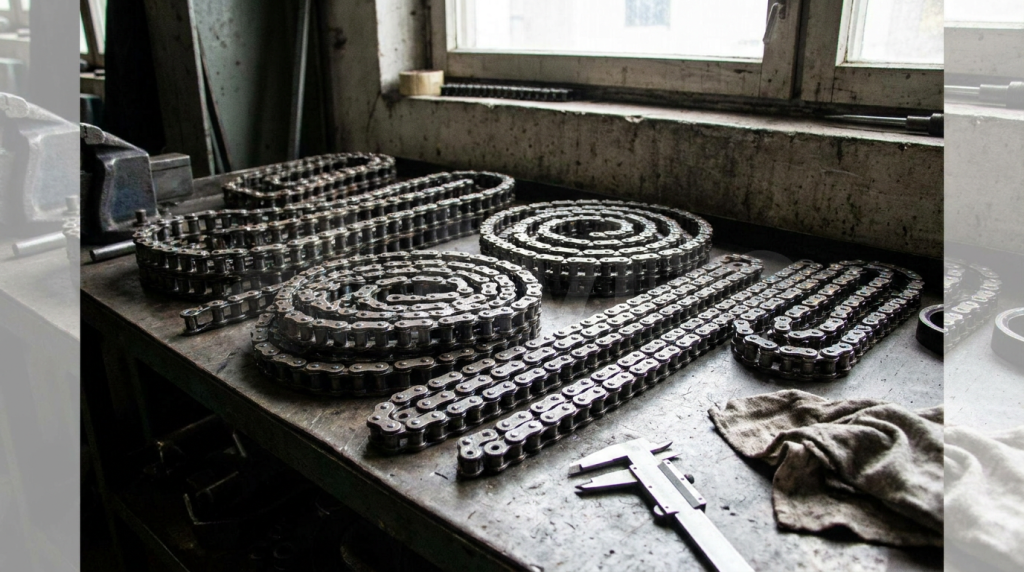
Roller chains are simple, strong, and deeply practical. They help transfer power in bicycles, motorcycles, conveyors, farm equipment, industrial machinery, garage doors, and many other systems. When the chain size is correct, everything moves smoothly. When it is wrong, the equipment may wear quickly, lose efficiency, or even become unsafe.
In Bhakti Yoga, we often speak about seva, a Sanskrit word meaning loving service. Even practical work—repairing a machine, maintaining a tool, helping a business run safely—can become service when done with care, honesty, and attention. Understanding roller chain sizes is one small way to serve well: protecting people, equipment, time, and resources.
This guide explains roller chain sizes in a clear, people-first way. Whether you are a mechanic, plant manager, farmer, cyclist, student, or simply someone trying to identify a chain, you are welcome here.
For a deeper understanding of roller chain sizes and their applications, you might find the article on chain selection and maintenance particularly useful. This resource provides insights into how to choose the right chain for your specific needs and tips for ensuring longevity and performance. You can read more about it here: Chain Selection and Maintenance.
What Is a Roller Chain?
A roller chain is a mechanical chain designed to transmit power between rotating shafts, usually through sprockets. It is made of repeating links that include pins, bushings, rollers, and plates. As the chain wraps around sprocket teeth, the rollers turn and reduce friction.
The Main Parts of a Roller Chain
A standard roller chain includes several important components:
- Pins: These hold the chain links together and allow articulation.
- Bushings: These sit around the pins and help the chain bend smoothly.
- Rollers: These contact the sprocket teeth and reduce wear.
- Inner plates: These hold the bushings and rollers.
- Outer plates: These hold the pins.
- Connecting link: Also called a master link, this joins the chain ends together.
Each part matters. If one part wears, the whole chain can suffer. In spiritual life, Bhakti texts often remind us that small daily actions shape the whole journey. In the same way, small chain parts support the whole motion of a machine.
Why Roller Chain Size Matters
Roller chain size affects:
- Load capacity
- Speed capability
- Sprocket compatibility
- Equipment efficiency
- Wear life
- Safety
- Noise and vibration
- Replacement cost
A chain that is too small may stretch, break, or wear out quickly. A chain that is too large may not fit the sprockets and can create unnecessary weight, friction, and expense.
Correct sizing is not only technical; it is also responsible. Choosing the right chain helps prevent breakdowns and protects those who work near the equipment.
Key Roller Chain Dimensions Explained
To understand roller chain sizes, you need to know the main dimensions. These measurements are usually standardized, especially for ANSI roller chains in the United States and ISO/British Standard chains in many other parts of the world.
Pitch
Pitch is the distance from the center of one pin to the center of the next pin. It is the most important roller chain measurement.
For example, a #40 roller chain has a pitch of 1/2 inch. A #50 chain has a pitch of 5/8 inch. A #60 chain has a pitch of 3/4 inch.
Pitch determines which sprockets the chain can fit. If the pitch does not match the sprocket, the chain will not engage properly.
Roller Diameter
The roller diameter is the outside diameter of the roller. This matters because the roller must fit smoothly between the sprocket teeth.
If the roller diameter is wrong, the chain may ride improperly on the sprocket, causing noise, wear, or slipping.
Inner Width
The inner width is the distance between the inner plates. This dimension must match the thickness of the sprocket teeth.
If the inner width is too narrow, the chain may not fit over the sprocket. If it is too wide, the chain may have too much side movement.
Plate Thickness and Overall Width
The thickness of the side plates affects chain strength. The overall width matters when space is limited, such as inside guards, compact machines, or narrow assemblies.
For multi-strand chains, total width becomes especially important.
Pin Diameter
The pin diameter affects strength and wear resistance. Larger pins generally increase load capacity, but the whole chain design must be balanced.
When replacing a chain, most users do not measure pin diameter first. Still, it is part of the standard sizing and can help identify unusual chains.
Please check out our latest article at https://cemindustrialsupply.com/news/ for more information.
Common ANSI Roller Chain Sizes
ANSI roller chains are common in North America and many industrial settings worldwide. ANSI stands for the American National Standards Institute. ANSI chain numbers usually follow a simple logic.
How ANSI Chain Numbers Work
In many ANSI roller chain sizes, the first digit or digits help identify pitch.
For standard roller chains:
- The first number multiplied by 1/8 inch gives the pitch.
- The second number often indicates chain style.
For example:
- #40 chain: 4 × 1/8 inch = 1/2 inch pitch
- #50 chain: 5 × 1/8 inch = 5/8 inch pitch
- #60 chain: 6 × 1/8 inch = 3/4 inch pitch
- #80 chain: 8 × 1/8 inch = 1 inch pitch
This pattern is not perfect for every chain type, but it is very helpful for common ANSI sizes.
Popular ANSI Roller Chain Sizes
Here are some common ANSI roller chain sizes:
- #25 chain: 1/4 inch pitch, used in light-duty applications
- #35 chain: 3/8 inch pitch, common in small machinery and go-karts
- #40 chain: 1/2 inch pitch, widely used in machinery and agriculture
- #41 chain: 1/2 inch pitch, lighter and narrower than #40
- #50 chain: 5/8 inch pitch, used in industrial and agricultural equipment
- #60 chain: 3/4 inch pitch, stronger and used for heavier loads
- #80 chain: 1 inch pitch, common in demanding industrial applications
- #100 chain: 1-1/4 inch pitch, used for heavy-duty power transmission
#40 vs #41 Roller Chain
Many people confuse #40 and #41 chain because both have a 1/2 inch pitch. However, they are not the same.
The #41 chain is narrower and lighter. It is often used on lighter-duty equipment. The #40 chain is wider and stronger. A #41 chain may fit some #40 sprockets in certain situations, but it is not always a proper replacement. Always check sprocket width, load, speed, and manufacturer specifications.
Heavy Series ANSI Chains
Some chains include an “H” suffix, such as #60H or #80H. The “H” means heavy series. These chains usually have thicker side plates and higher fatigue strength.
A heavy series chain can be helpful in shock-load applications, such as conveyors, agricultural machines, and equipment that starts and stops often.
Understanding roller chain sizes is crucial for ensuring the efficiency and longevity of your machinery. For those looking to enhance their home projects, you might find it beneficial to explore related topics, such as how to find reliable contractors for your home renovations. A great resource for this is an article that provides valuable insights on selecting trustworthy professionals for your bathroom remodel. You can read more about it here. This information can help you make informed decisions while also considering the mechanical aspects of your home improvements.
ISO and British Standard Roller Chain Sizes
Outside North America, ISO and British Standard roller chains are also very common. ISO means International Organization for Standardization. British Standard chains are often labeled with numbers like 08B, 10B, or 12B.
Understanding B-Series Chain Numbers
Common British Standard chain sizes include:
- 06B: 3/8 inch pitch
- 08B: 1/2 inch pitch
- 10B: 5/8 inch pitch
- 12B: 3/4 inch pitch
- 16B: 1 inch pitch
- 20B: 1-1/4 inch pitch
Although some B-series chains have the same pitch as ANSI chains, they are often different in roller diameter, inner width, and overall dimensions.
ANSI vs ISO Chain Compatibility
ANSI and ISO chains are not always interchangeable. Even when the pitch is the same, the sprocket fit may be different.
For example, ANSI #40 and ISO 08B both have a 1/2 inch pitch, but their roller diameter and width may not match. Using the wrong chain can cause poor engagement, faster sprocket wear, and reduced chain life.
If you are replacing a chain, try to identify the exact standard rather than relying on pitch alone.
When to Use ISO Chain
Use ISO or British Standard chain when:
- The machine was built in Europe or Asia
- The original chain is marked with B-series numbers
- The sprockets are designed for ISO chain
- The equipment manual specifies ISO chain
When in doubt, measure carefully and consult the equipment documentation.
Understanding roller chain sizes is crucial for ensuring the efficiency and longevity of machinery. For those looking to delve deeper into the world of power tools and accessories, a related article can provide valuable insights. You can explore more about essential components and their specifications in this informative piece on power tools and accessories. This resource will help you make informed decisions when selecting the right tools for your projects.
Single-Strand, Double-Strand, and Triple-Strand Roller Chains
Roller chains can have one or more rows of links. These are called strands.
Single-Strand Roller Chain
A single-strand chain has one row of rollers. It is the most common type and works well for many light, medium, and heavy-duty applications.
Single-strand chains are easier to install, easier to align, and generally less expensive than multi-strand chains.
Double-Strand Roller Chain
A double-strand chain has two parallel rows of rollers connected by longer pins. It can carry more load than a single-strand chain of the same pitch.
Double-strand chain numbers often include a suffix like -2 or may be described as duplex chain. For example:
- #40-2
- #50-2
- #60-2
Double-strand chains are used when more power capacity is needed but the designer does not want to increase pitch size.
Triple-Strand Roller Chain
A triple-strand chain has three rows of rollers. It offers even more load capacity and is used in heavier applications.
Triple-strand chain numbers often include -3 or may be called triplex chain.
Choosing the Right Number of Strands
More strands can carry more load, but they also require careful alignment and equal load sharing. If sprockets are not aligned correctly, one strand may carry more load than the others, causing uneven wear.
A larger single-strand chain may sometimes be better than a smaller multi-strand chain. The best choice depends on available space, speed, load, shock, cost, and maintenance conditions.
How to Measure a Roller Chain Size
If your chain has no visible markings, you can measure it. This should be done patiently and safely. If the chain is on a machine, disconnect power and follow lockout procedures before touching it.
Step 1: Measure the Pitch
Measure from the center of one pin to the center of the next pin. For better accuracy, measure across several pitches and divide.
For example, measure the distance across 10 pins, then divide by the number of pitches. This reduces error from wear and hand measurement.
Common pitch examples:
- 1/4 inch = #25
- 3/8 inch = #35 or 06B
- 1/2 inch = #40, #41, or 08B
- 5/8 inch = #50 or 10B
- 3/4 inch = #60 or 12B
- 1 inch = #80 or 16B
Step 2: Measure the Roller Diameter
Use calipers if possible. Measure the outside diameter of the roller. This helps distinguish between chains that have the same pitch but different standards.
Step 3: Measure the Inner Width
Measure the distance between the inner plates. This tells you whether the chain can fit the sprocket teeth.
This is especially important when comparing #40 and #41 chains or ANSI and ISO chains.
Step 4: Count the Strands
Look at how many rows of rollers the chain has:
- One row = single-strand
- Two rows = double-strand
- Three rows = triple-strand
Make sure the replacement chain has the same number of strands unless the sprockets and drive design are being changed.
Step 5: Check for Markings
Many roller chains have markings stamped on the side plates. You may see numbers such as 40, 50, 60, 08B, or 10B. You may also see manufacturer names or suffixes like H, SS, or C.
These markings can save time, but do not rely on them alone if the chain is worn, modified, or from an unknown source.
Roller Chain Suffixes and Special Types
Roller chain sizes often include letters or suffixes. These describe special features, materials, or construction.
H: Heavy Series Chain
As mentioned earlier, H means heavy series. A #60H chain has the same pitch as #60 chain but thicker side plates.
Heavy series chain is useful for shock loads and higher fatigue demands.
SS: Stainless Steel Chain
SS means stainless steel. Stainless steel roller chains resist corrosion and are used in wet, washdown, food processing, marine, and chemical environments.
However, stainless steel chain may have lower tensile strength than carbon steel chain of the same size. Always check load ratings.
NP or Nickel-Plated Chain
Nickel-plated roller chain offers corrosion resistance with good appearance. It is often used where moisture is present but full stainless steel is not required.
C: Cottered Chain
A cottered chain uses cotter pins to hold the link plates. This can make disassembly easier in larger chain sizes.
Riveted Chain
A riveted chain has pins that are riveted over. It is strong and common in many applications, but it may require a chain breaker or special tools for disassembly.
Attachment Chain
Attachment roller chains have special tabs or extended pins for carrying products, pushing materials, or connecting fixtures. They are common in conveyors.
Attachment chain sizing still begins with the base chain size, such as #40, #50, or 08B, but the attachment type must also match the application.
How to Choose the Correct Roller Chain Size
Choosing the right roller chain is not only about matching measurements. It is about understanding the whole application.
Load and Horsepower
The chain must handle the power being transmitted. Higher horsepower and heavier loads require stronger chains.
Manufacturers provide horsepower rating charts based on chain size, sprocket tooth count, speed, and lubrication conditions.
Speed
High-speed applications require careful chain selection. At higher speeds, lubrication, sprocket quality, alignment, and chain balance become more important.
A chain that works well at low speed may fail quickly at high speed.
Shock Loading
Shock loads happen when equipment starts suddenly, stops suddenly, jams, or experiences uneven force. Examples include crushers, agricultural machinery, heavy conveyors, and sawmill equipment.
For shock loads, you may need a larger chain, heavy series chain, or a different drive design.
Environment
Consider where the chain will operate:
- Dry and dusty
- Wet or humid
- Food-grade washdown
- High temperature
- Corrosive chemicals
- Outdoor weather
- Abrasive materials
The environment affects material choice, lubrication, maintenance schedule, and expected life.
Sprocket Size and Tooth Count
The sprocket must match the chain size and standard. Tooth count also affects performance. Very small sprockets increase chain articulation and wear. Larger sprockets usually improve chain life but require more space.
A common practical guideline is to avoid using sprockets that are too small for the chain and speed. Manufacturer charts can guide the best tooth count.
Roller Chain Length and Link Count
After choosing the chain size, you also need the correct chain length.
Counting Chain Links
Roller chain length is often described by the number of pitches or links. A chain may be ordered in a standard box length, such as 10 feet, and then cut to fit.
To replace an existing chain, count the links or measure the total length. Be aware that worn chains become longer due to pin and bushing wear. This is often called chain stretch, though the metal plates are not usually stretching much. The elongation comes from wear at the joints.
Even and Odd Link Counts
Many roller chain drives use an even number of links. If the chain requires an odd number, you may need an offset link, also called a half link.
Offset links can be useful but may reduce chain strength. If possible, adjust center distance or sprocket size to use an even link count.
Chain Tension and Sag
Roller chains should not be too tight or too loose. A chain that is too tight can overload bearings and wear quickly. A chain that is too loose may jump teeth or whip.
Many drives need a small amount of sag on the slack side. The correct amount depends on center distance, speed, orientation, and manufacturer recommendations.
Roller Chain Maintenance for Longer Life
A properly sized chain still needs care. Maintenance is where technical skill becomes steady service.
In the Bhagavad-gita, a beloved Bhakti scripture, Krishna teaches that work offered with sincerity can become a path of spiritual growth. This does not mean every task must look religious on the outside. It means our heart can become more thoughtful, grateful, and responsible in what we do. Maintaining equipment safely and honestly can be part of that spirit.
Lubrication
Lubrication is one of the most important factors in roller chain life. Oil must reach the pin and bushing area, not just coat the outside.
Good lubrication reduces:
- Friction
- Heat
- Wear
- Noise
- Corrosion
- Power loss
Use the lubricant recommended for your chain size, speed, temperature, and environment.
Alignment
Poor alignment causes side wear, noise, and premature failure. Make sure sprockets are parallel and in the same plane.
Check alignment whenever installing new chain or sprockets.
Sprocket Inspection
A new chain on worn sprockets may wear quickly. Look for hooked teeth, sharp points, uneven wear, or damaged tooth profiles.
If sprockets are badly worn, replace them with the chain.
Chain Elongation
As a roller chain wears, it becomes longer. Many chains should be replaced when elongation reaches about 2% to 3%, depending on the application and sprocket size.
Precision drives may require replacement sooner. Conveyor chains may tolerate more wear, depending on the system.
Cleanliness
Dirt, grit, and abrasive particles can enter chain joints and accelerate wear. In dusty environments, cleaning and proper lubrication are essential.
However, avoid harsh cleaning methods that remove internal lubrication without replacing it.
Common Roller Chain Sizing Mistakes
Mistakes happen, and there is no shame in learning. A humble approach saves time and prevents repeated failures.
Matching Pitch Only
Pitch is important, but it is not enough. Two chains can have the same pitch and still differ in roller diameter, inner width, plate thickness, and standard.
Always confirm multiple dimensions.
Ignoring the Sprockets
Chains and sprockets work together. Replacing only the chain may not solve the problem if sprockets are worn, misaligned, or incorrect.
Choosing a Chain That Is Too Small
A smaller chain may be cheaper at first, but it can fail quickly under load. Consider horsepower, speed, shock, and environment.
Over-Tensioning the Chain
Too much tension can damage bearings, shafts, sprockets, and the chain itself. Roller chains need proper tension, not maximum tightness.
Forgetting Lubrication
Even the best chain can fail early without lubrication. Dry chain joints create heat and wear.
Using the Wrong Connecting Link
The connecting link should match the exact chain size and type. A #40 connecting link will not properly fit a #50 chain. Stainless, heavy series, cottered, and riveted chains may also require specific link styles.
Quick Roller Chain Size Reference
This simple reference can help you begin identification. Always verify with manufacturer data before final selection.
Common ANSI Sizes
- #25: 1/4 inch pitch, light-duty
- #35: 3/8 inch pitch, small machinery, go-karts
- #40: 1/2 inch pitch, general power transmission
- #41: 1/2 inch pitch, narrower light-duty chain
- #50: 5/8 inch pitch, medium-duty industrial use
- #60: 3/4 inch pitch, heavier-duty equipment
- #80: 1 inch pitch, demanding industrial applications
- #100: 1-1/4 inch pitch, heavy-duty power transmission
Common ISO/British Standard Sizes
- 06B: 3/8 inch pitch
- 08B: 1/2 inch pitch
- 10B: 5/8 inch pitch
- 12B: 3/4 inch pitch
- 16B: 1 inch pitch
- 20B: 1-1/4 inch pitch
Helpful Measuring Tools
To identify a roller chain size, these tools are useful:
- Calipers
- Ruler or tape measure
- Chain wear gauge
- Sprocket gauge
- Manufacturer catalog
- Equipment manual
If you are unsure, take the old chain and sprocket measurements to a trusted supplier. A little extra patience can prevent costly mistakes.
Practical Examples of Roller Chain Size Selection
Real-life examples can make roller chain sizing easier to understand.
Example 1: Small Go-Kart Chain
A go-kart may use #35 chain, which has a 3/8 inch pitch. This chain is common for smaller engines and lighter loads. If the kart has been modified for more power, the chain and sprockets may need upgrading.
Example 2: Farm Equipment Chain
A piece of agricultural machinery might use #50 or #60 chain because farm equipment often faces dirt, shock loads, and outdoor weather. In this case, lubrication and cleaning are especially important.
Example 3: Industrial Conveyor
A conveyor may use #40, #50, or larger chain, depending on the weight being moved. If the chain includes attachments, the replacement must match not only the base chain size but also the attachment spacing and style.
Example 4: Imported Machine
A machine built overseas may use 08B or 10B chain rather than ANSI #40 or #50. Even if the pitch seems familiar, check the standard carefully before replacing it.
A Simple Checklist Before Buying Roller Chain
Before ordering a new roller chain, pause and review:
- What is the chain pitch?
- What is the roller diameter?
- What is the inner width?
- Is it ANSI, ISO, or another standard?
- Is it single-strand, double-strand, or triple-strand?
- Does it need heavy series, stainless steel, nickel-plated, or attachment style?
- Are the sprockets worn or damaged?
- What load and speed will the chain handle?
- What environment will it operate in?
- What lubrication is required?
This kind of thoughtful checklist is simple, but powerful. In Bhakti practice, we learn that steady, sincere attention can transform ordinary moments. In maintenance work, steady attention can transform confusion into confidence.
Bringing Skill, Safety, and Service Together
Roller chain sizes may seem complicated at first, but they become much easier when you understand the basics: pitch, roller diameter, inner width, strand count, and standard type. From ANSI #40 to ISO 08B, from single-strand chain to heavy-duty multi-strand chain, the right choice begins with careful observation.
Good chain selection protects machines. Good maintenance protects people. And when we bring humility, patience, and care into our work, even technical tasks can become part of a more meaningful life.
Bhakti Yoga is the path of love and devotion. Bhakti means loving devotion, and yoga means connection. Through chanting sacred names, prayer, service, study, and sincere daily effort, we gradually reconnect with God and with the sacred purpose behind our lives.
Wherever you are coming from, whatever your background, you are welcome. May your work be safe, your heart be encouraged, and your next step be blessed. Everyone is welcome to take one sincere step toward God—through a prayer, a chant, an act of service, or a moment of gratitude today.
[fluentform id=”3″]
FAQs
What are roller chain sizes?
Roller chain sizes refer to the various dimensions and specifications of roller chains, including pitch, roller diameter, and width, which determine their compatibility with sprockets and other components.
How are roller chain sizes measured?
Roller chain sizes are typically measured by the pitch, which is the distance between the centers of adjacent pins. Other important measurements include roller diameter, width, and overall length.
What are the common roller chain sizes?
Common roller chain sizes include #25, #35, #40, #50, #60, #80, and #100, with each size corresponding to specific pitch and roller diameter dimensions.
How do I choose the right roller chain size?
To choose the right roller chain size, it is important to consider the application, load requirements, speed, and environmental factors. Consulting with a manufacturer or supplier can also help in selecting the appropriate size.
What are the applications of different roller chain sizes?
Different roller chain sizes are used in various applications, such as industrial machinery, agricultural equipment, motorcycles, bicycles, and conveyors, based on their load-bearing capacity and speed requirements.