
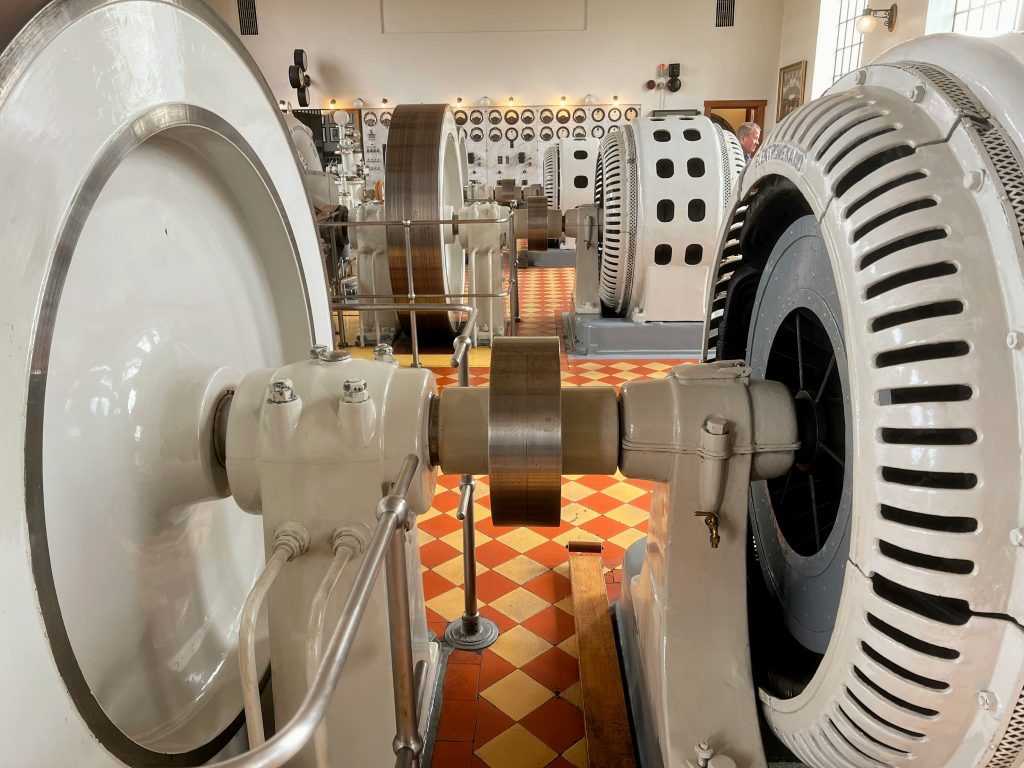
You’re wondering why rotor balancing matters for your machinery. Simply put, unbalanced rotors cause vibrations. These vibrations lead to premature wear, increased energy consumption, and ultimately, costly breakdowns. Proper rotor balancing extends equipment life, reduces operational headaches, and saves you money in the long run. It’s a fundamental aspect of machine health, often overlooked until problems arise.
Think of a spinning top. If all its weight is evenly distributed around its center, it spins smoothly and stably. Now imagine a small lump of clay stuck on one side. It would wobble and shake, right? That’s essentially what an unbalanced rotor does.
The Dynamics of Unbalance
An unbalanced rotor has an uneven distribution of mass around its axis of rotation. This unevenness creates a centrifugal force that varies in magnitude and direction as the rotor spins. This rotating force is what we perceive as vibration. It’s not just a nuisance; it’s a destructive force constantly trying to pull the machine apart.
Common Causes of Unbalance
Unbalance isn’t always obvious. Sometimes it’s built-in from the manufacturing process, particularly with cast or welded components. Other times, it develops over the equipment’s lifespan.
- Manufacturing Tolerances: No manufacturing process is perfect. Slight variations in material density, uneven machining, or assembly errors can introduce initial unbalance.
- Material Buildup or Erosion: Fans in dirty environments can accumulate dust and grime unevenly. Pumps handling abrasive fluids might experience uneven wear. Both scenarios shift the rotor’s center of mass.
- Component Damage: A bent shaft, a missing fan blade, or even a foreign object lodged within a rotating part can instantly create significant unbalance.
- Repair or Maintenance Errors: Improper replacement of parts, welding without considering weight distribution, or even painting unevenly can reintroduce or worsen unbalance.
- Thermal Distortion: As a rotor heats up during operation, different parts can expand or contract unevenly, leading to dynamic unbalance.
The Silent Erosion of Unbalance
The effects of unbalance aren’t always a catastrophic failure. Often, it’s a gradual, insidious process. Constant vibration slowly fatigues materials, loosens fasteners, and grinds away at surfaces. This “silent erosion” significantly shortens the lifespan of bearings, seals, and other critical components.
For those interested in understanding the importance of rotor balancing in generator performance, a related article can be found at CEM Industrial Supply. This resource provides valuable insights into how proper rotor balancing can enhance the efficiency and longevity of Generac generators, ensuring they operate smoothly and reliably.
The Cost of Neglecting Rotor Balancing
It’s tempting to think of balancing as an extra step, an added expense. However, the costs associated with not balancing often far outweigh the cost of doing it correctly at regular intervals.
Increased Maintenance and Repair Costs
This is the most direct and obvious consequence. Bearings often bear the brunt of unbalance. They’re designed to handle specific loads, but constant vibrational forces introduce oscillatory stress beyond their intended design limits.
- Premature Bearing Failure: Bearings will wear out much faster, requiring more frequent and costly replacements. Failed bearings can then lead to secondary damage to shafts and housings.
- Seal Leaks and Wear: Vibrations can cause seals to lose their integrity, leading to leaks of lubricants or process fluids, and thus contamination and further downtime.
- Structural Damage: Over time, high vibration levels can fatigue surrounding structures, cracking welds, loosening bolts, even damaging foundations.
- Component Breakage: In extreme cases, components like fan blades, impellers, or even shafts can fracture and break due to excessive vibratory stress.
Reduced Equipment Lifespan
Every minute a machine operates with significant unbalance, its overall lifespan is diminished. It’s like constantly driving a car with poorly balanced tires – every component in the suspension and steering system will degrade faster. Properly balanced machinery not only runs smoother but runs longer, delaying the need for costly capital expenditure on new equipment.
Decreased Energy Efficiency
Vibration isn’t just wasted motion; it’s wasted energy. The energy that causes the machine to shake and rattle is energy that isn’t contributing to the machine’s primary function.
- Higher Power Consumption: Unbalanced machinery requires more power to overcome the resistance created by the vibration. Motors have to work harder, drawing more current, and increasing your energy bills. This effect can be surprisingly significant in large, continuously operating equipment.
- Increased Heat Generation: The friction and stress caused by vibration also generate heat, which itself can lead to further material degradation and energy loss.
Production Downtime and Safety Concerns
When a machine breaks down due to unbalance-related issues, production stops. This means lost revenue, missed deadlines, and potentially idle workers.
- Unscheduled Downtime: Unbalance often leads to sudden, unpredictable failures, halting production without warning. This is far more disruptive than planned maintenance.
- Product Quality Issues: In some applications, excessive vibration can negatively impact the quality of the product being manufactured. For example, in precision machining, vibration can lead to poor finishes or dimensional inaccuracies.
- Safety Hazards: Severely unbalanced rotating equipment can pose significant safety risks. Parts can detach, creating projectiles, or structures can fail, endangering personnel. The noise from excessive vibration also contributes to occupational hazards in the workplace.
Understanding Different Types of Unbalance
Unbalance isn’t a one-size-fits-all phenomenon. The type of unbalance present dictates the balancing approach.
Static Unbalance
Imagine a heavy spot on a simple wheel. If you put that wheel on a perfectly smooth axle, the heavy spot would always roll to the bottom. That’s static unbalance. It occurs when the principal inertia axis is parallel to the axis of rotation, but offset from it.
- Detection: Can often be detected by placing the rotor on knife-edges or a static balancing stand. The heavy spot will always settle at the bottom.
- Correction: Usually corrected by adding or removing weight at a single point on the rotor in a single plane.
- Applicability: Most prevalent in narrow, disc-like rotors (e.g., flywheels, pulleys) where the axial length is small compared to the diameter.
Couple Unbalance
Now imagine two equal heavy spots, 180 degrees apart, but in different planes along the rotor’s axis. When one goes down, the other goes up. This creates a rocking motion or “couple” effect. The center of mass might still be on the axis of rotation, but the principal inertia axis is tilted relative to the axis of rotation.
- Detection: Cannot be detected by static balancing. Requires dynamic balancing.
- Correction: Requires adding or removing weight in at least two different planes along the rotor’s axis. The weights must be equal and opposite to counteract the rocking motion.
- Applicability: Common in longer rotors like shafts or armatures.
Dynamic Unbalance
This is the most common and complex type of unbalance found in real-world machinery. It’s a combination of both static and couple unbalance. Here, the principal inertia axis is neither parallel to nor intersects the axis of rotation.
- Detection: Requires dynamic balancing equipment that can measure vibration at multiple points and determine the phase and amplitude of unbalance forces.
- Correction: Involves adding or removing weight in two or more correction planes along the rotor’s length. This allows for simultaneous correction of both static and couple components.
- Applicability: Virtually all real-world rotating machinery experiences some degree of dynamic unbalance, especially rotors with significant length-to-diameter ratios.
Techniques and Standards for Rotor Balancing
Balancing isn’t guesswork; it involves precise measurements and calculations. There are established methods and standards that guide the process.
On-Site vs. Shop Balancing
Where you balance a rotor depends on its size, accessibility, and the practicalities of transport.
- On-Site (In-Situ) Balancing: This involves balancing the rotor in its own bearings and operating conditions.
- Advantages: Eliminates transport costs and risks, corrects for potential unbalance introduced by mounting in its operational setting, and considers environmental factors like temperature. It’s also ideal for very large or complex machines that are difficult to disassemble.
- Disadvantages: Requires specialized portable equipment, the machine must be taken out of service, and access to correction planes might be challenging.
- Shop (Machine) Balancing: This involves removing the rotor from its assembly and balancing it on a dedicated balancing machine in a workshop.
- Advantages: Offers higher precision and controlled conditions, easier access to correction points, and typically faster for smaller, readily removable rotors.
- Disadvantages: Requires disassembly and reassembly, transport risks, and doesn’t account for potential installation-induced unbalance or changes in operating conditions.
The Balancing Process Explained
While specific procedures vary based on equipment, the core steps remain consistent:
- Measurement: Specialized sensors (accelerometers) are placed on the bearing housings of the machine. The machine is then run, and the sensors measure the amplitude (severity) and phase (location) of the vibration. This data is fed into a balancing instrument.
- Trial Weight Application: A known trial weight is temporarily attached to a specific location on one of the correction planes. The machine is re-run, and new vibration data is collected.
- Calculation: The balancing instrument uses the initial vibration data and the data from the trial weight run to calculate the exact amount and location of weight needed to correct the unbalance. This is often done using vector analysis.
- Correction: Weight is then permanently added (e.g., by welding, bolting, or using epoxy) or removed (e.g., by grinding, drilling, or milling) at the calculated locations.
- Verification: The machine is run again to verify that the unbalance has been reduced to acceptable levels. If not, the process may be repeated, especially for very tight tolerances.
Balancing Standards (ISO 1940-1)
To ensure consistency and define acceptable levels of balance, international standards exist. The most prominent is ISO 1940-1, “Mechanical vibration – Balance quality requirements for rotors in a constant (rigid) state.”
- Balance Quality Grades (G-grades): This standard defines various balance quality grades (e.g., G2.5, G6.3, G16) based on the rotor’s operating speed and functionality. A lower G-grade indicates a higher quality (tighter tolerance) of balance.
- Application-Specific: The appropriate G-grade depends heavily on the machine type and its purpose. For instance, a high-speed grinding spindle will require a much tighter balance tolerance (e.g., G0.4 or G1) than a low-speed agricultural fan (e.g., G16 or G40).
- Residual Unbalance: The standard also specifies the maximum permissible residual unbalance (e.g., in gram-millimeters or ounce-inches) per plane that is acceptable for a given G-grade and rotor mass. Adhering to these standards ensures reliable and efficient operation.
Rotor balancing is a critical aspect of maintaining the efficiency and longevity of rotating machinery. Properly balanced rotors minimize vibrations, reduce wear and tear, and enhance overall performance. For those looking to deepen their understanding of maintenance practices, a related article can provide valuable insights into comprehensive maintenance and repair operations. You can read more about it in this informative guide on mastering maintenance and repair operations. This resource offers a broader perspective on the importance of regular maintenance, including rotor balancing, to ensure optimal machinery function.
Benefits Beyond Vibration Reduction
While reducing vibration is the primary goal, the ripple effects of proper rotor balancing extend much further, impacting overall operational efficiency and sustainability.
Improved Reliability and Uptime
This is perhaps the most compelling benefit. When machines run smoothly, they break down less often.
- Fewer Unscheduled Outages: Machines that meet their balance specifications are far less likely to suffer from sudden, catastrophic failures caused by vibration-induced wear. This means more predictable operations.
- Longer Mean Time Between Failure (MTBF): By mitigating a major cause of component degradation, the time a machine can operate without failure significantly increases, leading to higher overall productivity.
- Reduced Need for Emergency Repairs: Fewer breakdowns translate directly into a reduction in costly emergency repairs that often involve overtime and expedited parts shipping.
Enhanced Safety
A vibrating machine isn’t just inefficient; it can be dangerous.
- Reduced Risk of Structural Failure: Prolonged, severe vibration can weaken machine foundations, mounting bolts, and even the machine casing itself. Correct balancing minimizes these risks.
- Lowered Risk of Component Ejection: In extreme cases of unbalance, rapidly spinning parts can fracture and be ejected, posing a serious threat to personnel. Proper balancing virtually eliminates this risk.
- Improved Work Environment: While less direct, a quieter, smoother running plant is a safer and more comfortable place to work, reducing fatigue and improving focus for operators.
Environmental and Economic Advantages
The impact of balancing extends to the bottom line and beyond.
- Lower Energy Consumption: As discussed, less vibration means less wasted energy, leading to lower electricity bills and a smaller carbon footprint. This is a tangible, recurring saving.
- Extended Asset Life: By dramatically increasing the lifespan of major machinery components (bearings, seals, shafts), balancing defers the need for costly capital expenditure on new equipment. This frees up budget for other investments.
- Reduced Waste: Longer component life means less material waste from discarded parts, further contributing to environmental goals. Fewer oil leaks from worn seals also reduce environmental clean-up costs.
Improved Product Quality
In precision manufacturing, even slight vibrations can lead to unacceptable product defects.
- Precision Machining: In applications like grinding, milling, or turning, vibrations can cause chatter marks, poor surface finishes, and dimensional inaccuracies, leading to scrap. Balanced spindles produce higher quality parts.
- Printing and Coating: In processes that require smooth, even application (e.g., web presses, coating lines), vibrations can lead to streaks, uneven thicknesses, or registration errors.
- Consistency: Consistent operation from balanced equipment ensures a more uniform product output, which is crucial for meeting quality control standards.
Integrating Balancing into a Predictive Maintenance Strategy
Rotor balancing shouldn’t be a reactive measure taken only after a problem arises. It’s a powerful tool within a comprehensive maintenance program.
Vibration Analysis as a Diagnostic Tool
Vibration analysis is the primary method for identifying unbalance and monitoring its progression.
- Early Detection: Regular vibration measurements can detect developing unbalance long before it becomes severe enough to cause audible noise or catastrophic failure. This allows for planned, rather than reactive, maintenance.
- Root Cause Identification: Expert vibration analysts can differentiate between unbalance and other common fault conditions (e.g., misalignment, bearing defects, looseness) based on the frequency and pattern of the vibration signature. This ensures the correct remedial action is taken.
- Trend Monitoring: By tracking vibration levels over time, maintenance teams can establish baselines and identify increasing trends that signal a need for balancing before a critical threshold is crossed.
Scheduled Balancing and Preventative Measures
Rather than waiting for failure, integrate balancing into your preventative maintenance schedule.
- Routine Inspections: Incorporate visual checks for material buildup or wear on rotating components during routine inspections.
- Post-Maintenance Balancing: Any time major work is done on a rotating assembly (e.g., bearing replacement, motor overhaul, fan blade replacement), consider a re-balance as a standard procedure. Even slight changes can introduce unbalance.
- Regular Balancing Intervals: For critical, high-speed machines, consider scheduled balancing intervals as part of your overall preventative maintenance plan, even if vibration levels are currently acceptable. This proactive approach ensures optimal performance and extends asset life.
The Role of Initial Commissioning
The best time to balance a rotor is often right after installation or during its initial commissioning.
- Baseline Establishment: New equipment, even if factory-balanced, should undergo a final balance check once installed in its operating environment. This establishes a true baseline for future monitoring.
- Validation of Installation: A successful initial balance also validates that the machine has been installed correctly and that there are no assembly-induced unbalance issues.
- Long-Term Reliability: Starting with a perfectly balanced machine sets the stage for a long, reliable operational life, saving headaches and costs down the line.
Ultimately, rotor balancing is a small investment that yields significant dividends in machine health, operational efficiency, and overall plant reliability. It’s not just about fixing a problem; it’s about preventing problems and ensuring your equipment performs at its best, for longer.
FAQs
What is rotor balancing?
Rotor balancing is the process of adjusting the distribution of mass within a rotor to ensure that it rotates smoothly and without vibration. This is important for the performance and longevity of rotating machinery such as turbines, motors, and fans.
Why is rotor balancing important?
Proper rotor balancing is important because unbalanced rotors can cause excessive vibration, leading to increased wear and tear on machinery, decreased efficiency, and potential safety hazards. Balancing helps to minimize these issues and prolong the life of the equipment.
How is rotor balancing performed?
Rotor balancing is typically performed using specialized equipment such as balancing machines or vibration analyzers. The process involves measuring the amount and location of imbalance, and then adding or removing weight from the rotor to achieve the desired balance.
What are the benefits of rotor balancing?
Balancing rotors can result in smoother operation, reduced vibration, improved efficiency, and extended equipment life. It can also help to prevent damage to bearings, shafts, and other components, and minimize the risk of catastrophic failure.
When should rotor balancing be done?
Rotor balancing should be done during the initial installation of new equipment, as well as during routine maintenance or if vibration issues are detected. It is also important to balance rotors after any repairs or modifications that could affect their balance.